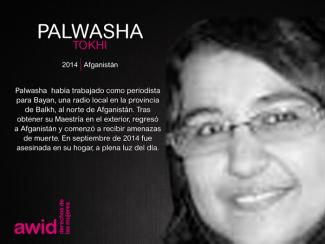
Palwasha Tokhi
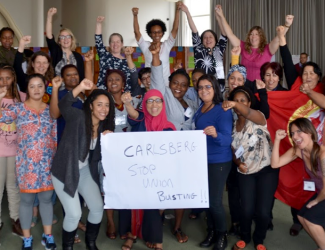
Women human rights defenders (WHRDs) worldwide defend their lands, livelihoods and communities from extractive industries and corporate power. They stand against powerful economic and political interests driving land theft, displacement of communities, loss of livelihoods, and environmental degradation.
Extractivism is an economic and political model of development that commodifies nature and prioritizes profit over human rights and the environment. Rooted in colonial history, it reinforces social and economic inequalities locally and globally. Often, Black, rural and Indigenous women are the most affected by extractivism, and are largely excluded from decision-making. Defying these patriarchal and neo-colonial forces, women rise in defense of rights, lands, people and nature.
WHRDs confronting extractive industries experience a range of risks, threats and violations, including criminalization, stigmatization, violence and intimidation. Their stories reveal a strong aspect of gendered and sexualized violence. Perpetrators include state and local authorities, corporations, police, military, paramilitary and private security forces, and at times their own communities.
AWID and the Women Human Rights Defenders International Coalition (WHRD-IC) are pleased to announce “Women Human Rights Defenders Confronting Extractivism and Corporate Power”; a cross-regional research project documenting the lived experiences of WHRDs from Asia, Africa and Latin America.
"Women Human Rights Defenders confronting extractive industries: an overview of critical risks and Human Rights obligations" is a policy report with a gender perspective. It analyses forms of violations and types of perpetrators, quotes relevant human rights obligations and includes policy recommendations to states, corporations, civil society and donors.
"Weaving resistance through action: Strategies of Women Human Rights Defenders confronting extractive industries" is a practical guide outlining creative and deliberate forms of action, successful tactics and inspiring stories of resistance.
The video “Defending people and planet: Women confronting extractive industries” puts courageous WHRDs from Africa, Asia, and Latin America in the spotlight. They share their struggles for land and life, and speak to the risks and challenges they face in their activism.
Challenging corporate power: Struggles for women’s rights, economic and gender justice is a research paper outlining the impacts of corporate power and offering insights into strategies of resistance.
AWID acknowledges with gratitude the invaluable input of every Woman Human Rights Defender who participated in this project. This project was made possible thanks to your willingness to generously and openly share your experiences and learnings. Your courage, creativity and resilience is an inspiration for us all. Thank you!
Lisez nos recherches sur le financement, sur les défenseuses des droits humains, sur la création de mouvements, sur les fondamentalismes, la justice économique et beaucoup plus
Dre. Margo Okazawa-Rey est titulaire de la Chaire Barbara Lee pour le leadership des femmes et professeure invitée en études sur les femmes, le genre et la sexualité et en politique publique au Mills College à Oakland, en Californie. Elle est également professeure émérite à la San Francisco State University.
Ses principaux domaines de recherche et d’activisme au cours des 25 dernières années sont le militarisme, les conflits armés et la violence à l’égard des femmes, analysés de manière intersectionelle. Professeure Okazawa-Rey siège au conseil consultatif international de Du Re Bang à Uijongbu en Corée du Sud, au Conseil international de PeaceWomen Across the Globe à Berne, en Suisse, et est co-présidente du conseil du Highlander Research and Education Centre à New Market, Tennessee aux États-Unis.
Ses publications récentes incluent « Nation-izing » Coalition and Solidarity Politics for US Anti-militarist Feminists (en presse) ; « No Freedom without Connections: Envisioning Sustainable Feminist Solidarities » (2018) dans Feminist Freedom Warriors : Genealogies, Justice, Politics, and Hope, Chandra Talpade Mohanty et Linda Carty (ed.) ; Between a Rock and Hard Place: Southeast Asian Women Confront Extractivism, Militarism, and Religious Fundamentalisms (2018) ; à « Liberal Arts Colleges Partnering with Highlander Research and Education Center : Intergenerational Learning for Student Campus Activism and Personal Transformation, » numéro spéciale de Feminist Formations (Feminist Social Justice Pedagogy, (2018).
1 |
Fornecer a membres da AWID, parceires do movimento e financiadores uma análise atualizada, robusta, baseada em fatos e orientada para a ação das realidades do financiamento de movimentos feministas e do estado atual do ecossistema do financiamento feminista. |
2 |
Identificar e demonstrar oportunidades para transferir mais recursos de maior qualidade para a organização feminista, expor soluções falsas e interromper tendências que fazem com que o financiamento não seja bem-sucedido e/ou se mova contra a justiça de género e objetivos feministas interseccionais. |
3 |
Articular visões, propostas e objetivos feministas para a justiça no financiamento. |
Bessy était aussi membre d’Arcoíris, une organisation qui soutient la communauté LGBTI+. Elle était en outre la personne référente de la plateforme Derechos aquí y Ahora (les droits ici et maintenant) au Honduras et plaidait fermement en faveur d’une pleine citoyenneté pour les personnes trans, ainsi que pour l’adoption d’une loi sur l’identité de genre qui permettrait aux personnes trans de changer légalement d’identité de genre.
« Depuis le début de l’année [2019], la communauté trans a été victime d’une série d’attaques, parce qu’elle a défendu et demandé des droits. » Rihanna Ferrera (sœur de Bessy)
Bessy était une travailleuse du sexe qui a été tuée par balle par deux hommes, au début du mois de juillet 2019, alors qu’elle travaillait dans les rues Comayagüela. Ses assaillants ont par la suite été arrêtés.
Bessy fait partie des nombreux·ses activistes des droits LGBTI+ du Honduras, assassiné·e·s en raison de leur identité et de leur travail, parmi qui se trouvent : Cynthia Nicole, Angy Ferreira, Estefania "Nia" Zuniga, Gloria Carolina Hernandez Vasquez, Paola Barraza, Violeta Rivas et Sherly Montoya.
Le cas de Bessy incarne l’injustice, de même qu’un problème plus large de violence systémique à laquelle se confronte la communauté LGBTI+ au Honduras, puisque l’État ne parvient pas à garantir l’offre de droits ni à fournir une protection. Cela est à l’origine d’une culture de l’impunité.
Malgré les risques auxquels sont confronté.e.s les activistes LGBTI+ au Honduras, tous et toutes continuent leur travail pour défier et résister à la violence, ainsi que pour combattre la stigmatisation et la discrimination au quotidien.
« Si je meurs, il faut que ce soit pour quelque chose de bien, pas pour une futilité. Je ne veux pas mourir en fuyant, en étant lâche. Si je meurs, je veux que les gens disent que je suis mort·e en me battant pour ce qui m’appartient » - membre d’Arcoíris
We can have an intro here
And maybe a little bit more text here
by Rode Wanimbo
I was born and grew up in Agamua, the Central Highlands of West Papua. My father belongs to the Lani tribe and my mother comes from Walak. (...)
< artwork: “Offerings for Black Life” by Sokari Ekine
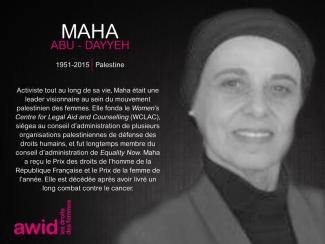
Salome is a feminist activist from Tbilisi, Georgia, devoted to social and gender justice. She holds a Master's degree in gender studies, and has been engaged in feminist, queer and green movements for over twelve years, working amongst others on issues of gender based violence, domestic violence, sexual and reproductive health and rights, LGBTIQ rights, [women’s] Labor Rights, Healing Justice and holistic and digital security and rights.
Since 2014 she has been actively working on safety and security issues of activists and Women Human Rights Defenders, providing integrated security and digital security workshops specifically for activists from under-privileged groups (queer persons, ethnic and religious minorities, rural women and girls, etc) as well as bigger feminist organisations. Salome is a member of the Independent Group of Feminists - a non-formal, non-hierarchical and non-registered initiative that unites feminists with diverse backgrounds in Georgia. Currently, she is the Executive Director of the Women's Fund in Georgia, fully engaged in women's/feminist movement building, providing feminist funding, and encouraging local feminist philanthropy.
Êtes-vous à la recherche d'un emploi? L'un des avantages de rejoindre la Communauté de l'AWID est d'avoir accès à notre tableau d'offres d'emploi organisé par la communauté. Vous aurez l'occasion d'explorer de nouvelles opportunités et vous aurez également la possibilité de partager des postes vacants et des appels à propositions avec tous les membres.
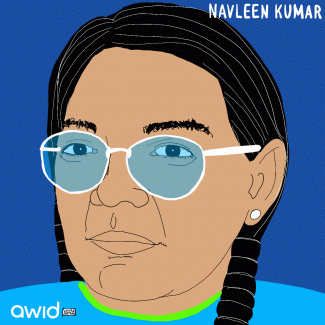
"She was not a person. She was a power."
- a fellow activist remembering Navleen Kumar
With commitment and integrity, she worked for more than a decade to protect and restore the lands of Indigenous people (adivasi) in Thane district, an area taken away by property and land developers using such means as coercion and intimidation. She fought this injustice and crime through legal interventions at different courts, realizing that manipulation of land records was a recurrent feature in most cases of land acquisition. In one of the cases, that of the Wartha (a tribal family), Navleen found out that the family had been cheated with the complicity of government officials.
Through her work, she helped restore the land back to the Wartha family and continued to pursue other cases of adivasi land transfers.
“Her paper on the impact of land alienation on adivasi women and children traces the history and complexities of tribal alienation from the 1970s, when middle class families began to move to the extended suburbs of Mumbai as the real estate value in the city spiralled.
Housing complexes mushroomed in these suburbs, and the illiterate tribals paid the price for this. Prime land near the railway lines fetched a high price and builders swooped down on this belt like vultures, to grab land from tribals and other local residents by illegal means.”
-Jaya Menon, Justice and Peace Commission
During the course of her activism, Navleen received numerous threats and survived several attempts on her life. Despite these, she continued working on what was not only important to her but contributed to changing the lives and realities of many she supported in the struggle for social justice.
Navleen was stabbed to death on 19 June 2002 in her apartment building. Two local gangsters were arrested for her murder.
Estamos encantadxs de anunciar el lanzamiento del nuevo podcast de AWID: ESE FUEGO FEMINISTA. Esta serie narrativa revela más de 40 años de movimientos feministas e imagina nuevos caminos a seguir.
En nuestra temporada piloto, escucharán cinco historias cautivadoras que forman parte de la actual constelación de activismo feminista. Presentado por nuestra Gopika Bashi, subdirectora de programas de AWID, cada episodio explora realidades feministas únicas pero interconectadas que están logrando una mayor justicia de género y asegurando derechos humanos.
ESE FUEGO FEMINISTA es producido en asociación con lxs ganadorxs de Webby, Hueman Group Media. Puedes suscribirte al podcast y escuchar nuestro primer episodio aquí.
Encuéntranos en Apple Podcasts, Spotify o donde sea que obtengas tus podcasts. ¡Comparte con tu red! Ayúdanos a difundir historias que enciendan nuestro fuego feminista y nos muevan a la acción.
In a global picture of rising religious fundamentalisms, this ebook details the grave human rights violations, and violations of women’s rights in particular, caused by state-sponsored fundamentalism, as well as by fundamentalist non-state actors such as militias, religious community organizations, and individuals.
It is vital to promote intersectional feminist understandings of power and privilege, and to apply these to questions of religion and culture.

por Marta Plaza Fernández
Tejer redes en las que nos sostenemos unas a otras: esa potencia es la realidad feminista que quiero compartirles. (...)
arte: «Healing Together» [Sanar juntxs], Upasana Agarwal >
Michelle es una feminista de Sudeste Asiático que disfruta de conspirar para congregar a las personas y suscitar conversaciones para el cambio social y el intercambio de conocimientos feministas, a través del arte, la poesía, la música y el juego. Con experiencia en promoción digital y desarrollo de estrategias de comunicación, ha contribuido a iniciativas de derechos digitales, investigaciones en derechos humanos y a la construcción de coaliciones de la sociedad civil a lo largo y ancho del Sudeste Asiático. Posee una licenciatura en Derecho de la Universidad Nacional de Singapur, disfruta de pasear al azar por las calles de la ciudad y le gusta un poquito demasiado el café.
Lo personal es político, y la apasionada y valiente Nadyn Jouny personificó este mantra feminista. Nadyn experimentó de primera mano el dolor de la violencia estructural de los sistemas legales que despojan a las mujeres de sus derechos.
Cuando Nadyn decidió solicitar el divorcio, los tribunales religiosos chiítas, bajo las Leyes de Estatuto Personal Libanesas, le negaron la custodia de su joven hijo Karam. Nadyn, como tantas otras mujeres del Líbano y de otros países, se vio atrapada entre el dolor imposible de dejar una relación no deseada y abusiva y de perder a la vez los derechos sobre su hijo. Sin embargo, Nadyn se defendió, y lo habría de hacerlo hasta el último día.
Nadyn utilizó su habilidad con los medios de comunicación para convertirse en una voz franca a favor de las mujeres que luchan contra la discriminación en la legislación familiar, en el Líbano y a nivel internacional. Nadyn cofundó el grupo autofinanciado "Protecting Lebanese Women" [Protegiendo a las Mujeres Libanesas] (PLW, por sus siglas en inglés) y se unió a muchas otras madres libanesas que se enfrentaban a problemas similares de custodia. Juntas, trabajaron para crear conciencia sobre las injusticias extremas a las que se enfrentaban, a nivel nacional, protestaron ante los tribunales religiosos por sus derechos y, a nivel internacional, llamaron la atención de los medios de comunicación.
Nadyn también trabajó con ABAAD - Resource Center for Gender Equality [Centro de Recursos para la Igualdad de Género], otra organización por los derechos de las mujeres en el Líbano, para realizar campañas en favor de los derechos de las mujeres, la igualdad en la legislación familiar y relativa a las custodias y contra los matrimonios forzados y precoces.
Para muchxs de sus colegas, Nadyn llegó a "simbolizar la lucha de una madre libanesa contra la supresión y la misoginia de todo tipo" (en inglés), al utilizar "su experiencia personal y trayectoria individual de empoderamiento, dio a otras mujeres esperanza para que ellas también pudieran ser un catalizador para el cambio positivo" - ABAAD - Centro de Recursos para la Igualdad entre los Géneros, Líbano.
El 6 de octubre de 2019, Nadyn murió trágicamente en un accidente de automóvil cuando se dirigía a protestar por los injustos aumentos de impuestos en un país que ya se enfrentaba a una espiral de crisis financiera. Nadyn Jouny tenía solo 29 años en el momento de su muerte.