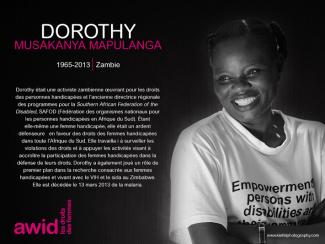
Dorothy Musakanya Mapulanga
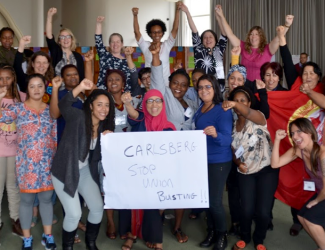
Women human rights defenders (WHRDs) worldwide defend their lands, livelihoods and communities from extractive industries and corporate power. They stand against powerful economic and political interests driving land theft, displacement of communities, loss of livelihoods, and environmental degradation.
Extractivism is an economic and political model of development that commodifies nature and prioritizes profit over human rights and the environment. Rooted in colonial history, it reinforces social and economic inequalities locally and globally. Often, Black, rural and Indigenous women are the most affected by extractivism, and are largely excluded from decision-making. Defying these patriarchal and neo-colonial forces, women rise in defense of rights, lands, people and nature.
WHRDs confronting extractive industries experience a range of risks, threats and violations, including criminalization, stigmatization, violence and intimidation. Their stories reveal a strong aspect of gendered and sexualized violence. Perpetrators include state and local authorities, corporations, police, military, paramilitary and private security forces, and at times their own communities.
AWID and the Women Human Rights Defenders International Coalition (WHRD-IC) are pleased to announce “Women Human Rights Defenders Confronting Extractivism and Corporate Power”; a cross-regional research project documenting the lived experiences of WHRDs from Asia, Africa and Latin America.
"Women Human Rights Defenders confronting extractive industries: an overview of critical risks and Human Rights obligations" is a policy report with a gender perspective. It analyses forms of violations and types of perpetrators, quotes relevant human rights obligations and includes policy recommendations to states, corporations, civil society and donors.
"Weaving resistance through action: Strategies of Women Human Rights Defenders confronting extractive industries" is a practical guide outlining creative and deliberate forms of action, successful tactics and inspiring stories of resistance.
The video “Defending people and planet: Women confronting extractive industries” puts courageous WHRDs from Africa, Asia, and Latin America in the spotlight. They share their struggles for land and life, and speak to the risks and challenges they face in their activism.
Challenging corporate power: Struggles for women’s rights, economic and gender justice is a research paper outlining the impacts of corporate power and offering insights into strategies of resistance.
AWID acknowledges with gratitude the invaluable input of every Woman Human Rights Defender who participated in this project. This project was made possible thanks to your willingness to generously and openly share your experiences and learnings. Your courage, creativity and resilience is an inspiration for us all. Thank you!
คุณสามารถส่งกิจกรรมได้มากถึง 2 กิจกรรมในฐานะผู้จัดกิจกรรม และคุณยังสามารถเป็นผู้ร่วมจัดในการส่งกิจกรรมของผู้อื่นได้


In 2002 AWID celebrated its 20th anniversary. Given the challenging political, economic and funding environment in which women's organizations must survive, a milestone such as this is worthy of recognition.
In the past two decades the geo-political landscape has been transformed and development theories have come and gone, but approaches to ensure women benefit from development processes have endured.
In its twenty-year history, AWID grew from a volunteer organization for U.S. "Women in Development" (WID) specialists to an international network striving to support proactive and strategic gender equality research, activism and policy dialogue.
On the occasion of its 20th anniversary, this paper charts not only the changes in AWID's organizational structure and goals but also the shifts in policy approaches to gender equality in a changing global environment, through the lens of a membership organization committed to improving the lives of women and girls everywhere.
您若持有下列國家的護照,可免簽入境台灣到台北參與論壇活動(請留意持免簽可停留的天數各國不同):
安道爾、澳大利亞、奧地利、比利時、保加利亞、汶萊、加拿大、智利、克羅埃西亞、賽普勒斯、捷克、丹麥、愛沙尼亞、 史瓦濟蘭、芬蘭、法國、德國、希臘、瓜地馬拉、海地、宏都拉斯、匈牙利、冰島、愛爾蘭、以色列、義大利、日本*、韓國、拉脫維亞、列支頓斯登、立陶宛、盧森堡、馬爾他、馬歇爾群島、摩納哥、荷蘭、紐西蘭、尼加拉瓜、挪威、帛琉、巴拉圭、菲律賓、波蘭、葡萄牙、羅馬尼亞、俄國、聖馬利諾、斯洛伐克、斯洛維尼亞、西班牙、瑞典、瑞士、吐瓦魯、英國、美國、梵蒂岡城國、貝里斯、多明尼加、馬來西亞、諾魯、聖克里斯多福及尼維斯、聖塔露西亞、聖文森和格瑞納丁、新加坡。
未持有上述國家護照的人士來台北須申請簽證。
請留意:
在您完成論壇註冊手續後,無論您國籍為何,應會收到與論壇參與相關的一組號碼,用於申請來台灣的電子簽證。
論譠開放報名的時間我們會另行通知。
ได้หรือไม่ เพราะได้มีการเสนอกิจกรรมเป็นเวลาเกือบ 1 ปีก่อนกิจกรรมจริง
แน่นอน! ในตอนนี้แบบฟอร์มสำหรับเสนอกิจกรรมได้ให้ระบุชื่อวิทยากร แม้วิทยากรเหล่านั้นอาจยังไม่ได้ยืนยันเข้าร่วมเราเข้าใจว่าการเปลี่ยนแปลงอาจเกิดขึ้นได้ภายในระยะเวลา 1 ปี

Nous Sommes la Solution est un mouvement de femmes rurales pour la souveraineté alimentaire en Afrique de l'Ouest. Fondée à l'origine comme une campagne contre l'agriculture hyper-industrialisée, Nous Sommes la Solution est devenue un mouvement de plus de 500 associations de femmes rurales du Burkina Faso, du Sénégal, du Ghana, de la Gambie, de la Guinée Bissau, du Mali et de la Guinée.
Ensemble, ce mouvement dirigé par des femmes construit et renforce la souveraineté alimentaire et semencière en Afrique de l'Ouest. Elles nourrissent les communautés, renforcent les économies locales, amplifient les connaissances des agricultrices et atténuent les effets dévastateurs du changement climatique grâce aux pratiques de l'agroécologie. Elles organisent également des ateliers, des forums et des émissions de radio communautaires pour partager leurs messages, leurs connaissances traditionnelles et leurs pratiques agroécologiques dans les communautés rurales.
En collaboration avec des universités et des centres de recherche publics, Nous Sommes la Solution travaille à la restauration des variétés indigènes traditionnelles de riz (un aliment de base en Afrique de l'Ouest) et à la promotion d'économies alimentaires locales basées sur des principes agroécologiques pour influencer l'élaboration des politiques nationales, tout en soutenant les femmes dans la création d'associations agricoles et leur accès à la propriété et à la gestion collectives des terres agricoles.
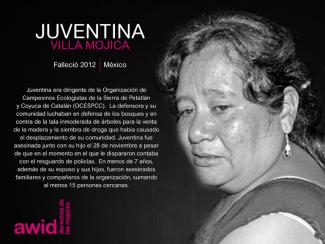
Estas defensoras lucharon por los derechos sobre la tierra, de las mujeres y de los pueblos indígenas; haciendo frente a las industrias extractivas, escribiendo poesía y promoviendo el amor. Una de ellas desapareció hace ya 19 años. Únete a nosotras para recordar y honrar a estas defensoras de derechos humanos, su trabajo y su legado, compartiendo los memes aquí incluidos; y tuiteando las etiquetas #WHRDTribute y #16Días.
Por favor, haz click en cada imagen de abajo para ver una versión más grande y para descargar como un archivo.


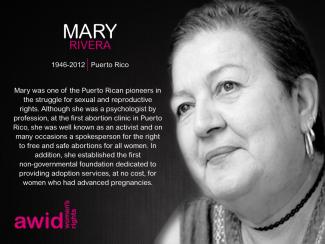
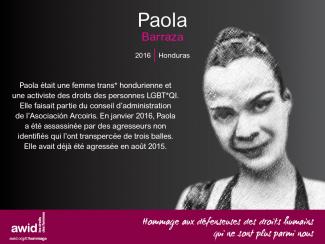
These transgender women were murdered because of their activism and their gender identity. There are insufficient laws recognizing trans* rights, and even where these laws exist, very little is being done to safeguard the rights of trans* people. Please join AWID in honoring these defenders, their activism and legacy by sharing the memes below with your colleagues, networks and friends and by using the hashtags #WHRDTribute and #16Days.
Please click on each image below to see a larger version and download as a file


Cette année, aux côtés de militant.e.s féministes du monde entier, nous serons à la CSW68 à New York. Nous serons là pour contester les discours capitalistes et néolibéraux et les fausses solutions autour de la pauvreté, du développement et de la finance. À travers des événements en présentiel, des lives sur nos réseaux sociaux, un stand d'exposition et bien plus encore, nous visons à nous rassembler, amplifier et soutenir les voix et la participation de nos membres et allié.e.s.
Apprenez-en davantage sur notre programme cette année ci-dessous.
“Los saberes y prácticas indígenas siempre han apoyado la soberanía alimentaria, y ese saber está en manos de las mujeres […] El ecofeminismo para mí es el respeto por todo lo que tenemos a nuestro alrededor” -
Related Content
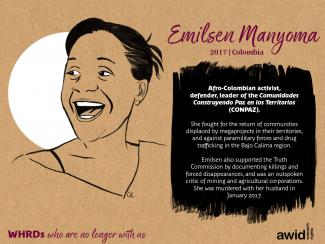
Front Line Defenders: Emilsen Manyoma Killed
ReliefWeb: A human rights defender killed every other day in 2017 in Colombia (between 1 and 23 January 2017)
Global Witness: Defenders of the Earth (2016 Report)
okayafrica.: Who is Killing Colombia's Black Human Rights Activists?
PBI Colombia: We will always accompany your work
Bitch Media: Don’t Touch My Crown: The failure of decapitation and the power of black women’s resistance
This section highlights key resources recommended by AWID so you can conduct your own WITM research.
In this section
Online tools
Once you gather these resources, you can estimate the costs for your research using our “Ready to Go? Worksheet”

The Ready to Go? Worksheet helps you estimate resources, staff and budget needed for your research