Confronting Extractivism & Corporate Power

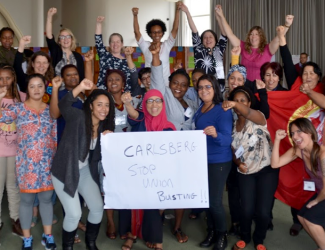
Women human rights defenders (WHRDs) worldwide defend their lands, livelihoods and communities from extractive industries and corporate power. They stand against powerful economic and political interests driving land theft, displacement of communities, loss of livelihoods, and environmental degradation.


Why resist extractive industries?

Extractivism is an economic and political model of development that commodifies nature and prioritizes profit over human rights and the environment. Rooted in colonial history, it reinforces social and economic inequalities locally and globally. Often, Black, rural and Indigenous women are the most affected by extractivism, and are largely excluded from decision-making. Defying these patriarchal and neo-colonial forces, women rise in defense of rights, lands, people and nature.

Critical risks and gender-specific violence

WHRDs confronting extractive industries experience a range of risks, threats and violations, including criminalization, stigmatization, violence and intimidation.  Their stories reveal a strong aspect of gendered and sexualized violence. Perpetrators include state and local authorities, corporations, police, military, paramilitary and private security forces, and at times their own communities.

Acting together

AWID and the Women Human Rights Defenders International Coalition (WHRD-IC) are pleased to announce “Women Human Rights Defenders Confronting Extractivism and Corporate Power”; a cross-regional research project documenting the lived experiences of WHRDs from Asia, Africa and Latin America.

We encourage activists, members of social movements, organized civil society, donors and policy makers to read and use these products for advocacy, education and inspiration.

Share your experience and questions!

Tell us how you are using the resources on WHRDs Confronting extractivism and corporate power.

◾️ How can these resources support your activism and advocacy?

◾️ What additional information or knowledge do you need to make the best use of these resources?

Share your feedback


Thank you!

AWID acknowledges with gratitude the invaluable input of every Woman Human Rights Defender who participated in this project. This project was made possible thanks to your willingness to generously and openly share your experiences and learnings. Your courage, creativity and resilience is an inspiration for us all. Thank you!
Related Content

Je suis une défenseuse des droits humains et je me sens en danger. À qui puis-je m’adresser pour obtenir du soutien ?

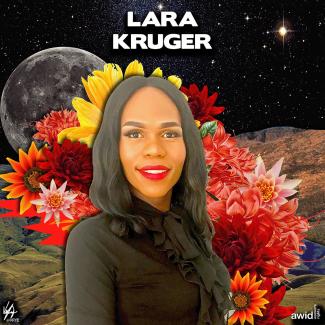
Lara Kruger

Lara fue una muy conocida y querida DJ de radio en la FM Motsweding, en Sudáfrica.

Fue una de las primeras conductoras abiertamente transgénero en una estación de radio comercial. Trabajó mucho para echar luz sobre los temas LGTBI.

El activismo de Lara comenzó a temprana edad, cuando defendía vivamente su derecho a vestirse y comportarse de una forma que le resultara cómoda y lo hacía frente a integrantes de su comunidad que todavía no entendían qué significaba ser transgénero.


Lara Kruger, South Africa

Defending our land and ourselves from corporate power

These industries 'extract' raw materials from the Earth: mining, timber, gas, oil are some examples

This economical model exploits nature and as it intensifies, so does the inequality between global North with their large corporations, and the global South, where resources are extracted.

Land contamination, water pollution, environmental damage, communities displaced are only some of the consequences.

Find more on our report on EXTRACTIVE INDUSTRIES

There are sustainable alternatives for the environment and women's rights.


Snippet FEA Georgia's minimum wage (ES)

El salario mínimo de Georgia se encuentra en un porcentaje inferior al de todos los países del mundo. Esta realidad afecta mayoritariamente a las mujeres.

El país no solo tiene una brecha salarial de género significativa, sino que las mujeres también trabajan más horas y más horas no reguladas antes de irse a casa para ocuparse de las tareas domésticas y de sus familias. No hay licencia por maternidad, no hay aumentos de salario por horas extras, no hay seguro de desempleo, y no hay licencias por enfermedad u otra protección social. Presionados por organizaciones occidentales, los partidos políticos oligárquicos georgianos han estado implementando reformas que están destruyendo el estado de bienestar, aumentando las medidas de austeridad y empeorando la explotación de lxs trabajadorxs, todo para los beneficios de grandes corporaciones que aplauden al país por su "facilidad para hacer negocios". Los medios de comunicación, cooptados por intereses privados y corporativos, están sesgados sobre estos temas o los silencian. La organización sindical sigue siendo una de las pocas opciones para luchar por los derechos humanos básicos y para hacer que el Estado y las empresas rindan cuentas ante las violaciones y persecuciones diarias y generalizadas contra lxs trabajadorxs, especialmente contra las mujeres.

Fuentes: Minimum-Wage y entrevista con Sopo Japaridze en Democracia Abierta

Snippet - WITM RESOURCES - PT

Recursos

(Disponível em inglês)

2009: The UN holds Conference on the impact of the economic crisis

2009 UN Conference on the World Financial and Economic Crisis and its Impacts on Development

  • The 2009 conference was an outcome of the 2008 Doha conference. The Doha Declaration had mandated that the United Nations hold a conference, to be organized by the President of the General Assembly, on the world financial and economic crisis and its impact on development.
  • During the conference women’s groups, through the WWG, highlighted the impact of the global financial crisis on vulnerable groups. In their statement to the members, the WWG proposed necessary actions to be taken by member states to redress the effects of the crisis to women. They stated that other social groups affected by the crisis are key to a response that is harmonized with international standards and commitments to gender equality, women’s rights and human rights and empowerment. 

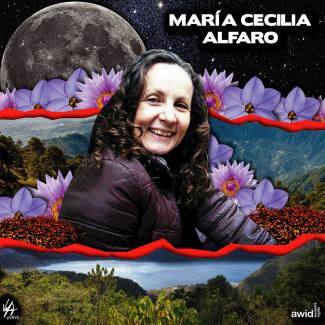
María Cecilia Alfaro Quesada

Maria a consacré la majeure partie de sa vie à l’intégration d’une perspective féministe et de la parité hommes-femmes dans les activités institutionnelles et organisationnelles, ainsi qu’au renforcement des capacités. 

Enfant, Maria s'intéressait beaucoup à l'art, à la communication, à la nature, à la littérature et à la justice, en particulier pour les femmes et les groupes marginalisés. 

Elle a milité en faveur droits sexuels et reproductifs et était membre du Conseil national pour une éducation intégrale à la sexualité. Celleux qui l’aimaient se souviennent d’elle comme d’une « combattante passionnée et infatigable », résolument engagée en faveur des droits des femmes et des enfants


María Cecilia Alfaro Quesada, Guatemala

Voici votre guide pratique et les infographies «Vers un écosystème de financement féministe»

Snippet FEA collaborator and allies Photo 4 (FR)

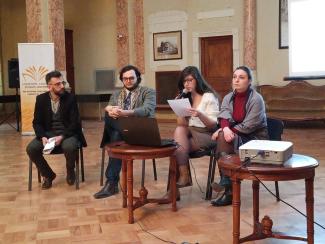
La photo représente Sopo prenant la parole lors d'un événement public à l'intérieur. Elle tient le micro tout en lisant ses notes et est assise sur une chaise entre trois autres personnes qui sont soit des orateur.trice.s, soit des modérateur.ice.s.

Наша группа, организация и/или движение не зарегистрированы – можем ли мы принять участие в опросе?

Безусловно, мы хотим услышать ваше мнение и о вашем опыте привлечения ресурсов.

Enero 2015: 1a sesión para redactar el documento final de la 3a Conferencia sobre FpD

Primera sesión para redactar el Documento Final de la tercera Conferencia Internacional sobre la Financiación para el Desarrollo

  • En enero de 2015, en la sede de la ONU en Nueva York comenzó una serie de sesiones para redactar el Documento Final.
  • Antes de la primera sesión, los facilitadores del proceso preparatorio de la Conferencia de Adís Abeba presentaron los “Elementos” para el llamado “Borrador Cero” del documento, que constituyeron la base para las negociaciones entre gobiernos en torno al Documento Final.
  • En esas sesiones, las organizaciones por los derechos de las mujeres subrayaron la necesidad de que, en los procesos post-2015, la FpD y los medios para su implementación se traten por separado, ya que la FpD brinda a los Estados una oportunidad única de ocuparse de las causas estructurales de la desigualdad.

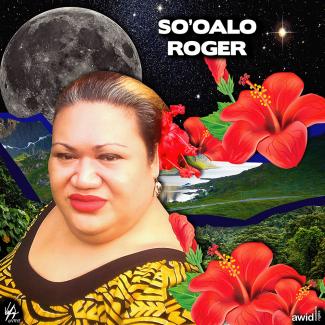
So'oalo Roger

So'oalo was a fervent human rights advocate, especially pertaining to the rights of the LGBTQI community in the Pacific.

She was a member of the Samoa Fa’afafine Association (SFA) and a passionate advocate for the acknowledgement of a third gender in the island country. Under her leadership, the SFA pushed for the recognition of the validity and rights of the fa’afafine community.

She was also a pioneer in articulating the links between human rights, exploitation of fa’afafines in Samoa and the Pacific, and the health, wellbeing and security of the LGBTQI community.

She was an inspiration, a visionary and her dedication to the pursuit of rights for her community is admirable and will be remembered.


So'oalo Roger, Samoa

The AWID Forum Access Fund

We strive to make the AWID Forum a truly global gathering with participation from a diverse array of movements, regions and generations. To this end, AWID mobilizes resources for a limited Access Fund (AF) to assist some participants with the costs of attending the Forum. 

The 14th AWID International Forum will take place 11-14 January 2021, in Taipei, Taiwan. 


How will  the Access Fund be allocated?

For this AWID Forum, there will be no application process. 

Access Fund grants will be allocated by invitation only to:

  • Two  persons per activity selected for the Forum program (decided by those organizations, groups or individuals organizing the activity) 
  • Participants who identify as part of Priority Forum  Constituencies (PFCs) recommended by the organizations, networks and groups who are co-creating the Forum with AWID. 
  • PFCs are those which we consider would strengthen our collective power as movements, are not centered in mainstream feminist movements, and whose Feminist Realities we would like to honor, celebrate and visibilize: 
    - Black feminists 
    - Indigenous feminists
    - Trans, gender non-conforming and intersex feminists
    - Feminists with disabilities 
    - Feminist sex workers and informal workers, including migrant workers
    - Feminists affected by migration 
    - Women affected by drug policy
    - Feminists from the Forum regions (with a focus on the Pacific and mainland China) 

In addition, AWID will fund approximately 100 participants from the Forum’s location. Forum Committee Members (Content and Methodology, Access and Host) as well as those in the Artists Working Group [link] are also granted Access Fund support.

What does the Access Fund cover?

For selected participants, the Access Fund will cover the cost of their:

  • Flight
  • Accommodation
  • Visa
  • Local transportation in Taipei
  • Travel medical insurance

The Access Fund will NOT cover their: 

  • Forum registration fee
  • Transportation to and from the airport in their city of departure
  • Other incidental costs

Apart from the Access Fund, how can I fund my participation at the Forum?

We have listed other ideas on how to fund your participation at the AWID Forum on the Funding Ideas page. 

More Funding Ideas

Snippet FEA lines of work Against (EN)

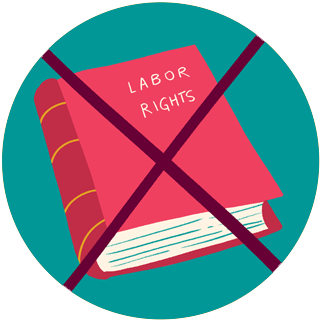
Illustration of a pink book that says “labor rights” and has a red X on it,

LABOR RIGHT VIOLATIONS

Qual é a definição de financiamento externo?

Financiamento externo inclui subsídios e outras formas de financiamento de fundações filantrópicas, governos, financiadores bilaterais, multilaterais ou empresariais, e doadores individuais, tanto a nível nacional como internacional. Não inclui recursos gerados autonomamente por grupos, organizações e/ou movimentos, como, por exemplo, quotas de membres, contribuições voluntárias de colaboradores, membres e/ou apoiantes, angariações de fundos comunitários, aluguer de espaços ou venda de serviços. Para facilitar a consulta, estão incluídas no inquérito definições dos diferentes tipos de financiamento e descrições resumidas de diferentes doadores.

Juillet 2015

Forum des femmes sur le financement de l’égalité des genres

  • Le Forum a eu lieu le 10 juillet 2015, à Addis-Abeba. Il a rassemblait des féministes, des femmes venant de la base, des défenseuses de l’égalité des genres, des universitaires et des représentant-e-s des organisations/réseaux de défense des droits des femmes. Un certain nombre de représentant-e-s de l’ONU et d’autres responsables politiques ont été invité-e-s à apporter leur contribution.
  • Les objectifs du Forum des femmes sont les suivants : échanger des informations sur l’état d’avancement des dernières négociations relatives au FdD, analyser conjointement le panorama et le suivi du FdD, adopter une position commune concernant la défense des droits des femmes et, enfin, élaborer des stratégies visant à permettre aux organisations de femmes de contribuer de manière significative et considérable à la Conférence d’Addis Abeba sur le FdD, et ce dans une perspective féministe.
  • Le Forum des femmes est organisé par le WWG on FfD, en collaboration avec FEMNET, le Fonds de développement pour la femme africaine (AWDF) et la Post-2015 Women's Coalition. Il bénéficie également du soutien de l’ONU Femmes.

Forum des OSC sur le FdD

  • Le Forum des OSC sur le FdD a eu lieu à Addis-Abeba les 11 et 12 juillet 2015. Ses objectifs sont les suivants : informer les OSC participantes de l’état d’avancement des processus officiels et coordonner la participation de la société civile pendant la troisième Conférence sur le FdD ; élaborer une Déclaration collective des OSC et les messages des OSC à destination des participant-e-s aux tables rondes de la Conférence sur le FdD, mettre en place des manifestations parallèles organisées par le groupe des OSC sur le FdD et tout autre événement qui pourrait se présenter ;  enfin, planifier et organiser les futurs domaines d’engagement des OSC dans le secteur du financement du développement, au-delà de la troisième Conférence sur le FdD.
  • Pour plus d’informations, vous pouvez consulter le site internet du Groupe des OSC sur le FdD (en anglais) ou prendre contact avec le Groupe de coordination des OSC pour Addis-Abeba (addiscoordinatinggroup@gmail.com).

La troisième Conférence internationale des Nations Unies sur le financement du développement

  • La troisième Conférence internationale des Nations Unies sur le financement du développement a eu lieu à Addis-Abeba, en Éthiopie, du 13 au 16 juillet 2015. Ses objectifs principaux étaient les suivants : évaluer les progrès accomplis dans la mise en œuvre du Consensus de Monterrey (2002) et de la Déclaration de Doha (2008) ; traiter des problèmes nouveaux et de ceux qu’il faudra anticiper, y compris dans le contexte de récentes initiatives multilatérales visant à encourager la coopération internationale pour le développement et en tenant compte des éléments suivants : l’évolution actuelle du cadre de la coopération pour le développement, les interrelations entre les différentes sources de financement du développement, les synergies existantes entre les différents objectifs de financement propres aux trois dimensions du développement durable (économique, sociale et environnementale) et la nécessité de soutenir le programme de développement des Nations Unies au-delà de 2015, et, enfin, la redynamisation et le renforcement du processus de suivi relatif au financement du développement.
  • Le Programme d’action d’Addis-Abeba a été adopté le 15 juillet 2015 par les chefs d’États et de gouvernements ainsi que les hauts-représentants de l’ONU.
  • Cependant, les pays en développement, les OSC et plus particulièrement les organisations de femmes, estiment que le Programme d’action d’Addis-Abeba n’a pas atteint son objectif. Le Groupe de Femmes sur le Financement du Développement a exprimé une vive déception et exigé des changements structurels sur le plan de la gouvernance économique mondiale et sur celui de l’architecture du développement. Consultez leur réaction au document final. Des centaines d’organisations et de réseaux de la société civile du monde entier ont aussi manifesté de vives préoccupations et de sérieuses réserves. Lisez leurs réactions au document final.