Flickr/Leonardo Veras (CC BY 2.0)

Protection of the Family

The Issue

Over the past few years, a troubling new trend at the international human rights level is being observed, where discourses on ‘protecting the family’ are being employed to defend violations committed against family members, to bolster and justify impunity, and to restrict equal rights within and to family life.

The campaign to "Protect the Family" is driven by ultra-conservative efforts to impose "traditional" and patriarchal interpretations of the family, and to move rights out of the hands of family members and into the institution of ‘the family’.

“Protection of the Family” efforts stem from:

  • rising traditionalism,
  • rising cultural, social and religious conservatism and
  • sentiment hostile to women’s human rights, sexual rights, child rights and the rights of persons with non-normative gender identities and sexual orientations.

Since 2014, a group of states have been operating as a bloc in human rights spaces under the name “Group of Friends of the Family”, and resolutions on “Protection of the Family” have been successfully passed every year since 2014.

This agenda has spread beyond the Human Rights Council. We have seen regressive language on “the family” being introduced at the Commission on the Status of Women, and attempts made to introduce it in negotiations on the Sustainable Development Goals.


Our Approach

AWID works with partners and allies to jointly resist “Protection of the Family” and other regressive agendas, and to uphold the universality of human rights.

In response to the increased influence of regressive actors in human rights spaces, AWID joined allies to form the Observatory on the Universality of Rights (OURs).  OURs is a collaborative project that monitors, analyzes, and shares information on anti-rights initiatives like  “Protection of the Family”.

Rights at Risk, the first OURs report, charts a map of the actors making up the global anti-rights lobby, identifies their key discourses and strategies, and the effect they are having on our human rights.   

The report outlines “Protection of the Family” as an agenda that has fostered collaboration across a broad range of regressive actors at the UN.  It describes it as: “a strategic framework that houses “multiple patriarchal and anti-rights positions, where the framework, in turn, aims to justify and institutionalize these positions.”


Related Content

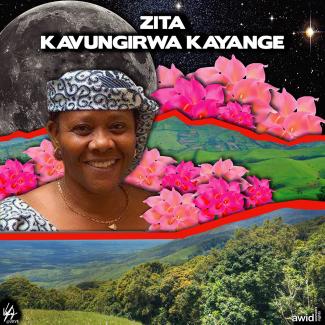
Zita Kavungirwa Kayange

Zita was a women’s rights activist who defended the rights of rural women in Greater Kivu.

She was the first Executive Director of UWAKI - a well known women’s organisation. Through her work with Women's Network for Rights and Peace (RFDP), and the Women's Caucus of South Kivu for Peace, she committed her life to helping to restore peace in the Eastern DRC. She spoke out strongly against the use of sexual violence as a weapon of war.

In 2006, she put herself forward as a candidate in the first democratic elections in the DRC. Although she did not win, she continued to advocate for women’s rights and the South Kivu community remembers her fondly. 


Zita Kavungirwa Kayange, Republic Democratic of Congo

2021: El poder feminista en acción

En 2021, AWID, junto con muchas otras organizaciones, comenzábamos a asumir las consecuencias de la pandemia global, todavía en curso, para nuestro modo de trabajo y nuestro rol en este momento tan particular. Fue un año que nos enseñó tres lecciones cruciales sobre cómo transitar este momento como organización global de apoyo a los movimientos feministas.

Descargar el informe anual 2021


Gracias al diálogo e intercambios fundamentales para su trabajo, AWID conectó a miles de feministas de todo el mundo.

Lo que nos queda claro de nuestra experiencia en 2021 es el rol preponderante -y de alguna forma singular- que AWID desempeña en la construcción y el sostenimiento de una comunidad feminista global transversal a diversas identidades y temas.

Descargar el informe anual 2021

Forum 2024 - FAQ - Funding Your Participation EN

Funding Your Participation

التعبير عن الرغبة وغيرها من الممارسات السياسيّة الأيديولوجيّة المجسَّدة | Title Snippet AR

التعبير عن الرغبة وغيرها من الممارسات السياسيّة الأيديولوجيّة المجسَّدة

مع منال التميمي وليديوي راسيكوالا ولويز ماليرب حقوق ملكيّة المدوّنة الصوتية: زهور محمود

Snippet - AWID Community - EN

AWID Community

AWID Community is an online social networking platform for specifically for AWID members. It’s a feminist space for connection, resistance and celebration. A space for critical  feminist conversations, collective power and solidarity. It is also a space for post-event dialogues, navigating difficult political learnings and community care

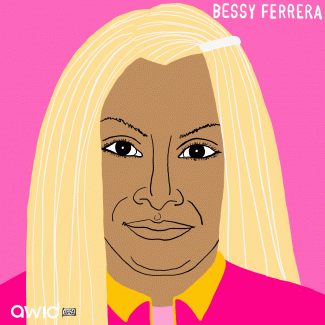
Bessy Ferrera

Bessy Ferrera was a lifelong defender of the human rights of trans people, sex workers and HIV positive people in Honduras.

Bessy was also a member of Arcoíris, an organisation which supports the LGBTI+ community. She was also a focal point person for the Right Here, Right Now (Derechos aquí y Ahora) Platform of Honduras, and advocated strongly for full citizenship of trans people, and the passing of a gender identity law that would allow trans people to change their gender identity legally.

"Since the beginning of the year [2019] the trans community has been suffering a series of attacks, for defending, for demanding rights." - Rihanna Ferrera (Bessy’s sister)

Bessy was a sex worker, and in early July 2019, was shot to death by two men while working in the streets of Comayagüela. Her assailants were subsequently arrested. 

Bessy is one of many LGBTI+ rights defenders in Honduras, who were murdered because of their identities and work. Other companeras include: Cynthia Nicole, Angy Ferreira, Estefania "Nia" Zuniga, Gloria Carolina Hernandez Vasquez, Paola Barraza, Violeta Rivas, and Sherly Montoya.

Bessy’s case is emblematic of injustice and a much larger problem of the systematic violence the LGBTI+ community faces in Honduras as the state fails to guarantee rights offer and fails to offer protection. This has created a culture of impunity.

Despite the risks LGBTI+ defenders in Honduras face, they continue their work to challenge and resist violence, and fight stigma and discrimination on a daily basis. 

“If I die, let it be for something good not for something futile. I don’t want to die running away, being a coward. If I die, I want people to say that I died fighting for what is mine.” - member of Arcoíris 

Lucy O.

Biography

With over ten years of finance experience, Lucy has devoted her career to for profit and furthering nonprofit missions. She also worked and volunteered at non-for-profit organizations. From the fast-paced world of Finance, Lucy has passion for staying tuned with tech skills in the finance field. Lucy joined AWID in 2014. During her spare time she enjoys music, traveling, and variety sports.

Position
Accounting Coordinator
Add to stories
Off

Forum 2024 - FAQ - Other Questions EN

Other Questions

Ester Lopes | Snippet FR

Ester Lopes Portrait

Ester Lopes est une danseuse et une écrivaine dont les recherches portent sur le corps, le genre, la race et les rapports de classe. Elle est professeure de Pilates et enseigne l’art. Ester est diplômée en théâtre contemporain – processus créatifs (à la FAINC) et en danse et conscience du corps (à l’USCS). Parmi ses spécialisations musicales figurent le chant populaire et les percussions. Elle a suivi une formation à Novos Brincantes avec Flaira Ferro, Mateus Prado et Antonio Meira à l’Institut Brincante en 2015 et 2016.

What Our Members Say - ES

Lo que dicen nuestrxs miembrxs

Yelena Grigoriyeva

Yelena Grigoriyeva, a menudo conocida entre sus amigxs como Lena, fue una destacada defensora de los derechos LGBT en Rusia.

Formó parte de movimientos democráticos, anti-guerra y LGBT. En su activismo, fue una crítica feroz del Presidente Vladimir Putin y su administración, y expresó su oposición a la anexión por parte de Rusia de la península de Crimea de Ucrania y al maltrato de prisionerxs.

Yelena se declaró bisexual a principios de 2019. "Su salida del armario fue una sorpresa para mí, y no la aprobé. Le dije: ‘Escucha, Lena, ya estás en la mira por tu actividad política. Te acabas de clavar otro blanco en el pecho’". - Olga Smirnova

Yelena, de hecho, recibió múltiples amenazas de muerte y, según algunxs de sus conocidxs, figuraba en un sitio web homofóbico que instaba a sus visitantes a que persiguieran a las personas LGBT. Yelena denunció las amenazas a la policía, pero el Estado ruso no le proporcionó ningún tipo de protección.

Sin embargo, Yelena, a pesar de vivir en una sociedad en la que la oposición política, así como lxs integrantes de la comunidad LGBT y lxs defensores de sus derechos, se enfrentan a una violencia continua y creciente, siguió haciendo campaña por la justicia social y la igualdad.

"No se perdió ni una sola acción. Y la detuvieron tantas veces que hasta perdí la cuenta", Olga Smirnova (compañera activista de la oposición y amiga).

Yelena fue asesinada el 21 de julio de 2019, cerca de su casa. Las autoridades detuvieron a una persona sospechosa pero, según algunas fuentes, muchxs amigxs y compañerxs activistas creen que es un chivo expiatorio y que, en realidad, se trata de un asesinato político deliberado.

Para los familiares y amigxs de Yelena, su caso sigue sin resolverse aunque la persona sospechosa haya confesado.

En 2013, Rusia aprobó una ley que prohíbe la difusión de lo que describió como "propaganda gay". En 2014, Human Rights Watch publicó un informe al respecto.
Kasia Staszewska

Biography

Kasia viene apoyando la labor de los movimientos feministas y por la justicia social desde hace 15 años. Antes de sumarse a AWID, se lideró las acciones de política e incidencia ActionAid y Amnistía Internacional, a la vez que participaba en procesos de organización feministas y de distintas agrupaciones por la justicia social en Polonia, en pro del acceso al aborto y contra la violencia en las fronteras europeas. Es una apasionada del financiamiento para la movilizaciónfeminista en toda su audacia, riqueza y diversidad. Reparte su tiempo entre Varsovia y su aldea comunitaria de trabajo artesanal en el bosque. Le encanta tomar saunas y adora con locura a su perro Wooly.

Position
Gerente, Financiamiento de los Movimientos Feministas
Add to stories
Off

Disintegration | Small Snippet ES

Desintegración

 El miércoles llega una nota con una dirección en el reverso.

Leer más

Snippet - CSW69 Image - FR

Magaly Quintana

Magaly Quintana était connue de nombreuses personnes au Nicaragua comme « La Maga » (la magicienne). Historienne et activiste féministe, elle était une indéfectible défenseure des droits des femmes, réclamant justice pour les victimes de féminicides.

Magaly était fortement engagée dans la documentation et la collecte de statistiques sur les femmes et les filles tuées dans le cadre de la violence sexuelle dans le pays. 

 « Elle s’employait à reconstituer la vie de chacune d’entre elles, de leur famille, pour montrer ces vies qui avaient été détruites », Dora María Téllez.

Magaly avait également critiqué le gouvernement pour sa réforme de la loi 779 sur la violence à l’égard des femmes. Résultat du travail acharné des mouvements de femmes nicaraguayens, cette loi incluait – avant sa réforme – d’importantes dispositions criminalisant le féminicide. Elle avançait que les réformes législatives avaient affaibli la loi et restreint la définition des féminicides à des homicides, rendant ainsi « invisibles » les crimes violents perpétrés contre les femmes.

Magaly a commencé à mener des actions féministes au début des années 1980. Directrice du Catholic Women for the Right to Choose, elle a défendu le droit à l’avortement thérapeutique après son interdiction en 2006, de même que soutenu les manifestations contre le gouvernement de Daniel Ortega en 2018.

Née en mai 1952, Magaly est décédée en mai 2019.

 « Nous nous reverrons plus tard, ma très chère Magaly Quintana. Merci beaucoup, merci pour l’héritage que tu nous laisses. Nous te reverrons, aussi forte et puissante que toujours. », Erika Guevara Rosas (Directrice américaine d’Amnesty International)

Faye Macheke

Biography

Faye est une féministe panafricaine passionnée, engagée dans les mouvements pour les droits des femmes, la justice raciale, les droits des migrant·e·s et des travailleur·euse·s, et la justice environnementale. Son activisme s'appuie sur l'héritage de la lutte contre l'apartheid en Afrique du Sud et de ses suites au Zimbabwe.

En 2019, Faye rejoint l'AWID en tant que Directrice des Finances, des Opérations et du Développement. Elle s’est efforcée de garantir que l’AWID respecte les principes et les valeurs féministes dans toutes ses opérations. Elle y apporte plus de 20 années d’expérience en leadership féministe, en stratégie et autres aspects du développement organisationnel et financier.

Faye est membre engagée du conseil d'administration de Urgent Action Fund-Africa et d'autres organisations de défense des droits des femmes. Auparavant, elle a occupé des postes de responsable des finances et des opérations chez Pediatric Adolescent Treatment for Africa et JASS - Just Associates Inc. en Afrique australe. Elle a également occupé des postes de direction chez International Computer Driving Licence (ICDL) en Afrique centrale et australe. Elle est titulaire d'une licence en sciences comptables de l'Université d'Afrique du Sud ainsi que membre du Southern African Institute for Business Accountants.

Position
Codirectrice Exécutive
Add to stories
Off

Hospital | Content Snippet EN

“Now might be a good time to rethink what a revolution can look like. Perhaps it doesn’t look like a march of angry, abled bodies in the streets. Perhaps it looks something more like the world standing still because all the bodies in it are exhausted—because care has to be prioritized before it’s too late.” 
- Johanna Hedva (https://getwellsoon.labr.io/)

Hospitals are institutions, living sites of capitalism, and what gets played out when somebody is supposed to be resting is a microcosm of the larger system itself. 

Institutions are set out to separate us from our care systems – we find ourselves isolated in structures that are rigidly hierarchical, and it often feels as if care is something done to us rather than given/taken as part of a conversation. Institutional care, because of its integration into capitalist demand, is silo-ed: one person is treating your leg and only your leg, another is treating your blood pressure, etc. 

Photographer Mariam Mekiwi had to have surgery last month and documented the process. Her portraits of sanitized environments – neon white lights, rows after rows of repetitive structures – in a washed-out color palette reflect a place that was drained of life and movement. This was one of the ways Mariam kept her own spirit alive. It was a form of protest from within the confines of an institution she had to engage with.

The photos form a portrait of something incredibly vulnerable, because watching someone live through their own body’s breakdown is always a sacred reminder of our own fragility. It is also a reminder of the fragility of these care systems, which can be denied to us for a variety of reasons – from not having money to not being in a body that’s considered valuable enough, one that’s maybe too feminine, too queer or too brown.  

Care experienced as disembodied and solitary, that is subject to revocation at any moment, doesn’t help us thrive. And it is very different from how human beings actually behave when they take care of each other. How different would our world look like if we committed to dismantling the current capitalist structures around our health? What would it look like if we radically reimagined it?