Flickr/Leonardo Veras (CC BY 2.0)

Special Focus

AWID is an international, feminist, membership organisation committed to achieving gender equality, sustainable development and women’s human rights

Protection of the Family

The Issue

Over the past few years, a troubling new trend at the international human rights level is being observed, where discourses on ‘protecting the family’ are being employed to defend violations committed against family members, to bolster and justify impunity, and to restrict equal rights within and to family life.

The campaign to "Protect the Family" is driven by ultra-conservative efforts to impose "traditional" and patriarchal interpretations of the family, and to move rights out of the hands of family members and into the institution of ‘the family’.

“Protection of the Family” efforts stem from:

  • rising traditionalism,
  • rising cultural, social and religious conservatism and
  • sentiment hostile to women’s human rights, sexual rights, child rights and the rights of persons with non-normative gender identities and sexual orientations.

Since 2014, a group of states have been operating as a bloc in human rights spaces under the name “Group of Friends of the Family”, and resolutions on “Protection of the Family” have been successfully passed every year since 2014.

This agenda has spread beyond the Human Rights Council. We have seen regressive language on “the family” being introduced at the Commission on the Status of Women, and attempts made to introduce it in negotiations on the Sustainable Development Goals.


Our Approach

AWID works with partners and allies to jointly resist “Protection of the Family” and other regressive agendas, and to uphold the universality of human rights.

In response to the increased influence of regressive actors in human rights spaces, AWID joined allies to form the Observatory on the Universality of Rights (OURs).  OURs is a collaborative project that monitors, analyzes, and shares information on anti-rights initiatives like  “Protection of the Family”.

Rights at Risk, the first OURs report, charts a map of the actors making up the global anti-rights lobby, identifies their key discourses and strategies, and the effect they are having on our human rights.   

The report outlines “Protection of the Family” as an agenda that has fostered collaboration across a broad range of regressive actors at the UN.  It describes it as: “a strategic framework that houses “multiple patriarchal and anti-rights positions, where the framework, in turn, aims to justify and institutionalize these positions.”
 

Related Content

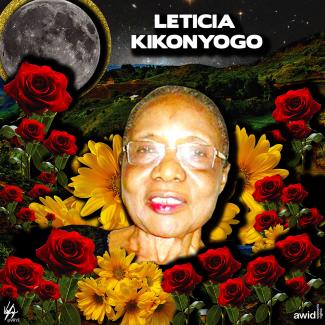
Leticia Eulalia Mary Mukasa- Kikonyogo

Leticia fue una abogada y jueza de Uganda.

Antes de retirarse, ocupó muchas posiciones de alto perfil, como por ejemplo miembrx de la Corte de Apelaciones de Uganda y Presidenta Adjunta de la Corte Suprema de Uganda. Fue la primera mujer ugandesa en ocupar el cargo de Primera Magistrada entre 1973 y 1986, y la primera mujer en ser nombrada jueza de la Corte Suprema en 1986.

Fue una de las primeras mujeres investidas como “Caballero Papal” de la historia de la Iglesia Católica en África. Murió de un paro cardíaco.


Leticia Eulalia Mary Mukasa- Kikonyogo, Uganda

Snippet - Intro WITM - AR

نكمل مشوار بناء الحشد الذي بدأناه قبل 20 عاماً لموارد أفضل وأكبر لحركات التغيير الاجتماعي بقيادة نسوية، تدعوكم/ن جمعية حقوق المرأة في التنمية لاستكمال استطلاعنا

" "أين التمويل للتنظيمات النسوية" (WITM)

لتعبئة الاستطلاع Tutorial

الرجاء اختيار اللغة المفضلة للإجابة على الاستطلاع في أقصى يمين الصفحة


Snippet FEA Georgia this is only the beginning (ES)

Georgia

Sindicato Red de Solidaridad


Este es sólo

EL COMIENZO

2002: comienzan las conversaciones acerca de una agenda de Financiación para el Desarrollo

La Conferencia de Monterrey sobre la Financiación para el Desarrollo marcó el comienzo de las conversaciones acerca de una agenda de Financiación para el Desarrollo.

  • El Consenso de Monterrey fue adoptado durante la primera Conferencia Internacional sobre la Financiación para el Desarrollo. Fue la primera reunión organizada por la ONU con nivel de cumbre para abordar aspectos esenciales del desarrollo global, entre ellos los temas financieros y otros conexos.
  • Durante la Conferencia y sus procesos preparatorios se dio una cooperación sin precedentes entre las Naciones Unidas y el Banco Mundial (BM), el Fondo Monetario Internacional (FMI) y la Organización Mundial del Comercio (OMC) para promover mayor coherencia y cohesión entre los sistemas e instituciones monetarias, comerciales y financieras internacionales.
  • Monterrey también marcó la primera ocasión en que se debatió la financiación para el desarrollo entre gobiernos, representantes de la sociedad civil y el sector empresarial. Estos actores llevaron la discusión más allá de lo ‘técnico’ para abordar cómo movilizar y canalizar recursos financieros a fin de alcanzar las metas internacionalmente convenidas en conferencias y cumbres de la ONU celebradas en la década de 1990, entre ellas los Objetivos de Desarrollo del Milenio (ODM).
  • El WWG [Grupo de Mujeres] señaló el significado histórico de la conferencia, afirmando que tenía el potencial de abordar desafíos estructurales que continúan obstaculizando el desarrollo. Sin embargo, también planteó sus preocupaciones por los efectos del incremento de la militarización y del fundamentalismo sobre las mujeres, pese a que el Consenso de Monterrey dio por sentado que el sistema económico y financiero mundial funcionaba bien para todas las personas.

Para saber más sobre los seis temas centrales de Monterrey los mecanismos de seguimiento a esta conferencia, consulta Género y financiación para el desarrollo, de Maria Floro, Nilufer Çagatay, John Willoughby y Korkut Ertürk (INSTRAW, 2004).

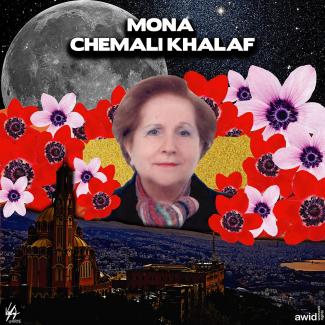
Mona Chemali Khalaf

Mona était économiste et consultante indépendante sur les questions de genre et de développement.

Elle a été professeure d'économie et directrice de l'Institut d'études féminines du monde arabe à l'Université libanaise américaine. Elle est décédée subitement le 6 janvier 2018.

Des amis et d'anciens collègues disent de Mona: « Pour lui rendre hommage, la meilleure chose à faire est de continuer à faire ce qu'elle a commencé: l'égalité de genre, à tout prix. 


Mona Chemali Khalaf, Lebanon

Snippet - WITM To make - RU

Сделать видимой сложность обеспечения ресурсами различных феминистских организаций

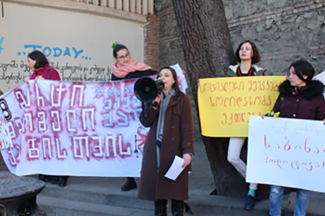
Snippet FEA Workers demonstrations in Georgia 1 (FR)

Quatre personnes avec des affiches lors d'une manifestation et, au milieu, une femme avec un mégaphone qui parle.

2009: l´ONU organise une conférence sur l´impact de la crise économique

La Conférence des Nations Unies de 2009 sur la crise financière et économique mondiale et son incidence sur le développement

  • La  conférence  de 2009  était l’aboutissement de celle de Doha en 2008. La Déclaration de Doha avait  mandaté  les Nations Unies  pour organiser, sous l’égide du Président de l’Assemblée générale, une conférence consacrée à la crise financière et économique mondiale et à son incidence sur le développement.
  • Pendant la conférence, les groupes de femmes, par le biais du WWG ont souligné l’impact de la crise financière mondiale sur les groupes les plus vulnérables. Dans sa déclaration aux membres (en anglais), le WWG a  proposé une liste d’actions nécessaires que les États membres devraient mettre en œuvre pour pallier  aux conséquences de la crise sur les femmes. Le groupe de travail a également déclaré que la prise en compte des autres groupes sociaux touchés par la crise était essentielle pour apporter une réponse qui soit en accord avec les normes et les engagements internationaux relatifs à l’égalité des genres, aux droits des femmes, aux droits humains et à l’autonomisation. 

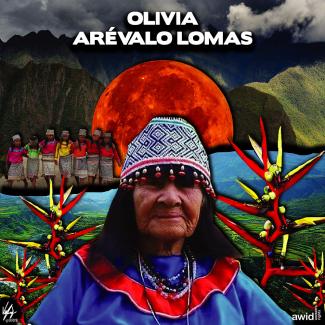
Olivia Arévalo Lomas

Olivia was the spiritual leader of the Shipibo Konibo indigenous peoples.

A wise Indigenous woman and grandmother, she was known for cultivating traditional medicine and the sacred songs of her people (Íkaros). Olivia Arevalo was an active defender of the cultural and environmental rights of her people. Olivia’s murder occurred in a context of territorial conflict between the Shipibo community and companies that desire to take over their land to cultivate palm oil.

Members of her community have said: “Her death is an aggression against the entire Shipibo community. She was the living memory of her people”.


Olivia Arévalo Lomas, Peru

Snippet - WITM Survey will remain open - AR

سيبقى الاستطلاع مفتوحاً حتى 31 يوليو (تموز) 2024

لتعبئة الاستطلاع

الرجاء اختيار لغتك في الزاوية اليمنى الرجاء اختيار اللغة المفضلة للإجابة على الاستطلاع في أقصى يمين الصفحة

 ذا كنت ترغب في معرفة المزيد، انضم إلى لقاء للأعضاء/ العضوات: أين المال؟ يوم الاثنين 27 مايو (أيار) الساعة 9:00 بالتوقيت العالمي - مع ترجمة
 فورية باللغتين الفرنسية والإنجليزية.
14:00 بالتوقيت العالمي - مع ترجمة فورية باللغتين الإسبانية والإنجليزية
سنستمع إلى فريق الحركات النسوية لتوفير الموارد التابع لجمعية حقوق المرأة في التنمية (جمعية حقوق المرأة في التنمية) حول خصوصيات وعموميات تمويل التنظيمات النسوية.

انضم/ي إلينا كعضو/ة في وكن/وني جزءًا من جلسة التواصل هذه.
الرد على الدعوة هنا

(Registration only available in English)

Snippet FEA Workers demonstrations in Georgia 2 (EN)

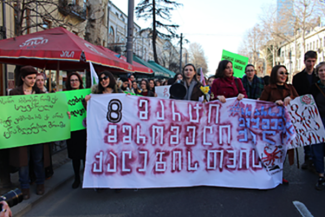
The photo shows a demonstration where a crowd of people is holding a banner in Georgian that reads as follows: “8th of March for worker women”.

March 2015: The Zero-Draft Outcome Document is released

Release of the Zero-Draft Outcome Document, March 2015

  • The zero-draft outcome document (dated 16 March), prepared by the Co-facilitators, was released for discussion at the 2nd drafting session from 13-17 April 2015
  • During the opening session, the WWG on FfD called for dedicated resources for gender equality and women’s empowerment as stated in both the Monterrey Consensus and Doha Declaration,to be added into the Zero draft. 

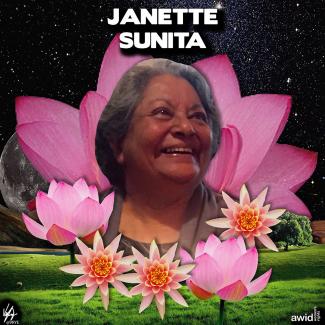
Janette Sunita

De la India, Janette era enérgica, extraordinaria, compasiva y amorosa.

Su intolerancia de la injusticia y su firme compromiso de defender los derechos de todas las personas la llevaron a trabajar en TARSHI (una ONG que trabaja en temas de la sexualidad y la salud y derechos sexuales y reproductivos) durante más de 15 años. Janette dirigió con destreza las finanzas, los recursos humanos y los aspectos operativos del trabajo de TARSHI, atravesando hábilmente la laberíntica burocracia a la que están sometidas las ONG indias.

Lxs integrantes de su equipo recuerdan que «Ella se quedaba vigilando, de manera que pudiéramos seguir el rumbo en aguas abiertas. Mujer de muchos talentos, Janette no sólo nos ayudó a conseguir nuestra propia oficina sino que también la diseñó para una utilización óptima». Amaba viajar y a los animales, y estaba interesada en la terapia asistida por animales.


Janette Sunita, India

Snippet - WITM FAQ - RU

Часто задаваемые вопросы

Snippet FEA Workers Persecution S4 (ES)

Un agente de la ley con equipo antidisturbios rosa sosteniendo un palo

PERSECUCIÓN DE LOS TRABAJADORES

¿Qué es el Proceso de la Financiación para el Desarrollo de Naciones Unidas?

El proceso de la Financiación para el Desarrollo (FpD) de Naciones Unidas (ONU) se propone abordar distintas formas de financiación y cooperación para el desarrollo. Según lo acordado en el Consenso de Monterrey, se centra en seis áreas prioritarias:

  • Movilización de recursos financieros nacionales para el desarrollo;
  • Movilización de recursos internacionales para el desarrollo: la inversión extranjera directa y otras corrientes de capitales privados;
  • El comercio internacional como promotor del desarrollo;
  • Aumento de la cooperación financiera y técnica internacional para el desarrollo;
  • La deuda externa;
  • Tratamiento de cuestiones sistémicas: fomento de la coherencia y la cohesión de los sistemas monetarios, financieros y comerciales internacionales en apoyo al desarrollo.

La Revista de las Realidades Feministas

La Revista de las Realidades Feministas

Les presentamos una inspiradora selección de historias e imágenes poderosas de transformación y resistencia creadas por activistas, escritorxs y artistas feministas de todo el mundo.

Explora la Revista