Related content
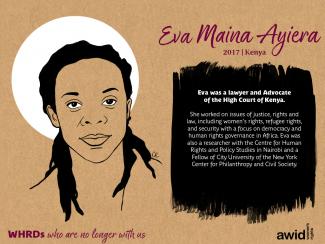
AfriCOG's security forum: Eva Ayiera on key drivers of Kenya's security threats (Video)
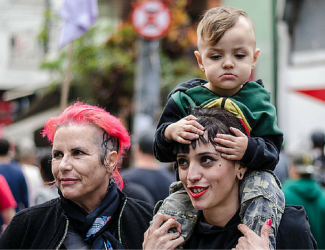
Over the past few years, a troubling new trend at the international human rights level is being observed, where discourses on ‘protecting the family’ are being employed to defend violations committed against family members, to bolster and justify impunity, and to restrict equal rights within and to family life.
The campaign to "Protect the Family" is driven by ultra-conservative efforts to impose "traditional" and patriarchal interpretations of the family, and to move rights out of the hands of family members and into the institution of ‘the family’.
Since 2014, a group of states have been operating as a bloc in human rights spaces under the name “Group of Friends of the Family”, and resolutions on “Protection of the Family” have been successfully passed every year since 2014.
This agenda has spread beyond the Human Rights Council. We have seen regressive language on “the family” being introduced at the Commission on the Status of Women, and attempts made to introduce it in negotiations on the Sustainable Development Goals.
AWID works with partners and allies to jointly resist “Protection of the Family” and other regressive agendas, and to uphold the universality of human rights.
In response to the increased influence of regressive actors in human rights spaces, AWID joined allies to form the Observatory on the Universality of Rights (OURs). OURs is a collaborative project that monitors, analyzes, and shares information on anti-rights initiatives like “Protection of the Family”.
Rights at Risk, the first OURs report, charts a map of the actors making up the global anti-rights lobby, identifies their key discourses and strategies, and the effect they are having on our human rights.
The report outlines “Protection of the Family” as an agenda that has fostered collaboration across a broad range of regressive actors at the UN. It describes it as: “a strategic framework that houses “multiple patriarchal and anti-rights positions, where the framework, in turn, aims to justify and institutionalize these positions.”
Related content
AfriCOG's security forum: Eva Ayiera on key drivers of Kenya's security threats (Video)
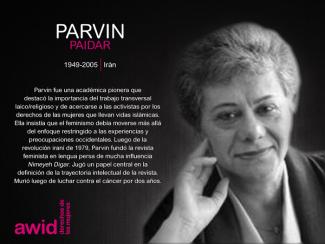
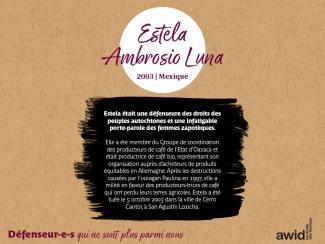
Estas defensoras lucharon por los derechos sobre la tierra, de las mujeres y de los pueblos indígenas; haciendo frente a las industrias extractivas, escribiendo poesía y promoviendo el amor. Una de ellas desapareció hace ya 19 años. Únete a nosotras para recordar y honrar a estas defensoras de derechos humanos, su trabajo y su legado, compartiendo los memes aquí incluidos; y tuiteando las etiquetas #WHRDTribute y #16Días.
Por favor, haz click en cada imagen de abajo para ver una versión más grande y para descargar como un archivo.


Dado que la encuesta ¿Dónde está el dinero? se centra en las realidades de la dotación de recursos para las organizaciones feministas, la mayoría de las preguntas indagan acerca del financiamiento de tu agrupación entre 2021 y 2023. Para responder la encuesta, necesitarás tener a mano cierta información como, por ejemplo, presupuestos anuales y las fuentes clave de financiamiento.

Listen to the story here:
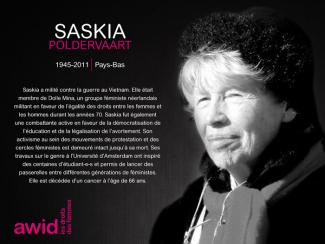
These transgender women were murdered because of their activism and their gender identity. There are insufficient laws recognizing trans* rights, and even where these laws exist, very little is being done to safeguard the rights of trans* people. Please join AWID in honoring these defenders, their activism and legacy by sharing the memes below with your colleagues, networks and friends and by using the hashtags #WHRDTribute and #16Days.
Please click on each image below to see a larger version and download as a file


Tout à fait. Vos réponses seront supprimées à la fin du processus de traitement et d’analyse des données. Elles ne seront utilisées qu’à des fins de recherche. Les données ne seront JAMAIS partagées en dehors de l’AWID et ne seront traitées que par le personnel de l’AWID et des consultant·es qui collaborent avec nous à la recherche WITM.
La confidentialité de votre vie privée et votre anonymat sont nos priorités. Notre politique de confidentialité est disponible ici.

This section highlights key resources recommended by AWID so you can conduct your own WITM research.
In this section
Online tools
Once you gather these resources, you can estimate the costs for your research using our “Ready to Go? Worksheet”

The Ready to Go? Worksheet helps you estimate resources, staff and budget needed for your research
The survey is open until the end of August 2024. Please complete it within this timeframe to ensure your responses are included in the analysis.
We all can dance
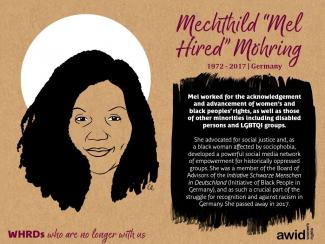
by Mechthild Möhring (aka serialmel)
How I punt myself at the narrow hard knitting I once retrieved. I'm dancing in the kitchen when I'm alone. Gracile and powerful. When I'm in company I'm clumsy. My body scandalizes, scandalizes the laws of look I feel, scandalizes the words which banished me. "Of course she can dance, it's in her blood as a Black person." "If she is able to dance nicely she is good in bed" they whisper, they murmur, no - they say it openly into my face. They smirk and rub themselves against me and let me move back. I stumble and fall. My feet reject their duty. Bearish I get out of breath. Smiling I place myself out of events and notice how my face freezes into a mask.
Translated into English by Tsepo Bollwinkel
Original in German
Tanzen können wir alle
Von Mechthild Möhring (aka serialmel)
Wie ich mich stosse an den engen, harten Maschen, in die ich mich einst zurückgezogen habe. Ich tanze in der Küche, wenn ich allein bin. Grazil und kraftvoll. Wenn ich in Gesellschaft bin, bin ich unbeholfen. Mein Körper eckt an, an die Gesetze des Blicks, den ich spüre, an die Worte, die mich bannten. „Natürlich kann sie tanzen, als Schwarze hat sie das im Blut.“ „Wenn sie gut tanzen kann, dann ist sie auch gut im Bett“ flüstern sie, raunen sie, nein, sie sagen es mir laut ins Gesicht. Sie grinsen und reiben sich an mir und lassen mich zurückweichen. Ich stolpere und falle. Meine Füsse verweigern ihren Dienst. Tollpatschig gerate ich ausser Atem. Lächelnd setze ich mich an den Rand des Geschehens und bemerke, wie mein Gesicht zur Maske erstarrt.