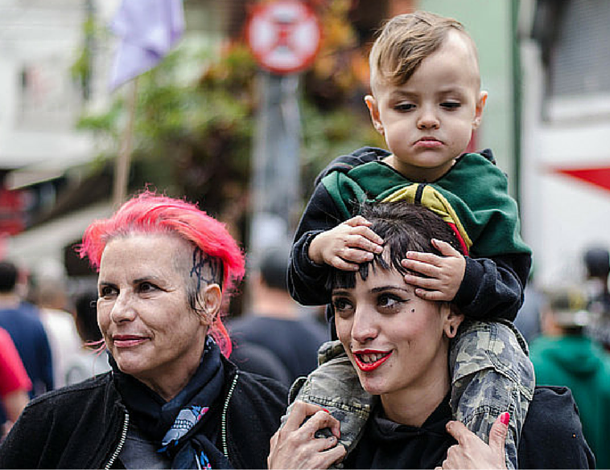

Flickr/Leonardo Veras (CC BY 2.0)

Special Focus

AWID is an international, feminist, membership organisation committed to achieving gender equality, sustainable development and women’s human rights

Protection of the Family

The Issue

Over the past few years, a troubling new trend at the international human rights level is being observed, where discourses on ‘protecting the family’ are being employed to defend violations committed against family members, to bolster and justify impunity, and to restrict equal rights within and to family life.

The campaign to "Protect the Family" is driven by ultra-conservative efforts to impose "traditional" and patriarchal interpretations of the family, and to move rights out of the hands of family members and into the institution of ‘the family’.

“Protection of the Family” efforts stem from:

  • rising traditionalism,
  • rising cultural, social and religious conservatism and
  • sentiment hostile to women’s human rights, sexual rights, child rights and the rights of persons with non-normative gender identities and sexual orientations.

Since 2014, a group of states have been operating as a bloc in human rights spaces under the name “Group of Friends of the Family”, and resolutions on “Protection of the Family” have been successfully passed every year since 2014.

This agenda has spread beyond the Human Rights Council. We have seen regressive language on “the family” being introduced at the Commission on the Status of Women, and attempts made to introduce it in negotiations on the Sustainable Development Goals.


Our Approach

AWID works with partners and allies to jointly resist “Protection of the Family” and other regressive agendas, and to uphold the universality of human rights.

In response to the increased influence of regressive actors in human rights spaces, AWID joined allies to form the Observatory on the Universality of Rights (OURs).  OURs is a collaborative project that monitors, analyzes, and shares information on anti-rights initiatives like  “Protection of the Family”.

Rights at Risk, the first OURs report, charts a map of the actors making up the global anti-rights lobby, identifies their key discourses and strategies, and the effect they are having on our human rights.   

The report outlines “Protection of the Family” as an agenda that has fostered collaboration across a broad range of regressive actors at the UN.  It describes it as: “a strategic framework that houses “multiple patriarchal and anti-rights positions, where the framework, in turn, aims to justify and institutionalize these positions.”


Related Content

Snippet - CSW69 - What Can Feminist Movements Learn - EN

What Can Feminist Movements Today Learn from Beijing 1995?

✉️ By registration only. Register here 

📅 Wednesday, March 12, 2025
🕒 6.30–8:00pm EST

🏢 Church Center of the United Nations, 777 United Nations Plaza, New York, NY 10017

🎙️Co-facilitated by: Inna Michaeli, Co-Executive Director

Organizer: Jass, Gender at Work, and Count Me In! Consortium

Snippet Caribbean Feminist Spaces_Fest (FR)

Espaces féministes caribéens, expressions créatives et pratiques spirituelles pour le renforcement communautaire

Tonya Haynes, CAISO
Angelique V. Nixon, CAISO

divider

Laurie Carlos

Laurie Carlos était une comédienne, réalisatrice, danseuse, dramaturge et poétesse aux États-Unis. Artiste hors pair et visionnaire, c’est avec de puissants modes de communication qu’elle a su transmettre son art. 

« Laurie entrait dans la pièce (n’importe quelle pièce/toutes les pièces) avec une perspicacité déroutante, un génie artistique, une rigueur incarnée, une féroce réalité – et une détermination à être libre... et à libérer les autres. Une faiseuse de magie. Une devineresse. Une métamorphe. Laurie m’a dit un jour qu’elle entrait dans le corps des gens pour trouver ce dont ils et elles avaient besoin. » - Sharon Bridgforth

Elle a employé plusieurs styles de performance alliant les gestes rythmiques au texte. Laurie encadrait les nouveaux·elles comédien·ne·s, performeur·euse·s et dramaturges, et a contribué à développer leur travail dans le cadre de la bourse Naked Stages pour les artistes émergent·e·s. Associée artistique au Penumbra Theatre, elle a participé à la sélection de scripts à produire, dans l’objectif « d’intégrer des voix plus féminines dans le théâtre ». Laurie faisait également partie des Urban Bush Women, une compagnie de danse contemporaine reconnue qui contait les histoires de femmes de la diaspora africaine.

Elle fit ses débuts à Broadway dans le rôle de Lady in Blue, en 1976, dans la production originale et primée du drame poétique For colored girls who have considered suicide / when the rainbow is enuf de Ntozake Shange. L’oeuvre de Laurie inclut White Chocolate, The Cooking Show et Organdy Falsetto

« Je raconte les histoires à travers le mouvement – les danses intérieures qui se produisent spontanément, comme dans la vie – la musique et le texte. Si j’écris une ligne, ce n’est pas forcément une ligne qui sera dite ; ce peut être une ligne qui sera bougée. Une ligne à partir de laquelle de la musique est créée. Le geste devient phrase. Tant de ce que nous sommes en tant que femmes, en tant qu’êtres, tient aux gestes que nous exprimons les un·e·s par rapport aux autres, tout le temps, et particulièrement dans les moments d’émotion. Le geste devient une phrase, ou un état de fait. Si j’écris “quatre gestes” dans un script, cela ne signifie pas que je ne dis rien;cela veut dire que j’ai ouvert la voie à ce que quelque chose soit dit physiquement. » Laurie Carlos

Laurie est née et a grandi à New York, a travaillé et vécu à Minneapolis-Saint-Paul. Elle est décédée le 29 décembre 2016, à l’âge de 67 ans, après un combat contre le cancer du côlon. 


Hommages :

« Je pense que c’était exactement l’intention de Laurie. De nous sauver. De la médiocrité. De l’ego. De la paresse. De la création artistique inaboutie. De la paralysie par la peur.
Laurie voulait nous aider à briller pleinement.
Dans notre expression artistique.
Dans nos vies. » - Sharon Bridgforth pour le Pillsbury House Theatre

« Quiconque connaissait Laurie aurait dit que c’était une personne singulière. Elle était sa propre personne. Elle était sa propre personne, sa propre artiste ; elle mettait en scène le monde tel qu’elle le connaissait avec un vrai style et une compréhension fine, et elle habitait son art. » – Lou Bellamy, Fondatrice de la Penumbra Theatre Company, pour le Star Tribune 

Lire un hommage complet par Sharon Bridgforth (seulement en anglais)
Rachel Mabaudi

Biography

Rachel es una profesional financiera con más de dos décadas de experiencia. Ha supervisado negocios y proyectos financieros para entidades privadas y públicas, organizaciones sin fines de lucro y organizaciones internacionales no gubernamentales. Es una contadora pública con una maestría global en administración de empresas, e integra el instituto sudafricano de contadores públicos. En su tiempo libre, Rachel diseña arte tipográfico, y disfruta de viajar y de pasar tiempo con familia y amigues con una botella de vino.

Position
Finance Manager
Add to stories
Off

Snippet - WCFM Movement and Struggle - EN

Movement in focus:

Filter your search by funders’ priority support areas that speak to your organizing efforts

Snippet Festival Days 8-13_Fest (EN)

Day, jour, día 8 festival - Sept. 16, 2021
Panel
Body Pleasure for Fat Girls 

Amy Lin

watch panel


Workshop
Broadening Pleasure

Hedone

watch workshop 


Workshop
#EmptyChairs campaign

Caroline Tagny, Coalition of African Lesbians
Carrie Shelver, Sexual Rights Initiative
Emeline Dupuis, Sexual Rights Initiative
Pooja Badarinath, Sexual Rights Initiative
Pooja Patel, International Service for Human Rights
Antje Schupp


Workshop
Feminist Realities:
Breathing & Healing Houses for Defenders

Ana María Hernández Cárdenas, Consorcio Oaxaca
Nallely Tello Méndez, Red Nacional de Defensoras de Derechos Humanos en México
Jelena Dordevic Liana Funes, National Network of Women Human Rights Defenders in Honduras
Rebeca Girón
Tania Lopes Muri, Movimento de Mulheres da Região dos Lagos
Rogéria Peixinho


Fem Movement
Members Dance Party Extravaganza

DJ Cozmic Cat


Day, jour, día 9 festival - Sept. 17, 2021
Storytelling
Unfettered Education:
Fatoumata's Story

Lina Baaziz

watch video


Instagram Live:

Sex Education

Oloricoitus

watch video


Workshop
Voices from the frontlines:
Bolstering collective power to end the incarceration of women worldwide
 

Claudia A. Cardona, Mujeres Libres Colombia
Phyllis Hardy, National Council for Incarcerated and Formerly Incarcerated Women and Girls
Grace Natalia, Womxn’s Voice and Women and Harm Reduction International Network
Mónica Marginet Flinch, Metzineres
Kenya Cuevas, Casa de las Muñecas Tiresias A.C.
Dawn Harrington, Free Hearts

watch workshop


Workshop
Movement as Healing,
Healing for Movements


Kimalee Phillip
Luz Stella Uspina Murillo, Fondo Acción Urgente para América Latina y el Caribe
Sara Munarriz-Awad, Fondo Acción Urgente para América Latina y el Caribe
Tai Pelli
Everdith (Evie) Landrau


Workshop
Emergent feminist leadership:
Lifting as we climb

Deborah A, Black LGBTQ Migrant Project (BLMP)
Anima Adjepong, Silent Majority
Maame Adwoa Marfo, FRIDA
Debbie Owusu-Akyeeah, Canadian Centre for Gender and Sexual Diversity


Day, jour, día 10 festival
Panel
Pleasure Across Borders

Lindiwe Rasekoala
Lizzie Kiama
Jovana Drodevic
Malaka Grant

watch video


Panel
Abortion realities:
strategies to fight reproductive injustice

Lindiwe Rasekoala
Lizzie Kiama
Jovana Drodevic
Malaka Grant


Day, jour, día 11, festival
Workshop
Networking and Solidarity Building Among Young Feminist Organizers

Nino Ugrekhelidze, AWID
Anwulika Ngozi
Okonjo Pooja Singh


Panel
Surviving the war on drugs

Ganna Dovbakh, Eurasian Harm Reduction Association (EHRA)
Priscila Gadelha, Rede Nacional de Feministas Antiproibicionistas (RENFA)
Veronica Russo, Red Latinoamericana y del Caribe de Personas que Usan Drogas (LANPUD)
Diana Edem, Heartland Alliance International
Judy Chang, International Network of People who Use Drugs (INPUD)
Louise Vincent, NC Urban Survivors Union
Aura Roig, Metzineres
Malicia, Live Artist

watch panel


Panel
Young Climate Feminists Building Radical Futures:
Video Launch and Conversation

Sanam Amin, Asia Pacific Forum on Women, Law and Development
Maggie Mapondera, Womin African Alliance
Maria Alejandra Escalente, FRIDA
Patricia Miranda Wattimena, Asia Indigenous Peoples Pact
Mara Dolan, WEDO
Andrea Vega Troncoso, WEDO

watch panel


Workshop
Antal: Non-binary Universe

Malicia Sabina, Resistencia No Binarix
Andras Yareth Hernández, Resistencia No Binarix

watch workshop


Day, jour, día 12, festival
Panel
Thank you, I can make my decision

Grace Chang, Taiwan Association for Disability Rights
Angel Hsu, Taiwan Association for Disability Rights
Joyann Peng, Taiwan Association for Disability Rights
Amy Wu, Taiwan Association for Disability Rights

watch panel


Panel
Feminist learnings on digital security in times of socio political and sanitary crisis

Paul Nail Ojeda
Paola Moss


Workshop
The current state of forests:
what’s the issue and why is it so important?

Camila Romero, VientoSur
Kanta Marathe, Navrachna Samaj Sevi Sansthan
Jeanette Sequeira, Global Forest Coalition

Download Resources  Descargar Recursos  Télécharger Les Ressourceses

Visit the AWID Members Lounge

Jessica Whitbread, AWID


Day, jour, día 13 festival
Workshop
Supporting the self-managed:
abortion doulas, acompanantes and radical networks of support

Aditi Pinto, Inroads
Daniela Tellez Del Valle, Di RAMONA
Sandra Cardona, Necesito Abortar México
Mickreen Adhiambo, Aunty Jane Hotline and MAMA Network
Zachi Brewster, Dopo Abortion Support
Ika Ayi, Samsara

watch panel


Workshop
Young Feminist Skill-Share:
How to Fund Your Idea

Nino Ugrekhelidze, AWID
Cassie Denbow
Nida Mushtaq


"Yo Imposible"
Watch Party & Discussion with Latin American Filmmakers from AWID's Feminist Film Club

Alejandra Laprea
Patricia Ortega
Alejandra Henriquez
Maria Torrellas
Carolina Reynoso
Camila Rodó
Micol Mtzener
Giovana Garcia

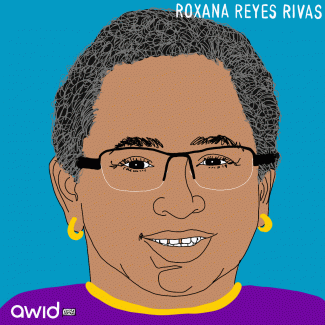
Roxana Reyes Rivas

Roxana Reyes Rivas, philosopher, feminist, lesbian, poet, politician and LGBT and women’s rights activist from Costa Rica. Owner of a sharp pen and incisive humour, a laugh a minute. She was born in 1960 and raised in San Ramón of Alajuela, when it was a rural town, and her whole life she would break away from the mandates of what it meant to be a woman.   

With El Reguero (Costa Rican lesbian group) she organized lesbian festivals for over a decade, fun-filled formative spaces to come together at a time when the Costa Rican government and society persecuted and criminalized the lesbian existence. For hundreds of women the lesbian festivals where the only place they could be themselves and come together with others like them.  

Roxana would often say founding political parties was one of her hobbies. “It’s important for people to understand there are other ways to do politics, that many issues need to be solved collectively”. She was one of the founders of the New Feminist League and VAMOS, a human rights focused political party.

“The philosophical trade is meant to jab, to help people ask themselves questions. A philosopher who doesn’t irritate anyone is not doing her job”. For 30 years Roxana taught philosophy at several Costa Rican public universities. Through her guidance, generations of students reflected about the ethical dilemmas in science and technology.  

Roxana’s favourite tool was humour, she created the Glowing Pumpkin award, an acknowledgement to ignorance that she would bestow upon public figures, through her social media channels, mocking their anti-rights expressions and statements.  

An aggressive cancer took Roxana at the end of 2019, before she could publish a compilation of her poems, a departing gift from the creative mind of a feminist who always raised her voice against injustice.

Que fait l’AWID ?

Clone of Snippet FEA Title Menu (FR)

Les Économies Féministes

QUE NOUS ADORONS

ÉCONOMIES DES SOINS AGROÉCOLOGIE ET SOUVERAINETÉ ALIMENTAIRECOOPÉRATIVISME FÉMINISTESYNDICALISME FÉMINISTE

Club de Cine Feminista: Leitis in Waiting & programa de América Latina y Centroamérica

En esta selección de películas encontrarán las voces de realizadoras que no solo se contentan con plasmar las realidades feministas que palpitan en cada rincón de este vasto y diverso territorio sino también trabajos que desde su gestación misma están cuestionando el para qué, quién y cómo se hace cine o audiovisual. Realizadoras o colectivos que entienden al cine como una herramienta de lucha, como algo más que imágenes que se disfrutan en una pantalla, que ven al cine y al audiovisual como instrumentos para potenciar una discusión o abrir un debate; en fin, como un recurso para la pedagogía popular y feminista.

Dorothy Masuka

«Yo no planeaba ser una cantante, el canto planeó estar en mí.» - Dorothy Masuka (entrevista de Mail & Guardian)

Dorothy Masuka, nacida en 1935 en Bulawayo (en ese momento Rodesia del Sur, ahora Zimbabue), creció en Sudáfrica, y se convirtió en una reconocida compositora, cantante de jazz, activista, y defensora ferviente de  la lucha contra el apartheid. Definida como «una arquitecta del discurso de la música popular africana de liberación», Dorothy a menudo cantaba sobre política en lenguas indígenas africanas y, a través de todo su trabajo, confrontó las políticas racistas del gobierno sudafricano.

Una de estas canciones, titulada «Dr. Malan» (por el político pro-apartheid D.F. Malan) fue prohibida. Luego, en 1961, grabó «Lumumba», una canción sobre el asesinato del líder anticolonial Patrice Lumumba. El trabajo y el activismo de Dorothy atrajeron la atención de la División Especial de la policía sudafricana, y fue forzada a un exilio político que se prolongaría durante tres décadas. Durante ese tiempo, trabajó con grupos independentistas, incluido el Congreso Nacional Africano. En 1992, cuando el apartheid comenzó a desmoronarse y Nelson Mandela fue liberado de prisión, Dorothy regresó a Sudáfrica.

Su trabajo incluye la primera canción que grabó, en 1953, titulada «Hamba Notsokolo», que fue un éxito durante la década de 1950, y hoy es un clásico muy valorado. También escribió «El Yow Phata Phata», una canción que fue adaptada por Miriam Makeba, quien hizo de «Pata, Pata» un hit internacional.

Arraigados en la resistencia, la música y el activismo de Dorothy (popularmente conocida como «Auntie Dot» [«Tía Dot»]) estaban entretejidos, y dejaron un legado magnífico e inspirador.

Dorothy falleció en Johannesburgo el 23 de febrero de 2019 a la edad de 83 años, por problemas de salud.


Entrevista a Dorothy Masuka de Mail & Guardian (en inglés)

Escucha su música:

Hamba Nontsokolo
El Yow Phata Phata
 

Are you a Northern or a Southern organization?

AWID is a global organization.

The main focus of our work is global. We also work closely with members and other women’s rights organizations and allies at the local, national and regional levels so that their realities inform our work.

  • We have offices in Mexico and Canada
  • Our staff are located in 15 countries around the world
  • Ten of our 13 Board members are from the global South.

Find out more about us

WITM - Refreshed INFOGRAPHIC 1 FR

Vous êtes-vous déjà demandé à quoi ressemblaient les budgets des organisations féministes ?

En 2023, le budget annuel médian des organisations féministes et de défense des droits des femmes était de 22 000 USD. Cette médiane masque de profondes inégalités : quelques groupes accèdent à des ressources considérables, tandis que la grande majorité survit avec des budgets très limités.
Un examen plus attentif des budgets réels révèle une immense diversité et une grande disparité dans les revenus. 

Explorez les données relatives à la taille des budgets féministes

Do You Want To Organize Your Own Festival?_ES Snippet

¿Quieres organizar tu propio festival?

Consulta nuestra Guía Superbreve para organizar Festivales Feministas y otros eventos globales en línea.

Descargar aqui

Esther Mwikali

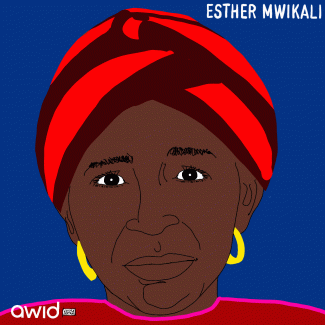
Esther Mwikali habitait dans le village de Mithini, dans le comté de Murang’a au Kenya. Activiste des droits fonciers, importante et appréciée, elle travaillait sur les abus à l’égard de squatters vivant sur des terres revendiquées par des magnats. Esther a participé à une enquête qui comprenait également des violations de droits fonciers à Makaya par de puissants individus.  

Suite à l’absence d’Esther lors d’une réunion de village, une équipe de patrouille est partie à sa recherche. Le 27 août 2019, deux jours après sa disparition, on retrouva son corps dans une ferme proche de sa propriété, montrant des signes de torture. Elle fut sauvagement assassinée. 

« Esther était reconnue pour son travail auprès des membres de la communauté, empêchant les évictions de terres revendiquées des magnats. Les activistes du coin n’ont aucun doute sur le lien entre son meurtre et les luttes constantes pour les terres dans la région. C’est un tragique rappel de la fréquence alarmante d’assassinats extrajudiciaires régulièrement menés au Kenya » - Global Wittness Report, juillet 2020

« Nous associons la mort de Mwikali aux luttes pour les terres par ici. Nous demandons au gouvernement de mener une enquête sur ce sujet au plus tôt. » - James Mburu, porte-parole des squatters

« Des mesures devraient être prises à l’égard des individus suspectés d’avoir menacé les squatters, et notamment la famille Mwikali. » - Alice Karanja, National Coalition of Human Rights Defenders (coalition nationale des défenseur·e·s des droits humains)

« L’impact de son travail et sa ténacité demeureront encore en vie pour les prochaines décennies au Kenya. CJGEA console avec les personnes endeuillées et appelle à la justice. » - Center for Justice and Governmental Action (Centre pour la justice et l’action gouvernementale, CJGEA) communiqué de presse, 13 septembre 2019

¿Qué es el Foro Internacional de AWID?

El Foro Internacional de AWID es una reunión de 2.000 líderes de derechos de las mujeres y activistas de todo el mundo. El Foro AWID es el evento recurrente más grande de su tipo, y cada Foro tiene lugar en un país diferente en el Sur global.


El Foro Internacional de AWID es un evento de la comunidad global y, al mismo tiempo, un espacio para una transformación personal radical. Es un encuentro único: el Foro reúne a los movimientos feministas, por los derechos de las mujeres, por la justicia de género, LBTQI+ y aliados, en toda nuestra diversidad y humanidad, para conectarnos, sanar y florecer.

Únete a nosotrxs en Bangkok, Tailandia, y de manera virtual, en diciembre de 2024.


¡Inscríbete ahora!