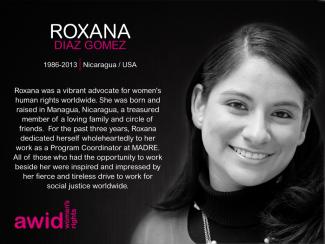
Roxana Diaz Gomez
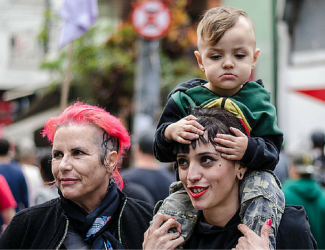
Over the past few years, a troubling new trend at the international human rights level is being observed, where discourses on ‘protecting the family’ are being employed to defend violations committed against family members, to bolster and justify impunity, and to restrict equal rights within and to family life.
The campaign to "Protect the Family" is driven by ultra-conservative efforts to impose "traditional" and patriarchal interpretations of the family, and to move rights out of the hands of family members and into the institution of ‘the family’.
Since 2014, a group of states have been operating as a bloc in human rights spaces under the name “Group of Friends of the Family”, and resolutions on “Protection of the Family” have been successfully passed every year since 2014.
This agenda has spread beyond the Human Rights Council. We have seen regressive language on “the family” being introduced at the Commission on the Status of Women, and attempts made to introduce it in negotiations on the Sustainable Development Goals.
AWID works with partners and allies to jointly resist “Protection of the Family” and other regressive agendas, and to uphold the universality of human rights.
In response to the increased influence of regressive actors in human rights spaces, AWID joined allies to form the Observatory on the Universality of Rights (OURs). OURs is a collaborative project that monitors, analyzes, and shares information on anti-rights initiatives like “Protection of the Family”.
Rights at Risk, the first OURs report, charts a map of the actors making up the global anti-rights lobby, identifies their key discourses and strategies, and the effect they are having on our human rights.
The report outlines “Protection of the Family” as an agenda that has fostered collaboration across a broad range of regressive actors at the UN. It describes it as: “a strategic framework that houses “multiple patriarchal and anti-rights positions, where the framework, in turn, aims to justify and institutionalize these positions.”
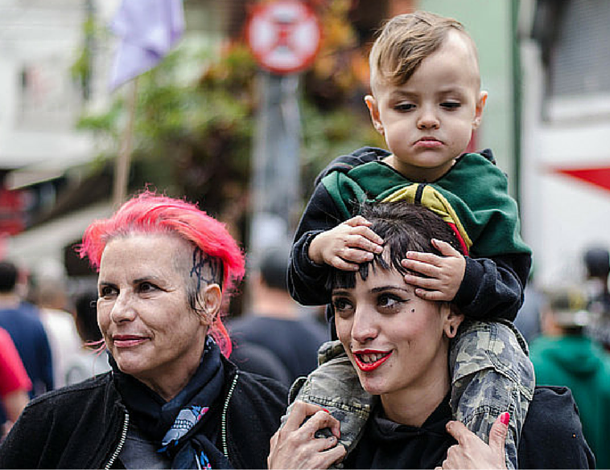
De fait, 38 % de nos membres sont ont moins de 30 ans.
Nous estimons que les jeunes féministes représentent le présent et l’avenir de la lutte pour les droits des femmes. Nous encourageons les jeunes femmes à devenir des leaders du mouvement et notre programme « Activisme des jeunes féministes » est transversal à tous les autres aspects de notre travail.
Dans le même temps, en définissant les jeunes féministes comme l'un de nos domaines prioritaires, nous apportons de nouvelles perspectives aux débats actuels et veillons à ce que les jeunes activistes puissent exprimer clairement leurs priorités et leurs inquiétudes.
En savoir plus sur le programme Activisme des jeunes féministes
เราทราบดีว่าการเดินทางครั้งแรกอาจจะน่าตื่นเต้นและบางครั้งอาจสร้างความกังวล จากการตระหนักถึงข้อท้าทายต่างๆต่อเรื่องนี้ เราจะจัดเตรียมข้อมูลมากขึ้นกว่านี้สำหรับการเดินทางมายังกรุงเทพฯเมื่อมีการเปิดรับลงทะเบียนในปีหน้า
For decades, feminist scholars and advocates have articulated important concepts related to gender to understand and challenge oppression and discrimination. Those concepts have now become the target of anti-rights actors who claim that oppressive patriarchal gender roles are “common sense”, strategically painting all other ideas, cultural norms, and forms of social life as a dangerous, conspirative ideology.
Read our Brief on “Gender Ideology” Narratives: A Threat To Human Rights
It would be better for you to seek legal advice and contact a women’s shelter or referral centre in your area.
The HotPeachPages is an online resource that offers links to women’s shelters around the world. AWID cannot vouch for the accuracy or quality of its listings, but it may be a good place to start if you don’t know of organizations in your area.
ECONOMIAS DE CUIDADOSAGROECOLOGÍA Y SOBERANÍA ALIMENTARIACOOPERATIVISMO FEMINISTASINDICALISMO FEMINISTA
En octubre de 2007 se creó el Women’s Working Group on Financing for Development [Grupo de Trabajo de Mujeres sobre Financiación para el Desarrollo, WWG on FfD en inglés], una alianza entre organizaciones y redes por los derechos de las mujeres cuyo objetivo es defender y promover avances en cuanto a igualdad de género, empoderamiento de las mujeres y derechos humanos en los procesos de la ONU relacionados con la FpD.
Tercer Diálogo de Alto Nivel sobre la Financiación para el Desarrollo, 23 al 25 de octubre de 2007
Día 1
Contenido relacionado
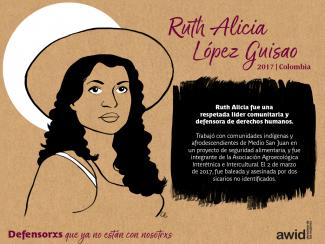
Front Line Defenders: Asesinato de la defensora de derechos humanos Ruth Alicia López Guisao
 |
 |
 |
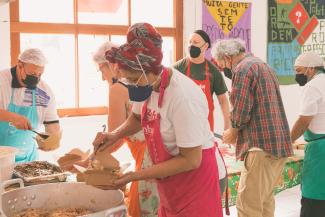
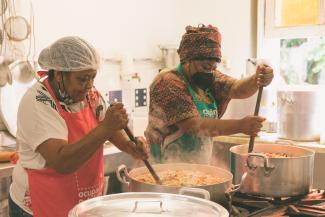
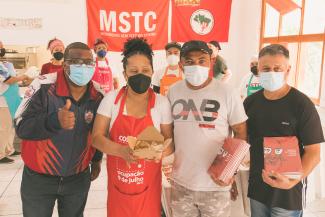 Femmes et collaborateurs à la cuisine de l'Ocupação 9 de Julho |
 |
(¡con invitades especiales!)
📅Martes 12 de marzo
🕒6:00 p. m. - 9:30 p. m. EST
🏢 Blue Gallery, 222 E 46th St, New York
Entrada solo con confirmación previa
.

Asociación de Mujeres Afrodescendientes del Norte del Cauca
Further drafting sessions on the Addis Ababa outcome document
Learn more from the CSO Hitchhiker’s Guide