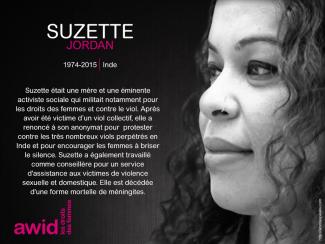
Suzette Jordan
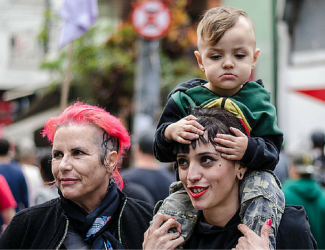
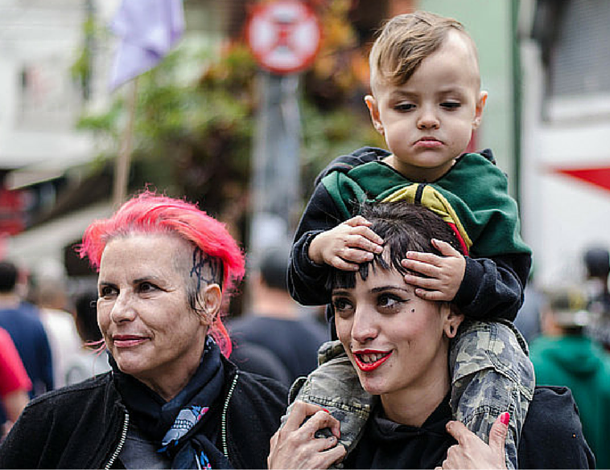
Over the past few years, a troubling new trend at the international human rights level is being observed, where discourses on ‘protecting the family’ are being employed to defend violations committed against family members, to bolster and justify impunity, and to restrict equal rights within and to family life.
The campaign to "Protect the Family" is driven by ultra-conservative efforts to impose "traditional" and patriarchal interpretations of the family, and to move rights out of the hands of family members and into the institution of ‘the family’.
Since 2014, a group of states have been operating as a bloc in human rights spaces under the name “Group of Friends of the Family”, and resolutions on “Protection of the Family” have been successfully passed every year since 2014.
This agenda has spread beyond the Human Rights Council. We have seen regressive language on “the family” being introduced at the Commission on the Status of Women, and attempts made to introduce it in negotiations on the Sustainable Development Goals.
AWID works with partners and allies to jointly resist “Protection of the Family” and other regressive agendas, and to uphold the universality of human rights.
In response to the increased influence of regressive actors in human rights spaces, AWID joined allies to form the Observatory on the Universality of Rights (OURs). OURs is a collaborative project that monitors, analyzes, and shares information on anti-rights initiatives like “Protection of the Family”.
Rights at Risk, the first OURs report, charts a map of the actors making up the global anti-rights lobby, identifies their key discourses and strategies, and the effect they are having on our human rights.
The report outlines “Protection of the Family” as an agenda that has fostered collaboration across a broad range of regressive actors at the UN. It describes it as: “a strategic framework that houses “multiple patriarchal and anti-rights positions, where the framework, in turn, aims to justify and institutionalize these positions.”
2-5 December, 2024, Bangkok, Thailand! We will gather at the Queen Sirikit National Convention Center (QSNCC) as well as virtually online.
Conoce el programa del Club de Cine Feminista de AWID «Holding up the Skies» [«Sosteniendo los cielos»], una serie de películas sobre realidades feministas de África y la Diáspora Africana, curada por Gabrielle Tesfaye.
Jaitun, souvent appelée « Amma », œuvrait à la protection des droits reproductifs des femmes et des filles en Inde. Son travail s’est particulièrement centré sur la défense des personnes pauvres et marginalisées, dont les filles et femmes dalits et musulmanes.
Jaitun était la force vitale derrière l’affaire Jaitun contre Janpura Maternity Home & Ors. Sa persévérance à obtenir justice a permis d’aboutir à un jugement sans précédent rendu par la Cour Suprême de Delhi. Le gouvernement indien a ainsi été tenu responsable de n’avoir pas rempli plusieurs de ses obligations juridiques, telles que les soins de santé reproductive et le droit à l’alimentation.
Sa fille Fatema, qui vivait sous le seuil de pauvreté, s’était vu refuser l’accès à des services de santé reproductive et avait dû accoucher en public, sous un arbre. Jaitun et Fatema étaient à cette époque sans domicile, car le gouvernement avait démoli leur maison dans le cadre d’un projet de réaménagement et de gentrification à New Delhi.
« Depuis, le jugement a fait jurisprudence pour de nombreux·euses avocat·e·s et activistes du monde entier, et notamment l’ancien Rapporteur spécial des Nations Unies sur le droit à la santé, non seulement comme source d’inspiration, mais comme solide tremplin pour obtenir la justice. » - Jameen Kaur
Jaitun a inspiré de très nombreuses autres femmes vivant dans la pauvreté à réclamer leurs droits. Elle s’est éteinte en 2017.
« Avec le décès de Jaitun, nous venons de perdre une inimitable guerrière pour la justice, mais son esprit de résistance perdure. » - Jameen Kaur
« Je n’ai, au cours de mes 18 années de plaidoyer pour les droits humains, jamais rencontré de femme qui m’ait tant inspirée et émue qu’Amma. Son courage féroce, son humour inimitable - nous la comparions à l’actrice de Bollywood Hema Malini -, ses colères lorsque l’on passait trop de temps sans venir la voir : elle nous disait, une étincelle dans le regard, « Tu as oublié Amma, Amma ne te parle plus », puis faisait volte-face de manière mélodramatique, pour se retourner en riant et tendre les bras pour une embrassade. Sa gentillesse, et en fin de compte son amour, sa joie d’aimer et sa volonté que chacun·e ait le droit de vivre dignement en faisaient un être à part . Elle me manque terriblement. » - Jameen Kaur
We’re beginning a new year--2023. COVID-19 continues to infect and re-infect many, many people around the world. We are witnessing the resurgence of right-wing and fascist governments, even in places we may not have expected like Sweden. War, armed conflict, and dramatic increase in militarization, militarism, and military spending are enabling the unbridled capital accumulation by the few, with participation of seemingly “strange” alliances locking arms, both visibly and invisibly, where economic and political elites of the Global North and Global South are benefitting beyond our wildest imagination. In the meanwhile, our people and the natural environment pay enormous costs and suffer all the expected and unexpected consequences.
As all of you and all of us at AWID know, feminists in multiple movements around the world are resisting and organizing against multiple faces of tyranny, creating alternative structures, implementing grassroots strategies, and building transnational alliances. We are generating joy, inspiring one another, singing, and dancing within and against the prevailing culture of killing and cynicism that seems to have engulfed so much of the world.
We--Staff and Board--of AWID are prepared and inspired more than ever before to face challenges by strengthening our relationships with our members and organizational partners, meeting and getting to know those who we are yet to meet and do what we do best: support the global feminist movements. Although we were sad facing the departures of our beloved former Co-Eds Cindy and Hakima, our wonderful new Co-EDS Faye and Inna along with committed and creative staff have embraced the moment that encapsulates both opportunities and threats.
For sure, all of us at AWID and all our movement folks know: As the Caribbean US poet and activist June Jordan wrote to the South African women activists during the height of the apartheid regime, “We are the ones we have been waiting for”!
Las inscripciones comenzarán a principios de 2024. Pronto anunciaremos la fecha exacta de inscripción y el valor correspondiente. La inscripción incluirá la participación en el Foro, así como almuerzo y refrigerios (el desayuno se proporcionará en los hoteles) y una cena en el lugar.
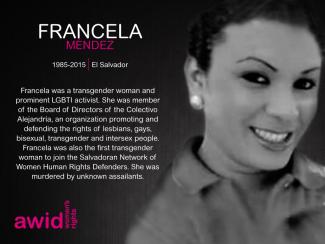
A complex and evolving network of anti-rights actors is exerting increasing influence in international spaces as well as domestic politics. Often backed by obscure funding, these actors build tactic alliances across issues, regions, and faiths to increase their impact.
✉️ By registration only. Register here
📅 Wednesday, March 12, 2025
🕒 6.30–8:00pm EST
🏢 Church Center of the United Nations, 777 United Nations Plaza, New York, NY 10017
🎙️Co-facilitated by: Inna Michaeli, Co-Executive Director
Organizer: Jass, Gender at Work, and Count Me In! Consortium
Rosa Candida Mayorga Muñoz was a Guatemalan social worker, union leader and labor rights defender. She was affectionately called Rosita and she inspired change.
In the 1980’s, Rosa became the first female member of the Executive Committee of the Union of Workers of the Institute of National Electrification (STINDE), a union she first joined to advocate for women’s labor rights. For her, this meant fighting for equal opportunities in a company where many women faced a discriminatory and violent system created by company authorities. Rosa had also suffered sexual harassment in her workplace, both by co-workers and managers. She was not to be kept quiet though.
Rosa continued fighting and was part of the effort to mould the struggle into a more specific form, that of the INDE-STINDE Collective Pact of Working conditions. This pact was a pioneer, the first in Guatemala to typify the concept of (sexual) harassment. It serves as a reference for the Guatemalan legislation on labor matters and is an encouragement for other unions.
“She had no fighting tools other than her own ideals... Many times she was intimidated, harassed to put the fight aside, but her courage generated the image of hope for grassroots unionists. Rosita created an image of respect, not only within her union, but before the authorities of the institution, before the women's movement; she was recognized as a pioneer of the trade union women's movement, in a space that had been more dominated by men.” - Maritza Velasquez, ATRAHDOM
Rosa passed away on 4 April 2018 at the age of 77.

We know feminists still need and deserve more and better resources! We have revised our funder database.
The Who Can Fund Me? Database is an easy-to-use, practical tool for movements looking for funders from philanthropic foundations, multilateral funders to women’s and feminist funds to support vital lifesaving efforts.
Notre fonds d'accès offrira un nombre limité de bourses pour financer la participation d'activistes qui ne pourraient autrement pas se rendre sur place, sachant qu’ils·elles ne bénéficient pas du soutien de bailleurs de fonds leur permettant de couvrir leur participation. Si d'autres possibilités s'offrent à vous, n'hésitez pas à les explorer. Nous ferons de notre mieux pour accorder un maximum de bourses, et échangerons plus d'informations concernant cette procédure et les modalités de candidature au début de l’année 2024.
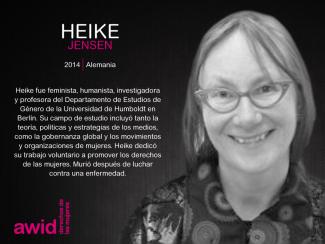
El informe más reciente del Observatorio sobre la Universalidad de los Derechos desarma discursos como los de la «ideología de género», el «genocidio prenatal» y el «imperialismo cultural». También investiga los flujos de fondos para CitizenGo, la Alliance Defending Freedom/ADF Internacional y otros grupos anti-derechos. En este informe también se puede encontrar un análisis de los sistemas regionales de derechos humanos así como de las estrategias exitosas y los logros feministas.

Filter your search by funders’ priority support areas that speak to your organizing efforts
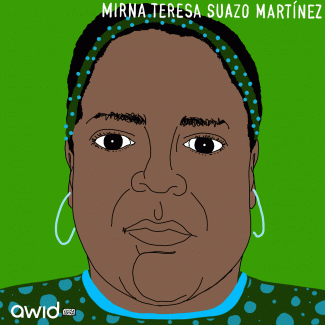
Mirna Teresa Suazo Martínez era parte de la comunidad garífuna (afrodescendiente e indígena) de Masca, en la costa norte del Caribe de Honduras. Era una líder comunitaria, y una ferviente defensora del territorio indígena, tierra que fue vulnerada cuando el Instituto Nacional Agrario de Honduras otorgó licencias territoriales a gente ajena a la comunidad.
Este acto deplorable derivó en repetidos acosos, abusos y violencia contra la comunidad de Masca, dado que los intereses económicos de diferentes grupos se unieron a los de las fuerzas armadas y las autoridades hondureñas. Según la Organización Fraternal Negra Hondureña (OFRANEH), la estrategia de estos grupos es expulsar y exterminar a la población indígena.
«Masca, la comunidad Garífuna localizada junto al valle del Cuyamel, forma parte de la zona de influencia de una de las supuestas ciudades modelo, situación que ha disparado las presiones territoriales a lo largo de la costa Garífuna.» - OFRANEH, 8 de septiembre de 2019
Mirna Teresa, presidenta del Patronato de la comunidad de Masca en Omoa, también rechazaba con firmeza la construcción de dos plantas hidroeléctricas sobre el río que lleva el mismo nombre que su comunidad, Masca.
«La comunidad garífuna atribuye el agravamiento de la situación en su región a su oposición contra la explotación turística, el monocultivo de palma africana y el narcotráfico, al mismo tiempo que busca construir una vida alternativa a través del cultivo del coco y de otros productos de autoconsumo.» - Voces Feministas, 10 de septiembre de 2019
Mirna Teresa fue asesinada el 8 de septiembre de 2019 en su restaurante «Champa los Gemelos».
Fue una de las seis defensoras garífunas asesinadas solo entre septiembre y octubre de 2019. Según OFRANEH, las autoridades no han investigado estos crímenes.
«En el caso de las comunidades Garífunas, buena parte de los homicidios están relacionados con la tenencia y el manejo de la tierra. No obstante, las rencillas entre el crimen organizado han tenido como resultado asesinatos, como los recientemente ocurridos en Santa Rosa de Aguán.» - OFRANEH, 8 de septiembre de 2019
Le Forum a été un espace clé pour le Mouvement des femmes autochtones (Indigenous Women’s Movement, IWM) dans son rapport au féminisme. Aux Forums de l’AWID, elles ont appliqué la même stratégie que celle utilisée pour les Nations Unies. Au cours de ce processus, les deux mouvements ont été transformés : de nouvelles voix et questions ont émergé au sein de l’IWM, et les féministes ont commencé à changer leurs discours et leurs pratiques autour des droits fonciers et de la spiritualité, elles ont mieux compris les droits collectifs et ont inclus l’IWM dans leurs événements et leurs programmes. Mónica Alemán et María Manuela Sequeira, de l’IWM, nous ont raconté cette histoire.
We will reconnect with past partners, to ensure past efforts are honored. If your contact information has changed since the last Forum process, please update us so that we may reach you.