Flickr/Leonardo Veras (CC BY 2.0)

Special Focus

AWID is an international, feminist, membership organisation committed to achieving gender equality, sustainable development and women’s human rights

Protection of the Family

The Issue

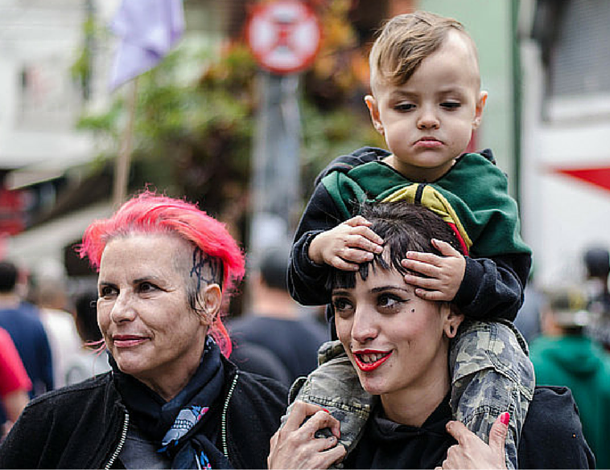
Over the past few years, a troubling new trend at the international human rights level is being observed, where discourses on ‘protecting the family’ are being employed to defend violations committed against family members, to bolster and justify impunity, and to restrict equal rights within and to family life.

The campaign to "Protect the Family" is driven by ultra-conservative efforts to impose "traditional" and patriarchal interpretations of the family, and to move rights out of the hands of family members and into the institution of ‘the family’.

“Protection of the Family” efforts stem from:

  • rising traditionalism,
  • rising cultural, social and religious conservatism and
  • sentiment hostile to women’s human rights, sexual rights, child rights and the rights of persons with non-normative gender identities and sexual orientations.

Since 2014, a group of states have been operating as a bloc in human rights spaces under the name “Group of Friends of the Family”, and resolutions on “Protection of the Family” have been successfully passed every year since 2014.

This agenda has spread beyond the Human Rights Council. We have seen regressive language on “the family” being introduced at the Commission on the Status of Women, and attempts made to introduce it in negotiations on the Sustainable Development Goals.


Our Approach

AWID works with partners and allies to jointly resist “Protection of the Family” and other regressive agendas, and to uphold the universality of human rights.

In response to the increased influence of regressive actors in human rights spaces, AWID joined allies to form the Observatory on the Universality of Rights (OURs).  OURs is a collaborative project that monitors, analyzes, and shares information on anti-rights initiatives like  “Protection of the Family”.

Rights at Risk, the first OURs report, charts a map of the actors making up the global anti-rights lobby, identifies their key discourses and strategies, and the effect they are having on our human rights.   

The report outlines “Protection of the Family” as an agenda that has fostered collaboration across a broad range of regressive actors at the UN.  It describes it as: “a strategic framework that houses “multiple patriarchal and anti-rights positions, where the framework, in turn, aims to justify and institutionalize these positions.”


Related Content

FRMag - Ghosts Of Girlhood

Les fantômes des jeunes filles

par Akua Antiwiwaa

J’ai une vieille photo, floue, devant les yeux. J’y suis vêtue tout de blanc, des perles nacrées attachées à mes cheveux, collés contre mes oreilles, à celles qui pendent de mes poignets. (...)

Lire

illustration : « Cultura Negra » (“Culture noire”), par Astrid Milena González Quintero >

Sylvia Robinson

"La vida se trata ... de vivir en alegría – despertarse con objetivos, sentir tu propia energía creativa, responder a tu llamada." - Sylvia Robinson

Sylvia Robinson, una incansable organizadora y líder comunitaria, fue la fundadora y directora ejecutiva de Emergence Community Arts Collective [Colectivo de Artes Comunitarias de Emergencia] (ECAC, por sus siglas en inglés ), en Washington DC.

Este centro y espacio de performance combina la educación, el compromiso cívico, las artes, los servicios sociales y espirituales y las prácticas ambientales sostenibles. Sylvia lo concibió como un hogar donde " hubiera equilibrio y sinergia con las actividades que la gente necesitaba para sostener la vida".

También fue una de lxs co-fundadorxs del Georgia Avenue Community Development Taskforce [Grupo de Trabajo de Desarrollo Comunitario de la Avenida Georgia], un grupo vecinal que trabaja por la justicia social y la organización de la comunidad en el noroeste de DC, para asegurarse de que esta tenga una voz en la reurbanización y gentrificación del área.

"Estamos pidiendo viviendas asequibles. Estamos pidiendo que los pequeños negocios que han estado aquí desde siempre no sean aniquilados por nuevos comercios. Estamos pidiendo espacios verdes y espacios para que la gente se pueda reunir y socializar. Estamos pidiendo mejoras en el paisaje urbano – mejores calles y mejor iluminación en los tramos de carretera." - Sylvia Robinson sobre el Grupo de Trabajo

Antes de convertirse en organizadora y después de recibir un título en informática, Sylvia trabajó en sistemas de control de tráfico aéreo por más de una década. Después se dedicó al asesoramiento en materia de drogas y alcohol, a través de lo cual se involucró cada vez más en el trabajo comunitario.

"Involucrarme con la comunidad era mi vocación".  - Sylvia Robinson

Sylvia nació en Washington D.C. el 14 de agosto de 1961, y falleció el 18 de septiembre de 2017, después de una batalla contra el cáncer.

"El espíritu y el legado de Sylvia seguirán inspirando a esta comunidad durante muchos años." - ECAC
I am new to this field and there are lots of terms that I find confusing. Can you help?

Snippet Forum Quoate Jac s m Kee, Malaysia (FR)

Il n'y a rien de tel que d'être dans un espace partagé, d'échanger des énergies corporelles, de regarder dans les yeux de quelqu'un et de tisser des liens, de voir le monde et de faire quelque chose ensemble. Des événements comme le Forum sont parmi les plus forts du mouvement féministe mondial...
- Jac s m Kee, Malaisie

Snippet - WCFM Content Body - EN

Feminist and gender justice movements continue to be chronically underfunded in the face of global funding cuts and freezes, and rising fascisms. Growing resource scarcity has impacted the most vulnerable communities, particularly in Global South regions with progressively closing civic spaces. 


In response to these challenges, we collaborated with Impactmapper to co-create a comprehensive resource that combines two powerful tools to strengthen the funding ecosystem for social justice movements.

Film club - Finding Sally

Finding Sally (2020) Amharic | English with English subtitles

A personal investigation into the mysterious life of the director's Aunt Sally, an Ethiopian aristocrat-turned-communist-rebel who disappeared after the revolution that lead to the overthrow of Emperor Haile Selassie.


Live Conversation with Tamara Dawit, the filmmaker of “Finding Sally

June 23 at 12:30pm EST on IG Live

Maritza Quiroz Leiva

Maritza Quiroz Leiva était une activiste sociale, leader communautaire et défenseure des droits des femmes afro-colombienne. Comptant parmi les 7,7 millions de Colombien·ne·s déplacé·e·s internes par 50 années de conflit armé, Maritza a dédié son travail de plaidoyer au soutien des droits des autres, particulièrement au sein de la communauté afro-colombienne ayant souffert deviolations et déplacements similaires.

Maritza était responsable adjointe du Conseil de victimes  Santa Marta et une voix importante pour celles et ceux qui défendaient la justice dans leur communauté, réclamant réparation pour la torture, les enlèvements, les déplacements et les violences sexuelles subis par les victimes tout au long du conflit armé. Elle aégalement été active au sein du mouvement pour la redistribution des terres et la justice foncière en Colombie. 

Le 5 janvier 2019, Maritza a été tuée par deux personnes armées qui se sont introduites à son domicile. Elle avait 60 ans. 

Maritza s’ajoute ainsi aux cinq autres activistes et leaders colombien·ne·s assassiné·e·s au cours de la seule première semaine de 2019. Un total de 107 défenseur·e·s des droits humains ont été tué·e·s cette année-là dans le pays. 
 

Estoy viviendo una situación de violencia en una o más de mis relaciones, ¿AWID puede abogar en mi nombre?

AWID no es una organización que brinde servicios directos ni que defienda casos individuales

Te recomendamos buscar asesoría legal y ponerte en contacto con un refugio para mujeres o un centro de referencia en tu área.

Las "HotPeachPages" son un recurso en línea que ofrece enlaces a albergues para mujeres en todo el mundo. AWID no puede dar fe de la exactitud o la calidad de las instituciones que aparecen en esos listados, pero podría ser un buen lugar por donde empezar si no conoces organizaciones en tu zona.

Why Bangkok?

Each Forum takes place in a different region, and it is time for the AWID Forum to come back to Asia! We visited many countries in the region, consulted feminist movements, and conducted detailed assessments of logistics, accessibility, safety, visas and more. Eventually, the AWID Board enthusiastically approved Bangkok, Thailand, as the best option. We are excited to come back to Bangkok, where we held the AWID Forum in 2005.

Snippet2 - WCFM Registration status - EN

Clipboard icon

Registration status:

Search for funders based on their requirements for groups to be registered.

Snippet example from training video FRENCH

Big banner heading FRENCH

some text some text some text some text some text some text some text some text some text some text some text some text 

Call to action


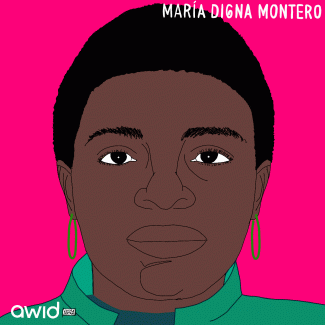
María Digna Montero

María Digna Montero was a Garifuna (Afro-descendent and indigenous) land defender and a member of the National Black Fraternal Organization of Honduras (OFRANEH), a grassroots organization working to protect the Garifuna communities, their ancestral rights, culture, resources and territory.

María also taught in the local school and was a member of the OFRANEH Intercultural Bilingual Education working group.

On the Day of Indigenous Resistance, October 12, 2019, unknown assailants shot María multiple times in the backyard of her house.  

She was one of six Garifuna women defenders murdered between September and October 2019 and according to OFRANEH, there was no investigation by the authorities into these crimes. In an official statement, the organization also highlighted the connection between the violence against Garifuna leaders and the increase in extractive industries which exploit natural resources in their communities calling this violence part of a “strategy of intimidation and systematic expulsion” by the Honduran State. 

“The heightened tension and growing risks to the security and human rights of the leaders in the communities and ancestral territories is a product of the dispossession, displacement and criminalization of the communities and of the extractive mega projects promoted by the State together with the national and international corporations.” - OFRANEH communique, October 12, 2019

2007: la participation de la société civile est renforcée par la création du WWG sur le FdD

Le Groupe de travail des femmes sur le financement du développement   (Women's Working Group on Financing for Development – WWG on FfD) , une alliance composée d’organisations et de réseaux de défense des droits des femmes,  a été créée en octobre 2007 pour mener, dans le cadre des processus des Nations Unies sur le FdD, des activités de plaidoyer en faveur de l’égalité de genre, de l’autonomisation des femmes et des droits humains.

Troisième Dialogue de haut niveau sur le financement du développement, 23-25 octobre 2007

  • Le troisième Dialogue de haut niveau sur le financement du développement a été l’occasion d’un regain de participation de la société civile. En plus des six tables rondes, des audiences ont été consacrées à la société civile et au secteur privé.
  • Lors de la séance plénière, l’AWID a prononcé une déclaration au nom de la société civile  appelant les gouvernements à accorder une attention plus soutenue au rôle important en tant qu’agentes de développement que jouent les organisations de défense des droits des femmes et à la nécessité de favoriser la mise en œuvre de nouveaux mécanismes de financement destinés aux femmes dans les pays en développement et dans les pays les moins avancés. Cette déclaration exhortait les gouvernements à apporter un soutien plus important à l’architecture de genre des Nations Unies, de façon à ce que le système,  dans son ensemble,  puisse progresser dans son engagement en faveur de l’égalité des genres, de l’autonomisation des femmes et des droits humains, en ce qui concerne notamment  les droits économiques, sociaux, culturels et environnementaux de toutes les personnes.

¿Cuánto cuesta la participación?

Por favor, calcula los costos de viaje a Bangkok, alojamiento y viáticos, visado, cualquier necesidad de accesibilidad y gastos incidentales, además de la tarifa de inscripción que se anunciará próximamente. Los hoteles en la zona de Sukhumvit en Bangkok tienen un rango de precios de USD$50 a $200 por noche en ocupación doble.

Lxs afiliadxs de AWID reciben un descuento al registrarse, por lo tanto, si aún no te has sumado a la membresía, te invitamos a considerar unirte y formar parte de nuestra comunidad feminista global.

sinppet-annual-budget-size-4-4

Key factors impacting 
budget size

→Region
→Level of organizing
→Registration status
→Priorities and Agendas


Read and download the insights here

ours chapter 5

Chapter 5

Anti-Rights Tactics, Strategies, and Impacts

Anti-rights actors adopt a double strategy. As well as launching outright attacks on the multilateral system, anti-rights actors also undermine human rights from within. Anti-rights actors engage with the aim of co-opting processes, entrenching regressive norms, and undermining accountability.

Read more

Nilcéa Freire

Nilcéa Freire fue una activista feminista, política y académica brasileña. Como perseverante defensora de los derechos de las mujeres y de las minorías subrepresentadas de su país, su vida y su trabajo acumularon una larga historia de luchas y victorias.

«Mientras se resiste, tenemos que empujar para avanzar y los avances que vamos a poder lograr en este momento, a mi juicio, serán a través de la organización estupenda que las jóvenes mujeres blancas, pero sobre todo, las mujeres negras, están haciendo en todas las capitales, y las grandes ciudades de Brasil.» - Nilcéa Freire

En 1999, se convirtió en la primera mujer Rectora de la Universidad del Estado de Río de Janeiro (UERJ). Desde ese puesto, impulsó la implementación de la primera política de acción afirmativa para estudiantes que se graduaban de escuelas públicas, que exigía un cupo específico para estudiantes negrxs de sectores de bajos ingresos, sistema adoptado por decenas de otras universidades públicas.

Unos años más tarde, Nilcéa encabezó la Secretaría Especial de Políticas para las Mujeres del gobierno del ex-presidente Luiz Inácio Lula da Silva. Desde esta función, lideró la Primera Conferencia Nacional de Mujeres Brasileñas, en la que participaron más de doce mil mujeres de todo el país. El resultado de este trabajo colectivo fue incorporado en el Plan Nacional de Políticas para las Mujeres.

Su compromiso con las mujeres y las personas afrobrasileñas e indígenas se reflejó también en su trabajo de promoción de sus derechos, a través de iniciativas de la Fundación Ford en Brasil, de la cual fue Directora Regional.

La activista feminista Manoela Miklos describió a Nilcéa como «una mujer sin igual».

Nilcéa falleció en Río de Janeiro el 29 de diciembre de 2019 a los 66 años, víctima de un cáncer.


 «No tengo palabras ante la noticia de la muerte de la querida Nilcéa Freire. Es demasiado triste saber que partió tan pronto. Siempre formó parte de las filas de quienes no aceptan las injusticias del mundo. Fue Ministra de las Mujeres, una activista, siempre activa en la causa feminista. ¡La extrañaremos mucho!» - Jandira Feghali, Diputada Federal

La feminista brasileña Nilcéa Freire nos dice por qué es importante solidarizarse con Brasil