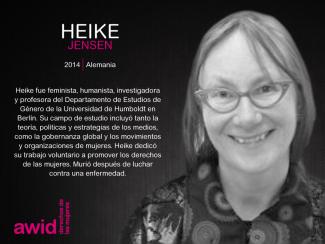
Heike Jensen
WHRDs are self-identified women and lesbian, bisexual, transgender, queer and intersex (LBTQI) people and others who defend rights and are subject to gender-specific risks and threats due to their human rights work and/or as a direct consequence of their gender identity or sexual orientation.
WHRDs are subject to systematic violence and discrimination due to their identities and unyielding struggles for rights, equality and justice.
The WHRD Program collaborates with international and regional partners as well as the AWID membership to raise awareness about these risks and threats, advocate for feminist and holistic measures of protection and safety, and actively promote a culture of self-care and collective well being in our movements.
WHRDs are exposed to the same types of risks that all other defenders who defend human rights, communities, and the environment face. However, they are also exposed to gender-based violence and gender-specific risks because they challenge existing gender norms within their communities and societies.
We work collaboratively with international and regional networks and our membership
We aim to contribute to a safer world for WHRDs, their families and communities. We believe that action for rights and justice should not put WHRDs at risk; it should be appreciated and celebrated.
Promoting collaboration and coordination among human rights and women’s rights organizations at the international level to strengthen responses concerning safety and wellbeing of WHRDs.
Supporting regional networks of WHRDs and their organizations, such as the Mesoamerican Initiative for WHRDs and the WHRD Middle East and North Africa Coalition, in promoting and strengthening collective action for protection - emphasizing the establishment of solidarity and protection networks, the promotion of self-care, and advocacy and mobilization for the safety of WHRDs;
Increasing the visibility and recognition of WHRDs and their struggles, as well as the risks that they encounter by documenting the attacks that they face, and researching, producing, and disseminating information on their struggles, strategies, and challenges:
Mobilizing urgent responses of international solidarity for WHRDs at risk through our international and regional networks, and our active membership.
Yes! Please read the Call for Activities and apply here. Deadline is 15 January 2024

Filter your search by funders’ priority support areas that speak to your organizing efforts
Stephanie Bracken est une féministe qui se consacre à la construction et au soutien de systèmes solides qui répondent aux besoins du moment et des personnes qui interagissent avec eux, tout en servant les principes de justice. Elle est titulaire d'un master en droits humains de l'Université de Sydney et d'une licence en études de genre, histoire et philosophie de l'Université McGill. Elle possède une expérience de travail avec des organisations féministes et de justice sociale dans les domaines du suivi, de l'évaluation et de l'apprentissage, de la planification stratégique du travail, de la gouvernance, de la gestion de projet et de la création de systèmes et de processus opérationnels. Stephanie est basée à Tiohtià:ke/Montréal, où elle aime chanter avec d’autres, camper, pratiquer les arts textiles et passer du temps avec ses enfants et sa communauté.
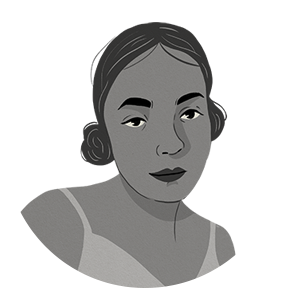
زهور محمود، منسّقة التواصل لمجلّة كحل. هي كاتبة ومحرّرة ودي جاي مقيمة في برلين. تركّز في عملها على مقاربات نقدية بين الثقافة والتكنولوجيا والسياسة، ودورة حياتهم في العالم الرقمي.
« La vie... c’est vivre dans la joie, se lever avec un but, sentir son énergie créative, répondre à son appel. » – Sylvia Robinson
Cet espace de performances créatrices foisonnantes rassemblait des initiatives d’éducation, d’engagement citoyen, d’arts, de services sociaux et spirituels et de pratiques de développement durable. Sylvia considérait cet endroit comme une maison où « il existe un équilibre et une synergie avec les activités dont les gens ont besoin pour entretenir la vie ».
Elle comptait également parmi les membres fondateur·trice·s du Georgia Avenue Community Development Taskforce, dans le nord-ouest de la capitale, un groupe de quartier actif dans le domaine de la justice sociale et de l’organisation qui veillait à ce que la communauté ait son mot à dire dans le redéveloppement et l’embourgeoisement du secteur.
« Nous demandons des logements abordables. Nous demandons que les petits commerces qui sont ici depuis longtemps ne soient pas balayés par de nouvelles enseignes. Nous demandons des espaces verts et des lieux où les gens peuvent se rencontrer. Nous demandons à ce que le paysage urbain soit amélioré, avec des rues en meilleur état et des éclairages publics. » – Sylvia Robinson, à propos du travail de la Taskforce
Avant de devenir organisatrice, et après avoir obtenu son diplôme en informatique, Sylvia avait travaillé dans le domaine des systèmes de contrôle du trafic aérien pendant plus d’une décennie. Elle s’est ensuite orientée vers le conseil relatif à la consommation d’alcool et de drogue, s’impliquant davantage dans le travail communautaire.
« Cette implication dans la communauté, c’était ma vocation. » – Sylvia Robinson
Née à Washington D.C. le 14 août 1961, Sylvia est décédée le 18 septembre 2017 après avoir lutté contre le cancer.
« L’esprit et l’héritage de Sylvia continueront d’inspirer cette communauté pour de nombreuses années. » – ECAC

Please refer to the Call for Activities for this information, including the section “What you need to know”.
ÉCONOMIES DES SOINS AGROÉCOLOGIE ET SOUVERAINETÉ ALIMENTAIRECOOPÉRATIVISME FÉMINISTESYNDICALISME FÉMINISTE
Kasia has been supporting the work of feminist and social justice movements for the last 15 years. Before joining AWID, Kasia used to lead policy and advocacy for ActionAid and Amnesty International while organizing with feminists and social justice groups in Poland for access to abortion and against violence on the European borders. Kasia is passionate about resourcing feminist organizing in all their boldness, richness and diversity. She shares her time between Warsaw and her DIY community village in the forest. She loves saunas and is crazy about her dog named Wooly.

Mariam Mekiwi es una cineasta y fotógrafa de Alejandría. Vive y trabaja en Berlín.
“I’m no adherent to the concept of the ‘Third World’. I make films so that people - no matter what race or color they are - can understand them. For me there are only exploiters and the exploited, that’s all. To make a film means to take a position.” - Sarah Maldoror
Her groundbreaking film and “revolutionary picture” Sambizanga (1972) follows Angolan militants’ anti-colonial liberation struggle, as well as captures a woman’s perspective in a historical moment she finds herself in.
“For many African filmmakers, cinema is a revolutionary tool, a political education to raise consciousness. It is inscribed in the evolution of a Third Cinema striving to decolonize thought and advocate radical changes in society.” - Sarah Maldoror
Throughout her career, Sarah - together with a number of African and Caribbean artists - co-founded (1956) the first Black theatre troupe in France. She made around 40 films, comprising important documentaries that amplify the lives and work of black artists, including her friend and poet Aimé Césaire who wrote to her:
“To Sarah Maldo
who, a camera in hand,
fights oppression, alienation
and flies in the face
of human bullshit.”
Sarah was also committed to giving African women more ownership of the filmmaking process. In an interview, she pointed out:
"African women must be everywhere. They must be in the images, behind the camera, in the editing room and involved in every stage of the making of a film. They must be the ones to talk about their problems."
Sarah left an incredibly powerful legacy to be carried forward.
Born 19 July 1929, Sarah passed away on 13 April 2020 from complications of the coronavirus.
Watch Sambizanga and read a film review in a 1973 New York Times article

En 2023, le budget annuel médian des organisations féministes et de défense des droits des femmes était de 22 000 USD. Cette médiane masque de profondes inégalités : quelques groupes accèdent à des ressources considérables, tandis que la grande majorité survit avec des budgets très limités.
Un examen plus attentif des budgets réels révèle une immense diversité et une grande disparité dans les revenus.
Explorez les données relatives à la taille des budgets féministes
Faye es una apasionada feminista panafricana, que trabaja activamente en diversos movimientos por los derechos de las mujeres, la justicia racial, los derechos de las personas migrantes y los derechos laborales, y por la justicia ambiental. Su activismo se basa en el legado de la lucha contra el apartheid en Sudáfrica y las consecuencias de la era del apartheid en Zimbabue.
En 2019, Faye se sumó a AWID como Directora de Finanzas, Operaciones y Desarrollo y dedicó sus esfuerzos a garantizar que AWID defienda los principios y valores feministas en todas sus operaciones. Aporta más de 20 años de experiencia en liderazgo y estrategias feministas y en todos los aspectos de las finanzas y el desarrollo institucional.
Faye es una comprometida integrante de la Junta de Urgent Action Fund Africa (UAF- Fondo de Acción Urgente África) y otras organizaciones por los derechos de las mujeres. Anteriormente, desempeñó funciones de Directora de Finanzas y Operaciones en Paediatric Adolescent Treatment for Africa (Tratamiento Pediátrico y Adolescente para África) y JASS - Just Associates Inc., en Sudáfrica. Asimismo, ocupó roles directivos en International Computer Driving Licence (ICDL), en África central y meridional. Posee una licenciatura en Ciencias Contables de la Universidad de Sudáfrica y forma parte del Instituto Sudafricano de Gestión Contable Empresarial.
تصوير: مريم مكيوي
تصميم وعرض الملابس: النمرة
María Digna Montero fue una garífuna (afrodescendiente e indígena) defensora de la tierra e integrante de la Organización Fraternal Negra Hondureña (OFRANEH), una organización de base que trabaja para proteger a las comunidades garífunas, sus derechos ancestrales, su cultura, sus recursos y su territorio.
María también enseñaba en la escuela local, e integraba el grupo de trabajo de Educación Bilingüe Intercultural de OFRANEH.
El 12 de octubre (Día de la Resistencia Indígena) de 2019, sujetos desconocidos le dispararon a María varias veces en el patio de su casa.
Fue una de las seis defensoras garífunas asesinadas entre septiembre y octubre de 2019 y, según OFRANEH, no hubo ninguna investigación de estos crímenes por parte de las autoridades. En un comunicado oficial, la organización también subrayó la conexión entre la violencia contra líderes garífunas y el incremento de las industrias extractivas que explotan los recursos naturales en sus comunidades, y definieron esta violencia como «parte de una estrategia de intimidación y de expulsión sistemática por parte del Estado de Honduras.»
«El recrudecimiento de la tensión y de los riesgos crecientes para la seguridad y derechos humanos de las lideresas en las comunidades y territorios ancestrales es producto del despojo, desplazamiento y criminalización hacia las comunidades, y de los mega proyectos extractivos que impulsa el Estado junto con las corporaciones nacionales e internacionales.» - Pronunciamiento de OFRANEH, 13 de octubre de 2019
Get started with these resources.
COP30 Political Education Toolbox Play the Climate Justice Organizing Deckgame
Read the Feminist Economic Alternatives Brief Download the Climate Justice Zine
Juhi est passionnée de technologie, titulaire d'une licence en génie informatique de l'Université Technologique du Gujarat et d'une formation de troisième cycle en télécommunications sans fil et en gestion de projet du Humber College. Passionnée par la résolution de problèmes et aimant garder une longueur d'avance dans un paysage technologique en constante évolution, Juhi s'est retrouvée à naviguer dans divers secteurs en tant que technicienne informatique. Grâce à l'environnement stimulant de la School Board, Juhi a eu l'occasion d'appliquer ses compétences techniques dans divers contextes, relevant toujours de nouveaux défis avec enthousiasme. Au-delà du code et des circuits, Juhi aime les aventures de la vie. Explorer de nouveaux lieux et cultures constitue pour elle une bouffée d’air frais. Qu'il s'agisse de découvrir des trésors cachés de la ville, d'essayer des cuisines exotiques ou de se lancer dans des sports d'aventure palpitants, Juhi est toujours partante pour de nouvelles expériences.