.

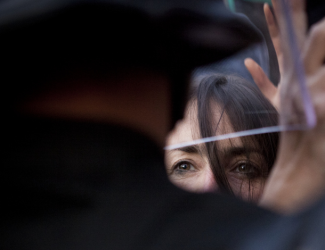
WHRDs are self-identified women and lesbian, bisexual, transgender, queer and intersex (LBTQI) people and others who defend rights and are subject to gender-specific risks and threats due to their human rights work and/or as a direct consequence of their gender identity or sexual orientation.
WHRDs are subject to systematic violence and discrimination due to their identities and unyielding struggles for rights, equality and justice.
The WHRD Program collaborates with international and regional partners as well as the AWID membership to raise awareness about these risks and threats, advocate for feminist and holistic measures of protection and safety, and actively promote a culture of self-care and collective well being in our movements.
WHRDs are exposed to the same types of risks that all other defenders who defend human rights, communities, and the environment face. However, they are also exposed to gender-based violence and gender-specific risks because they challenge existing gender norms within their communities and societies.
We work collaboratively with international and regional networks and our membership
We aim to contribute to a safer world for WHRDs, their families and communities. We believe that action for rights and justice should not put WHRDs at risk; it should be appreciated and celebrated.
Promoting collaboration and coordination among human rights and women’s rights organizations at the international level to strengthen responses concerning safety and wellbeing of WHRDs.
Supporting regional networks of WHRDs and their organizations, such as the Mesoamerican Initiative for WHRDs and the WHRD Middle East and North Africa Coalition, in promoting and strengthening collective action for protection - emphasizing the establishment of solidarity and protection networks, the promotion of self-care, and advocacy and mobilization for the safety of WHRDs;
Increasing the visibility and recognition of WHRDs and their struggles, as well as the risks that they encounter by documenting the attacks that they face, and researching, producing, and disseminating information on their struggles, strategies, and challenges:
Mobilizing urgent responses of international solidarity for WHRDs at risk through our international and regional networks, and our active membership.
El objetivo fundamental de la encuesta ¿Dónde está el dinero? es arrojar luz sobre la situación financiera de la diversidad de movimientos feministas, por los derechos de las mujeres, la justicia social, las personas LBTQI+ y demás movimientos aliados de todo el mundo y, sobre la base de dicha información, reforzar las razones fundadas para movilizar más y mejores fondos y transferir el poder a los movimientos feministas.
.
Non, nous souhaitons recevoir une seule participation par groupe.
Contenu lié
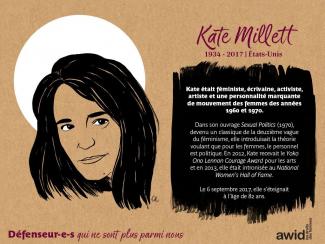
TV5Monde: Kate Millett, décès d'une féministe qui combattait avec caresses et plaisir
Escucha esta historia aquí:
Yes, the survey can be accessed using a smartphone.
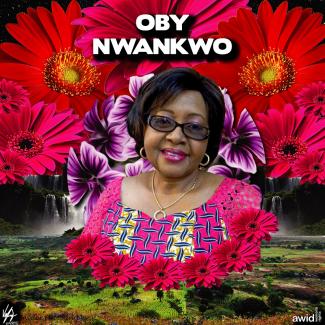
With a legal career spanning more than 30 years, Oby was known across Africa and around the world as a champion for gender justice and human rights.
She founded and served as Executive Director of the Civil Resource Development and Documentation Centre (CIRDDOC), a Nigerian NGO which sponsors trainings and network-building activities for members of civil society, parliamentarians and other key stakeholders to promote human rights, good governance and access to justice and rule of law.
Oby is remembered fondly by activists in Nigeria as an “extraordinary activist who displayed energy and passion towards the fight for gender equality and gender justice in Nigeria and across Africa.”
Sí, invitamos a compartir más impresiones acerca de alguna cuestión que sea de importancia para ti respondiendo a las preguntas abiertas al término de la encuesta.
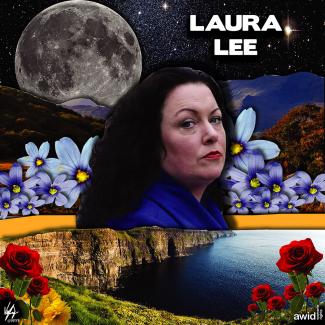
Laura fue una abogada y líder activista que luchó valientemente por la descriminalización del trabajo sexual en Irlanda.
Es recordada como «una combatiente por la libertad de lxs trabajadorxs sexuales, una feminista, una madre para su hija y una amiga necesaria para mucha gente».
Laura promovió el reconocimiento de las personas de la industria del sexo como trabajadorxs merecedorxs de derechos. Presentó demandas por la descriminalización, e inició una revisión judicial en la Corte Suprema de Belfast respecto de las provisiones que criminalizan la compra de servicios sexuales. Declaró que su intención era llevar el caso a la Corte Europea de Derechos Humanos.
Listen to the story here:

Les données seront traitées à des fins statistiques, pour mettre en lumière l’état du financement de l’organisation des mouvements féministes dans le monde entier, et ne seront présentées que sous forme agrégée. L’AWID ne publiera pas d’informations relatives à une organisation donnée ni ne divulguera d’informations qui permettraient d’identifier une organisation par le biais de son emplacement ou de caractéristiques qui lui sont propres, sans son accord explicite.
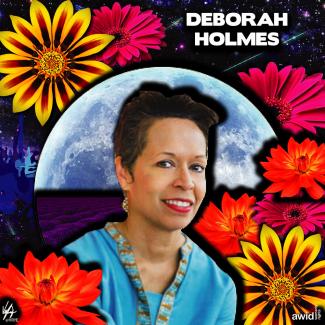
Jusqu’à son décès, à la suite d’une lutte brève mais agressive contre le cancer, Deborah était la directrice de la communication et de la mobilisation au Women’s funding network (le réseau de financement des femmes), WFN.
Entre 2008 et 2017, elle avait également travaillé auprès du Fonds mondial pour les femmes. Deborah était extrêmement appréciée et respectée par le conseil d'administration, l’équipe et les partenaires du Fonds mondial pour les femmes.
Kavita Ramdas, ex-PDG a déclaré, à juste titre, que Deborah était « la combinaison unique d’un être mêlant chaleur, générosité, intelligence et style, avec un engagement passionné pour faire fusionner la beauté et la justice. Elle avait compris le pouvoir des histoires. Le pouvoir de la voix des femmes. Le pouvoir de l'expérience vécue. Le pouvoir de renaître de ses cendres et de dire aux autres que c'était possible. Et nous continuons à nous relever. »
Musimbi Kanyoro, l'actuelle PDG du Fonds mondial pour les femmes, a ajouté: « Nous avons perdu une sœur et sa vie illumine des valeurs qui nous unissent et nous inspirent tou-te-s. Alors que nous sommes tou-te-s réuni-e-s pour pleurer le décès de Deborah, souvenons-nous et célébrons sa vie remarquable, audacieuse et passionnée. »
Una identidad de género latinoamericana
El término travesti se trata de una identidad de género latinoamericana sin equivalente en otros idiomas, y exclusivamente femenina. Es una persona designada varón al nacer que se identifica como mujer, y siempre deben abordarse con el pronombre “ella”.
Travesti no es solo una identidad de género ubicada fuera del binarismo de género, también es una identidad cultural arraigada en los movimientos latinoamericanos. El término inicialmente fue peyorativo, pero luego fue re-apropiado como símbolo de resistencia y dignidad. Toda travesti es trans porque no se identifica con el género asignado al nacer, sin embargo no toda travesti se considera mujer trans, ya que travesti ya es una identidad de género en sí misma.
Referencia: Berkins, Lohana. (2006). Travestis: una Identidad Política . Trabajo presentado en el Panel Sexualidades contemporáneas en las VIII Jornadas Nacionales de Historia de las Mujeres/ III Congreso Iberoamericano de Estudios de Género Diferencia Desigualdad. Construirnos en la diversidad, Villa Giardino, Córdoba, 25 al 28 de octubre de 2006.
