WHRDs are self-identified women and lesbian, bisexual, transgender, queer and intersex (LBTQI) people and others who defend rights and are subject to gender-specific risks and threats due to their human rights work and/or as a direct consequence of their gender identity or sexual orientation.
WHRDs are subject to systematic violence and discrimination due to their identities and unyielding struggles for rights, equality and justice.
The WHRD Program collaborates with international and regional partners as well as the AWID membership to raise awareness about these risks and threats, advocate for feminist and holistic measures of protection and safety, and actively promote a culture of self-care and collective well being in our movements.
Risks and threats targeting WHRDs
WHRDs are exposed to the same types of risks that all other defenders who defend human rights, communities, and the environment face. However, they are also exposed to gender-based violence and gender-specific risks because they challenge existing gender norms within their communities and societies.
By defending rights, WHRDs are at risk of:
Physical assault and death
Intimidation and harassment, including in online spaces
Judicial harassment and criminalization
Burnout
A collaborative, holistic approach to safety
We work collaboratively with international and regional networks and our membership
to raise awareness about human rights abuses and violations against WHRDs and the systemic violence and discrimination they experience
to strengthen protection mechanisms and ensure more effective and timely responses to WHRDs at risk
We work to promote a holistic approach to protection which includes:
emphasizing the importance of self-care and collective well being, and recognizing that what care and wellbeing mean may differ across cultures
documenting the violations targeting WHRDs using a feminist intersectional perspective;
promoting the social recognition and celebration of the work and resilience of WHRDs ; and
building civic spaces that are conducive to dismantling structural inequalities without restrictions or obstacles
Our Actions
We aim to contribute to a safer world for WHRDs, their families and communities. We believe that action for rights and justice should not put WHRDs at risk; it should be appreciated and celebrated.
Promoting collaboration and coordination among human rights and women’s rights organizations at the international level to strengthen responses concerning safety and wellbeing of WHRDs.
Supporting regional networks of WHRDs and their organizations, such as the Mesoamerican Initiative for WHRDs and the WHRD Middle East and North Africa Coalition, in promoting and strengthening collective action for protection - emphasizing the establishment of solidarity and protection networks, the promotion of self-care, and advocacy and mobilization for the safety of WHRDs;
Increasing the visibility and recognition of WHRDs and their struggles, as well as the risks that they encounter by documenting the attacks that they face, and researching, producing, and disseminating information on their struggles, strategies, and challenges:
Mobilizing urgent responses of international solidarity for WHRDs at risk through our international and regional networks, and our active membership.
Related Content
Pourquoi et comment renouveler votre adhésion de l'AWID
Rencontrez d'autres membres
Nos membres individuel-le-s et institutionnels viennent de 163 pays situés dans TOUTES les régions du monde. Les dernier-ère-s membres à avoir rejoint notre association viennent de l’Inde, du Royaume-Uni, du Sri Lanka et du Kirghizistan. Nos membres contribuent un éventail riche et diversifié de perspectives, d’expériences, de connaissances, d’énergie et d’inspiration !
Connaissez-vous nos profils hebdomadaires de membres ?
En tant que membre de l’AWID, vous pourrez, entre autres avantages, voir votre propre histoire figurer dans la newsletter que nous envoyons à 35,000 abonné-e-s et que nous diffusons par le biais des médias sociaux auprès de 60,000 personnes.
Récemment en vedette :
Rencontrez Angila Ashitua, une jeune femme du comté de Vihiga, situé dans l’ouest du Kenya.
en entrant en contact avec d’autres membres par le biais de notre forum des membres et de notre annuaire en ligne.
en en apprenant davantage sur le travail de l’AWID et sur les questions relatives aux droits des femmes et à la justice sociale grâce à nos publications et ressources, et notamment grâce à notre dernière vidéo en date “Changing Systems, Changing Lives“.(uniquement disponible en anglais).
en prenant part à nos sessions de formation en ligne. Vous pouvez consulter ici les points principaux de notre webinaire sur la Puissance des entreprises et la justice de genre. (uniquement disponible en anglais)
Et bien plus encore !
Vous pouvez renouveler votre adhésion pour une période d’1, 2 ou 3 ans. Nous offrons la possibilité d’une adhésion individuelle ou institutionnelle gratuite à ceux et celles dont les revenus ou budgets sont restreints.
Si vous rencontrez des difficultés lors de votre identification en ligne et avez besoin d’aide, n’hésitez pas à me contacter à l’adresse suivante : membership@awid.org
Les témoignages de nos membre
«Nous trouvons que l’AWID est un réseau particulièrement stimulant et nous nous impliquons dans beaucoup de ses plateformes. » – Engabu Za Tooro (membre institutionnel de l’AWID)
« Je me réjouis d’entamer une collaboration fructueuse avec l’équipe. J’en suis très heureuse. Merci de m’avoir acceptée parmi vos membres. » – R. Chakraborty (membre individuelle de l’AWID)
« Je tiens à remercier infiniment l’AWID ! Vous accomplissez un travail gigantesque. Vos efforts sont grandement appréciés. » – E. Khan (membre individuelle de l’AWID)
Snippet - WITM To share - PT
Para partilhar a sua experiência vivida com o financiamento da sua organização;
Snippet FEA Lohana Berkins (FR)
L'une des dirigeantes fondatrices de la coopérative était Lohana Berkins, une militante, défenseuse et promotrice de l'identité trans. Lohana a joué un rôle crucial dans la lutte pour les droits des personnes trans et travestis.
Grâce à sa lutte, entre autres choses, l'approbation de la loi sur l'identité de genre a été obtenue. C'est l'une des lois les plus progressistes au monde, garantissant les droits fondamentaux des personnes trans et des travestis. Désormais, les personnes peuvent changer de nom et de sexe avec un affidavit et ont accès à des soins de santé complets sans intervention/approbation judiciaire ou médicale (Outright International, 2012).
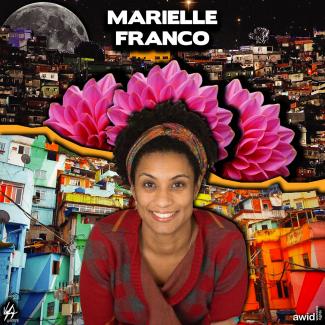
Marielle était une femme politique brésilienne, féministe lesbienne et militante des droits humains.
Marielle était une critique virulente de la brutalité policière et des exécutions extrajudiciaires. Sa politique, ouvertement féministe, centrée sur les personnes noires et les favelas était une source d’espoir pour les groupes marginalisés de Rio de Janeiro, actuellement gouvernée par un gouvernement conservateur et un maire évangélique.
Le 14 mars 2018, après avoir prononcé un discours à Rio de Janeiro, Marielle Franco et son chauffeur ont été assassinés, abattus par balles. Suite à la nouvelle de leur mort, les foules sont descendues dans les rues en criant « Marielle presente! » (Marielle est ici !) et ont exigé que justice soit faite.
Your comprehensive research product is now all organized and edited. You now want to ensure your findings are visually accessible and appealing to facilitate the dissemination.
Consider developing smaller products along with your long report.
As mentioned in the “Synthesize your research findings,” AWID often pulls smaller products from the lengthy research report. This allows for wider and easier distribution specialized for key audiences.
Always keep your targeted population in mind: who will read your report?
Examples of smaller products distilled from a larger report:
Infographics
Online gallery
An animation presenting your arguments
1. Think as your audience thinks
People are bombarded with information constantly. Your product will have to be visually compelling to maintain the interest of your audience. Again, having an idea of what you hope to accomplish and who you hope to reach, will allow the designer to create targeted products.
A lengthy written PDF report may seem the only way to present your research, but it could appear overwhelming to most people – especially online.
If you want to share your product with an online community, think about creating memes and infographics to use on social media, blogs and web platforms.
When deciding whether to create smaller products, consider dividing your results into several smaller products that you could share with targeted populations or at different times of the year to reactivate the interest on your product.
2. Work with a professional designer
If you have limited time and a little bit of budget, we recommend hiring a design firm.
It can be tempting for economic reasons to use in-house staff to package your report. However, a professional graphic designer can make a huge difference on how your final product looks and thus on how much impact it will have!
The designer (in-house or hired) must be able to:
Show you samples of their previous work that is similar to what you seek.
Provide you clear advice on how to present your research based on the content you provide and the audience you are targeting.
Suggest additional or different pieces to package your product.
What the designer will need from you:
A general idea on what you would like the lengthy report to highlight through visuals and graphics (what are the most important pieces of information, the key findings, for example) and some ideas on the types of smaller products you want to create (brochure, an infographic, a series of viral memes, for example). If possible, show the designer examples of similar documents developed by other organizations.
Your budget and time frame.
Your organization’s visual guidelines if you have any (logo, official colours, fonts, etc...).
A few photos copyright free or access to your photo bank if you have one.
Key visuals that need to be included – graphs, tables and other visual graphics drawn from your research.
The designer is a graphic expert. S/he is not necessarily familiar with women’s issues and does not know the results of your research, especially if you hire an external firm.
Communicate what elements of this report is important to you and who is your target. The designer will propose a way to highlight these elements and make the whole piece appealing to your users.
3. Make sure it's consistent
While creating a set of smaller information products, do not forget to link them all together:
A shorter version of the report that focuses only on your final results and recommendations should present a link to the final, full report
A visually compelling infographic that sends a message on the state of funding for your particular research can link to your website and the related section of the full report. It should be associated with a call to share on social media.
A short animation video that uses the data, findings and recommendations from your report should link back to your organization website and social media
A series of viral memes that can be distributed online should link back to your report, infographic, shorter report, etc.
It is also important to keep the research staff involved, so they can ensure any offshoot products stay true to the actual findings of the research.
After the design and packaging of the final research report is complete, if any of the wording of content was changed, be sure to re-send to translators.
If you create smaller products, once designed and packaged, you will also need to get the copy translated for those pieces. The translations should be clear enough so the designer can apply to the design, even if she/he does not speak the language.
Once translated, make sure to have your design proofread by a native speaker before sharing it!
Феминистские движения, движения за права женщин, гендерную справедливость, ЛГБТКИ+ и смежные движения по всему миру переживают критический момент, сталкиваясь с мощной негативной реакцией на ранее завоеванные права и свободы. Последние годы привели к быстрому росту авторитаризма, жестоким репрессиям в отношении гражданского общества и криминализации правозащитниц(-ков) с разнообразной гендерной самоидентификацией, эскалации войн и конфликтов во многих частях света, продолжающейся экономической несправедливости, – и все это на фоне кризиса в области здравоохранения, экологии и климата.
Snippet FEA Bauen Hotel (EN)
Only a year after it was founded, the members of Nadia Echazú started to work in haute couture and organized a fashion show in the historic Bauen Hotel.
They showcased five models and some workers of the textile cooperative walked down the runway with their own designs.
This was revolutionary not only because they were designing alternatives to mainstream fashion, but also because they were creating accessible, inclusive clothes for all trans and travesti bodies.
Feminist economies should also be about feeling amazing and comfortable in the clothes we are wearing.
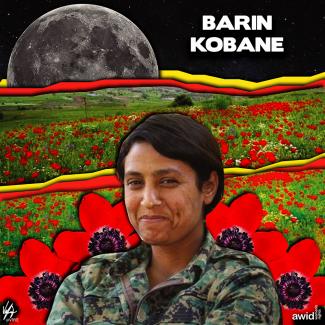
Barin was a member of the all-women fighting unit of the Kurdish People’s Protection Unit (YPG)
She was killed while on active duty.
Lebanese journalist Hifaa Zuaiter wrote: “Barin represents everything we have heard about the courage of the Kurdish female fighters, and her death is far more than the killing of a rival, or the result of a political or ethnic struggle. The horror of displaying her body only because she is a woman stems from the fact that she dared to threaten male hegemony by becoming a female fighter on a battlefield meant for men”.
Body
Nuestra visión: La justicia económica en un mundo feminista
En nuestra lucha por la justicia de género, económica, social y ambiental, en la paz, lxs feministas sabemos que no existe una sola receta para el éxito sino una gama de posibilidades que pueden y hacen que sucedan los cambios.
El menú de opciones es tan diverso como lo son nuestros movimientos y las comunidades en las que vivimos y luchamos.
Antes de atrevernos a presentar algunas de las formas en que lxs feministas nos imaginamos un mundo diferente, aquí están los principios que sostienen nuestras propuestas:
1. Desarrollo autodeterminado desde lo local hasta lo global
Creemos que no existe un modelo único aplicable a todxs y que todxs tienen derecho a reivindicar la construcción de ese otro mundo posible, como lo expresa el lema del Fondo Mundial..
Esto incluye el derecho a participar en la gobernabilidad democrática y de influir sobre el propio futuro, en el ámbito político, social y cultural.
La autodeterminación económica permite que los pueblos controlen sus recursos naturales y los utilicen de manera colectiva o para los fines que ellos mismos decidan. Además, la autonomía económica de las mujeres es fundamental para mitigar la naturaleza a menudo cíclica de la pobreza y la falta de educación, seguridad y protección.
2. Los derechos, la igualdad sustantiva y la justicia ocupan un lugar central en la economía
El principio de la igualdad sustantiva o de facto forma parte de la Convención sobre la Eliminación de Todas las Formas de Discriminación contra las Mujeres (CEDAW) y de otros instrumentos internacionales de derechos humanos. Es fundamental para el desarrollo y para lograr una economía justa ya que afirma que todos los seres humanos nacen libres e iguales.
La no discriminación forma parte intrínsecamente del principio de igualdad que garantiza que a nadie se le nieguen sus derechos por factores como la raza, el género, el idioma, la religión, la orientación sexual, la identidad de género, las opiniones políticas o de otra clase, el origen nacional o social, la propiedad o el nacimiento.
La dignidad intrínseca de todas las personas sin distinción alguna debe ser afirmada y respetada. Si bien los Estados tienen la responsabilidad de garantizar el uso de los máximos recursos de que disponen para la realización de los derechos humanos, la reivindicación de los derechos y la dignidad configura sobre todo un espacio clave para las luchas de la sociedad civil y la movilización popular.
3. Distribución justa para todxs, sin monopolización (el principio de la anticodicia)
Este principio, que se ejerce mediante esfuerzos organizados para transformar instituciones injustas, guía la recuperación del equilibrio entre «participación» (entrada) y «distribución» (salida) cuando se ha violado cualquiera de esos dos principios.
Implica ponerle un límite a toda acumulación monopólica de capital y otros abusos de la propiedad. Este concepto se apoya en un modelo económico que gira en torno a la ecuanimidad y la justicia.
4. La solidaridad entre feministas y entre movimientos es fundamental
Para que se produzcan cambios, necesitamos redes feministas fuertes y diversas. Necesitamos movimientos que construyan solidaridad desde lo personal hacia lo político, desde lo local a lo global, y viceversa.
La construcción de poder colectivo a través de los movimientos sociales ayuda a convertir la lucha por los derechos humanos, la igualdad y la justicia en una fuerza política para el cambio que no puede ser ignorada.
«Únicamente los movimientos pueden crear cambios sostenidos a niveles que las políticas y las leyes solas no pueden alcanzar»
تقديم تحليل محدّث، قوي، مبني على الأدلة ومسيّر نحو النشاط عن وقائع التمويل النسوي للتنظيمات النسوية ووضع البيئة التمويلية النسوية لأعضاء وعضوات AWID، الشركاء/ الشريكات في الحركة والممولين/ات.
1
تحديد وإظهار الفرص للتحول لتمويل أفضل وأكبر للحركات النسوية، لكشف الحلول الزائفة ووقف التوجه الذي يجعل التمويل يتحرك ضد الأجندات التقاطعية أو أجندات العدالة الجندرية.
2
تحديد الرؤى المقترحات والأجندات النسوية، لتمويل يحقق العدالة.
Snippet FEA The fight for a world full of workplaces (ES)
La lucha por un mundo lleno de lugares de trabajo libres de todas formas de discriminación, estigma y exclusión es digna. Un mundo en el que el trabajo sexual sea descriminalizado y reconocido como trabajo es parte integrante de esto.
Un mundo donde todxs lxs trabajadorxs tengan condiciones de trabajo seguras, salarios dignos y puedan disfrutar de los mismos derechos como el acceso a la salud, pensiones, permisos por enfermedad, vacaciones, seguridad laboral y más, sin importar su género, raza, etnia, edad o capacidad.
Los derechos laborales son cuestiones feministas, y los sindicatos feministas desempeñan un papel clave en la promoción de los derechos legales, laborales y económicos de todxs lxs trabajadorxs, especialmente lxs trabajadorxs migrantes, lxs trabajadorxs domésticxs, lxs trabajadorxs informales y lxs trabajadorxs sexuales. Estas son personas que recientemente se han visto afectadas de manera desproporcionada por la pandemia, su crisis de cuidados, los confinamientos, toques de queda y el aumento de la vigilancia y represión policial.
Aquí les presentamos las historias de activistas feministas y sindicalistas que luchan por mejores condiciones de trabajo y mejores mundos para todxs.
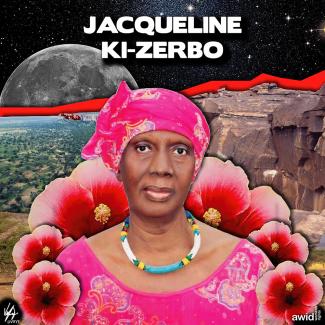
Jacqueline fue una feminista pionera malí-burkinesa, nacionalista y educadora.
Enseñó inglés en Senegal antes de ser convocada en 1961 como maestra de inglés en el Lycée Philippe Zinda Kaboré en Ouagadougou, Burkina Faso. Debido a su activismo, estuvo involucrada en el alzamiento popular del 3 de enero de 1966. Entre 1961 y 1966 fue responsable de la prensa del sindicato docente, Voces de lxs Maestrxs. Fue nombrada directora del Curso Normal para Niñas Jóvenes (ahora conocida como Escuela Secundaria Nelson Mandela), cargo que ocupó hasta 1974, dedicándose a la educación de las niñas y a la promoción de los derechos de las mujeres.
En 1984 recibió el Premio Paul G. Hoffmann por su destacado trabajo para el desarrollo nacional e internacional.
Body
Contester le modèle de croissance économique
Le contexte
Contestant la prémisse que l'économie d'un pays doit toujours «grandir ou mourir», les propositions de décroissance démystifient le rôle central d’une croissance mesurée par l'augmentation du produit intérieur brut (PIB).
Définition
Le modèle de la décroissance propose une transition vers des niveaux de production et de consommation plus faibles et durables. En substance, il s’agit de restreindre l’espace économique pour laisser plus de latitude à la coopération humaine et aux écosystèmes.
La proposition prévoit ce qui suit :
Réduire la production superflue, consommatrice de grandes quantités de ressources et d'énergie, qui génère des émissions destructrices, en particulier dans les pays du Nord (par exemple l’industrie automobile et l’industrie militaire).
Réorienter les investissements vers le secteur des services de soins, des infrastructures sociales et de la restauration de l'environnement.
Perspective féministe
Les perspectives féministes sur la théorie et la pratique de la décroissance soutiennent qu'il est également nécessaire de redéfinir et de reconnaître la valeur du travail rémunéré et non rémunéré, sur le marché comme dans le secteur des soins aux personnes. Ceci contribuerait à surmonter les stéréotypes de genre traditionnels, les écarts de salaires en vigueur et les inégalités de revenus qui dévalorisent le travail réalisé dans le domaine des soins.
Pour en savoir plus sur cette proposition :
Dans The Future WE Want: Occupy development (L'avenir que nous voulons : Occuper le développement), Christa Wichterich fait valoir que pour briser la logique hégémonique de la croissance débridée et le retour rapide sur investissement, un autre modèle de développement doit émerger qui combinerait les trois piliers suivants : les soins, les biens communs ainsi qu’une production et une consommation adéquates. Article en anglais uniquement.
Dans Equitable, Ecological Degrowth: Feminist Contributions (Décroissance équitable et écologique : Contributions féministes), Patricia Perkins suggère d’élaborer des indicateurs alternatifs concernant le bien-être, qui comprendraient notamment des données sur l’équité économique et sociale ainsi que des statistiques sur la répartition du temps de travail. Elle vise à démontrer l'importance du travail et des services non rémunérés pour l'économie et à proposer un mécanisme qui permettrait d’attribuer une valeur à cette contribution.
Кому следует принять участие в опросе?
Группы, организации и движения, работающие исключительно или главным образом в интересах женщин, девочек, гендерной справедливости, прав ЛГБТКИ+ людей во всех регионах и на всех уровнях, как недавно созданные, так и давно существующие.