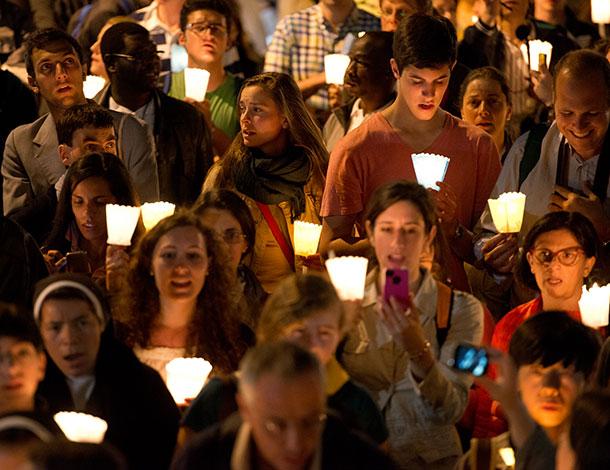
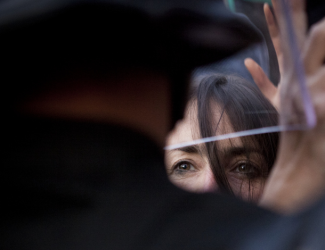
Philippe Leroyer | Flickr (CC BY-NC-ND 2.0)

Women Human Rights Defenders

WHRDs are self-identified women and lesbian, bisexual, transgender, queer and intersex (LBTQI) people and others who defend rights and are subject to gender-specific risks and threats due to their human rights work and/or as a direct consequence of their gender identity or sexual orientation.

WHRDs are subject to systematic violence and discrimination due to their identities and unyielding struggles for rights, equality and justice.

The WHRD Program collaborates with international and regional partners as well as the AWID membership to raise awareness about these risks and threats, advocate for feminist and holistic measures of protection and safety, and actively promote a culture of self-care and collective well being in our movements.


Risks and threats targeting WHRDs  

WHRDs are exposed to the same types of risks that all other defenders who defend human rights, communities, and the environment face. However, they are also exposed to gender-based violence and gender-specific risks because they challenge existing gender norms within their communities and societies.

By defending rights, WHRDs are at risk of:

  • Physical assault and death
  • Intimidation and harassment, including in online spaces
  • Judicial harassment and criminalization
  • Burnout

A collaborative, holistic approach to safety

We work collaboratively with international and regional networks and our membership

  • to raise awareness about human rights abuses and violations against WHRDs and the systemic violence and discrimination they experience
  • to strengthen protection mechanisms and ensure more effective and timely responses to WHRDs at risk

We work to promote a holistic approach to protection which includes:

  • emphasizing the importance of self-care and collective well being, and recognizing that what care and wellbeing mean may differ across cultures
  • documenting the violations targeting WHRDs using a feminist intersectional perspective;
  • promoting the social recognition and celebration of the work and resilience of WHRDs ; and
  • building civic spaces that are conducive to dismantling structural inequalities without restrictions or obstacles

Our Actions

We aim to contribute to a safer world for WHRDs, their families and communities. We believe that action for rights and justice should not put WHRDs at risk; it should be appreciated and celebrated.

  • Promoting collaboration and coordination among human rights and women’s rights organizations at the international level to  strengthen  responses concerning safety and wellbeing of WHRDs.

  • Supporting regional networks of WHRDs and their organizations, such as the Mesoamerican Initiative for WHRDs and the WHRD Middle East and North Africa  Coalition, in promoting and strengthening collective action for protection - emphasizing the establishment of solidarity and protection networks, the promotion of self-care, and advocacy and mobilization for the safety of WHRDs;

  • Increasing the visibility and recognition of  WHRDs and their struggles, as well as the risks that they encounter by documenting the attacks that they face, and researching, producing, and disseminating information on their struggles, strategies, and challenges:

  • Mobilizing urgent responses of international solidarity for WHRDs at risk through our international and regional networks, and our active membership.

Related Content

Snippet - WITM to claim - PT

Para reivindicar o seu poder como especialista sobre o estado dos recursos de movimentos feministas;

Stephanie Bracken

Biography

Stephanie Bracken est une féministe qui se consacre à la construction et au soutien de systèmes solides qui répondent aux besoins du moment et des personnes qui interagissent avec eux, tout en servant les principes de justice. Elle est titulaire d'un master en droits humains de l'Université de Sydney et d'une licence en études de genre, histoire et philosophie de l'Université McGill. Elle possède une expérience de travail avec des organisations féministes et de justice sociale dans les domaines du suivi, de l'évaluation et de l'apprentissage, de la planification stratégique du travail, de la gouvernance, de la gestion de projet et de la création de systèmes et de processus opérationnels. Stephanie est basée à Tiohtià:ke/Montréal, où elle aime chanter avec d’autres, camper, pratiquer les arts textiles et passer du temps avec ses enfants et sa communauté.

Position
Cheffe des Opérations
Add to stories
Off

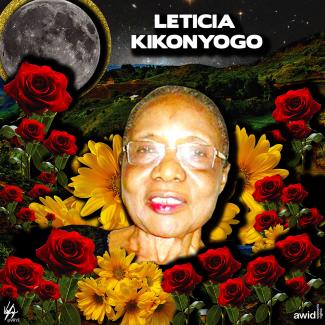
Leticia Eulalia Mary Mukasa- Kikonyogo

Leticia was a Ugandan lawyer and judge.

Prior to her retirement, she held many high profile positions including member of the Court of Appeal of Uganda and Deputy Chief Justice of Uganda. She was the first Ugandan woman to hold the position of Chief Magistrate between 1973 and 1986 and the first woman to be appointed High court judge in 1986.

She was one of the first ever women papal knights in the history of the Catholic Church in Africa. She died of a heart attack.


Leticia Eulalia Mary Mukasa- Kikonyogo, Uganda

Key opposition discourses

Ultra conservative actors have developed a number of discourses at the international human rights level that call on arguments manipulating religion, culture, tradition, and national sovereignty in order to undermine rights related to gender and sexuality.

Anti-rights actors have increasingly moved away from explicitly religious language. Increasingly, we see regressive actors - who may previously have derided human rights concepts - instead manipulating and co-opting these very concepts to further their objectives.


Protection of the family

This emerging and successful discourse appears innocuous, but it functions as a useful umbrella theme to house multiple patriarchal and anti-rights positions. The ‘protection of the family’ theme is thus a key example of regressive actors’ move towards holistic and integrated advocacy.

The language of ‘protection of the family’ works to shift the subject of human rights from the individual and onto already powerful institutions.

It also affirms a unitary, hierarchical, and patriarchal conception of the family that discriminates against family forms outside of these rigid boundaries. It also attempts to change the focus from recognition and protection of the rights of vulnerable family members to non-discrimination, autonomy, and freedom from violence in the context of family relations.

The Right to Life

The Holy See and a number of Christian Right groups seek to appropriate the right to life in service of an anti-abortion mission.  Infusing human rights language with conservative religious doctrine, they argue that the right to life, as set out in the Universal Declaration of Human Rights and the International Covenant on Civil and Political Rights, applies at the moment of conception.

The discourse has no support in any universal human rights instrument. Yet this is an appealing tactic for anti-rights actors, because the right to life cannot be violated under any circumstances and is a binding legal standard.

Sexual rights

Anti-rights actors use a number of rhetorical devices in their campaign to undermine sexual rights: they argue that sexual rights do not exist or are ‘new rights,’ that they cause harm to children and society, and/or that these rights stand in opposition to culture, tradition or national laws.

Conservative actors engaged in advocacy at the UN attack the right to comprehensive sexuality education from several directions. They claim that CSE violates ‘parental rights’, harms children, and that it is not education but ideological indoctrination. They also claim that comprehensive sexuality education is pushed on children, parents, and the United Nations by powerful lobbyists seeking to profit from services they provide to children and youth.

Attempts to invalidate rights related to sexual orientation and gender identity have proliferated. Ultra conservative actors argue that application of long-standing human rights principles and law on this issue constitutes the creation of ‘new rights’; and that the meaning of rights should vary radically because they should be interpreted through the lens of ‘culture’ or ‘national particularities.’

Reproductive Rights

Christian Right organizations have been mobilizing against reproductive rights alongside the Holy See and other anti-rights allies for several years. They often argue that reproductive rights are at heart a form of Western-imposed population control over countries in the global South. Ironically, this claim often originates from U.S. and Western Europe-affiliated actors, many of whom actively work to export their fundamentalist discourses and policies.

Regressive actors also cite to ‘scientific’ arguments from ultra-conservative think tanks, and from sources that rely on unsound research methodologies, to suggest that abortion causes an array of psychological, sexual, physical, and relational side effects.

Protection of children and parental rights

Just as anti-rights actors aim to construct a new category of ‘protection of the family,’ they are attempting to construct a new category of ‘parental rights,’ which has no support in existing human rights standards.

This discourse paradoxically endeavours to use the rights protections with which children are endowed, as articulated in the Convention on the Rights of the Child, to support the rights of parents to control their children and limit their rights.

Violence against women

Increasingly, anti-rights actors are attempting to infiltrate and subvert standards and discourses developed by women human rights defenders, such as violence against women (VAW).

At the Commission on the Status of Women and other spaces, one rhetorical move is to treat VAW as a concept in which to embed anti-reproductive rights and patriarchal arguments. Ultra conservative actors, for example, have argued that non-heteronormative or traditional intimate partner relationships are a risk factor for violence, and emphasize that fathers are necessary to protect families from violence.

Gender and ‘gender ideology’

The Holy See has set off a sustained critique of gender, ‘gender ideology’, ‘gender radicals,’ and gender theory, and anti-rights actors often read the term as code for LGBTQ rights. Gender is used by the religious right as a cross-cutting concept that links together many of their discourses. Increasingly, the hysteria on this subject fixates on gender identity and trans rights.

Complementarity and human dignity

Complementarity of the sexes is a discourse employed by a number of ultra-conservative actors today. Its rhetoric is structured around an assumption of difference: men and women are meant to have differing but complementary roles in marriage and family life, and with respect to their engagement in the community and political and economic life.

Reference to ‘natural’ roles is meant to fundamentally reject universal human rights to equality and non-discrimination.

It is also used to justify State and non-State violations of these rights, and non-compliance with respect to State obligations to eliminate prejudices and practices based on stereotyped roles for men or women.

National sovereignty and anti-imperialism

This discourse suggests that national governments are being unjustly targeted by UN bodies, or by other States acting through the UN. This is an attempt to shift the subject of human rights from the individual or marginalized community suffering a rights violation to a powerful and/or regressive institution - i.e. the state, in order to justify national exceptions from universal rights or to support state impunity. 

Religious freedom

Anti-rights actors have taken up the discourse of freedom of religion in order to justify violations of human rights. Yet, ultra-conservative actors refer to religious freedom in a way that directly contradicts the purpose of this human right and fundamentally conflicts with the principle of the universality of rights. The inference is that religious liberty is threatened and undermined by the protection of human rights, particularly those related to gender and sexuality.

The central move is to suggest that the right to freedom of religion is intended to protect a religion rather than those who are free to hold or not hold different religious beliefs.

Yet under international human rights law, the right protects believers rather than beliefs, and the right to freedom of religion, thought and conscience includes the right not to profess any religion or belief or to change one’s religion or belief.

Cultural rights and traditional values

The deployment of references to culture and tradition to undermine human rights, including the right to equality, is a common tactic amongst anti-rights actors. Culture is presented as monolithic, static, and immutable, and it is is often presented in opposition to ‘Western norms.’

Allusions to culture by anti-rights actors in international policy debates aim to undermine the universality of rights, arguing for cultural relativism that trumps or limits rights claims. Regressive actors’ use of cultural rights is founded on a purposeful misrepresentation of the human right. States must ensure that traditional or cultural attitudes are not used to justify violations of equality, and human rights law calls for equal access, participation and contribution in all aspects of cultural life for all, including women, religious, and racial minorities, and those with non-conforming genders and sexualities.

Subverting ‘universal’

Anti-rights actors in international policy spaces increasingly manipulate references to universal or fundamental human rights to reverse the meaning of the universality of rights.

Rather than using the term universal to describe the full set of indivisible and interrelated human rights, ultra conservative actors employ this term to instead delineate and describe a subset of human rights as ‘truly fundamental.’ Other rights would thus be subject to State discretion, ‘new’ rights or optional. This discourse is especially powerful as their category of the truly universal remains unarticulated and hence open to shifting interpretation.


Other Chapters

Read the full report
Snippet FEA Georgia this is only the beginning (EN)

Georgia

Solidarity Network


THIS IS ONLY THE

BEGINNING

Snippet - WITM Survey will remain open - PT

A pesquisa está disponível até 31 de julho de 2024

Participe da pesquisa!

Kasia Staszewska

Biography

Kasia has been supporting the work of feminist and social justice movements for the last 15 years. Before joining AWID, Kasia used to lead policy and advocacy for ActionAid and Amnesty International while organizing with feminists and social justice groups in Poland for access to abortion and against violence on the European borders. Kasia is passionate about resourcing feminist organizing in all their boldness, richness and diversity. She shares her time between Warsaw and her DIY community village in the forest. She loves saunas and is crazy about her dog named Wooly.

Position
Manager, Resourcing Feminist Movements
Add to stories
Off

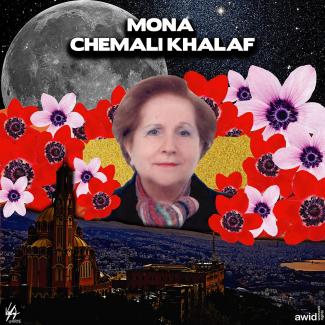
Mona Chemali Khalaf

Mona fue una economista y consultora independiente sobre temas de género y desarrollo.

Fue profesora de economía y Directora del Institute for Women's Studies in the Arab World de la Lebanese American University. Falleció repentinamente el 6 de enero de 2018.

Sus amigxs y ex-colegas dicen sobre Mona: «Cuando celebramos su vida, lo mejor que podemos hacer es comprometernos a continuar con lo que ella empezó: la igualdad de género, indefectiblemente.


Mona Chemali Khalaf, Lebanon

When development initiatives, religious fundamentalisms and the state of women’s rights collide

Nuestro nuevo documento de investigación El diablo se esconde en los detalles aborda la falta de conocimientos sobre los fundamentalismos religiosos en el sector del desarrollo, y se propone comprender mejor de qué manera estos fundamentalismos inhiben el desarrollo y, en particular, los derechos de las mujeres. Propone recomendaciones para que quienes trabajan en temas de desarrollo desafíen la labor de los fundamentalismos y eviten fortalecerlos inadvertidamente. [CTA download link: Leer el documento completo]


Seven pointers to consider


Graphic1 1. Control of women’s bodies, sexuality, and choice are “warning signs” of rising fundamentalisms.
2. Neoliberal economic policies have a particularly negative impact on women, and fuel the growth of religious fundamentalisms. Graphic2
Graphic3 3. Choosing religious organizations as default for partnerships builds their legitimacy and access to resources, and supports their ideology, including gender ideology.
4.Everyone has multiple identities and should be defined by more than just their religion. Foregrounding religious identities tends to reinforce the power of religious fundamentalists. Graphic4
Graphic5 5. Religion, culture, and tradition are constantly changing, being reinterpreted and challenged. What is dominant is always a question of power.
6. Racism, exclusion, and marginalization all add to the appeal of fundamentalists’ offer of a sense of belonging and a “cause”. Graphic6
Graphic7 7. There is strong evidence that the single most important factor in promoting women’s rights and gender equality is an autonomous women’s movement.


Auge global de los fundamentalismos religiosos.

El Diablo se esconde en los detalles proporciona detalles de las graves violaciones a los derechos humanos y, en particular, de las violaciones a los derechos de las mujeres, causados por los fundamentalismos auspiciados por los Estados, así como por actores fundamentalistas no estatales como milicias, organizaciones comunitarias confesionales e individuos. La profundización fundamentalista de normas sociales atávicas y patriarcales está provocando el aumento de la violencia contra las mujeres, las niñas y las defensoras de derechos humanos (WHRDs). El informe propuesta estas ideas clave para abordar el problema:

  • [icon] Fundamentalismos religiosos están ganando terreno en el seno de las comunidades
  • [icon] Sistemas políticos
  • [icon] Escenarios internacionales, con efectos devastadores para la gente común y para las mujeres en particular.


Los agentes de desarrollo deben actuar urgentemente.

Quienes trabajan en el desarrollo están de capacidad de asumir una posición más firme. Su capacidad colectiva para reconocer y enfrentar conjuntamente a los fundamentalismos religiosos resulta crucial para promover la justicia social, económica y de género y los derechos humanos de todas las personas en el marco del desarrollo sostenible.   Resulta fundamental promover que el poder y los privilegios se entiendan desde la óptica del feminismo interseccional y aplicar esta comprensión a los interrogantes sobre religión y cultura. Las organizaciones de mujeres ya poseen conocimientos y estrategias para oponerse a los fundamentalismos. Quienes trabajan en el desarrollo deberían apoyarse en estos e invertir en coaliciones enfocadas en múltiples temáticas. Lo anterior, les ayudará a alcanzar nuevos horizontes.

Snippet FEA Workers demonstrations in Georgia 1 (ES)

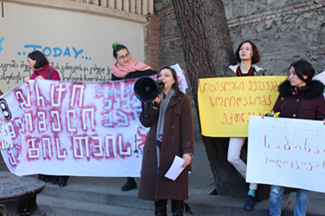
Cuatro personas con carteles durante una manifestación y, en medio, una mujer con un megáfono hablando.

Snippet - WITM Acknowledgements - AR

شكر

ان جمعية حقوق المرأة في التنمية ممتنة للعديد من الأشخاص الذين/ اللواتي ساعدت أفكارهم/ن، تحليلاتهم/ن ومساهماتهم/ن على تصميم استطلاع "أين المال" على مدار السنوات.

نشكر جزيل الشكر أعضاء/ عضوات AWID والنشطاء/ الناشطات الذين/ اللواتي شاركوا/ن في استشارات استطلاع "أين المال؟" وقاموا/ن بتجربة الاستطلاع وأعطونا بسخاء من وقتهم/ن وتحليلاتهم/ن وقلوبهم/ن.

نقدر بشكل عميق الحركات النسوية، الحلفاء/ الحليفات والصناديق النسوية بمانقدر بشكل عميق الحركات النسوية، الحلفاء/ الحليفات والصناديق النسوية وهنا بعض منها وليس جميعها: Black Feminist Fund, Pacific Feminist Fund, ASTREA, FRIDA Young Feminist Fund, Purposeful, Kosovo Women's Network, Human Rights Funders Network, CEECCNA Feminist Fund e PROSPERA, على بحثكم/ن الرائع عن وضع التمويل، تحليلكم/ن الدقيق والمناصرة المستمرة لتمويل وقوة أكبر وأفضل للحركات النسوية وتنظيمات العدالة الجندرية في جميع السياقات.

انضموا/من للمجتمع العالمي من النسويات/ين اللواتي/ اللذين يرفعن/وا صوتهم/ن ويتحدثن/وا عن التمويل، ويطالبن/وا بتمويل وبقوة أكبر وأفضل للنسويات/ين في كل مكان

Faye Macheke

Biography

Faye es una apasionada feminista panafricana, que trabaja activamente en diversos movimientos por los derechos de las mujeres, la justicia racial, los derechos de las personas migrantes y los derechos laborales, y por la justicia ambiental. Su activismo se basa en el legado de la lucha contra el apartheid en Sudáfrica y las consecuencias de la era del apartheid en Zimbabue.

En 2019, Faye se sumó a AWID como Directora de Finanzas, Operaciones y Desarrollo y dedicó sus esfuerzos a garantizar que AWID defienda los principios y valores feministas en todas sus operaciones. Aporta más de 20 años de experiencia en liderazgo y estrategias feministas y en todos los aspectos de las finanzas y el desarrollo institucional.

Faye es una comprometida integrante de la Junta de Urgent Action Fund Africa (UAF- Fondo de Acción Urgente África) y otras organizaciones por los derechos de las mujeres. Anteriormente, desempeñó funciones de Directora de Finanzas y Operaciones en Paediatric Adolescent Treatment for Africa (Tratamiento Pediátrico y Adolescente para África) y JASS - Just Associates Inc., en Sudáfrica. Asimismo, ocupó roles directivos en International Computer Driving Licence (ICDL), en África central y meridional. Posee una licenciatura en Ciencias Contables de la Universidad de Sudáfrica y forma parte del Instituto Sudafricano de Gestión Contable Empresarial.

Position
Codirectora Ejecutiva
Add to stories
Off

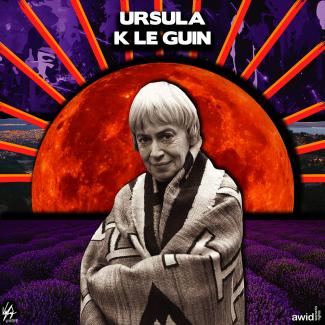
Ursula K Le Guin

Ursula était une romancière américaine dont les genres littéraires de prédilection étaient la science-fiction et le genre fantastique.

Elle a connu le succès grâce à son roman « La main gauche de la nuit », où elle imagine une société du futur où les personnes sont ambisexuelles - leur sexe n’est pas déterminé. Parmi les premiers grands livres de science-fiction féministes, ce roman explore les influences du genre et du sexe dans la société. Ursula était une source d'inspiration pour ses écrits subversifs et originaux, ainsi que pour les thèmes du féminisme et de la liberté qui lui tenaient tellement à cœur.

En 1983, lors d'un discours au Mills College en Californie, elle a déclaré aux diplômé-e-s : « Pourquoi une femme libre ayant suivi une formation universitaire devrait-elle combattre Macho-Man ou le servir ? Pourquoi devrait-elle vivre sa vie selon son bon vouloir ? J'espère que vous vivrez sans avoir besoin de dominer et sans avoir besoin d'être dominé-e ».


Ursula K Le Guin, USA

Here is your Feminist Realities Toolkit

Thank you for taking the first steps to Co-create Feminist Realities!

Download your toolkit


Learn more about Feminist Realities

Any questions? Please do not hesitate to contact us


Snippet FEA collaborator and allies Photo 5 (FR)

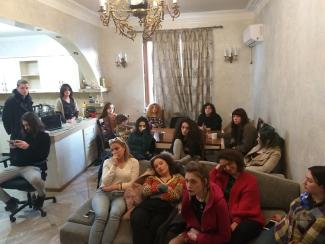
La photo représente un groupe de quinze travailleur.euse.s assis.e.s ensemble dans un salon aux murs blancs. Certain.e.s dorment, d'autres sont debout, discutent entre elleux ou regardent leur téléphone.

Я являюсь индивидуальной(-ым) активисткой(-том), не сотрудничающей(-им) в данный момент ни с какой группой, организацией и/или движением – могу ли я принять участие в опросе?

Нет, мы очень ценим вашу работу, но в данный момент мы не собираем информацию об отдельных активистках(-тах).

Juhi

Biography

Juhi est passionnée de technologie, titulaire d'une licence en génie informatique de l'Université Technologique du Gujarat et d'une formation de troisième cycle en télécommunications sans fil et en gestion de projet du Humber College. Passionnée par la résolution de problèmes et aimant garder une longueur d'avance dans un paysage technologique en constante évolution, Juhi s'est retrouvée à naviguer dans divers secteurs en tant que technicienne informatique. Grâce à l'environnement stimulant de la School Board, Juhi a eu l'occasion d'appliquer ses compétences techniques dans divers contextes, relevant toujours de nouveaux défis avec enthousiasme. Au-delà du code et des circuits, Juhi aime les aventures de la vie. Explorer de nouveaux lieux et cultures constitue pour elle une bouffée d’air frais. Qu'il s'agisse de découvrir des trésors cachés de la ville, d'essayer des cuisines exotiques ou de se lancer dans des sports d'aventure palpitants, Juhi est toujours partante pour de nouvelles expériences.

Position
Coordonnatrice du Support informatique
Add to stories
Off