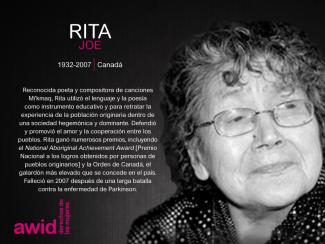
Rita Joe
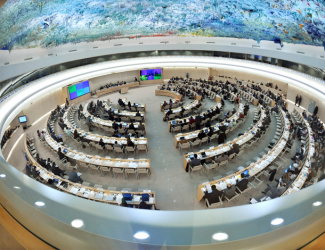
The Human Rights Council (HRC) is the key intergovernmental body within the United Nations system responsible for the promotion and protection of all human rights around the globe. It holds three regular sessions a year: in March, June and September. The Office of the UN High Commissioner for Human Rights (OHCHR) is the secretariat for the HRC.
Debating and passing resolutions on global human rights issues and human rights situations in particular countries
Examining complaints from victims of human rights violations or activist organizations on behalf of victims of human rights violations
Appointing independent experts (known as “Special Procedures”) to review human rights violations in specific countries and examine and further global human rights issues
Engaging in discussions with experts and governments on human rights issues
Assessing the human rights records of all UN Member States every four and a half years through the Universal Periodic Review
AWID works with feminist, progressive and human rights partners to share key knowledge, convene civil society dialogues and events, and influence negotiations and outcomes of the session.
Una nómada de las culturas, nacida en Hong Kong y con raíces turco-paquistaníes, el amor de Fatima por la narración, ya sea su lectura o su creación conjunta, le infundió la pasión por el activismo de las comunicaciones. Formada en periodismo, ha trabajado durante siete años en los ámbitos de la comunicación digital y los medios de comunicación con ONG que brindan oportunidades educativas y asistencia jurídica a personas refugiadas y solicitantes de asilo, así como con el movimiento feminista musulmán, que aplica un enfoque feminista y de derechos para comprender y buscar la igualdad y la justicia en la tradición jurídica musulmana. Escribe con habitualidad artículos de opinión sobre asuntos feministas en el Sur Global.
Mediante la narración en esta era hiperdigital de las redes sociales, Fatima sigue colaborando con organizadores comunitaries y activistas de base para crear contenido audiovisual, a fin de tender puentes de comprensión hacia la liberación colectiva y la descolonización. Durante los días en que no trabaja, mira atentamente largometrajes feministas independientes de Irán, Marruecos y Pakistán, e interpreta poesía oral con sus camaradas de Kuala Lumpur.

GenderJobs.org: This is a platform with a comprehensive list of job opportunities to work on gender equality and LGBTQI+ rights, curated by gender professionals and intersectional feminists who intimately know the sector and are extremely passionate about supporting other gender professionals and anyone who is aspiring to become one! (source: https://genderjobs.org/about)
This project is built in collaboration with:


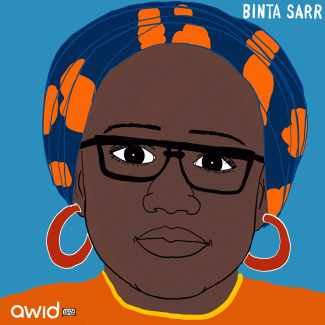
Binta Sarr was an activist for social, economic, cultural and political justice, and a hydraulic engineer in Senegal. After 13 years in civil service, she left this path to work with rural and marginalized women.
Out of this engagement grew the Association for the Advancement of Senegalese Women (APROFES), a grassroots movement and organization Binta founded in 1987. One of her main approaches was leadership training, relating not only to economic activities but also to women's rights and access to positions of decision-making.
“Grassroots populations must organize, mobilize, assume citizen control and demand democratic governance in all sectors of public space. The priority of social movements must go beyond the fight against poverty and must be focused on articulated and coherent development programs in line with human rights principles, while taking into account their needs and concerns both at the national and sub-regional levels and from a perspective of African and global integration.” - Binta Sarr
Rooted in Binta’s conviction that fundamental change in women’s status requires transformation in male attitudes, APROFES took an interdisciplinary approach, using radio, seminars and popular theatre, as well as providing innovative public education and cultural support for awareness-raising actions. Its popular theatre troupe performed original pieces on the caste system in Senegal, alcoholism, and conjugal violence. Binta and her team also looked at the crucial connection between the community and the broader world.
“For APROFES, it is a question of studying and taking into account the interactions between the micro and the macro, the local and the global and also, the different facets of development. From slavery to colonization, neocolonialism and the commodification of human development, most of the resources of Africa and the Third World (oil, gold, minerals and other natural resources) are still under the control of financial cartels and other multinationals that dominate this globalized world.” - Binta Sarr
Binta was one of the founding members of the female section of the Cultural and Sports Association Magg Daan. She received commendations from the Regional Governor and the Minister of Hydrology for her "devotion to rural people."
Born in 1954 in Guiguineo, a small rural town, Binta passed away in September 2019.
“The loss is immeasurable, the pain is heavy and deep but we will resist so as not to mourn Binta; we will not mourn Binta, we will keep the image of her broad smile in all circumstances, to resist and be inspired by her, maintain, consolidate and develop her work…” - Aprofes Facebook page, September 24, 2019
"Farewell Binta! We believe your immense heritage will be preserved." - Elimane FALL, president of ACS Magg-Daan
Nana est militante féministe et chercheuse spécialisée dans les droits reproductifs et les politiques démographiques. Elle exerce ses activités en Égypte. Elle collabore avec Realizing Sexual and Reproductive Justice (RESURJ), siège au conseil consultatif de l’A Project au Liban et fait partie du comité communautaire de Mama Cash. Nana est diplômée d’un master en santé publique de l’Institut KIT et de l’Université Vrije d’Amsterdam. Son travail consiste à analyser et contextualiser les politiques démographiques nationales tout en documentant les questions liées à l’eugénisme contemporain, aux programmes d’aide internationale régressifs et aux régimes autoritaires. Auparavant, elle a collaboré avec la Fondation genevoise pour la formation et la recherche médicales, l’Initiative égyptienne pour les droits de la personne, ainsi qu’avec le Collectif féministe Ikhtyar au Caire.
Are you a funder? Or do you know funders that support feminist and gender justice movements? Apply to be a part of the Who Can Fund Me? Database now!
Hakima Abbas, AWID
"Estamos utilizando las herramientas que tenemos para compartir nuestra resistencia, nuestras estrategias y continuar edificando nuestro poder para actuar y crear nuevos mundos valientes y justos"

Diana Isabel Hernández Juárez fue una maestra guatemalteca, defensora de los derechos humanos y activista comunitaria y del medioambiente. Fue la coordinadora del programa ambiental de la parroquia de Nuestra Señora de Guadalupe, en la costa sur del país.
Diana dedicó su vida a co-crear conciencia ambiental, y trabajó de modo particularmente estrecho con comunidades locales para abordar problemas ambientales y proteger los recursos naturales. Inició proyectos tales como viveros forestales, granjas municipales, huertas familiares y campañas de limpieza. Participó activamente en programas de reforestación, tratando de recuperar especies nativas y paliar la falta de agua, en más de 32 comunidades rurales.
El 7 de septiembre de 2019, Diana recibió disparos y fue asesinada por dos hombres armados desconocidos mientras se encontraba participando de una procesión en su comunidad. Diana tenía solamente 35 años en el momento de su muerte.
Nous œuvrons à renforcer les répercussions et l’influence des organisations, mouvements et défenseur-euse-s des droits des femmes sur la scène internationale et à amplifier leur voix collective, en vue de la pleine réalisation de la justice de genre et des droits humains des femmes.
ÉCONOMIES DES SOINS AGROÉCOLOGIE ET SOUVERAINETÉ ALIMENTAIRECOOPÉRATIVISME FÉMINISTESYNDICALISME FÉMINISTE
Tonya Haynes, CAISO
Angelique V. Nixon, CAISO

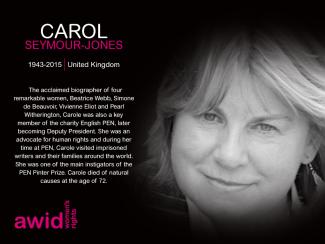
Jaitun, souvent appelée « Amma », œuvrait à la protection des droits reproductifs des femmes et des filles en Inde. Son travail s’est particulièrement centré sur la défense des personnes pauvres et marginalisées, dont les filles et femmes dalits et musulmanes.
Jaitun était la force vitale derrière l’affaire Jaitun contre Janpura Maternity Home & Ors. Sa persévérance à obtenir justice a permis d’aboutir à un jugement sans précédent rendu par la Cour Suprême de Delhi. Le gouvernement indien a ainsi été tenu responsable de n’avoir pas rempli plusieurs de ses obligations juridiques, telles que les soins de santé reproductive et le droit à l’alimentation.
Sa fille Fatema, qui vivait sous le seuil de pauvreté, s’était vu refuser l’accès à des services de santé reproductive et avait dû accoucher en public, sous un arbre. Jaitun et Fatema étaient à cette époque sans domicile, car le gouvernement avait démoli leur maison dans le cadre d’un projet de réaménagement et de gentrification à New Delhi.
« Depuis, le jugement a fait jurisprudence pour de nombreux·euses avocat·e·s et activistes du monde entier, et notamment l’ancien Rapporteur spécial des Nations Unies sur le droit à la santé, non seulement comme source d’inspiration, mais comme solide tremplin pour obtenir la justice. » - Jameen Kaur
Jaitun a inspiré de très nombreuses autres femmes vivant dans la pauvreté à réclamer leurs droits. Elle s’est éteinte en 2017.
« Avec le décès de Jaitun, nous venons de perdre une inimitable guerrière pour la justice, mais son esprit de résistance perdure. » - Jameen Kaur
« Je n’ai, au cours de mes 18 années de plaidoyer pour les droits humains, jamais rencontré de femme qui m’ait tant inspirée et émue qu’Amma. Son courage féroce, son humour inimitable - nous la comparions à l’actrice de Bollywood Hema Malini -, ses colères lorsque l’on passait trop de temps sans venir la voir : elle nous disait, une étincelle dans le regard, « Tu as oublié Amma, Amma ne te parle plus », puis faisait volte-face de manière mélodramatique, pour se retourner en riant et tendre les bras pour une embrassade. Sa gentillesse, et en fin de compte son amour, sa joie d’aimer et sa volonté que chacun·e ait le droit de vivre dignement en faisaient un être à part . Elle me manque terriblement. » - Jameen Kaur
AWID works towards the realization of gender justice and women’s human rights worldwide. We work to strengthen the voices and impact of women’s rights advocates, organizations and movements. Our main Priority Areas relate to themes that are closely linked to dominant global trends.
These themes reflect growing challenges that negatively impact women’s rights worldwide.
En 2023, le budget annuel médian des organisations féministes et de défense des droits des femmes était de 22 000 USD. Cette médiane masque de profondes inégalités : quelques groupes accèdent à des ressources considérables, tandis que la grande majorité survit avec des budgets très limités.
Un examen plus attentif des budgets réels révèle une immense diversité et une grande disparité dans les revenus.
Explorez les données relatives à la taille des budgets féministes
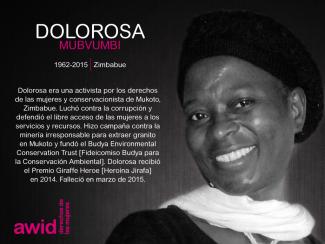
Rosa Candida Mayorga Muñoz was a Guatemalan social worker, union leader and labor rights defender. She was affectionately called Rosita and she inspired change.
In the 1980’s, Rosa became the first female member of the Executive Committee of the Union of Workers of the Institute of National Electrification (STINDE), a union she first joined to advocate for women’s labor rights. For her, this meant fighting for equal opportunities in a company where many women faced a discriminatory and violent system created by company authorities. Rosa had also suffered sexual harassment in her workplace, both by co-workers and managers. She was not to be kept quiet though.
Rosa continued fighting and was part of the effort to mould the struggle into a more specific form, that of the INDE-STINDE Collective Pact of Working conditions. This pact was a pioneer, the first in Guatemala to typify the concept of (sexual) harassment. It serves as a reference for the Guatemalan legislation on labor matters and is an encouragement for other unions.
“She had no fighting tools other than her own ideals... Many times she was intimidated, harassed to put the fight aside, but her courage generated the image of hope for grassroots unionists. Rosita created an image of respect, not only within her union, but before the authorities of the institution, before the women's movement; she was recognized as a pioneer of the trade union women's movement, in a space that had been more dominated by men.” - Maritza Velasquez, ATRAHDOM
Rosa passed away on 4 April 2018 at the age of 77.