Confronting Extractivism & Corporate Power

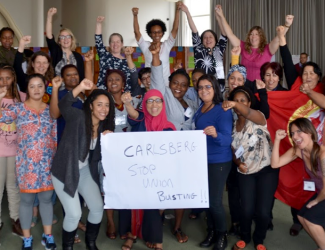
Women human rights defenders (WHRDs) worldwide defend their lands, livelihoods and communities from extractive industries and corporate power. They stand against powerful economic and political interests driving land theft, displacement of communities, loss of livelihoods, and environmental degradation.


Why resist extractive industries?

Extractivism is an economic and political model of development that commodifies nature and prioritizes profit over human rights and the environment. Rooted in colonial history, it reinforces social and economic inequalities locally and globally. Often, Black, rural and Indigenous women are the most affected by extractivism, and are largely excluded from decision-making. Defying these patriarchal and neo-colonial forces, women rise in defense of rights, lands, people and nature.

Critical risks and gender-specific violence

WHRDs confronting extractive industries experience a range of risks, threats and violations, including criminalization, stigmatization, violence and intimidation.  Their stories reveal a strong aspect of gendered and sexualized violence. Perpetrators include state and local authorities, corporations, police, military, paramilitary and private security forces, and at times their own communities.

Acting together

AWID and the Women Human Rights Defenders International Coalition (WHRD-IC) are pleased to announce “Women Human Rights Defenders Confronting Extractivism and Corporate Power”; a cross-regional research project documenting the lived experiences of WHRDs from Asia, Africa and Latin America.

We encourage activists, members of social movements, organized civil society, donors and policy makers to read and use these products for advocacy, education and inspiration.

Share your experience and questions!

Tell us how you are using the resources on WHRDs Confronting extractivism and corporate power.

◾️ How can these resources support your activism and advocacy?

◾️ What additional information or knowledge do you need to make the best use of these resources?

Share your feedback


Thank you!

AWID acknowledges with gratitude the invaluable input of every Woman Human Rights Defender who participated in this project. This project was made possible thanks to your willingness to generously and openly share your experiences and learnings. Your courage, creativity and resilience is an inspiration for us all. Thank you!

Related Content

Michelle D'Cruz

Biography

Michelle est une féministe d'Asie du Sud-Est qui aime concerterer pour rassembler des gens et susciter des conversations en faveur du changement social et du partage des connaissances féministes, à travers l'art, la poésie, la musique et les jeux. Forte d'une expérience en plaidoyer digital et en développement de stratégies de communication, elle a contribué à des initiatives en matière de droits digitaux, de recherche sur les droits humains et de création de coalitions de la société civile dans toute l'Asie du Sud-Est. Elle est titulaire d'une licence de droit de l'Université nationale de Singapour, aime se balader dans des rues au hasard de la ville et apprécie un peu trop le café.

Position
Coordonnatrice de l’Adhésion et de l’Engagement des Membres
Add to stories
Off

لماذا تسألون عن اسم المجموعة، المنظمة و\ أو الحركة التي تعبئ الاستطلاع؟

نسأل عن هذه المعلومات كي نسهّل عملية المعالجة وكي نستطيع أن نتواصل مع مجموعتكم/ن في حالة لم تستطيعون تكملة الاستطلاع و\ أو في حالة كانت لديكم/ن شكوك أو أسئلة إضافية. يمكنكم/ن قراءة المزيد عن كيف نستعمل المعلومات التي نجمعها خلال عملنا هنا.

Selena “Rocky” Malone

Engagée auprès de jeunes lesbiennes, gays, bisexuels, transgenres, intersexuels, queers, et transgenres (appelés Brotherboys-BB et Sistergirls-SS dans la communauté aborigène en Australie), Rocky faisait preuve de vision et d'un leadership inspirants.

Rocky avait commencé sa carrière auprès de la police du Queensland en tant qu'agent de liaison. Faire une différence était très important pour elle. Elle a mené un travail de soutien impressionnant auprès de jeunes de cette communauté en tant que responsable du service jeunesse « Open Doors » (portes ouvertes). Rocky a œuvré dans des situations complexes liées spécifiquement aux questions de genre et d'identité sexuelle.Elle avait un don naturel dans ce domaine: c’était une leader communautaire solide, une femme sereine, une amie fidèle, une personne aimante et attentionnée ainsi qu’une actrice du changement. Rocky était membre fondatrice d’IndigiLez Leadership and Support Group. 

En 2016, à la Cour suprême de Brisbane, l'ancien juge de la Haute Cour, Michael Kirby, a cité le nom de Rocky lorsqu'il a loué le travail du service juridique de la communauté LGBTI au fil des années. Rocky s'est engagée très fermement en faveur des droits humains de la communauté « LGBTIQBBSG », elle a repoussé les limites et induits des changements de manière respectueuse et aimante.
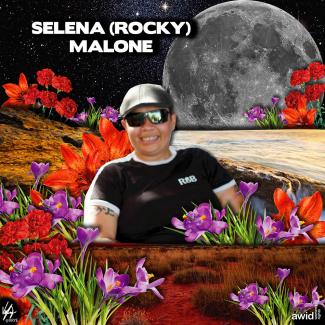
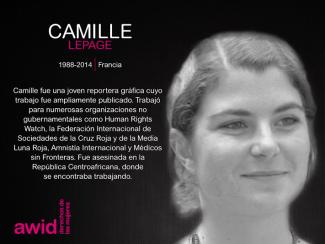
 

Rocky Malone, Australia

Snippet FEA Get Involved 2 (FR)

Si vous êtes de passage à Sao Paulo, au Brésil, visitez l'Occupation 9 de Julho et prenez un repas collaboratif. Vous pouvez aussi acheter leurs produits dans leur boutique en ligne depuis l'étranger.

Visitez la boutique en ligne de l'Association des Femmes Afro-Descendantes du Cauca du Nord où vous pouvez trouver de superbes produits faits à la main.

Il existe plusieurs façons de soutenir Metzineres : vous pouvez faire un don financier, offrir du matériel et des services, proposer une formation, un atelier ou une activité (pour plus d'informations, cliquez ici).

Debbie Stothard

Biography

During her 38-year career, Debbie Stothard, has worked with diverse communities and activists to engage states, IGOs and other stakeholders throughout Asia, Africa, Europe, and the Americas on human rights and justice. Her work is focused on the thematic priorities of business and human rights, atrocity prevention, and women’s leadership. Accordingly, she has either facilitated or been a resource person at nearly 300 training events in the past 15 years. Most of these were grassroots-oriented workshops delivered in the field, focused on human rights advocacy, economic literacy and business and human rights, and transitional justice and atrocity prevention. Her work in transitional justice and atrocity prevention has mainly focused on Burma/Myanmar, however she has provided advice on responses to other country situations around the world.

During 1981 – 1996, Debbie worked as a crime reporter, student organizer, policy analyst, academic, government advisor and food caterer in Malaysia and Australia while volunteering for human rights causes. In 1996, she founded ALTSEAN-Burma which spearheaded a range of innovative and empowering human rights programs. This includes ALTSEAN’s ongoing intensive leadership program for diverse young women from Burma, which in the past 22 years, has helped strengthen and expand women’s leadership in conflict-affected zones. She served as a member of the Board of the International Federation for Human Rights (FIDH) for 9 years as Deputy Secretary-General (2010-2013) and Secretary-General (2013 – 2019) during which she promoted the mission and profile of FIDH at approximately 100 meetings and conferences per year.

Add to stories
Off

Когда будут доступны результаты опроса?

Мы проанализируем ответы, чтобы получить представление о тенденциях, и представим результаты на 15-м Международном форуме AWID в Бангкоке, а также в режиме онлайн, в декабре 2024 года. Зарегистрируйтесь для участия в Форуме здесь!

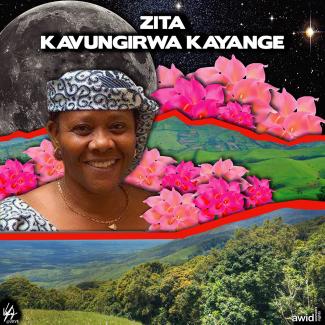
Zita Kavungirwa Kayange

Zita was a women’s rights activist who defended the rights of rural women in Greater Kivu.

She was the first Executive Director of UWAKI - a well known women’s organisation. Through her work with Women's Network for Rights and Peace (RFDP), and the Women's Caucus of South Kivu for Peace, she committed her life to helping to restore peace in the Eastern DRC. She spoke out strongly against the use of sexual violence as a weapon of war.

In 2006, she put herself forward as a candidate in the first democratic elections in the DRC. Although she did not win, she continued to advocate for women’s rights and the South Kivu community remembers her fondly. 


Zita Kavungirwa Kayange, Republic Democratic of Congo

Snippet FEA EoS The Ivy (FR)

An illustration of a vine with vine like leaves in neon with purple background

Le lierre
Communauté et quartier

Jemimah Naburri-Kaheru

Biography

Jemimah Naburri-Kaheru est une stratège internationale accomplie en matière de ressources humaines à impact profond dans la région de la Corne de l'Afrique. Jemimah était auparavant responsable régionale des ressources humaines et du bureau de l'Initiative stratégique pour les femmes dans la Corne de l'Afrique (SIHA) . Son influence s’est étendue jusqu’à la direction des ressources humaines de plus de 70 employé·e·s régionaux·ales, alors que l'organisation connaissait une croissance rapide, avec une augmentation de 40 % de ses revenus annuels. Tout au long de sa carrière, Jemimah a orchestré avec succès des efforts de recrutement, introduit des systèmes de performance basés sur le mérite, de même que supervisé les relations avec les employé·e·s et les politiques RH. Elle a joué un rôle central dans le soutien aux stratégies mondiales de personnel. Avec une formation universitaire en Études de Développement de l'Université de Makerere (Ouganda) et un Master en Gestion des Ressources Humaines, Jemimah est évidemment engagée envers le développement professionnel. Sa contribution à des effectifs hautement performants et à un leadership international en matière de ressources humaines la positionne comme un atout inestimable dans toute entreprise mondiale.

Position
Directrice adjointe des ressources humaines
Add to stories
Off

Membership why page - Paz Romero

"This community is a place for connections, to understand our individual fights as part of global struggles, and sometimes even dance! There aren’t places like this online where you can meet real grassroots activists from all over the world and build solidarity and sisterhood."

- Paz Romero, Argentina

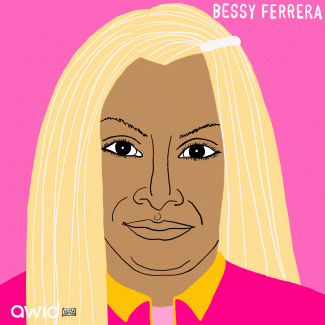
Bessy Ferrera

Bessy Ferrera was a lifelong defender of the human rights of trans people, sex workers and HIV positive people in Honduras.

Bessy was also a member of Arcoíris, an organisation which supports the LGBTI+ community. She was also a focal point person for the Right Here, Right Now (Derechos aquí y Ahora) Platform of Honduras, and advocated strongly for full citizenship of trans people, and the passing of a gender identity law that would allow trans people to change their gender identity legally.

"Since the beginning of the year [2019] the trans community has been suffering a series of attacks, for defending, for demanding rights." - Rihanna Ferrera (Bessy’s sister)

Bessy was a sex worker, and in early July 2019, was shot to death by two men while working in the streets of Comayagüela. Her assailants were subsequently arrested. 

Bessy is one of many LGBTI+ rights defenders in Honduras, who were murdered because of their identities and work. Other companeras include: Cynthia Nicole, Angy Ferreira, Estefania "Nia" Zuniga, Gloria Carolina Hernandez Vasquez, Paola Barraza, Violeta Rivas, and Sherly Montoya.

Bessy’s case is emblematic of injustice and a much larger problem of the systematic violence the LGBTI+ community faces in Honduras as the state fails to guarantee rights offer and fails to offer protection. This has created a culture of impunity.

Despite the risks LGBTI+ defenders in Honduras face, they continue their work to challenge and resist violence, and fight stigma and discrimination on a daily basis. 

“If I die, let it be for something good not for something futile. I don’t want to die running away, being a coward. If I die, I want people to say that I died fighting for what is mine.” - member of Arcoíris 

Snippet FEA We are living in a world (EN)

We are living in a world where the destruction of Nature fuels our current global economy.

Even in times of climate crisis, governments continue to encourage large-scale agriculture industries to expand. These activities poison the land, threaten biodiversity, and destroy local food production and livelihoods. Meanwhile, while women produce the majority of our food in the world, they own almost none of the land.

What if we perceived land and Nature not as private property to exploit, but as a whole to live in, learn from, and harmoniously coexist with? What if we repaired our relationships with the land and embraced more sustainable alternatives that nurture both the planet and its communities?

Nous Sommes la Solution (We Are the Solution, NSS) is one of many women-led movements striving to do this. This is their story.

Khaoula Ksiksi

Biography

Khaoula Ksiksi is a passionate advocate for justice, equity, and liberation. As a Gender, Equality, Diversity, and Inclusion (GEDI) Advisor, she works to make inclusivity a lived reality, not just a policy, across humanitarian programs and crisis contexts. She collaborates with teams to challenge structural oppression using bold, transformative tools rooted in lived experience.

Her activism began on the frontlines of Tunisia’s anti-racism movement. With Mnemty, she helped push through the country’s first anti-discrimination law, forcing a national reckoning with racial injustice. She later co-founded Voices of Black Tunisian Women to amplify Black women’s leadership, build solidarity networks, and demand visibility in a society that often silences them.

Khaoula is also a founding member of Falgatna, a radical queer-feminist movement fighting for SOGIESC rights and supporting LGBTQI+ communities through direct action, digital resistance, and survivor-centered advocacy.

Previously, she led regional feminist and climate justice projects at the Rosa Luxemburg Foundation in North and West Africa.

At the heart of her work is a deep belief: no one is free until we all are. Her activism is both a fight and a love letter to her people, her communities, and the world we deserve.

Add to stories
Off

Forum Homepage Banner

Inscrivez-vous au Forum !

Se rassembler à l’échelle mondiale, en tant qu’individus et mouvements, nous permet de générer une force considérable. Rejoignez-nous à Bangkok, en Thaïlande et en ligne en décembre 2024.

En savoir plus Inscription

Yelena Grigoriyeva

Yelena Grigoriyeva, a menudo conocida entre sus amigxs como Lena, fue una destacada defensora de los derechos LGBT en Rusia.

Formó parte de movimientos democráticos, anti-guerra y LGBT. En su activismo, fue una crítica feroz del Presidente Vladimir Putin y su administración, y expresó su oposición a la anexión por parte de Rusia de la península de Crimea de Ucrania y al maltrato de prisionerxs.

Yelena se declaró bisexual a principios de 2019. "Su salida del armario fue una sorpresa para mí, y no la aprobé. Le dije: ‘Escucha, Lena, ya estás en la mira por tu actividad política. Te acabas de clavar otro blanco en el pecho’". - Olga Smirnova

Yelena, de hecho, recibió múltiples amenazas de muerte y, según algunxs de sus conocidxs, figuraba en un sitio web homofóbico que instaba a sus visitantes a que persiguieran a las personas LGBT. Yelena denunció las amenazas a la policía, pero el Estado ruso no le proporcionó ningún tipo de protección.

Sin embargo, Yelena, a pesar de vivir en una sociedad en la que la oposición política, así como lxs integrantes de la comunidad LGBT y lxs defensores de sus derechos, se enfrentan a una violencia continua y creciente, siguió haciendo campaña por la justicia social y la igualdad.

"No se perdió ni una sola acción. Y la detuvieron tantas veces que hasta perdí la cuenta", Olga Smirnova (compañera activista de la oposición y amiga).

Yelena fue asesinada el 21 de julio de 2019, cerca de su casa. Las autoridades detuvieron a una persona sospechosa pero, según algunas fuentes, muchxs amigxs y compañerxs activistas creen que es un chivo expiatorio y que, en realidad, se trata de un asesinato político deliberado.

Para los familiares y amigxs de Yelena, su caso sigue sin resolverse aunque la persona sospechosa haya confesado.

En 2013, Rusia aprobó una ley que prohíbe la difusión de lo que describió como "propaganda gay". En 2014, Human Rights Watch publicó un informe al respecto.

Snippet FEA Agroecology And Food (EN)

AGROECOLOGY AND FOOD SOVEREIGNTY AS RESISTANCE

Today, large-scale industrial food production uses single-crop plantations, genetically modified organisms and other pesticides that destroy the land and knowledge of local communities.

Agroecology is a resistance to corporate-driven agriculture. It prioritizes smaller scale agriculture, multiple crops and diversified food production, and the centering of local knowledge and practices. Agroecology goes hand-in-hand with demands for food sovereignty, or the “right of peoples to healthy and culturally appropriate food produced through ecologically sound and sustainable methods, and their right to define their own food and agriculture systems”(Via Campesina, Declaration of Nyéléni).

The role of women, indigenous and rural communities and people of color from the Global South is absolutely essential when it comes to food systems. Feminist agroecologists are working to dismantle oppressive gender roles and systems of patriarchy embedded within food production. As shown by the heroines of NSS, they are generating a liberatory agroecology by strengthening community resilience, empowering women peasants and farmers, and preserving local traditions, territories, and knowledge of food-producing communities.