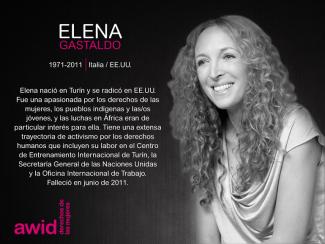
Elena Gastaldo
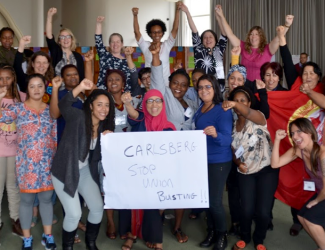
Women human rights defenders (WHRDs) worldwide defend their lands, livelihoods and communities from extractive industries and corporate power. They stand against powerful economic and political interests driving land theft, displacement of communities, loss of livelihoods, and environmental degradation.
Extractivism is an economic and political model of development that commodifies nature and prioritizes profit over human rights and the environment. Rooted in colonial history, it reinforces social and economic inequalities locally and globally. Often, Black, rural and Indigenous women are the most affected by extractivism, and are largely excluded from decision-making. Defying these patriarchal and neo-colonial forces, women rise in defense of rights, lands, people and nature.
WHRDs confronting extractive industries experience a range of risks, threats and violations, including criminalization, stigmatization, violence and intimidation. Their stories reveal a strong aspect of gendered and sexualized violence. Perpetrators include state and local authorities, corporations, police, military, paramilitary and private security forces, and at times their own communities.
AWID and the Women Human Rights Defenders International Coalition (WHRD-IC) are pleased to announce “Women Human Rights Defenders Confronting Extractivism and Corporate Power”; a cross-regional research project documenting the lived experiences of WHRDs from Asia, Africa and Latin America.
"Women Human Rights Defenders confronting extractive industries: an overview of critical risks and Human Rights obligations" is a policy report with a gender perspective. It analyses forms of violations and types of perpetrators, quotes relevant human rights obligations and includes policy recommendations to states, corporations, civil society and donors.
"Weaving resistance through action: Strategies of Women Human Rights Defenders confronting extractive industries" is a practical guide outlining creative and deliberate forms of action, successful tactics and inspiring stories of resistance.
The video “Defending people and planet: Women confronting extractive industries” puts courageous WHRDs from Africa, Asia, and Latin America in the spotlight. They share their struggles for land and life, and speak to the risks and challenges they face in their activism.
Challenging corporate power: Struggles for women’s rights, economic and gender justice is a research paper outlining the impacts of corporate power and offering insights into strategies of resistance.
AWID acknowledges with gratitude the invaluable input of every Woman Human Rights Defender who participated in this project. This project was made possible thanks to your willingness to generously and openly share your experiences and learnings. Your courage, creativity and resilience is an inspiration for us all. Thank you!
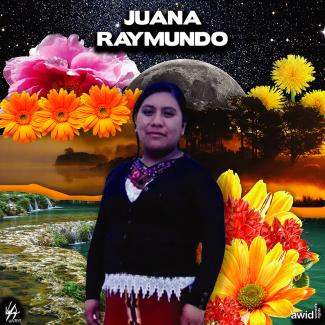
Membre de la communauté autochtone maya ixil, Juana était infirmière professionnelle et coordinatrice du Comité de développement des agriculteurs (CODECA)
CODECA est une organisation de défense des droits humains composée d'agriculteurs autochtones et vouée à la promotion des droits à la terre et du développement rural pour les familles autochtones dans la microrégion de Nebaj Quiché. Elle a d'abord rejoint le CODECA en tant que membre de la Juventud de CODECA (branche de la jeunesse).
Au moment de son décès, elle venait d’être élue membre du Comité exécutif du Mouvement de libération des peuples (MLP).
Le corps de Juana a été retrouvé par des voisins au bord d’une petite rivière sur la route située près de Nebaj et du village d’Acambalam, au Guatemala. Selon le CODECA, son corps portait des traces de torture.

Да, доступ к опросу можно получить с помощью смартфона.
Les presentamos una inspiradora selección de historias e imágenes poderosas de transformación y resistencia creadas por activistas, escritorxs y artistas feministas de todo el mundo.
Con más de 10 años de experiencia en finanzas, Lucy ha dedicado su carrera a misiones con y sin fines de lucro. También ha prestado trabajo voluntario para organizaciones sin fines de lucro. Desde el acelerado mundo de las finanzas, Lucy siente pasión por estar al día con las competencias tecnológicas asociadas con este ámbito. Lucy se incorporó a AWID en 2014. En su tiempo libre disfruta de la música, de viajar y de practicar una variedad de deportes.

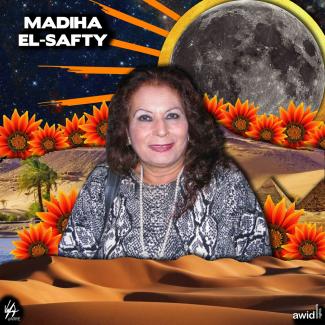
Madiha was a prominent Professor of Sociology who actively engaged with civil society as an advocate for women’s rights in the Arab region.
She chaired the Alliance for Arab Women and was a member of the Committee on Civil Society and the Committee on the Development of Minia Governorate with the National Council for Women. She produced numerous papers that shed light on, and analyzed, gender inequalities and discrimination against women.
She is remembered fondly by colleagues, students and friends.
Sim, encorajamo-lo a partilhar mais sobre questões importantes para si ao responder à(s) pergunta(s) aberta(s) no final do inquérito.
Partagez vos histoires et écoutez celles des les autres. En reliant nos expériences, nos récits et nos propositions, nous aidons à co-créer et à amplifier les Réalités Féministes.
Kasia soutient le travail des mouvements féministes et de justice sociale depuis 15 ans. Avant de rejoindre l'AWID, Kasia dirigeait les politiques et le plaidoyer d’ActionAid et d’Amnesty International, tout en se mobilisant avec des féministes et des groupes de justice sociale en Pologne pour l'accès à l'avortement et la lutte contre les violences aux frontières européennes. Kasia est passionnée par le ressourcement des organisations féministes dans tout leur courage, leur richesse et leur diversité. Elle partage son temps entre Varsovie et son village communautaire de bricolage dans la forêt. Elle adore les saunas et aime follement son chien Wooly.
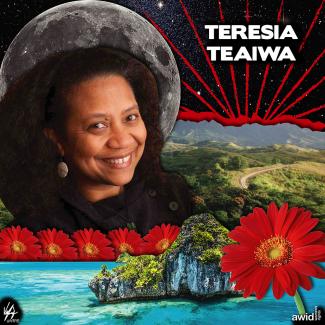
Retratada en The Guardian como uno de los íconos nacionales de Kiribati, Teresia fue una valiente activista.
Trabajó estrechamente con los grupos feministas en Fiji y que puso sus investigaciones al servicio de las cuestiones feministas y de género en el Pacífico. Además, fue coeditora de la publicación International Feminist Journal of Politics. Su influencia se extendió desde la frontera académica hasta los movimientos por la justicia social en la región de Oceanía.
Most Member States of the European Union have laws and practices that either criminalize or control sex workers in ways unacceptable to them. Criminalization of sex workers and/or their clients only contributes to increase the vulnerability of sex workers, who are already facing stigma, discrimination and exclusion from society on a daily basis. In Spain for example, the government is currently trying to pass an Organic Law for the Abolition of Prostitution, which will result in more clandestiny and violence. Let’s dive into the stories of sex workers and union organizers fighting to decriminilaze sex work and advance their labor rights.
سيتم جمع المعطيات لأهداف إحصائية لتسليط الضوء على وضع التمويل للحركات النسوية العالمية وسيتم عرضها فقط بشكل إجمالي. لن تنشر AWID المعلومات عن اي منظمة محددة ولن تعرض أي من المعلومات التي ستمكّن من التعرّف على منظمة عن طريق موقعها أو صفاتها دون موافقة المنظمة.
We believe in a full application of the principle of rights including those enshrined in international laws and affirm the belief that all human rights are interrelated, interdependent and indivisible. We are committed to working towards the eradication of all discriminations based on gender, sexuality, religion, age, ability, ethnicity, race, nationality, class or other factors.
Marta is a queer, transfeminist non-binary activist-researcher from ex-Yugoslavia, currently based in Barcelona. They work as a transnational movement organizer, a feminist economist and a weaver of systemic alternatives. They are the co-founder and one of the coordinators of the Global Tapestry of Alternatives, a global process that seeks to identify, document and connect alternatives on local, regional and global levels. Locally, they are engaged in anti-racist, transfeminist, queer, migrant organizing. They also hold a doctoral degree in Environmental Science and Technology from the Autonomous University of Barcelona, dedicated to decolonial feminist perspectives of a pluriverse of systemic alternatives and the creation of feminist alternative systems based on care and the sustainability of life. During their free time, they enjoy boxing, playing the guitar and the drums as part of a samba band, photography, hiking, cooking for loved ones and spoiling their two cats.
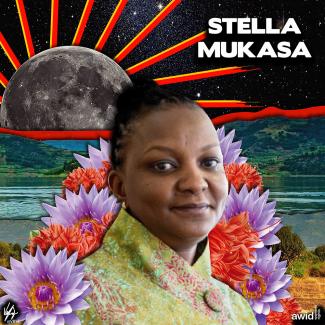
Stella a commencé sa carrière au ministère du Genre et du Développement communautaire en Ouganda. Elle œuvrait auprès des décideurs-euses politiques, pour encourager des réformes législatives, dont celle de la Constitution ougandaise en 1995 qui a entériné certaines des réformes les plus progressives pour les femmes dans la région.
Elle était adorée dans la région tout entière pour ses incessants efforts pour la création et l’application de lois et politiques sensibles au genre. Elle a joué un rôle clé dans l’ébauche de la loi sur les violences domestiques en Ouganda. Elle a aussi contribué à une mobilisation importante en faveur de Constitutions sensibles au genre à la fois en Ouganda et au Rwanda.
Par son travail au Centre international de recherches sur les femmes (International Center for Research on Women, ICRW), elle a abordé les thématiques de la violence à l’égard des enfants. Stella s’est attachée à renforcer les organisations locales qui luttent contre les violences basées sur le genre. Conférencière en Droits genrés et loi à l’université Makerere, elle a également siégé aux conseils d’administration d’Akina Mama wa Afrika, ActionAid International Uganda et l’Open Society Initiative for Eastern Africa.