AWID Forum: Co-creating Feminist Futures

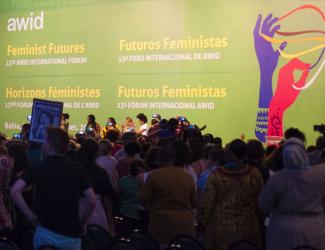
In September 2016, the 13th AWID international Forum brought together in Brazil over 1800 feminists and women’s rights advocates in a spirit of resistance and resilience.

This section highlights the gains, learnings and resources that came out of our rich conversations. We invite you to explore, share and comment!


What has happened since 2016?

One of the key takeaways from the 2016 Forum was the need to broaden and deepen our cross-movement work to address rising fascisms, fundamentalisms, corporate greed and climate change.

With this in mind, we have been working with multiple allies to grow these seeds of resistance:

And through our next strategic plan and Forum process, we are committed to keep developing ideas and deepen the learnings ignited at the 2016 Forum.

What happens now?

The world is a much different place than it was a year ago, and it will continue to change.

The next AWID Forum will take place in the Asia Pacific region (exact location and dates to be announced in 2018).

We look forward to you joining us!

About the AWID Forum

AWID Forums started in 1983, in Washington DC. Since then, the event has grown to become many things to many peoples: an iterative process of sharpening our analyses, vision and actions; a watershed moment that reinvigorates participants’ feminisms and energizes their organizing; and a political home for women human rights defenders to find sanctuary and solidarity.

Learn more about previous Forums

Related Content

Pourquoi et comment renouveler votre adhésion de l'AWID

Rencontrez d'autres membres

Nos membres individuel-le-s et institutionnels viennent de 163 pays situés dans TOUTES les régions du monde. Les dernier-ère-s membres à avoir rejoint notre association viennent de l’Inde, du Royaume-Uni, du Sri Lanka et du Kirghizistan. Nos membres contribuent un éventail riche et diversifié de perspectives, d’expériences, de connaissances, d’énergie et d’inspiration !

Connaissez-vous nos profils hebdomadaires de membres ?

En tant que membre de l’AWID, vous pourrez, entre autres avantages, voir votre propre histoire figurer dans la newsletter que nous envoyons à 35,000 abonné-e-s et que nous diffusons par le biais des médias sociaux auprès de 60,000 personnes.

Récemment en vedette :

Rencontrez Angila Ashitua, une jeune femme du comté de Vihiga, situé dans l’ouest du Kenya.

Rencontrez d'autres membres


Connectez, Inspirez, Mobilisez !

Comment ?

Et bien plus encore !

Vous pouvez renouveler votre adhésion pour une période d’1, 2 ou 3 ans. Nous offrons la possibilité d’une adhésion individuelle ou institutionnelle gratuite à ceux et celles dont les revenus ou budgets sont restreints.

Renouvelez votre adhésion dès aujourd’hui !

Si vous rencontrez des difficultés lors de votre identification en ligne et avez besoin d’aide, n’hésitez pas à me contacter à l’adresse suivante : membership@awid.org


Les témoignages de nos membre

« Nous trouvons que l’AWID est un réseau particulièrement stimulant et nous nous impliquons dans beaucoup de ses plateformes. » – Engabu Za Tooro (membre institutionnel de l’AWID)

« Je me réjouis d’entamer une collaboration fructueuse avec l’équipe. J’en suis très heureuse. Merci de m’avoir acceptée parmi vos membres. » – R. Chakraborty (membre individuelle de l’AWID)

« Je tiens à remercier infiniment l’AWID ! Vous accomplissez un travail gigantesque. Vos efforts sont grandement appréciés. » – E. Khan (membre individuelle de l’AWID)

Reason to join 6

Participez au Forum international de l'AWID - un rassemblement féministe mondial majeur - et bénéficiez de réductions spéciales et de points d'entrée pour le dialogue virtuel réservés aux membres de l'AWID. Co-créé par des mouvements féministes, le Forum est un espace unique de discussion profonde et d'imagination où nous remettons en question et renforçons notre organisation, et joignons nos luttes et nos réalités féministes.

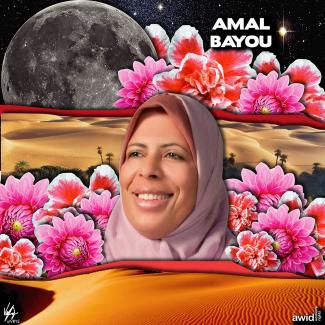
Amal Bayou

Amal was a prominent politician and parliamentarian in Libya. She was a faculty member at Benghazi University from 1995 until her death in 2017.

Amal was a civil society activist and a member of various social and political initiatives. She assisted the families of martyrs and the  disappeared, and was a founding member of a youth initiative called ‘’Youth of Benghazi Libya”. In the 2014 parliamentary elections, Amal was elected to the House of Representatives with more than 14,000 votes (the highest number of votes anyone received in the 2014 elections).

Amal will remain in the memories of many as a woman politician working to ensure a better future in one the most difficult and conflict-ridden contexts in the region.


Amal Bayou, Libya
Body

إلى متى يمكن الإجابة على الاستطلاع؟

وسيكون التحقيق مفتوحًا حتى 31 أغسطس 2024. الرجاء تكملته خلال هذا الوقت للتأكد بأن تشمل ردودكم/ن في التحليل.

Snippet FEA Union Otras Photo 1 (EN)

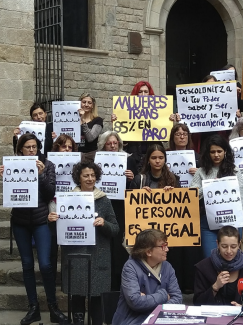
Photo shows shows four people with posters at a protest and in the middle a woman with a megaphone speaking.

8. Finalize and format

Your comprehensive research product is now all organized and edited. You now want to ensure your findings are visually accessible and appealing to facilitate the dissemination.

In this section

Package your long report for public dissemination

Consider developing smaller products along with your long report.

As mentioned in the “Synthesize your research findings,” AWID often pulls smaller products from the lengthy research report. This allows for wider and easier distribution specialized for key audiences.

Always keep your targeted population in mind: who will read your report?

Examples of smaller products distilled from a larger report:

  • Infographics
  • Online gallery
  • An animation presenting your arguments

1. Think as your audience thinks

People are bombarded with information constantly. Your product will have to be visually compelling to maintain the interest of your audience. Again, having an idea of what you hope to accomplish and who you hope to reach, will allow the designer to create targeted products.

A lengthy written PDF report may seem the only way to present your research, but it could appear overwhelming to most people – especially online.

If you want to share your product with an online community, think about creating memes and infographics to use on social media, blogs and web platforms.

When deciding whether to create smaller products, consider dividing your results into several smaller products that you could share with targeted populations or at different times of the year to reactivate the interest on your product.

2. Work with a professional designer

If you have limited time and a little bit of budget, we recommend hiring a design firm.

It can be tempting for economic reasons to use in-house staff to package your report. However, a professional graphic designer can make a huge difference on how your final product looks and thus on how much impact it will have!

The designer (in-house or hired) must be able to:

  • Show you samples of their previous work that is similar to what you seek.

  • Provide you clear advice on how to present your research based on the content you provide and the audience you are targeting.

  • Suggest additional or different pieces to package your product.

What the designer will need from you:

  • A general idea on what you would like the lengthy report to highlight through visuals and graphics (what are the most important pieces of information, the key findings, for example) and some ideas on the types of smaller products you want to create (brochure, an infographic, a series of viral memes, for example). If possible, show the designer examples of similar documents developed by other organizations.
  • Your budget and time frame.
  • Your organization’s visual guidelines if you have any (logo, official colours, fonts, etc...).
  • A few photos copyright free or access to your photo bank if you have one.
  • Key visuals that need to be included – graphs, tables and other visual graphics drawn from your research.

The designer is a graphic expert. S/he is not necessarily familiar with women’s issues and does not know the results of your research, especially if you hire an external firm.

Communicate what elements of this report is important to you and who is your target. The designer will propose a way to highlight these elements and make the whole piece appealing to your users.

3. Make sure it's consistent

While creating a set of smaller information products, do not forget to link them all together:

  • A shorter version of the report that focuses only on your final results and recommendations should present a link to the final, full report
  • A visually compelling infographic that sends a message on the state of funding for your particular research can link to your website and the related section of the full report. It should be associated with a call to share on social media.
  • A short animation video that uses the data, findings and recommendations from your report should link back to your organization website and social media
  • A series of viral memes that can be distributed online should link back to your report, infographic, shorter report, etc.

It is also important to keep the research staff involved, so they can ensure any offshoot products stay true to the actual findings of the research.

Back to top


Control the quality of the translations

After the design and packaging of the final research report is complete, if any of the wording of content was changed, be sure to re-send to translators.

If you create smaller products, once designed and packaged, you will also need to get the copy translated for those pieces. The translations should be clear enough so the designer can apply to the design, even if she/he does not speak the language.

Once translated, make sure to have your design proofread by a native speaker before sharing it!

Back to top


Previous step

7. Synthesize your research findings

Next step

9. Advocate and tell the world


Estimated time:

• 2-3 months

People needed:

• 1 or more research person(s)
• 1 or more editor
• Design staff or hiring design firm
• Translator(s), if necessary

Resources needed:

• List of online spaces for dissemination


Previous step

7. Synthesize your research findings

Next step

9. Advocate and tell the world


Ready to Go? Worksheet

Download the toolkit in PDF

Our values - Justice and systemic change

Justice and systemic change

We work towards a world based on social, environmental, and economic justice; and interdependence, solidarity, and respect. We work towards dismantling systems of oppressive power and against all its manifestations, including patriarchy, fundamentalisms, militarisms, fascisms and corporate power that threaten our lives and our world. We want a just world where resources and power are shared in ways that enable everyone to thrive.

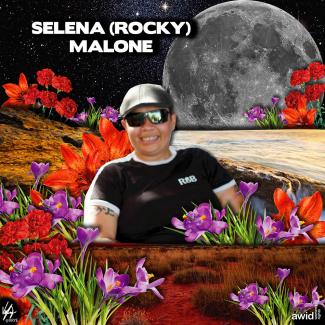
Selena “Rocky” Malone

Rocky mostró un liderazgo y una dirección inspiradoras en su trabajo con jóvenes lesbianas, gays, bisexuales, transgénero, intersex, queer, y personas transgénero indígenas de Australia (LGBTIQBBSG) en riesgo.

Rocky comenzó su carrera con el Servicio de Policía de Queensland como Oficial de Policía de Enlace. Para ella, hacer una diferencia era algo importante. Desarrolló una carrera impresionante trabajando con jóvenes LGBTIQBBSG como Gerente del Servicio Juvenil de Puertas Abiertas.

Rocky trabajó con lxs beneficiarixs en situaciones complejas, específicamente relacionadas con la identidad sexual y de género. Esta línea de trabajo le resultaba propia: era una líder comunitaria fuerte, una triunfadora discreta, una amiga leal, una persona que apoyaba compasivamente a lxs demás, alguien que producía el cambio. Rocky fue una de lxs fundadorxs de IndigiLez Leadership y de Support Groes.

En 2016, en la Corte Suprema de Brisbane, Michael Kirby, ex juez del Tribunal Supremo de Apelaciones, mencionó por su nombre a Rocky al elogiar el trabajo que el Servicio Legal LGBTI había desarrollado a lo largo de los años. Rocky luchó de forma extraordinariamente tenaz por los derechos humanos de la comunidad LGBTIQBBSG, corrió los límites y produjo cambios de una forma respetuosa y amorosa.


Rocky Malone, Australia
Body

Snippet - Home page promo WITM - FR

« Où est l’argent pour l’organisation des mouvements féministes? »

En s’appuyant sur nos 20 années d’efforts pour la mobilisation de davantage de financements de meilleure qualité pour des changements sociaux menés par des féministes, l’AWID vous invite à répondre à la nouvelle version de notre enquête phare intitulée WITM

JE PARTICIPE À L’ENQUÊTE! En savoir plus

Snippet FEA Union Otras Photo Panel (ES)

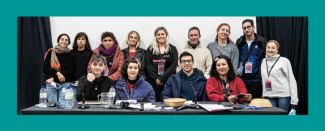
Un panel de 13 personas de pie detrás de una silla de conferencia. Sobre la mesa hay hojas de papeles, micrófonos y botellas de agua. Detrás de ellos se puede ver una pared blanca y cortinas negras.

Miembrxs del sindicato OTRAS

Nuestra visión: La justicia económica en un mundo feminista

En nuestra lucha por la justicia de género, económica, social y ambiental, en la paz, lxs feministas sabemos que no existe una sola receta para el éxito sino una gama de posibilidades que pueden y hacen que sucedan los cambios.


El menú de opciones es tan diverso como lo son nuestros movimientos y las comunidades en las que vivimos y luchamos.

Antes de atrevernos a presentar algunas de las formas en que lxs feministas nos imaginamos un mundo diferente, aquí están los principios que sostienen nuestras propuestas:

1. Desarrollo autodeterminado desde lo local hasta lo global

Creemos que no existe un modelo único aplicable a todxs y que todxs tienen derecho a reivindicar la construcción de ese otro mundo posible, como lo expresa el lema del Fondo Mundial..

Esto incluye el derecho a participar en la gobernabilidad democrática y de influir sobre el propio futuro, en el ámbito político, social y cultural.

La autodeterminación económica permite que los pueblos controlen sus recursos naturales y los utilicen de manera colectiva o para los fines que ellos mismos decidan. Además, la autonomía económica de las mujeres es fundamental para mitigar la naturaleza a menudo cíclica de la pobreza y la falta de educación, seguridad y protección.

2. Los derechos, la igualdad sustantiva y la justicia ocupan un lugar central en la economía

El principio de la igualdad sustantiva o de facto forma parte de la Convención sobre la Eliminación de Todas las Formas de Discriminación contra las Mujeres (CEDAW) y de otros instrumentos internacionales de derechos humanos. Es fundamental para el desarrollo y para lograr una economía justa ya que afirma que todos los seres humanos nacen libres e iguales.

La no discriminación forma parte intrínsecamente del principio de igualdad que garantiza que a nadie se le nieguen sus derechos por factores como la raza, el género, el idioma, la religión, la orientación sexual, la identidad de género, las opiniones políticas o de otra clase, el origen nacional o social, la propiedad o el nacimiento.

La dignidad intrínseca de todas las personas sin distinción alguna debe ser afirmada y respetada. Si bien los Estados tienen la responsabilidad de garantizar el uso de los máximos recursos de que disponen para la realización de los derechos humanos, la reivindicación de los derechos y la dignidad configura sobre todo un espacio clave para las luchas de la sociedad civil y la movilización popular.

3. Distribución justa para todxs, sin monopolización (el principio de la anticodicia)

Este principio, que se ejerce mediante esfuerzos organizados para transformar instituciones injustas, guía la recuperación del equilibrio entre «participación» (entrada) y «distribución» (salida) cuando se ha violado cualquiera de esos dos principios.

Implica ponerle un límite a toda acumulación monopólica de capital y otros abusos de la propiedad. Este concepto se apoya en un modelo económico que gira en torno a la ecuanimidad y la justicia.

4. La solidaridad entre feministas y entre movimientos es fundamental

Para que se produzcan cambios, necesitamos redes feministas fuertes y diversas. Necesitamos movimientos que construyan solidaridad desde lo personal hacia lo político, desde lo local a lo global, y viceversa.

La construcción de poder colectivo a través de los movimientos sociales ayuda a convertir la lucha por los derechos humanos, la igualdad y la justicia en una fuerza política para el cambio que no puede ser ignorada.

 «Únicamente los movimientos pueden crear cambios sostenidos a niveles que las políticas y las leyes solas no pueden alcanzar»


Para leer más sobre este tema, consulta Batliwala, S: 2012 «Cambiando el mundo: Conceptos y prácticas de los movimientos de mujeres», 2da edición. AWID.


Ver también

Las 5 grandes amenazas

¿Cómo se originó este proyecto?
Join the Feminist Realities journey (Forum page)

Únete al viaje por las Realidades feministas

Este Foro de AWID celebrará y difundirá las realidades feministas que nos rodean en diferentes etapas de desarrollo.

Únete a nosotrxs

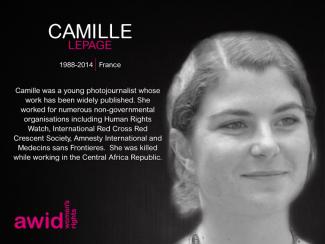
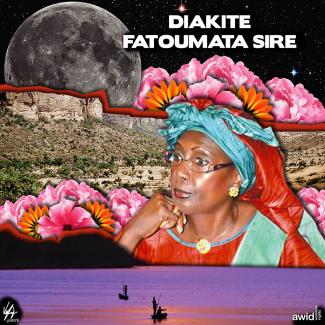
Diakite Fatoumata Sire

Diakite s'est activement impliquée dans la défense des femmes dans la vie politique et publique au Mali.

Elle a travaillé pour soutenir la formation des candidates aux élections et s'est élevée contre les mutilations génitales féminines (MGF). Elle était un ardente défenseure de la santé et des droits reproductifs.


Diakite Fatoumata Sire, Mali

Forum Homepage Banner

¡Inscríbete en el Foro!

Cuando la gente se reúne a escala global, como personas individuales y como movimientos, se genera una fuerza arrolladora. Únete a nosotrxs en Bangkok, Tailandia, y de manera virtual, en diciembre de 2024.

Conoce más Inscríbete