AWID Forum: Co-creating Feminist Futures

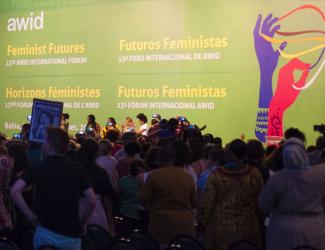
In September 2016, the 13th AWID international Forum brought together in Brazil over 1800 feminists and women’s rights advocates in a spirit of resistance and resilience.

This section highlights the gains, learnings and resources that came out of our rich conversations. We invite you to explore, share and comment!


What has happened since 2016?

One of the key takeaways from the 2016 Forum was the need to broaden and deepen our cross-movement work to address rising fascisms, fundamentalisms, corporate greed and climate change.

With this in mind, we have been working with multiple allies to grow these seeds of resistance:

And through our next strategic plan and Forum process, we are committed to keep developing ideas and deepen the learnings ignited at the 2016 Forum.

What happens now?

The world is a much different place than it was a year ago, and it will continue to change.

The next AWID Forum will take place in the Asia Pacific region (exact location and dates to be announced in 2018).

We look forward to you joining us!

About the AWID Forum

AWID Forums started in 1983, in Washington DC. Since then, the event has grown to become many things to many peoples: an iterative process of sharpening our analyses, vision and actions; a watershed moment that reinvigorates participants’ feminisms and energizes their organizing; and a political home for women human rights defenders to find sanctuary and solidarity.

Learn more about previous Forums

Related Content

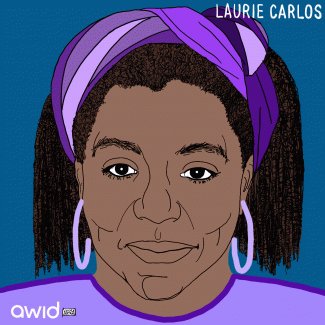
Laurie Carlos

Laurie Carlos was an actor, director, dancer, playwright, and poet in the United States. An extraordinary artist and visionary with powerful ways of bringing the art out in others. 

“Laurie walked in the room (any room/every room) with swirling clairvoyance, artistic genius, embodied rigor, fierce realness—and a determination to be free...and to free others. A Magic Maker. A Seer. A Shape Shifter. Laurie told me once that she went inside people’s bodies to find what they needed.” - Sharon Bridgforth 

She combined performance styles such as rhythmic gestures and text. Laurie mentored new actors, performers, writers and helped amplify their work through Naked Stages, a fellowship for emerging artists. She was an artistic fellow at Penumbra Theater and supported with identifying scripts to produce, with a goal of “bringing more feminine voices into the theater”. Laurie was also a member of Urban Bush Women, a renowned contemporary dance company telling stories of women of the African diaspora.

In 1976, as Lady in Blue, she made her Broadway debut in Ntozake Shange’s original and award-winning production of the poetic drama For colored girls who have considered suicide / when the rainbow is enuf. Laurie’s own works include White Chocolate, The Cooking Show, and Organdy Falsetto

“I tell the stories in the movement—the inside dances that occur spontaneously, as in life—the music and the text. If I write a line, it doesn’t necessarily have to be a line that is spoken; it can be a line that’s moved. A line from which music is created. The gesture becomes the sentence. So much of who we are as women, as people, has to do with how we gesture to one another all the time, and particularly through emotional moments. Gesture becomes a sentence or a state of fact. If I put on a script ‘four gestures,’ that doesn’t mean I’m not saying anything; that means I have opened it up for something to be said physically.” Laurie Carlos

Laurie was born and grew up in New York City, worked and lived in Twin Cities. She passed away on 29 December 2016, at the age of 67, after a battle with colon cancer.


Tributes:  

“I believe that that was exactly Laurie’s intention. To save us. From mediocrity. From ego. From laziness. From half-realized art making. From being paralyzed by fear.
Laurie wanted to help us Shine fully.
In our artistry.
In our Lives.” - Sharon Bridgforth for Pillsbury House Theatre

“There’s no one that knew Laurie that wouldn’t call her a singular individual. She was her own person. She was her own person, her own artist; she put the world as she knew it on stage with real style and understanding, and she lived her art.” - Lou Bellamy, Founder of Penumbra Theater Company, for Star Tribune 
Read a full Tribute by Sharon Bridgforth

Snippet - Take the quiz FR

Répondez au quiz 

Où est l’argent pour l’organisation des mouvements féministes ?

Que connaissez-vous du financement féministe ? Répondez au quiz de l’AWID Où est l’argent pour l’organisation des mouvements féministes ? pour tester vos connaissances 

Répondez au quiz en ligne Téléchargez et imprimez le quiz

Leila Hessini

Biography

Leila est une dirigeante, défenseuse et conseillère féministe transnationale qui compte plus de 25 ans d'expérience dans la promotion des droits humains, de l'égalité des genres et de la santé et des droits sexuels et reproductifs, ainsi que de la justice au niveau local et mondial. Née en Algérie, Leila a fait ses études aux États-Unis, en France et au Maroc. Au cours de sa carrière professionnelle, elle a vécu et travaillé en Afrique, en Europe et aux États-Unis.  

Elle a occupé le poste de vice-présidente des programmes au Fonds mondial pour les femmes (GFW) pendant plus de cinq ans, où elle a supervisé son octroi de subventions stratégiques, le renforcement des mouvements, le plaidoyer mondial et les collaborations philanthropiques.  Au sein du GFW, elle a doublé le montant de ses subventions pour atteindre plus de 17 millions de dollars, a lancé son travail sur les mouvements et les crises féministes et axées sur le genre, a créé un programme pour les adolescentes dirigé par un conseil consultatif de filles et a dirigé son travail de plaidoyer philanthropique.  Avant cela, elle a fait partie de l'équipe de direction d'Ipas de 2002 à 2016, où elle a publié de nombreux articles sur le droit à l'avortement et la justice, dirigé des actions de plaidoyer mondiales et établi des partenariats avec des groupes féministes travaillant sur l'autogestion, la mobilisation communautaire et la réduction de la stigmatisation autour de l'intégrité corporelle et des droits sexuels et reproductifs.  Alors qu’elle était basée en Afrique du Nord, elle a cofondé une société de conseil féministe intersectionnelle, Strategic Analysis for Gender Equality (SAGE), qui travaillait sur les intersections entre l'économie, le genre et les droits sexuels et reproductifs, et a dirigé le travail national, régional et mondial sur le genre du bureau du Caire de la Fondation Ford pendant 5 ans. 

Leila dispose d'une vaste expérience dans les domaines de l'éducation populaire, le plaidoyer, l'organisation à but non lucratif, le développement de conseils d'administration, la philanthropie et le suivi et l'évaluation. C'est une communicatrice compétente qui privilégie une approche intersectionnelle pour centrer et amplifier les voix et les expériences des personnes les plus marginalisées.  Elle a reçu la bourse Op-ed Public Voices de la Fondation Ford et a été boursière Fulbright au Maroc.  Ses publications couvrent un large éventail de sujets, notamment les approches féministes et décoloniales de la philanthropie, la promotion des droits humains des femmes dans les contextes majoritairement musulmans, les stratégies féministes visant à promouvoir la justice reproductive, la promotion du recours des femmes aux avortements autogérés et la lutte contre la stigmatisation et la discrimination. 

 Leila est actuellement coprésidente du conseil du Center for Constitutional Rights et membre du conseil de Highlander Research and Education. Elle fait également partie du conseil de responsabilité du Numun Feminist Technology Fund et du comité consultatif de la Plateforme des femmes défenseuses des droits humains d'Afrique.  Elle a précédemment siégé aux conseils d'administration de SisterSong Women of Color Reproductive Justice Collective, du Réseau mondial des femmes pour les droits sur la reproduction, du Fonds mondial pour les femmes, du Safe Abortion Access Fund et du Reproductive Health Technologies Project. Elle a été élue trésorière et membre du comité exécutif du conseil d'administration de Prospera et a siégé au comité directeur du Fonds Fenomenal pendant quatre ans. Leila est titulaire d'une maîtrise en santé publique et d'une maîtrise en études sur la région du Moyen-Orient et de l'Afrique du Nord, a étudié le droit islamique au Maroc et a poursuivi des études doctorales en sociologie en France. Elle a étudié l'arabe et l'allemand et parle couramment le français et l'anglais.

Position
Trésorier
Add to stories
Off

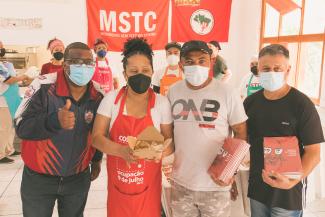
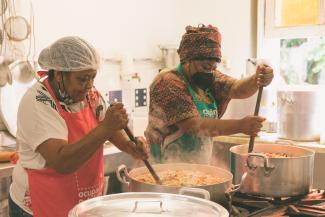
Snippet FEA Occupation’s kitchen (FR)

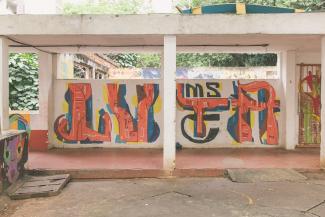
Photo of a wall with a graffiti which says “Luta’
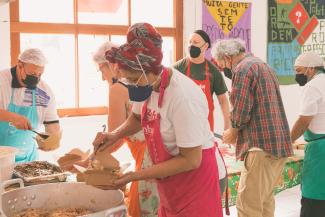
Photo of people in facemasks and aprons cooking together
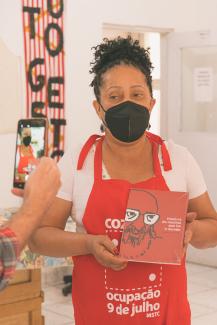
Photo of a black woman in a red apron and black facemask, holding a book
Photo of a group of 4 of people wearing facemasks, demonstrating food and books

Femmes et collaborateurs à la cuisine de l'Ocupação 9 de Julho

Photo of two black women cooking

Fadila M.

Fadila M. fue una activista tribal soulaliyate de Azrú, en la región Ifrane de  Marruecos. Luchó contra una forma específica de discriminación territorial dirigida a  las mujeres tribales.

Como parte del Movimiento de Mujeres Soulaliyate por el Derecho a la Tierra, trabajó para reformar el marco legislativo relacionado con la administración de la propiedad comunitaria, a través de la adopción, en 2019, de tres proyectos de ley que garantizan la igualdad de mujeres y varones.

Según las leyes consuetudinarias vigentes, las mujeres no tenían derecho a beneficiarse de la tierra, en especial aquellas que eran solteras, viudas o divorciadas. En Marruecos, los derechos a las tierras colectivas eran transmitidos tradicionalmente entre los varones de la familia mayores de 16 años. Desde 2007, Fadila M. ha sido parte del movimiento de mujeres, la primera movilización nacional de base por los derechos a la tierra. Una de sus conquistas ha sido que, en 2012, las mujeres soulaliyate pudieron registrarse por primera vez en las listas de beneficiarixs, y recibir compensaciones relacionadas con la cesión de tierras. El movimiento también logró la enmienda del dahir (decreto del Rey de Marruecos) de 1919, para garantizar el derecho a la igualdad de las mujeres.

Fadila M. falleció el 27 de septiembre de 2018. Las circunstancias de su muerte no son claras. Participó en una marcha de protesta relacionada con el tema de las tierras colectivas y, si bien las autoridades informaron que su muerte fue accidental y que tuvo un paro cardíaco camino al hospital, la sección local de la Asociación de Derechos Humanos de Marruecos (AMDH) señaló que Fadila fue sofocada por un miembro de la fuerza policial utilizando una bandera marroquí. Su familia solicitó una investigación, pero los resultados de la autopsia no fueron dados a conocer.

Más información sobre el Movimiento de Mujeres Soulaliyate por el Derecho a la Tierra (en inglés)


Nota: Como no ninguna fotografía/imagen de Fadila M. disponible, la obra de arte (en lugar de un retrato) pretende representar por lo que luchó y trabajó: la tierra y los derechos a vivir y tener acceso a esa tierra y lo que crece en ella.

WITM - Refreshed DATA SNAPSHOTS - EN

Data Snapshots

Our collective power, wisdom, and commitment have no boundaries, but our bank accounts do.

Data snapshots are based on the responses of 1,174 feminist, women’s rights, LGBTQI+, and allied organizations (hereafter referred to as “feminist and women's rights organizations”) from 128 countries to the Where is the Money for Feminist Organizing? survey.

Explore Data Snapshots

Alexandra Lamb Guevara

Biography

Alexandra es una feminista anglo-colombiana con más de 20 años de experiencia en programas locales, nacionales e internacionales sobre VIH y salud y derechos sexuales y reproductivos. Posee amplia experiencia en movilización de recursos y en relaciones con los donantes con fundaciones filantrópicas privadas y organismos multilaterales en nombre de ONG internacionales, nacionales y locales, sobre todo en América Latina y el Caribe. Antes de AWID, Alexandra trabajó en la Fundación Si Mujer, que presta servicios de aborto feminista, y como educadora en Colombia, RedTraSex y la International HIV/AIDS Alliance.

Es Licenciada en Relaciones Internacionales y Estudios para el Desarrollo de la Universidad de Sussex y posee un Máster en Salud Pública de la Escuela de Higiene y Medicina Tropical de Londres. En los pocos momentos en que no está trabajando o maternando, adora practicar natación, comer y, recientemente, comenzó a jugar al Zelda: Breath of the Wild con su hijo.

Position
Responsable, Movilización de Recursos
Add to stories
Off

Snippet FEA NORTH CAUCA Left (EN)

NORTH CAUCA, COLOMBIA

Asociación de Mujeres Afrodescendientes del Norte del Cauca


WE DESERVE

MORE!

Rosa Candida Mayorga Muñoz

Rosa Candida Mayorga Muñoz était une travailleuse sociale, leader syndicale et défenseure des droits humains du Guatemala. On la surnommait affectueusement Rosita. 

Dans les années 1980, Rosa devient la première femme à siéger au comité exécutif du syndicat de l’Institut d’électrification nationale (STINDE), syndicat qu’elle avait rejoint en premier lieu pour défendre les droits des femmes au travail. Cela signifiait, à ses yeux, de lutter pour l’égalité des chances dans une entreprise où de nombreuses femmes affrontaient un système discriminatoire et violent mis en place par la direction de l’entreprise. Rosa avait également subi du harcèlement sexuel sur son lieu de travail, tant de la part de collègues que de responsables. Elle n’entendait cependant pas rester silencieuse. 

Rosa a continué à se battre et fait partie des efforts pour façonner la lutte afin qu’elle prenne la forme du « Pacte collectif pour les conditions de travail du INDE-STINDE ». Ce pacte était le premier du genre et le premier au Guatemala à caractériser le concept de harcèlement (sexuel). Il fait désormais référence dans la loi guatémaltèque pour les questions de travail, et sert d’encouragement aux autres syndicats.

« Elle n’avait d’autres outils pour se battre que ses propres idéaux... Elle a été intimidée à plusieurs reprises, harcelée pour abandonner la lutte, mais son courage a fait naître l’espoir chez les syndicalistes de la base. Rosita a créé une image de respect non seulement au sein de son syndicat mais également face aux autorités de l’institution et au sein du mouvement des femmes. Elle a été reconnue comme une pionnière du mouvement des femmes du syndicat, dans un espace qui avait davantage été dominé par les hommes. » - Maritza Velasquez, ATRAHDOM

Rosa est décédée le 4 avril 2018, elle avait 77 ans.

Snippet - COP30 - 6th International Rights of Nature Tribunal - EN

6th International Rights of Nature Tribunal: A New Pledge for Mother Nature

Where frontline organizers lead and corporations are held accountable.

📅 Tuesday, November 11, 2025
📍 Online and at the Universidade Federal do Pará, Belém

More info here

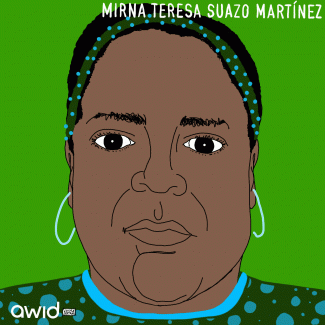
Mirna Teresa Suazo Martínez

Mirna Teresa Suazo Martínez was part of the Garifuna (Afro-descendent and Indigenous) Masca community, living on the North Caribbean coast of Honduras. She was a community leader and a fervent defender of the Indigenous territory, a land that was violated when the National Agrarian Institute of Honduras gave territorial licenses to people outside of the community. 

This deplorable deed resulted in repeated harassment, abuse and violence against the Masca, where economic interests of different groups met those of Honduran armed forces and authorities. According to the Black Fraternal Organization of Honduras (OFRANEH), the strategy of these groups is to evict and exterminate the Indigenous population.

“Masca, the Garifuna community located next to the Cuyamel Valley, is part of the area of influence of one of the supposed model cities, a situation that has triggered territorial pressures along the Garifuna coast.” - OFRANEH, 8 September 2019

Mirna Teresa, president of the Board of Trustees of the Masca Community in Omoa, was also firmly rejecting the construction of two hydroelectric plants on the river that carries the same name as her community, Masca.

“The Garífuna community attributes the worsening of the situation in their region to their opposition to tourist exploitation, the monoculture of African palm and drug trafficking, at the same time that it seeks to build an alternative life through the cultivation of coconut and other products for self-consumption.” - Voces Feministas, 10 September 2019 

Mirna Teresa was murdered on 8 September 2019 in her Restaurant “Champa los Gemelos”. 

She was one of six Garifuna women defenders murdered between September and October 2019 alone. According to OFRANEH, there was no investigation by the authorities into these crimes.

“In the case of the Garífuna communities, a large part of the homicides are related to land tenure and land management. However, squabbles between organized crime have resulted in murders, such as the recent ones in Santa Rosa de Aguán.” - OFRANEH, 8 September 2019

Snippet - COP30 - Resistance Hubs Section Title - ES

Nodos de resistencia por la justicia climática

Comment l’AWID a-t-elle débuté ?

L’AWID a fait ses débuts en 1982 et s’est transformée au fil du temps.

Pour mieux connaître notre histoire

Lire « From WID to GAD to Women's Rights: The First 20 Years of AWID » (disponible uniquement en anglais).

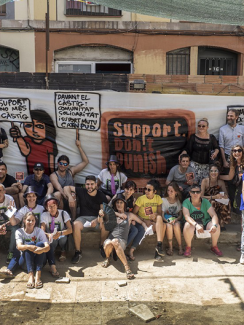
Snippet FEA Metzineres activists (FR)

A crowd of people sitting in front of a banner which says ‘support, don't punish”;
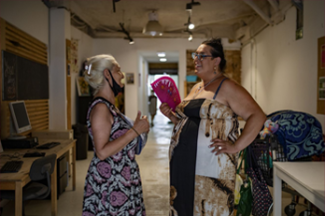
Photo of two women talking to each other, one of them is holding a handheld fan.
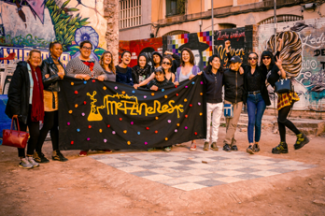
Crowd of people with a black banner that says Metzineres in yellow.
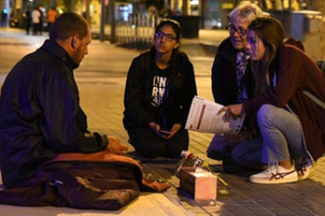
Photo of four people sitting on the ground and talking
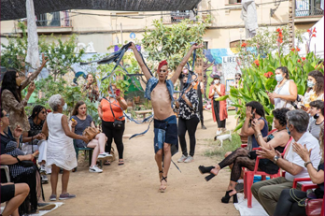
Photo people with plants around them, most of them sitting and clapping to a person who is walking in the middle


Des militants de Metzineres en action

Feminist Realities Magazine

Description
Feminist realities are the living, breathing examples of the worlds we know are possible.
Add to stories
On

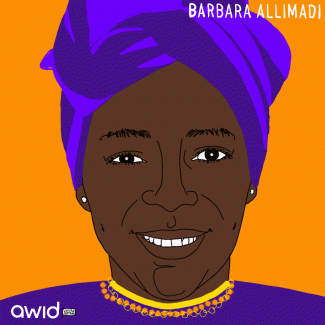
Barbara Allimadi

Barbara Allimadi fue una activista política y defensora de los derechos humanos de Uganda. En 2012, co-organizó una protesta contra la agresión policial a Ingrid Turinawe, una figura política de la oposición, que fue televisada y muestra cómo un policía le aprieta el pecho. Durante la protesta, Barbara, junto con otras compañeras activistas, se quitaron la ropa hasta quedarse en sujetador frente a la Estación Central de Policía de Kampala. Este hecho pasó a conocerse en Uganda como la infame "protesta de los sujetadores".

"Nos decidimos por la protesta de los sujetadores. Pensamos que sería lo más apropiado para lo que había sucedido. Con esta acción, no es que estuviésemos diciendo que no nos respetásemos a nosotras mismas. Estábamos indignadas con lo que había sucedido." - Barbara Allimadi, 2013 (Daily Monitor, en inglés)

Barbara se licenció en Ingeniería Electrónica y de Comunicaciones en la Universidad Metropolitana de Londres, y ejerció como ingeniera de redes en el Reino Unido. Era,además, una fan entusiasta de la música reggae. Regresó a Uganda en 2007, cuando su madre falleció.

En 2019, fue nombrada Coordinadora de Asuntos Internacionales y de la Diáspora de la Alianza para la Transformación Nacional (ANT, por sus siglas en inglés), un partido político lanzado ese año por un líder de la oposición.

"Queremos garantizar la seguridad de la vida y la propiedad,  no el dolor, las lesiones o incluso la muerte a manos de unas fuerzas de seguridad que se supone deberían protegernos. Y lo más importante, queremos un entorno estable y propicio donde podamos realizar nuestros sueños y aspiraciones". - Barbara Allimadi, video de ANT (en inglés)  

Barbara falleció el 27 de abril de 2020.


Tributos:

"Estaba muy orgullosa de mi hermana por muchas razones, pero, en particular, por su intrépida búsqueda de la paz, la democracia, la justicia y la igualdad en Uganda. En los momentos más álgidos de su activismo, Barbara lideró muchas marchas por las calles de Kampala, hacia las comisarías de policía y el Parlamento". - Doris Allimadi, hermana de Barbara

"Nos enteramos con profunda tristeza del prematuro fallecimiento de Barbara Allimadi. Ella ha sido una fuerza valiente, implacable y valerosa para el movimiento de liberación de Uganda. Queremos dar nuestro más sentido pésame a su familia. La echaremos mucho de menos". - Akina Mama wa Afrika (tweet, 28 April 2020)

"El fallecimiento de Barbara es una noticia muy triste para nosotrxs y para toda su familia. Barbara dedicó su vida a luchar por la justicia, la libertad y los derechos de las personas desde la sociedad civil, hasta que se unió, recientemente, al partido." Maj Gen Mugisha Muntu, coordinador nacional de la ANT (por sus siglas en inglés)

"Una hermana hermosa, encantadora, divertida, carismática e inspiradora. Mis hijxs han perdido a su tía. Uganda ha perdido a una audaz y valiente defensora de la libertad. Barbara dijo una vez: "Mientras siga habiendo aliento en ti, sigue trabajando por conseguir tus sueños". - Doris Allimadi, hermana de Barbara.