Flickr/Leonardo Veras (CC BY 2.0)

Protection of the Family

The Issue

Over the past few years, a troubling new trend at the international human rights level is being observed, where discourses on ‘protecting the family’ are being employed to defend violations committed against family members, to bolster and justify impunity, and to restrict equal rights within and to family life.

The campaign to "Protect the Family" is driven by ultra-conservative efforts to impose "traditional" and patriarchal interpretations of the family, and to move rights out of the hands of family members and into the institution of ‘the family’.

“Protection of the Family” efforts stem from:

  • rising traditionalism,
  • rising cultural, social and religious conservatism and
  • sentiment hostile to women’s human rights, sexual rights, child rights and the rights of persons with non-normative gender identities and sexual orientations.

Since 2014, a group of states have been operating as a bloc in human rights spaces under the name “Group of Friends of the Family”, and resolutions on “Protection of the Family” have been successfully passed every year since 2014.

This agenda has spread beyond the Human Rights Council. We have seen regressive language on “the family” being introduced at the Commission on the Status of Women, and attempts made to introduce it in negotiations on the Sustainable Development Goals.


Our Approach

AWID works with partners and allies to jointly resist “Protection of the Family” and other regressive agendas, and to uphold the universality of human rights.

In response to the increased influence of regressive actors in human rights spaces, AWID joined allies to form the Observatory on the Universality of Rights (OURs).  OURs is a collaborative project that monitors, analyzes, and shares information on anti-rights initiatives like  “Protection of the Family”.

Rights at Risk, the first OURs report, charts a map of the actors making up the global anti-rights lobby, identifies their key discourses and strategies, and the effect they are having on our human rights.   

The report outlines “Protection of the Family” as an agenda that has fostered collaboration across a broad range of regressive actors at the UN.  It describes it as: “a strategic framework that houses “multiple patriarchal and anti-rights positions, where the framework, in turn, aims to justify and institutionalize these positions.”
 

Related Content

Snippet - WITM To share - AR

لمشاركة تجاربكم/ن المعاشة بما يتعلق بتمويل منظمتكم/ن

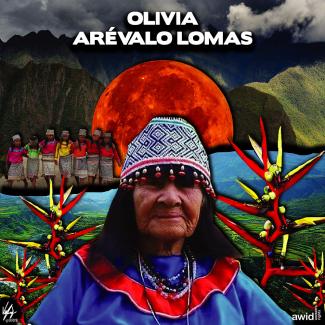
Olivia Arévalo Lomas

Olivia was the spiritual leader of the Shipibo Konibo indigenous peoples.

A wise Indigenous woman and grandmother, she was known for cultivating traditional medicine and the sacred songs of her people (Íkaros). Olivia Arevalo was an active defender of the cultural and environmental rights of her people. Olivia’s murder occurred in a context of territorial conflict between the Shipibo community and companies that desire to take over their land to cultivate palm oil.

Members of her community have said: “Her death is an aggression against the entire Shipibo community. She was the living memory of her people”.


Olivia Arévalo Lomas, Peru

Defending our land and ourselves from corporate power

These industries 'extract' raw materials from the Earth: mining, timber, gas, oil are some examples

This economical model exploits nature and as it intensifies, so does the inequality between global North with their large corporations, and the global South, where resources are extracted.

Land contamination, water pollution, environmental damage, communities displaced are only some of the consequences.

Find more on our report on EXTRACTIVE INDUSTRIES

There are sustainable alternatives for the environment and women's rights.


Snippet FEA Brisa Escobar Quote (ES)

“Mis sueños y objetivos siempre han sido los mismos que los de Lohana Berkins: que la cooperativa siga de pie y no cierre. Seguir dándole este lugar a nuestras compañeras travesti, darles trabajo y un lugar de apoyo”

Brisa Escobar,
presidenta de la Cooperativa

Snippet - WITM Start the survey 1 - AR


Globe

الاستطلاع متاح باللغات العربية، الإنجليزية، الفرنسية، البرتغالية، الروسية والاسبانية!

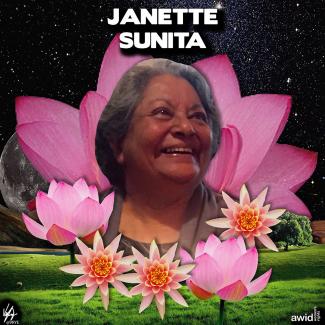
Janette Sunita

De la India, Janette era enérgica, extraordinaria, compasiva y amorosa.

Su intolerancia de la injusticia y su firme compromiso de defender los derechos de todas las personas la llevaron a trabajar en TARSHI (una ONG que trabaja en temas de la sexualidad y la salud y derechos sexuales y reproductivos) durante más de 15 años. Janette dirigió con destreza las finanzas, los recursos humanos y los aspectos operativos del trabajo de TARSHI, atravesando hábilmente la laberíntica burocracia a la que están sometidas las ONG indias.

Lxs integrantes de su equipo recuerdan que «Ella se quedaba vigilando, de manera que pudiéramos seguir el rumbo en aguas abiertas. Mujer de muchos talentos, Janette no sólo nos ayudó a conseguir nuestra propia oficina sino que también la diseñó para una utilización óptima». Amaba viajar y a los animales, y estaba interesada en la terapia asistida por animales.


Janette Sunita, India

Voici votre guide pratique et les infographies «Vers un écosystème de financement féministe»

Snippet FEA Map of Georgia (FR)

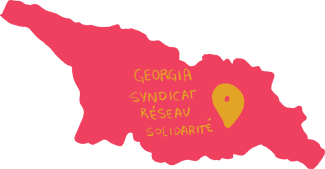
Cette image montre les pays de la Géorgie et de l'Espagne en rose corail turquoise avec des épingles jaunes indiquant l'Espagne, l'Union OTRAS, et l'Union du réseau de solidarité de la Géorgie sur les cartes.

Snippet - WITM Our objectives - RU

Задачи исследования «Где деньги?»:

1

Предоставить членам AWID, партнерам и донорам обновленный, мощный, основанный на фактических данных и ориентированный на конкретные действия анализ ресурсных реалий феминистских движений, а также текущего состояния экосистемы финансирования феминистских инициатив.

2

Выявить и продемонстрировать возможности для увеличения и улучшения финансирования феминистских организаций, выявить ошибочные решения и препятствовать тенденциям, приводящим к нехватке финансирования и/или противоречащим гендерной справедливости и межсекторальным феминистским повесткам.

3

Сформулировать феминистское видение, предложения и программы по обеспечению ресурсами.

Пройти опрос!

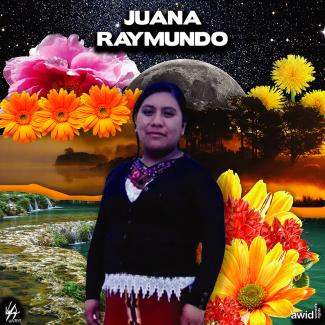
Juana Raymundo

Membre de la communauté autochtone maya ixil, Juana était infirmière professionnelle et coordinatrice du Comité de développement des agriculteurs (CODECA)

CODECA est une organisation de défense des droits humains composée d'agriculteurs autochtones et vouée à la promotion des droits à la terre et du développement rural pour les familles autochtones dans la microrégion de Nebaj Quiché. Elle a d'abord rejoint le CODECA en tant que membre de la Juventud de CODECA (branche de la jeunesse). 

Au moment de son décès, elle venait d’être élue membre du Comité exécutif du Mouvement de libération des peuples (MLP).

Le corps de Juana a été retrouvé par des voisins au bord d’une petite rivière sur la route située près de Nebaj et du village d’Acambalam, au Guatemala. Selon le CODECA, son corps portait des traces de torture.


Juana Raymundo, Guatemala

The AWID Forum Access Fund

We strive to make the AWID Forum a truly global gathering with participation from a diverse array of movements, regions and generations. To this end, AWID mobilizes resources for a limited Access Fund (AF) to assist some participants with the costs of attending the Forum. 

The 14th AWID International Forum will take place 11-14 January 2021, in Taipei, Taiwan. 


How will  the Access Fund be allocated?

For this AWID Forum, there will be no application process. 

Access Fund grants will be allocated by invitation only to:

  • Two  persons per activity selected for the Forum program (decided by those organizations, groups or individuals organizing the activity) 
  • Participants who identify as part of Priority Forum  Constituencies (PFCs) recommended by the organizations, networks and groups who are co-creating the Forum with AWID. 
  • PFCs are those which we consider would strengthen our collective power as movements, are not centered in mainstream feminist movements, and whose Feminist Realities we would like to honor, celebrate and visibilize: 
    - Black feminists 
    - Indigenous feminists
    - Trans, gender non-conforming and intersex feminists
    - Feminists with disabilities 
    - Feminist sex workers and informal workers, including migrant workers
    - Feminists affected by migration 
    - Women affected by drug policy
    - Feminists from the Forum regions (with a focus on the Pacific and mainland China) 

In addition, AWID will fund approximately 100 participants from the Forum’s location. Forum Committee Members (Content and Methodology, Access and Host) as well as those in the Artists Working Group [link] are also granted Access Fund support.

What does the Access Fund cover?

For selected participants, the Access Fund will cover the cost of their:

  • Flight
  • Accommodation
  • Visa
  • Local transportation in Taipei
  • Travel medical insurance

The Access Fund will NOT cover their: 

  • Forum registration fee
  • Transportation to and from the airport in their city of departure
  • Other incidental costs

Apart from the Access Fund, how can I fund my participation at the Forum?

We have listed other ideas on how to fund your participation at the AWID Forum on the Funding Ideas page. 

More Funding Ideas

Snippet FEA collaborator and allies Photo 2 (EN)

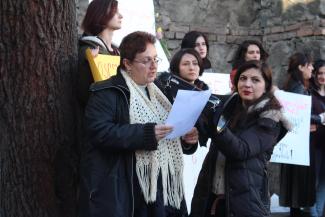
The photo on depicts eight women standing together during a protest. Many are holding banners while Sopo is holding the megaphone close to the mouth of a woman worker with short red hair, wearing a white scarf and a black coat reading a manifesto.

لماذا عليّ أن أفكر بتعبئة الاستطلاع؟

هنالك العديد من الأسباب لتعبئة الاستطلاع منها أنه لديك الفرصة لمشاركة تجربتك المعاشة المتعلقة بحشد الموارد لدعم تنظيمك، أن تعمل/ين من منطلق قوة كخبير/ة بما يتعلق بالأموال ولأين تتحرك ولأين تصل وبذلك المشاركة بالجهد المشترك والمناصرة لتحريك التمويلات الأكبر والأفضل. لقد أثبت استطلاع "أين المال" في العشرين عام الأخيرة أنه مصدر أساسي للشركاء/ الشريكات وكذلك للممولين/ات. ندعوك من كل قلبنا للمشاركة بالنسخة الثالثة لتسليط الضوء على الوضع الفعلي للموارد، وتحد الحلول الخاطئة، والإشارة إلى كيفية تغيير التمويل حتى تزدهر الحركات وتواجه التحديات المعقدة في عصرنا.

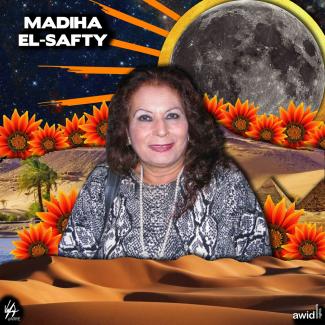
Madiha El Safty

Madiha was a prominent Professor of Sociology who actively engaged with civil society as an advocate for women’s rights in the Arab region.

She chaired the Alliance for Arab Women and was a member of the Committee on Civil Society and the Committee on the Development of Minia Governorate with the National Council for Women. She produced numerous papers that shed light on, and analyzed, gender inequalities and discrimination against women.

She is remembered fondly by colleagues, students and friends.


Madiha El Safty, Egypt