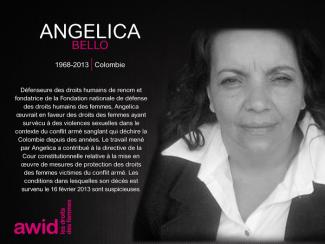
Angelica Bello
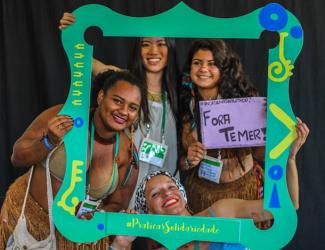
Young feminist activists play a critical role in women’s rights organizations and movements worldwide by bringing up new issues that feminists face today. Their strength, creativity and adaptability are vital to the sustainability of feminist organizing.
At the same time, they face specific impediments to their activism such as limited access to funding and support, lack of capacity-building opportunities, and a significant increase of attacks on young women human rights defenders. This creates a lack of visibility that makes more difficult their inclusion and effective participation within women’s rights movements.
AWID’s young feminist activism program was created to make sure the voices of young women are heard and reflected in feminist discourse. We want to ensure that young feminists have better access to funding, capacity-building opportunities and international processes. In addition to supporting young feminists directly, we are also working with women’s rights activists of all ages on practical models and strategies for effective multigenerational organizing.
We want young feminist activists to play a role in decision-making affecting their rights by:
Fostering community and sharing information through the Young Feminist Wire. Recognizing the importance of online media for the work of young feminists, our team launched the Young Feminist Wire in May 2010 to share information, build capacity through online webinars and e-discussions, and encourage community building.
Researching and building knowledge on young feminist activism, to increase the visibility and impact of young feminist activism within and across women’s rights movements and other key actors such as donors.
Promoting more effective multigenerational organizing, exploring better ways to work together.
Supporting young feminists to engage in global development processes such as those within the United Nations
Collaboration across all of AWID’s priority areas, including the Forum, to ensure young feminists’ key contributions, perspectives, needs and activism are reflected in debates, policies and programs affecting them.
Luchar contra viento y marea: la historia de la victoria sin precedentes de la Red de Solidaridad
En enero de 2022, la Red de Solidaridad organizó una huelga con 400 trabajadorxs. ¿Su principal demanda? Aumentar los salarios. La huelga fue convocada después de meses de conversaciones fracasadas con el Ministerio de Asuntos Sociales de Georgia como parte de un conflicto laboral.
Después de semanas de protestar, negociar, hablar con la prensa, resistir represalias y soportar el frío del invierno georgiano, lxs trabajadorxs obtuvieron concesiones sin precedentes del gobierno: aumento de los salarios, prestaciones por maternidad, cobertura de los costos de transporte, el cese de despidos, la compensación por los días de huelga, y más.
La huelga no solo resultó en ganancias materiales, sino que también hizo que lxs trabajadorxs se sintieran unidxs y empoderadxs para defenderse y luchar por condiciones de trabajo dignas ahora y en el futuro. Se convirtieron en una fuente de inspiración para todxs lxs trabajadorxs del país.
Puedes leer más sobre su victoria aquí.
Expande tus fronteras. Lxs afiliadxs de AWID representan de forma creciente una intersección diversa y vibrante de feministas que trabajan, entre otras cosas, en temáticas asociadas a la tierra, los derechos de lxs trabajadorxs, los derechos sexuales y la autonomía corporal. Al afiliarte, puedes conectar tus luchas con las de otros movimientos.
O tempo estimado para preencher o inquérito é 30 minutos.
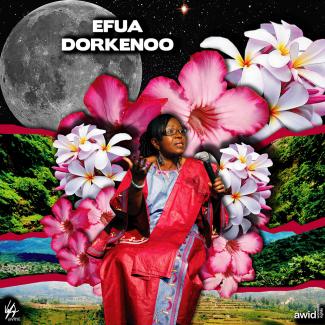
Affectueusement connue sous le nom de « Mama Efua », Efua a lutté contre les mutilations génitales féminines (MGF) pendant trois décennies et a contribué à attirer l'attention et l'action de la communauté internationale pour mettre fin à cette pratique néfaste.
En 1983, Efua a cofondé FORWARD (fondation pour la santé, la recherche et le développement des femmes), qui est devenue une organisation de premier plan dans la lutte contre les MGF. Son livre intitulé « Cutting the Rose: Female Genital Mutilation » (couper la rose), publié en 1994, est considéré comme le premier ouvrage sur les mutilations génitales féminines. Il figure parmi « Les 100 meilleurs livres africains du XXe siècle » de l’Université de Columbia.
Originaire du Ghana et infirmière de formation, Efua a rejoint l'OMS en 1995 et a réussi à faire en sorte que les mutilations génitales féminines fassent partie des agendas politiques des États membres de l'OMS. Elle a également travaillé en étroite collaboration avec le gouvernement nigérian pour élaborer une politique nationale globale qui servirait de base légale aux lois nigérianes contre les mutilations et qui est toujours en vigueur à ce jour.
Son travail de pionnière a abouti à une campagne menée par l'Afrique intitulée « The Girl Generation », qui s'est engagée à mettre fin aux MGF en une génération. Efua a montré comment une seule personne peut devenir la voix unificatrice d'un mouvement : « Une identité partagée peut aider à rassembler des activistes d'horizons différents dans un but commun ». Ces mots, emplis de sagesse, sont plus pertinents que jamais.
Welcome to Crear | Résister | Transform: a festival for feminist movements!
AWID is committed to creating an online space that invites and challenges us all to operate from a place of courage, curiosity, generosity and shared responsibility.
We invite you to co-create spaces with us that are free of harassment and violence, where everyone is respected in their gender identity and expression, race, ability, class, religion, language, ethnicity, age, occupation, type of education, sexuality, body size, and physical appearance. Spaces where we recognize inequalities in our world and strive to transform them in our own interactions with each other.
This means that we are able to listen, understand and relate to each other. To feel close, in spite of it all being virtual. For this, we will make interpretation available and open channels (like chat and other tools) for you to react and share. To hear each other better, we invite you to wear headphones during the conversation. If it is possible for you , we suggest that you close your email and any other likely source of distraction while you are in the conversation.
Let us celebrate the multiple ways in which knowledge shows up in our lives. We invite you to approach the conversation with curiosity and openness to learn from others, allowing ourselves to unlearn and relearn through the exchange, as a way to start collectively building knowledge.
We are committed to holistically approaching accessibility by being mindful of different physical, language, mental and safety needs. We want a space that is welcoming of folks from various backgrounds, beliefs, abilities and experiences. We will be proactive but we also ask that you communicate your needs with us, and we will do our best within our capacity to address these needs.
We all commit individually and collectively to respect each other’s privacy and to seek people’s consent before sharing any images or content generated during the conversation that involves them.
Creating a safer, respectful and enjoyable environment for the conversations, is everybody's responsibility.
If you notice that someone is behaving in a discriminatory or offensive manner, please contact the reference person who will be indicated at the beginning of the session.
Any participants that express oppressive language or images, will be removed from the call and will not be readmitted. We will not engage with them in any way.
L’Organisation Sindicale des Travailleur·euses du Sexe (Organización Sindical de Trabajadoras del Sexo, OTRAS) est le premier syndicat de travailleur·euses du sexe de l'histoire de l'Espagne. Le syndicat est née de la nécessité de garantir les droits sociaux, juridiques et politiques des travailleur·euses du sexe dans un pays où les mouvements d'extrême droite se renforcent au jour le jour.
Après des années de lutte contre le système juridique espagnol et les groupes abolitionnistes du travail du sexe qui ont appelé à sa fermeture, OTRAS a finalement obtenu son statut légal de syndicat en 2021.
Son objectif? Décriminaliser le travail du sexe et garantir des conditions et des environnements de travail décents pour tous·tes les travailleur·euses du sexe.
Le syndicat représente plus de 600 travailleur·euses du sexe, dont beaucoup de personnes immigrantes, racialisées, trans, queer, ou de genre non-conforme.
Nous célébrons le droit de chacun·e à choisir son identité, ses relations, ses objectifs, son travail, ses rêves et ses plaisirs, et ce qu'iel fait de son esprit, de son corps et de son âme. Nous croyons qu'il est nécessaire de travailler à l'accès aux ressources, aux informations et à des environnements sûrs et favorables qui permettent d'atteindre cet objectif.
طبعاً! هذه الأسئلة اختيارية. نقدّر جداً حقكم بالسرية. الرجاء تعبئة الاستطلاع دون علاقة بقراركم/ن بمشاركة اسم المجموعة، المنظمة أو الحركة أو تفاصيل التواصل معكم/ن.
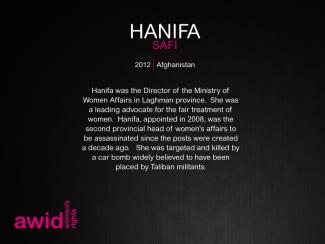
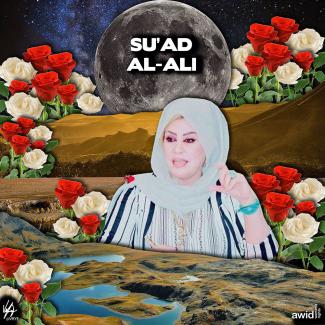
Su’ad was a strong advocate of women’s and children’s rights, and was the head of Al-Weed Al-Alaiami - an Iraqi human rights organisation.
She participated in the July 2018 demonstrations that took place in Basra and several other Iraqi cities protesting unemployment and demanding jobs and proper public services for citizens, as well as calling for the elimination of rampant corruption.
On 25 September 2018, Su’ad was assassinated in the Al-Abbasiyah district in downtown Basra. A video of the incident showed a person approaching her as she was getting into her car, firing a bullet at the back of her head and pointing another bullet at her driver Hussain Hassan, who was injured in the shoulder. Al-Ali was 46 and the mother of four children.
Given the current world situation, our Board of Directors has taken the difficult decision to cancel Forum scheduled in 2021 in Taipei.
Да, пожалуйста! Мы просим распространить ссылку на опрос среди своих коллег по сети. Чем больше различных точек зрения мы соберем, тем более полным будет наше понимание финансового положения феминистских организаций.
“Afterwards
After love the first time,
Our naked bodies and minds
A hall of mirrors,
Wholly unarmed, utterly fragile,
We lie in one another's arms
Breathing with care,
Afraid to break
These crystal figurines.” - Fahmida Riaz
Her work faced harsh criticism from conservatives, who accused her of using erotic and “pornographic” expressions in her poetic language.
Fahimida was eventually blacklisted and charged with sedition under Section 124A of the Pakistan Penal Code) during the dictatorship of Zia Ul Haq. Forced into exile in 1981, she spent almost seven years in India before returning to Pakistan.
As part of the preface to “Badan Dareeda” ('The Torn-Bodied'), a collection of poetry published in 1974, she wrote:
The brilliance of Fahmida was in defying any singular logic or categories of gender, nation, religion or culture. She refused to be put in the role of a ‘woman poet’, breaking with traditional definitions of feminine poetry and concepts and themes (ranging from political consciousness, body, culture, desire, religion, home) and knocking down inhibitions put on her gender.
“You have to understand that culture can have no essence. Cultures move, flowing into one another, forming new cultures. Culture is born this way. There is no clash of cultures.”
Fahmida authored more than 15 books on poetry and fiction including her poem ‘Taaziyati Qaraardaaden’ (‘Condolence Resolutions’) that might serve as an appropriate tribute to her life and legacy and a collection of poems (Apna Jurm To Saabit He ‘My Crime Stands Proven’) published in 1988 during her time in exile.
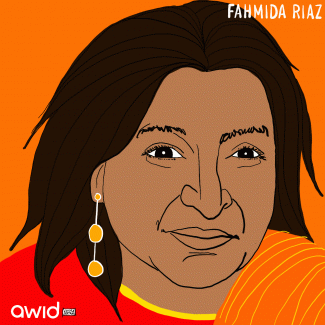
Fahmida Riaz was born in Meerut, India on 28 July 1946 and passed away on 21 November 2018 in Lahore, Pakistan.