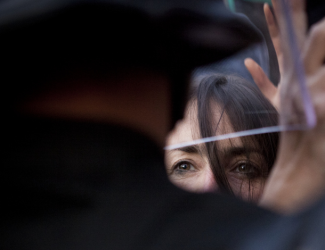
Philippe Leroyer | Flickr (CC BY-NC-ND 2.0)

Special Focus

AWID is an international, feminist, membership organisation committed to achieving gender equality, sustainable development and women’s human rights

Women Human Rights Defenders

WHRDs are self-identified women and lesbian, bisexual, transgender, queer and intersex (LBTQI) people and others who defend rights and are subject to gender-specific risks and threats due to their human rights work and/or as a direct consequence of their gender identity or sexual orientation.

WHRDs are subject to systematic violence and discrimination due to their identities and unyielding struggles for rights, equality and justice.

The WHRD Program collaborates with international and regional partners as well as the AWID membership to raise awareness about these risks and threats, advocate for feminist and holistic measures of protection and safety, and actively promote a culture of self-care and collective well being in our movements.


Risks and threats targeting WHRDs  

WHRDs are exposed to the same types of risks that all other defenders who defend human rights, communities, and the environment face. However, they are also exposed to gender-based violence and gender-specific risks because they challenge existing gender norms within their communities and societies.

By defending rights, WHRDs are at risk of:

  • Physical assault and death
  • Intimidation and harassment, including in online spaces
  • Judicial harassment and criminalization
  • Burnout

A collaborative, holistic approach to safety

We work collaboratively with international and regional networks and our membership

  • to raise awareness about human rights abuses and violations against WHRDs and the systemic violence and discrimination they experience
  • to strengthen protection mechanisms and ensure more effective and timely responses to WHRDs at risk

We work to promote a holistic approach to protection which includes:

  • emphasizing the importance of self-care and collective well being, and recognizing that what care and wellbeing mean may differ across cultures
  • documenting the violations targeting WHRDs using a feminist intersectional perspective;
  • promoting the social recognition and celebration of the work and resilience of WHRDs ; and
  • building civic spaces that are conducive to dismantling structural inequalities without restrictions or obstacles

Our Actions

We aim to contribute to a safer world for WHRDs, their families and communities. We believe that action for rights and justice should not put WHRDs at risk; it should be appreciated and celebrated.

  • Promoting collaboration and coordination among human rights and women’s rights organizations at the international level to  strengthen  responses concerning safety and wellbeing of WHRDs.

  • Supporting regional networks of WHRDs and their organizations, such as the Mesoamerican Initiative for WHRDs and the WHRD Middle East and North Africa  Coalition, in promoting and strengthening collective action for protection - emphasizing the establishment of solidarity and protection networks, the promotion of self-care, and advocacy and mobilization for the safety of WHRDs;

  • Increasing the visibility and recognition of  WHRDs and their struggles, as well as the risks that they encounter by documenting the attacks that they face, and researching, producing, and disseminating information on their struggles, strategies, and challenges:

  • Mobilizing urgent responses of international solidarity for WHRDs at risk through our international and regional networks, and our active membership.

Related Content

Will there be pre-Forum convenings this time around?

We have been contacted by global and regional partners about some ideas for pre-Forum convenings and we will share more information about these ideas soon.

If you plan to organize a meeting before the Forum please let us know!

Contact us


Many beautiful things emerged from the 2016 Black Feminisms Forum (BFF) that was organized by an Advisory Group and funded by AWID. Some of the independent organizing that arose from the BFF include Black feminist organizing in Brazil. While we won’t have another BFF this year, we remain committed to sharing some key learnings with anyone interested in continuing work around Black feminist organizing.

Snippet Festival Days 8-13_Fest (EN)

Day, jour, día 8 festival - Sept. 16, 2021
Panel
Body Pleasure for Fat Girls 

Amy Lin

watch panel


Workshop
Broadening Pleasure

Hedone

watch workshop 


Workshop
#EmptyChairs campaign

Caroline Tagny, Coalition of African Lesbians
Carrie Shelver, Sexual Rights Initiative
Emeline Dupuis, Sexual Rights Initiative
Pooja Badarinath, Sexual Rights Initiative
Pooja Patel, International Service for Human Rights
Antje Schupp


Workshop
Feminist Realities:
Breathing & Healing Houses for Defenders

Ana María Hernández Cárdenas, Consorcio Oaxaca
Nallely Tello Méndez, Red Nacional de Defensoras de Derechos Humanos en México
Jelena Dordevic Liana Funes, National Network of Women Human Rights Defenders in Honduras
Rebeca Girón
Tania Lopes Muri, Movimento de Mulheres da Região dos Lagos
Rogéria Peixinho


Fem Movement
Members Dance Party Extravaganza

DJ Cozmic Cat


Day, jour, día 9 festival - Sept. 17, 2021
Storytelling
Unfettered Education:
Fatoumata's Story

Lina Baaziz

watch video


Instagram Live:

Sex Education

Oloricoitus

watch video


Workshop
Voices from the frontlines:
Bolstering collective power to end the incarceration of women worldwide
 

Claudia A. Cardona, Mujeres Libres Colombia
Phyllis Hardy, National Council for Incarcerated and Formerly Incarcerated Women and Girls
Grace Natalia, Womxn’s Voice and Women and Harm Reduction International Network
Mónica Marginet Flinch, Metzineres
Kenya Cuevas, Casa de las Muñecas Tiresias A.C.
Dawn Harrington, Free Hearts

watch workshop


Workshop
Movement as Healing,
Healing for Movements


Kimalee Phillip
Luz Stella Uspina Murillo, Fondo Acción Urgente para América Latina y el Caribe
Sara Munarriz-Awad, Fondo Acción Urgente para América Latina y el Caribe
Tai Pelli
Everdith (Evie) Landrau


Workshop
Emergent feminist leadership:
Lifting as we climb

Deborah A, Black LGBTQ Migrant Project (BLMP)
Anima Adjepong, Silent Majority
Maame Adwoa Marfo, FRIDA
Debbie Owusu-Akyeeah, Canadian Centre for Gender and Sexual Diversity


Day, jour, día 10 festival
Panel
Pleasure Across Borders

Lindiwe Rasekoala
Lizzie Kiama
Jovana Drodevic
Malaka Grant

watch video


Panel
Abortion realities:
strategies to fight reproductive injustice

Lindiwe Rasekoala
Lizzie Kiama
Jovana Drodevic
Malaka Grant


Day, jour, día 11, festival
Workshop
Networking and Solidarity Building Among Young Feminist Organizers

Nino Ugrekhelidze, AWID
Anwulika Ngozi
Okonjo Pooja Singh


Panel
Surviving the war on drugs

Ganna Dovbakh, Eurasian Harm Reduction Association (EHRA)
Priscila Gadelha, Rede Nacional de Feministas Antiproibicionistas (RENFA)
Veronica Russo, Red Latinoamericana y del Caribe de Personas que Usan Drogas (LANPUD)
Diana Edem, Heartland Alliance International
Judy Chang, International Network of People who Use Drugs (INPUD)
Louise Vincent, NC Urban Survivors Union
Aura Roig, Metzineres
Malicia, Live Artist

watch panel


Panel
Young Climate Feminists Building Radical Futures:
Video Launch and Conversation

Sanam Amin, Asia Pacific Forum on Women, Law and Development
Maggie Mapondera, Womin African Alliance
Maria Alejandra Escalente, FRIDA
Patricia Miranda Wattimena, Asia Indigenous Peoples Pact
Mara Dolan, WEDO
Andrea Vega Troncoso, WEDO

watch panel


Workshop
Antal: Non-binary Universe

Malicia Sabina, Resistencia No Binarix
Andras Yareth Hernández, Resistencia No Binarix

watch workshop


Day, jour, día 12, festival
Panel
Thank you, I can make my decision

Grace Chang, Taiwan Association for Disability Rights
Angel Hsu, Taiwan Association for Disability Rights
Joyann Peng, Taiwan Association for Disability Rights
Amy Wu, Taiwan Association for Disability Rights

watch panel


Panel
Feminist learnings on digital security in times of socio political and sanitary crisis

Paul Nail Ojeda
Paola Moss


Workshop
The current state of forests:
what’s the issue and why is it so important?

Camila Romero, VientoSur
Kanta Marathe, Navrachna Samaj Sevi Sansthan
Jeanette Sequeira, Global Forest Coalition

Download Resources  Descargar Recursos  Télécharger Les Ressourceses

Visit the AWID Members Lounge

Jessica Whitbread, AWID


Day, jour, día 13 festival
Workshop
Supporting the self-managed:
abortion doulas, acompanantes and radical networks of support

Aditi Pinto, Inroads
Daniela Tellez Del Valle, Di RAMONA
Sandra Cardona, Necesito Abortar México
Mickreen Adhiambo, Aunty Jane Hotline and MAMA Network
Zachi Brewster, Dopo Abortion Support
Ika Ayi, Samsara

watch panel


Workshop
Young Feminist Skill-Share:
How to Fund Your Idea

Nino Ugrekhelidze, AWID
Cassie Denbow
Nida Mushtaq


"Yo Imposible"
Watch Party & Discussion with Latin American Filmmakers from AWID's Feminist Film Club

Alejandra Laprea
Patricia Ortega
Alejandra Henriquez
Maria Torrellas
Carolina Reynoso
Camila Rodó
Micol Mtzener
Giovana Garcia

Snippet - Intro WITM - PT

Com base na nossa história de 20 anos de mobilização de mais fundos de melhor qualidade para a mudança social liderada por feministas, a AWID convida a participar da nova edição da nossa pesquisa principal:

"Onde está o dinheiro para a organização feminista?"

(WITM)

PARTICIPE NO INQUÉRITO!Veja o tutorial

Please select your language in the upper right corner of the page.

Elisa Badayos

Elisa era coordinadora de la organización de derechos humanos Karapatan, en la Provincia de Negros Oriental de Filipinas.

También era organizadora de comunidades urbanas empobrecidas de la Provincia de Cebú, y trabajaba con Desaparecidos, una organización de familiares de personas desaparecidas.

Elisa y dos de sus colegas fueron asesinadxs el 28 de noviembre de 2017 por dos hombres no identificados en Barangay San Ramón, en la ciudad de Bayawan de la Provincia de Negros Oriental, durante una misión que investigaba presuntas violaciones de derechos territoriales en la zona.

La sobreviven cuatro hijxs.
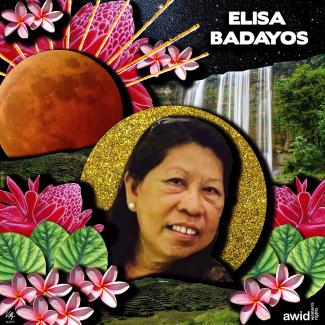


Elisa Badayos, Philippines

Where and when will the next AWID Forum take place?

The 14th AWID International Forum will take place 20-23 September 2021 in Taipei, Taiwan.

Find out more!

Club de Cine Feminista: Leitis in Waiting & programa de América Latina y Centroamérica

En esta selección de películas encontrarán las voces de realizadoras que no solo se contentan con plasmar las realidades feministas que palpitan en cada rincón de este vasto y diverso territorio sino también trabajos que desde su gestación misma están cuestionando el para qué, quién y cómo se hace cine o audiovisual. Realizadoras o colectivos que entienden al cine como una herramienta de lucha, como algo más que imágenes que se disfrutan en una pantalla, que ven al cine y al audiovisual como instrumentos para potenciar una discusión o abrir un debate; en fin, como un recurso para la pedagogía popular y feminista.
Snippet - WITM To make - AR

لجعل الواقع المركّب لتمويل الأشكال المختلفة من التنظيم النسوي، مرئي

Guadalupe Campanur Tapia

Guadalupe était une activiste environnementale impliquée dans la lutte contre le crime à Cherán, au Mexique.

En 2011, Guadalupe a aidé à renverser le gouvernement local. Elle participait à des patrouilles de sécurité locale, notamment dans les forêts municipales et faisait partie des dirigeant-e-s autochtones de Cherán qui ont appelé les gens à défendre leurs forêts contre l’abattage implacable et illégal. Son travail pour les aînés, les enfants, les travailleurs-euses a fait d'elle une icône dans sa communauté.

Elle a été assassinée à Chilchota, au Mexique, à environ 30 kilomètres au nord de Cherán, sa ville natale.
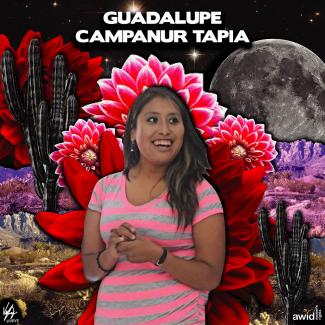


Guadalupe Campanur Tapia, Mexico

Do You Want To Organize Your Own Festival?_ES Snippet

¿Quieres organizar tu propio festival?

Consulta nuestra Guía Superbreve para organizar Festivales Feministas y otros eventos globales en línea.
Descargar aqui

Snippet - WITM About the survey - RU

Об опросе

  • Глобальный и разнообразный: Размышления о ресурсных реалиях феминистских организаций в глобальном и региональном масштабе.
  • Контекстуализированный: Объединение голосов, точек зрения и опыта феминистских движений во всем их богатстве, смелости и разнообразии.
  • Совместно созданный: Разработка и апробация опроса в тесном сотрудничестве с членами AWID и партнерками(-рами) по движению.
  • Дополняющий: С помощью активисток(-тов), феминистских грантодательниц(-телей) и союзниц(-ков), дополняет и усиливает имеющуюся информацию о состоянии ресурсов организаций, занимающихся вопросами феминизма, прав женщин и гендерной справедливости.
  • Многоязычный: Доступен на арабском, английском, французском, португальском, русском и испанском языках.
  • Конфиденциальность и безопасность прежде всего: Мы обязуемся обеспечить конфиденциальность и неприкосновенность ваших данных. Ознакомьтесь с нашей политикой конфиденциальности, чтобы понять, какие меры мы принимаем, чтобы защитить полученные от вас сведения.
  • Доступный: Доступен для людей с различными нарушениями слуха, зрения, движений и когнитивных способностей. Прохождение опроса занимает около 30 минут.
  • Воспроизводимый: Может быть воспроизведен различными организациями в специфических контекстах; инструменты для проведения опроса будут доступны для широкой аудитории для проведения дополнительных исследований и адвокации.

Ursula K Le Guin

Ursula was an American novelist who worked mainly in the genres of fantasy and science fiction.

She found fame with The Left Hand Of Darkness, which imagines a future society where people are ambisexual – they have no fixed sex. It explores the effects of gender and sex in society, and was one of the first major feminist science fiction books. Ursula was inspiring in her subversive and original writing, and also for the themes of feminism and freedom she held so dearly.

In a 1983 address at Mills College in California, she told graduates: “Why should a free woman with a college education either fight Macho-man or serve him? Why should she live her life on his terms? I hope you live without the need to dominate, and without the need to be dominated.”
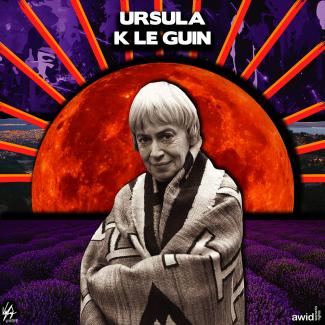


Ursula K Le Guin, USA

Snippet FEA Intro (FR)

Venez découvrir les économies féministes que nous ADORONS.

Quand nous parlons d'économie, nous parlons de comment nous organisons nos sociétés, nos foyers et nos lieux de travail. Comment vivons-nous ensemble? Comment est-ce que nous produisons la nourriture, organisons les soins, ou assurons notre santé et celle de nos communautés? L'économie concerne également la manière dont nous accédons et gérons les ressources, et nos relations avec les autres, avec nous-mêmes et avec la Nature.

Les féministes ont construit des alternatives économiques aux systèmes capitalistes d'exploitation depuis des lustres. Ces alternatives existent ici et maintenant, et elles sont les piliers des mondes plus justes et plus durables dont nous avons tant besoin et que nous méritons.

Nous sommes ravi·es de vous présenter certaines de ces alternatives économiques féministes et les collectifs à travers le monde qui nous inspirent.
Snippet - WITM FAQ - AR

الأسئلة الأكثر شيوعاً

Liliana Bodoc

Liliana fue una maestra argentina, una tejedora y una escritora muy reconocida.

Su trilogía La saga de los confines recibió varios premios y es única en el género fantástico por su uso y reimaginación de la mitología de los pueblos indígenas de América del Sur.

El compromiso de Liliana con el feminismo se expresaba en las diversas, ricas y fuertes voces de mujeres en su escritura y especialmente en su extensa obra para lectorxs jóvenes. También tomó posición públicamente en favor del aborto, la justicia económica y la equidad de género.
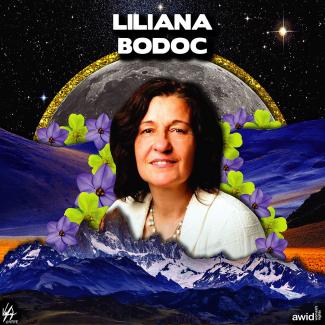


Liliana Bodoc, Argentina