
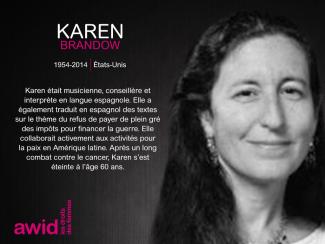
Karen Brandow
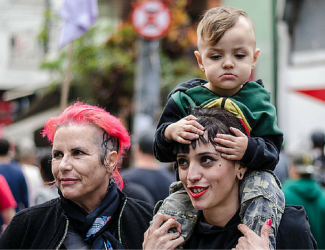
Over the past few years, a troubling new trend at the international human rights level is being observed, where discourses on ‘protecting the family’ are being employed to defend violations committed against family members, to bolster and justify impunity, and to restrict equal rights within and to family life.
The campaign to "Protect the Family" is driven by ultra-conservative efforts to impose "traditional" and patriarchal interpretations of the family, and to move rights out of the hands of family members and into the institution of ‘the family’.
Since 2014, a group of states have been operating as a bloc in human rights spaces under the name “Group of Friends of the Family”, and resolutions on “Protection of the Family” have been successfully passed every year since 2014.
This agenda has spread beyond the Human Rights Council. We have seen regressive language on “the family” being introduced at the Commission on the Status of Women, and attempts made to introduce it in negotiations on the Sustainable Development Goals.
AWID works with partners and allies to jointly resist “Protection of the Family” and other regressive agendas, and to uphold the universality of human rights.
In response to the increased influence of regressive actors in human rights spaces, AWID joined allies to form the Observatory on the Universality of Rights (OURs). OURs is a collaborative project that monitors, analyzes, and shares information on anti-rights initiatives like “Protection of the Family”.
Rights at Risk, the first OURs report, charts a map of the actors making up the global anti-rights lobby, identifies their key discourses and strategies, and the effect they are having on our human rights.
The report outlines “Protection of the Family” as an agenda that has fostered collaboration across a broad range of regressive actors at the UN. It describes it as: “a strategic framework that houses “multiple patriarchal and anti-rights positions, where the framework, in turn, aims to justify and institutionalize these positions.”
From building prospect funders lists with *templates*, to understand how to write a solid grant proposal, with ‘Getting the Money we Need’ Guide really we don't have to figure this out alone anymore
Read and download the guide hereText-only version
Dear feminist movements,
Love is what keeps our feminist fire burning. Along with care for our communities, anger and rage in the face of injustice, and the courage to take action.
In September 2022, we stepped with great excitement into our leadership roles at AWID, as Co-Executive Directors. We felt the warmth and embrace of the feminist sisterhood as you welcomed us.
Reflecting on our most precious memories as feminists, we recall powerful moments of togetherness at street protests, sharp analysis, and brave voices shaking the status quo at gatherings. We held those intimate conversations into the night, laughed for hours, and danced at parties together.
Feminist fires need to be fed, especially in difficult times when there is no lack of external challenges, from the climate crisis and the rise of right-wing forces to exploitative economies and persisting patterns of oppression within our own social movements. It's these fires, burning ablaze everywhere, that light our ways and keep us warm, but we can’t disregard the exhausting effects of political violence and repression directed against many of our struggles, movements, and communities.
We understand the desire to change the world as an essential ingredient of feminist organizing. We can never forget that we are the ones we have been waiting for, in building alternatives and shaping our future. Yet, vibrant feminist energy cannot be taken for granted and must be safeguarded in many ways. In this, we will continue to be vigilant. Greater and equal access to care and wellbeing, to healing and pleasure, are not only instruments to prevent burnout and sustain our movements, though that is an important function; first and foremost, they are the way in which we hope to live our lives.
We are thrilled to roll up our sleeves and work with you. AWID’s new strategic plan “Fierce Feminisms: Together We Rise” reflects our conviction that now is the time for us to be fierce and unapologetic in our agendas while making an effort to connect across movements and truly get to know each other’s realities, so that we may rise together - because, for us, this is the only way.
Our plans include the long-awaited AWID Forum! We look forward to meeting you all in person and online in 2024. We are hearing from you the need to connect and recharge, to rest and heal, to be challenged and inspired, to share good food, and to laugh and dance together. Few things in this world are as powerful and transformative, as feminists from all parts of the world coming together, and we truly hold our breath for this moment, because we know the magic that we can create together.
Our membership engagement has taken on a life of its own through the AWID Community (our online platform for members), and our focus on building connection and solidarity resonates with many of you. Please join and connect with us and others in feminist movements around the world. We know the importance of connection in a time and space where the rules are not made for us, and we hold close our community, where each of us matters.
Together with our fantastic AWID colleagues, we promise to do our best to support feminist movements, as is the mission and purpose of AWID. Please hold us to account.
For the past 40 years, you - feminist movements - have shaped AWID’s history, and pushed us to be braver, creative, and radical. 40 is a fabulous age, and we look forward to another 40 years with you all. We are looking forward to the partnerships, calls to justice, collaboration, policy influencing, and badass feminist power that you all bring in navigating the ever-increasing backlash on gender, racial and environmental justice. We have so much to learn from you and from each other, as we collectively build the worlds we believe in.
Cindy Clark and Hakima Abbas, thank you for paving the way for us and preparing us to fill your enormous shoes. We always appreciate all those on whose shoulders we stood and continue to stand. We understand ourselves to be part of a broader movement landscape, feminist histories, presents, and daring futures.
AWID’s Board of Directors, we are grateful to you for the support and feminist love you show us, and for your commitment to Global South leadership and the co-leadership model. We send our love and respect to each and every AWID colleague, we feel honoured to be working with such an exceptional feminist team of dedicated professionals.
This is our first time writing a love letter together, how could we conclude it without expressing love, care, and respect for each other? It’s a pretty intense relationship we’ve stepped into! We both bring our different and diverse perspectives and skills to our work, and as individuals, we also bring our lived experiences and authentic selves.
Together with you all, we are a story in the making, a part of a beautiful woven - and often beautifully challenging - tapestry that continues into the future. We had fun starting this journey together with each other and with you, and we very much hope to keep the romance alive.
In solidarity, with love and care
Inna and Faye
21 February 2023, Member Mixer 5 on Feminist Politics with Faye and Inna.
Not a member yet? Find out more about AWID Membership.
Join as an AWID member now and participate in our next member event:
“Forum Dreaming” on June 20th.
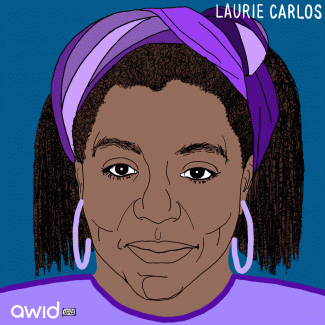
Laurie Carlos was an actor, director, dancer, playwright, and poet in the United States. An extraordinary artist and visionary with powerful ways of bringing the art out in others.
“Laurie walked in the room (any room/every room) with swirling clairvoyance, artistic genius, embodied rigor, fierce realness—and a determination to be free...and to free others. A Magic Maker. A Seer. A Shape Shifter. Laurie told me once that she went inside people’s bodies to find what they needed.” - Sharon Bridgforth
She combined performance styles such as rhythmic gestures and text. Laurie mentored new actors, performers, writers and helped amplify their work through Naked Stages, a fellowship for emerging artists. She was an artistic fellow at Penumbra Theater and supported with identifying scripts to produce, with a goal of “bringing more feminine voices into the theater”. Laurie was also a member of Urban Bush Women, a renowned contemporary dance company telling stories of women of the African diaspora.
In 1976, as Lady in Blue, she made her Broadway debut in Ntozake Shange’s original and award-winning production of the poetic drama For colored girls who have considered suicide / when the rainbow is enuf. Laurie’s own works include White Chocolate, The Cooking Show, and Organdy Falsetto.
“I tell the stories in the movement—the inside dances that occur spontaneously, as in life—the music and the text. If I write a line, it doesn’t necessarily have to be a line that is spoken; it can be a line that’s moved. A line from which music is created. The gesture becomes the sentence. So much of who we are as women, as people, has to do with how we gesture to one another all the time, and particularly through emotional moments. Gesture becomes a sentence or a state of fact. If I put on a script ‘four gestures,’ that doesn’t mean I’m not saying anything; that means I have opened it up for something to be said physically.” Laurie Carlos
Laurie was born and grew up in New York City, worked and lived in Twin Cities. She passed away on 29 December 2016, at the age of 67, after a battle with colon cancer.
“I believe that that was exactly Laurie’s intention. To save us. From mediocrity. From ego. From laziness. From half-realized art making. From being paralyzed by fear.
Laurie wanted to help us Shine fully.
In our artistry.
In our Lives.” - Sharon Bridgforth for Pillsbury House Theatre
“There’s no one that knew Laurie that wouldn’t call her a singular individual. She was her own person. She was her own person, her own artist; she put the world as she knew it on stage with real style and understanding, and she lived her art.” - Lou Bellamy, Founder of Penumbra Theater Company, for Star Tribune
Como parte del Viaje por las Realidades Feministas de AWID, te invitamos a explorar nuestro nuevo Club de Cine Feminista: una colección de cortometrajes y largometrajes seleccionados por nuestrxs curadorxs y narradorxs feministas de todo el mundo, que incluyen a Jess X. Snow (Asia-Pacífico), Gabrielle Tesfaye (África/Diáspora Africana) y Esra Ozban (Sudoeste Asiático y África del Norte). Alejandra Laprea es la curadora del programa de América Latina y Centroamérica, que inauguraremos en septiembre, durante el evento de AWID Crear, Résister, Transform: un festival para movimientos feministas. Mientras tanto, ¡mantente atentx a los anuncios sobre proyecciones especiales y conversaciones con cineastas!
A closer look at actual budgets reveals major income diversity and inequality.
Nunca supe que tenía una familia cercana que me ama y que quiere que crezca. Mi mamá siempre ha estado presente para mí, pero nunca imaginé que tendría miles de familias por otros sitios, con las que no estoy relacionada por lazos de sangre.
Descubrí que la familia no son solo las personas relacionadas por lazos sanguíneos, sino la gente que te ama de forma incondicional, a quienes no les importa tu orientación sexual, ni tu estado de salud, ni tu estatus social, ni tu raza.
Al pensar en los momentos invaluables en que escuché a mis hermanas de todo el mundo que son firmes feministas –gente a quien no he conocido físicamente, pero quienes me apoyan, me enseñan, luchan por mí– me faltan las palabras: las palabras no pueden expresar cuánto las amo a ustedes, mis mentoras, y a las demás feministas. Ustedes son una madre, una hermana, una amiga para millones de chicas jóvenes.
Ustedes son maravillosas, ustedes luchan por personas a quienes no conocen –y eso es lo que las hace tan especiales–.
Mi corazón se alegra de expresar esto por escrito.
Las amo a todas y seguiré amándolas. Nunca he visto a ninguna de ustedes en forma física, pero parece que nos conociéramos desde hace décadas.
Somos feministas y estamos orgullosas de ser mujeres.
Vamos a seguir diciéndole al mundo que nuestra valentía es nuestra corona.
Una carta de amor de FAITH ONUH, una joven feminista de Nigeria
¡Sí! Por favor lee la Convocatoria de Actividades y presenta tu propuesta aquí. La fecha límite es el 1ero de febrero de 2024.
Fadila M. fue una activista tribal soulaliyate de Azrú, en la región Ifrane de Marruecos. Luchó contra una forma específica de discriminación territorial dirigida a las mujeres tribales.
Como parte del Movimiento de Mujeres Soulaliyate por el Derecho a la Tierra, trabajó para reformar el marco legislativo relacionado con la administración de la propiedad comunitaria, a través de la adopción, en 2019, de tres proyectos de ley que garantizan la igualdad de mujeres y varones.
Según las leyes consuetudinarias vigentes, las mujeres no tenían derecho a beneficiarse de la tierra, en especial aquellas que eran solteras, viudas o divorciadas. En Marruecos, los derechos a las tierras colectivas eran transmitidos tradicionalmente entre los varones de la familia mayores de 16 años. Desde 2007, Fadila M. ha sido parte del movimiento de mujeres, la primera movilización nacional de base por los derechos a la tierra. Una de sus conquistas ha sido que, en 2012, las mujeres soulaliyate pudieron registrarse por primera vez en las listas de beneficiarixs, y recibir compensaciones relacionadas con la cesión de tierras. El movimiento también logró la enmienda del dahir (decreto del Rey de Marruecos) de 1919, para garantizar el derecho a la igualdad de las mujeres.
Fadila M. falleció el 27 de septiembre de 2018. Las circunstancias de su muerte no son claras. Participó en una marcha de protesta relacionada con el tema de las tierras colectivas y, si bien las autoridades informaron que su muerte fue accidental y que tuvo un paro cardíaco camino al hospital, la sección local de la Asociación de Derechos Humanos de Marruecos (AMDH) señaló que Fadila fue sofocada por un miembro de la fuerza policial utilizando una bandera marroquí. Su familia solicitó una investigación, pero los resultados de la autopsia no fueron dados a conocer.
Más información sobre el Movimiento de Mujeres Soulaliyate por el Derecho a la Tierra (en inglés)
Nota: Como no ninguna fotografía/imagen de Fadila M. disponible, la obra de arte (en lugar de un retrato) pretende representar por lo que luchó y trabajó: la tierra y los derechos a vivir y tener acceso a esa tierra y lo que crece en ella.
While fundamentalisms, fascisms and other systems of oppression shapeshift and find new tactics and strategies to consolidate power and influence, feminist movements continue to persevere and celebrate gains nationally and in regional and international spaces.
Les organisations féministes et de défense des droits des femmes ne dépendent pas uniquement des financements institutionnels, elles s’autofinancent. Nos mouvements sont animés par la passion, la solidarité, l’engagement politique et le soin collectif.
Ces ressources autonomes et autogénérées sont souvent invisibles dans les budgets, mais elles sont le pilier de notre action collective.
Dans le monde entier et au sein des mouvements sociaux, les personnes désireuses d’innover ont tendance à se sentir seules et impuissantes face au « statu quo du mouvement ». Historiquement, les Forums de l’AWID ont joué un rôle dans le soutien de ces innovateur·trices en leur offrant une plateforme où leurs idées et pratiques sont accueillies et renforcées par les pensées et actions d’autres personnes de différentes régions et communautés qui les ont déjà explorées. Sara Abu Ghazal, féministe palestinienne au Liban, nous parle de ce qu’ont représenté les Forums pour toute une nouvelle génération de féministes de la région MENA (Moyen-Orient et Afrique du Nord) qui ont introduit de nouvelles façons de s’organiser, de nouvelles conceptions du féminisme et de nouvelles questions dans le paysage régional des droits des femmes.
Non, il n'est pas nécessaire d'être membre de l'AWID pour y participer, mais les membres de l'AWID bénéficient d'une réduction sur les frais d'inscription ainsi que d'un certain nombre d'autres avantages.
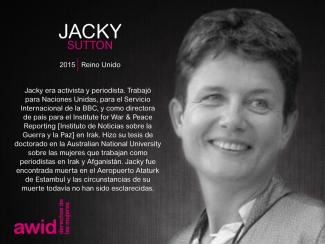
Rosa Candida Mayorga Muñoz était une travailleuse sociale, leader syndicale et défenseure des droits humains du Guatemala. On la surnommait affectueusement Rosita.
Dans les années 1980, Rosa devient la première femme à siéger au comité exécutif du syndicat de l’Institut d’électrification nationale (STINDE), syndicat qu’elle avait rejoint en premier lieu pour défendre les droits des femmes au travail. Cela signifiait, à ses yeux, de lutter pour l’égalité des chances dans une entreprise où de nombreuses femmes affrontaient un système discriminatoire et violent mis en place par la direction de l’entreprise. Rosa avait également subi du harcèlement sexuel sur son lieu de travail, tant de la part de collègues que de responsables. Elle n’entendait cependant pas rester silencieuse.
Rosa a continué à se battre et fait partie des efforts pour façonner la lutte afin qu’elle prenne la forme du « Pacte collectif pour les conditions de travail du INDE-STINDE ». Ce pacte était le premier du genre et le premier au Guatemala à caractériser le concept de harcèlement (sexuel). Il fait désormais référence dans la loi guatémaltèque pour les questions de travail, et sert d’encouragement aux autres syndicats.
« Elle n’avait d’autres outils pour se battre que ses propres idéaux... Elle a été intimidée à plusieurs reprises, harcelée pour abandonner la lutte, mais son courage a fait naître l’espoir chez les syndicalistes de la base. Rosita a créé une image de respect non seulement au sein de son syndicat mais également face aux autorités de l’institution et au sein du mouvement des femmes. Elle a été reconnue comme une pionnière du mouvement des femmes du syndicat, dans un espace qui avait davantage été dominé par les hommes. » - Maritza Velasquez, ATRAHDOM
Rosa est décédée le 4 avril 2018, elle avait 77 ans.
Una colección viva de recursos para apoyar a los movimientos feministas, a personas que diseñan políticas y a aliadxs que resisten a las tendencias fascistas, fundamentalistas y anti-derechos.
Modèles de gouvernance alternative comme moyens de sortir de la crise climatique.
📅 Mercredi 12 novembre 2025
📍 Seminario Mar Nossa Sra Da Assunção, Pará, Brésil
Site web en anglais