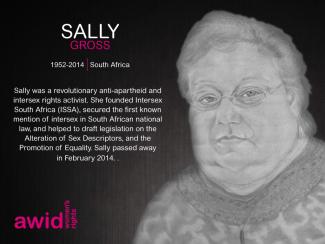
Sally Gross
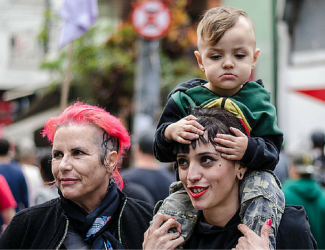
Over the past few years, a troubling new trend at the international human rights level is being observed, where discourses on ‘protecting the family’ are being employed to defend violations committed against family members, to bolster and justify impunity, and to restrict equal rights within and to family life.
The campaign to "Protect the Family" is driven by ultra-conservative efforts to impose "traditional" and patriarchal interpretations of the family, and to move rights out of the hands of family members and into the institution of ‘the family’.
Since 2014, a group of states have been operating as a bloc in human rights spaces under the name “Group of Friends of the Family”, and resolutions on “Protection of the Family” have been successfully passed every year since 2014.
This agenda has spread beyond the Human Rights Council. We have seen regressive language on “the family” being introduced at the Commission on the Status of Women, and attempts made to introduce it in negotiations on the Sustainable Development Goals.
AWID works with partners and allies to jointly resist “Protection of the Family” and other regressive agendas, and to uphold the universality of human rights.
In response to the increased influence of regressive actors in human rights spaces, AWID joined allies to form the Observatory on the Universality of Rights (OURs). OURs is a collaborative project that monitors, analyzes, and shares information on anti-rights initiatives like “Protection of the Family”.
Rights at Risk, the first OURs report, charts a map of the actors making up the global anti-rights lobby, identifies their key discourses and strategies, and the effect they are having on our human rights.
The report outlines “Protection of the Family” as an agenda that has fostered collaboration across a broad range of regressive actors at the UN. It describes it as: “a strategic framework that houses “multiple patriarchal and anti-rights positions, where the framework, in turn, aims to justify and institutionalize these positions.”
«Este sería un buen momento para repensar cómo podría ser la revolución. Quizás no sera una marcha por las calles de cuerpos enojados y sin discapacidades. Quizás será más como el mundo detenido porque todos los cuerpos que hay en él están exhaustos: porque el cuidado debe ser priorizado antes de que sea demasiado tarde.»
- Johanna Hedva
Los hospitales son instituciones, espacios vivientes del capitalismo, y lo que se manifiesta cuando alguien está supuestamente haciendo reposo allí es un microcosmos del sistema en que vivimos.
Las instituciones están organizadas para separarnos de nuestros sistemas de cuidados: en ellas nos encontramos aisladxs en estructuras rígidamente jerárquicas, y a menudo sentimos como si ese cuidado fuera algo que se nos hace a nosotrxs, en lugar de algo dado/recibido como parte de una conversación. Debido a su integración en la demanda capitalista, el cuidado institucional está compartimentado: una persona trata tu pierna y solo tu pierna, otra persona trata tu presión arterial, etc.
El mes pasado, la fotógrafa Mariam Mekiwi tuvo que someterse a una cirugía y documentó el proceso. Sus imágenes de entornos esterilizados (luces blancas de neón, filas y filas de estructuras repetitivas), con una paleta de colores desteñidos, reflejan un lugar que estaba vaciado de vida y de movimiento. Esta fue una de las formas en que Mariam mantuvo vivo su propio espíritu. Era una forma de protesta desde dentro de los confines de una institución con la cual tenía que interactuar.
Las fotos constituyen un retrato de algo increíblemente vulnerable, porque observar a alguien atravesar el colapso de su propio cuerpo es siempre un recordatorio sagrado de nuestra fragilidad. Son también un testimonio de la fragilidad de estos sistemas de cuidado, que nos pueden ser negados por diversas razones: desde no tener dinero hasta no estar en un cuerpo considerado lo suficientemente valioso, un cuerpo que es quizás demasiado femenino, demasiado queer, o demasiado marrón.
El cuidado experimentado como algo desencarnado y solitario, que puede ser revocado en cualquier momento, no nos ayuda a prosperar. Y es muy diferente del modo en que los seres humanos se comportan en la realidad cuando cuidan unos de otros. ¿En qué sería diferente nuestro mundo si nos comprometiéramos a desmantelar las actuales estructuras capitalistas referidas a nuestra salud? ¿Cómo sería nuestro mundo si lo reinventáramos en forma radical?
Kasia soutient le travail des mouvements féministes et de justice sociale depuis 15 ans. Avant de rejoindre l'AWID, Kasia dirigeait les politiques et le plaidoyer d’ActionAid et d’Amnesty International, tout en se mobilisant avec des féministes et des groupes de justice sociale en Pologne pour l'accès à l'avortement et la lutte contre les violences aux frontières européennes. Kasia est passionnée par le ressourcement des organisations féministes dans tout leur courage, leur richesse et leur diversité. Elle partage son temps entre Varsovie et son village communautaire de bricolage dans la forêt. Elle adore les saunas et aime follement son chien Wooly.
|
Consejo editorial Co-editorxs Diseño e ilustración Estratega de las comunicaciones Editora de la versión árabe Responsable de la traducción
Corrección |
Traducciones árabes
Corrección
Corrección |
Marta is a queer, transfeminist non-binary activist-researcher from ex-Yugoslavia, currently based in Barcelona. They work as a transnational movement organizer, a feminist economist and a weaver of systemic alternatives. They are the co-founder and one of the coordinators of the Global Tapestry of Alternatives, a global process that seeks to identify, document and connect alternatives on local, regional and global levels. Locally, they are engaged in anti-racist, transfeminist, queer, migrant organizing. They also hold a doctoral degree in Environmental Science and Technology from the Autonomous University of Barcelona, dedicated to decolonial feminist perspectives of a pluriverse of systemic alternatives and the creation of feminist alternative systems based on care and the sustainability of life. During their free time, they enjoy boxing, playing the guitar and the drums as part of a samba band, photography, hiking, cooking for loved ones and spoiling their two cats.
عندما كنت في السادسة من العمر، علِمت أنّ جدّي كان يملك داراً للسينما. أخبرَتني أمّي كيف أنه افتتحها في أوائل الستينيّات، وكانت هي حينها في مثل عمري، إذ كان عمرها قُرابة الستّ سنوات. تذكّرتُ أنهم في الليلة الأولى عرضوا فيلم «صوت الموسيقى».

Elina es una joven feminista afrodominicana, que trabaja con enfoque interseccional. Es abogada de derechos humanos y está comprometida a usar su voz y sus capacidades para construir un mundo más justo, empático e inclusivo. Ingresó a la facultad de derecho a los 16 años, segura de que iba a obtener herramientas para entender y promover la justicia social. Luego de obtener el título de Juris Doctor [Doctora en Jurisprudencia] en la República Dominicana, cursó una maestría en Derecho Internacional Público y Derechos Humanos en el Reino Unido, como becaria Chevening. Fue la única mujer latinoamericana-caribeña en su clase y se graduó con honores.
Elina ha trabajado en la intersección de derechos humanos, género, migración y política en el gobierno, en colectivos de base y en organizaciones internacionales. Colaboró en el litigio de casos sobre violencia de género ante la Corte Interamericana de Derechos Humanos. Como integrante del Panel Consultivo de Jóvenes de UNFPA, contribuyó al fortalecimiento de los derechos sexuales y reproductivos en la República Dominicana. Fue una de las personas que lideraron la primera campaña de Amnistía Internacional sobre derechos de lxs trabajadorxs sexuales en las Américas, desarrollando una fuerte asociación con las organizaciones de trabajadorxs sexuales, y utilizando la posición de Amnistía para potenciar las voces de quienes defienden los derechos humanos de las mujeres y de lxs trabajadorxs sexuales. Elina es parte del Foro Feminista Magaly Pineda y la Global Shapers Community [Comunidad Global Shapers]. Habla español, francés e inglés.
Gracias a su diversificada trayectoria, Elina trae sólidas capacidades de gobernanza y de planificación estratégica, una experiencia sustancial en las Naciones Unidas y en mecanismos regionales de derechos humanos, además de su profunda determinación para que AWID siga siendo una organización inclusiva para todas las mujeres, especialmente, las feministas jóvenes y caribeñas. Con estas propuestas, se suma a una hermandad global de feministas fantásticas, desde donde podrá seguir cultivando su liderazgo feminista y nunca más se sentirá sola en su camino.
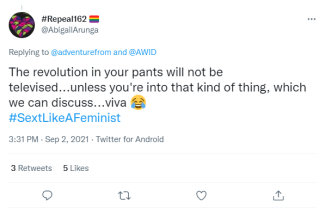
تَلفَزَتُنا للثورة تحت حزامك مشروطة بطبيعة رغباتك

Jessica est une artiste-activiste queer de Toronto, au Canada, mais qui vit actuellement en Bulgarie. Elle a plus de 15 ans d'expérience dans la riposte au VIH, travaillant aux intersections du genre et du VIH auprès de populations clés (travailleurs·ses du sexe, femmes consommatrices de drogues, communautés LGBTQI, personnes incarcérées et, bien sûr, personnes vivant avec le VIH). Jessica aime créer du mouvement et réfléchir/entreprendre/élaborer des stratégies sur des interventions basées sur les arts. L'un des projets amusants qu'elle a lancé en 2013 était LOVE POSITIVE WOMEN (Femmes positives à l’amour), qui implique plus de 125 groupes et organisations communautaires du monde entier, du 1er au 14 février, pour célébrer les femmes vivant avec le VIH dans leurs communautés.
Upasana is a non binary illustrator and artist based out of Kolkata, India. Their work explores identity and personal narratives by using a visual remnant or evidence of the contexts they work with. They are especially drawn to patterns which to them communicate complex truths about the past, present and future. When Upasana is not illustrating they organise and run a queer and trans community art centre in the city.
Leila is a transnational feminist leader, strategist, and advisor with over 25 years of organizing, advocacy and philanthropic experience advancing human rights, gender equality, and sexual and reproductive rights and justice. She was born in Algeria and educated in the U.S., France, and Morocco; over her professional career, she has lived and worked in forty countries across Africa, Europe, Latin America and Asia. Leila currently serves as a Senior International Fellow at the Asfari Institute for Civil Society and Citizenship at the American University of Beirut in Lebanon and as Senior Strategist for various feminist movements and organizations as well as the the Urgent Action Fund-Africa and Trust Africa on an initiative on Reimagining Feminist and Pan-African Philanthropies.
From 2017-2023, Leila held the position as Vice-President of Programs at Global Fund for Women where she oversaw its strategic grantmaking, movement-strengthening, global advocacy and philanthropic collaborations. At GFW, she doubled its grantmaking to over $17 million, launched its feminist and gender-based movements and crises work, created an adolescent girls program led by a girls’ advisory council and led its philanthropic advocacy work. Prior to that she served on the senior leadership team of Ipas from 2002 to 2016 where she published extensively on abortion rights and justice, lead global advocacy efforts and partnered with feminist groups working on self-management, community strategies and stigma reduction around bodily integrity and sexual and reproductive rights.
Leila is currently researching shifts in the philanthropic sector including recognizing non-institutional practices of giving resources in the Global South and efforts to decolonize practices in the Global North. She has written extensively on the political nature of veiling across North Africa and the Middle East, abortion practices in majority Muslim contexts and feminist approaches to sexual and reproductive health, rights and justice.
Leila holds an MPH in public health and a MA in Middle Eastern and North African Studies, studied Islamic law in Morocco and pursued doctoral studies in sociology in France. She studied Arabic and speaks French and English fluently. She is a mother of two feminist young women, an avid scuba diver, mountain bike rider, skier, and outdoor enthusiast.
En asociación con activistas feministas jóvenes y organizaciones lideradas por jóvenes, AWID está organizando, en forma autónoma, Beijing Sin Ataduras, en paralelo con Beijing+25.
Culturellement nomade, née à Hong Kong et enracinée dans un héritage turco-pakistanais, l'amour de Fatima pour les récits - tant pour les lire que pour les cocréer - a alimenté sa passion pour l'activisme à travers la communication. Forte de sa formation en journalisme, Fatima a travaillé pendant 7 ans dans les domaines de la communication numérique et médiatique avec des ONG qui offrent des opportunités d'éducation et de l’aide juridique aux réfugié·e·s et demandeur·se·s d'asile, ainsi qu'avec le mouvement féministe musulman qui applique une perspective féministe et fondée sur les droits dans la compréhension et la quête d’égalité et de justice au sein de la tradition juridique musulmane. Elle rédige régulièrement des tribunes sur les questions féministes dans les pays du Sud.
Grâce à la narration dans cette ère ultra digitale des réseaux sociaux, Fatima continue de collaborer avec des animateur·rice·s communautaires et des activistes de terrain pour créer du contenu audiovisuel dans le but de cultiver des ponts de compréhension vers la libération collective et la décolonisation. Les jours où elle ne travaille pas, elle regarde attentivement des films féministes indépendants venant d’Iran, du Maroc et du Pakistan, et les autres jours elle interprète de la poésie orale avec ses camarades à Kuala Lumpur.
Es exactamente el mismo proceso, con la misma fecha límite. Por favor utiliza el mismo formulario para presentar tu propuesta de actividad, ya sea esta presencial, en línea o híbrida (presencial y en línea).