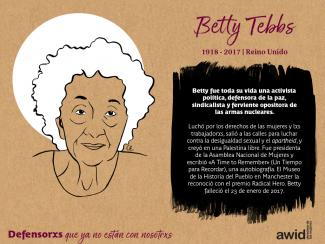
Betty Tebbs
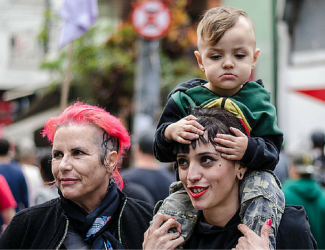
Over the past few years, a troubling new trend at the international human rights level is being observed, where discourses on ‘protecting the family’ are being employed to defend violations committed against family members, to bolster and justify impunity, and to restrict equal rights within and to family life.
The campaign to "Protect the Family" is driven by ultra-conservative efforts to impose "traditional" and patriarchal interpretations of the family, and to move rights out of the hands of family members and into the institution of ‘the family’.
Since 2014, a group of states have been operating as a bloc in human rights spaces under the name “Group of Friends of the Family”, and resolutions on “Protection of the Family” have been successfully passed every year since 2014.
This agenda has spread beyond the Human Rights Council. We have seen regressive language on “the family” being introduced at the Commission on the Status of Women, and attempts made to introduce it in negotiations on the Sustainable Development Goals.
AWID works with partners and allies to jointly resist “Protection of the Family” and other regressive agendas, and to uphold the universality of human rights.
In response to the increased influence of regressive actors in human rights spaces, AWID joined allies to form the Observatory on the Universality of Rights (OURs). OURs is a collaborative project that monitors, analyzes, and shares information on anti-rights initiatives like “Protection of the Family”.
Rights at Risk, the first OURs report, charts a map of the actors making up the global anti-rights lobby, identifies their key discourses and strategies, and the effect they are having on our human rights.
The report outlines “Protection of the Family” as an agenda that has fostered collaboration across a broad range of regressive actors at the UN. It describes it as: “a strategic framework that houses “multiple patriarchal and anti-rights positions, where the framework, in turn, aims to justify and institutionalize these positions.”
We will announce this soon. Stay tuned!
 The Cover
|
 The Powerful
|
 The Ivy
|
 The Howl
|

Production and entrepreneurship |
 Artisana
|

Para compartir tu experiencia con el financiamiento de tu organización.

No, you don't have to be an AWID member to participate but AWID members receive a discounted registration fee as well as a number of other benefits.

Feminist, women’s rights, gender justice, LBTQI+ and allied movements around the world are at a critical juncture, facing a powerful backlash on previously-won rights and freedoms. Recent years have brought the rapid rise of authoritarianism, violent repression of civil society, criminalization of women and gender-diverse human rights defenders, escalating war and conflict in many parts of our world, continued perpetuation of economic injustices, and the intersecting health, ecology and climate crises.
An online community for and by young feminists working on women’s human rights, gender equality and social justice around the world.
The platform is the go-to place for information and resources on safeguarding the universality of rights in international and regional human rights spaces.
Provides funding for young feminist-led initiatives. It aims to strengthen the capacity of young feminist organizations to leverage resources for their work and to increase donors’ and allies’ commitments to resourcing young feminist activism.
A go-to site to learn about the urgent responses undertaken to protect women human rights defenders and to find tools and resources to support the work and wellness of WHRDs.
A regional initiative created to prevent, respond, document and make public all cases of violence against women human rights defenders in the Mesoamerican region.
The WHRD IC is a resource and advocacy network for the protection and support of women human rights defenders worldwide.
A Coalition of feminist, women´s rights, women´s development, grassroots and social justice organisations working to challenge and reframe teh global development agenda.
The role of the Women’s Major Group is to assure effective public participation of women’s non-governmental groups in the UN policy processes on Sustainable Development, Post2015 and Environmental matters.
An alliance of women’s organizations and networks to advocate for the advancement of gender equality, women’s empowerment and human rights in the Financing for Development (FfD) related UN processes.

For additional questions, please use our contact form, and select “14th AWID Forum" from the dropdown menu.
Nous Sommes la Solution es un movimiento de mujeres rurales por la soberanía alimentaria en África Occidental. Originalmente fundada como una campaña contra la agricultura hiper-industrializada, Nous Sommes la Solution se ha convertido en un movimiento de más de 500 asociaciones de mujeres rurales de Burkina Faso, Senegal, Ghana, Gambia, Guinea Bissau, Malí y Guinea.
Este movimiento liderado por mujeres está construyendo y fortaleciendo la soberanía alimentaria y de semillas en África Occidental. Alimentan a las comunidades, fortalecen las economías locales, amplían el conocimiento de las mujeres agricultoras y mitigan los efectos devastadores de la crisis climática a través de las prácticas agroecológicas. También organizan talleres, foros y transmisiones de radio comunitarias para compartir sus mensajes, conocimientos tradicionales y prácticas agroecológicas en las comunidades rurales.
En colaboración con universidades y centros públicos de investigación, Nous Sommes la Solution trabaja para restaurar las variedades indígenas de arroz (un alimento esencial de África Occidental) y promover economías alimentarias locales basadas en principios agroecológicos para influir en la formulación de políticas nacionales, mientras apoya a las mujeres en la creación de asociaciones agrícolas y su acceso a la propiedad y gestión colectiva de las tierras agrícolas.
1 |
Provide AWID members, movement partners and funders with an updated, powerful, evidence-based, and action-oriented analysis of the resourcing realities of feminist movements and current state of the feminist funding ecosystem. |
2 |
Identify and demonstrate opportunities to shift more and better funding for feminist organizing, expose false solutions and disrupt trends that make funding miss and/or move against gender justice and intersectional feminist agendas. |
3 |
Articulate feminist visions, proposals and agendas for resourcing justice. |
English article created from Spanish site

We see Taipei as the location in the Asia Pacific region that will best allow us to build that safe and rebelious space for our global feminist community.
Taipei offers a moderate degree of stability and safety for the diversity of Forum participants we will convene. It also has strong logistical capacities, and is accessible for many travellers (with a facilitated e-visa process for international conferences).
The local feminist movement is welcoming of the Forum and keen to engage with feminists from across the globe.