
Sonia Pierre
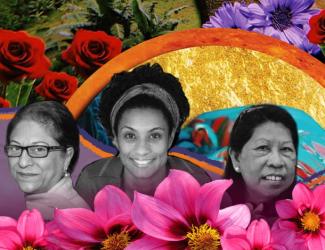
AWID’s Tribute is an art exhibition honouring feminists, women’s rights and social justice activists from around the world who are no longer with us.
This year’s tribute tells stories and shares narratives about those who co-created feminist realities, have offered visions of alternatives to systems and actors that oppress us, and have proposed new ways of organising, mobilising, fighting, working, living, and learning.
49 new portraits of feminists and Women Human Rights Defenders (WHRDs) are added to the gallery. While many of those we honour have passed away due to old age or illness, too many have been killed as a result of their work and who they are.
This increasing violence (by states, corporations, organized crime, unknown gunmen...) is not only aimed at individual activists but at our joint work and feminist realities.
The portraits of the 2020 edition are designed by award winning illustrator and animator, Louisa Bertman.
AWID would like to thank the families and organizations who shared their personal stories and contributed to this memorial. We join them in continuing the remarkable work of these activists and WHRDs and forging efforts to ensure justice is achieved in cases that remain in impunity.
“They tried to bury us. They didn’t know we were seeds.” - Mexican Proverb
It took shape with a physical exhibit of portraits and biographies of feminists and activists who passed away at AWID’s 12th International Forum, in Turkey. It now lives as an online gallery, updated every year.
To date, 467 feminists and WHRDs are featured.
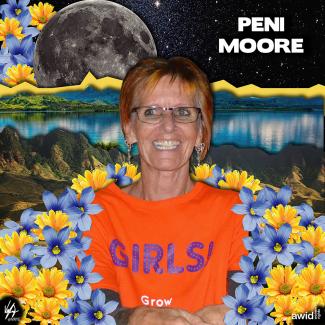
Philosophe féministe radicale, Peni était aussi poète, écrivaine, dramaturge et compositrice.
Première coordinatrice du Fiji Women’s Rights Movement (Mouvement pour les droits des femmes aux Fidji), elle a laissé un héritage empreint de sa profonde préoccupation pour les droits fondamentaux des femmes, la justice et la paix. L’engagement de Peni en faveur de la justice sociale, économique et écologique et son travail remarquable lui a valu le respect de la communauté locale et internationale. Au sein des mouvements féministes traditionnels des Fidji, elle a été l’une des premières à travailler avec et aux côtés des personnes LGBTQI et a fourni une assistance concrète au mouvement des travailleurs et des travailleuses du sexe lorsqu’il s’est constitué aux Fidji.
Ses collègues l'ont décrite comme une personne formidable et une leader visionnaire du changement. Elle a inspiré beaucoup de personnes par sa créativité et son courage. Son travail a permis à de nombreuses personnes de se faire entendre, d’acquérir de nouvelles compétences et d’ouvrir de nouvelles voies, tant au niveau personnel que communautaire.

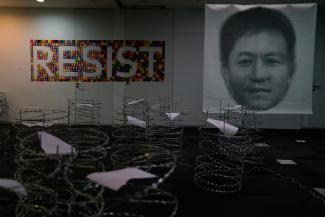
The #MeToo movement in China was ignited in January 2018, impelled by the momentum of the #MeToo movement around the globe. The movement was a response to cultural and systemic problems in relation to gender and power within China. The foundation of the movement was laid over decades, with many years of debate and advocacy for gender equality finally erupting into a tremendous force across society. #MeToo has been driven mainly by young people, among whom are countless anonymous women and their allies, and they search for opportunities to realize the ultimate “Chinese Dream”: to transform China into a country with gender equality.
The environment for #MeToo movement is extremely adverse in China: the rule of law, the fairness and transparency of government action, and freedom of speech cannot be taken for granted by the movement in China but are the very goals it fights for. From the beginning, it has been an intense struggle, with every victim or activist who comes forward running tremendous risks. From being silenced, humiliated, or retaliated against, to having their safety jeopardized, every success of the #MeToo movement has been won by those who are courageous enough to bear the costs of speaking out and defying censorship.
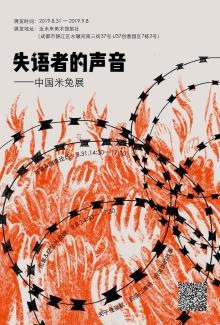
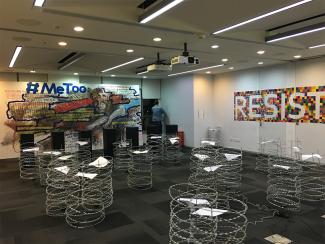
#MeToo in China Exhibition was first held in 2019 and toured in 5 cities. The aim of the exhibition is to bring the personal experiences of the victims and activists to greater prominence and, through engagement with these stories, to inspire our audience to join in the fight. The exhibition has itself become a part of the #MeToo struggle—the exhibition has been beset by challenges on its tour throughout China, on more than one occasion even facing closure.
Comparte tus historias y conoce las de otrxs. Al conectar nuestras experiencias, relatos y propuestas ayudamos a crear en conjunto y amplificar las Realidades Feministas.
نعم، انه متاح للأشخاص أصحاب/ صاحبات الإعاقات السمعية، البصرية، النظرية والفكرية المختلفة.
Samira was a Syrian activist under Bashar al-Asad's regime.
From a young age Samira opposed all forms of despotism, particularly vis-a-vis the authoritarian regime in which she lived.
Samira was kidnapped in 2013 along with three other prominent activists. She is believed to have been taken from the Center for the Documentation of Violations in Duma, in rural Damascus.
The main suspect associated with her disappearance is the Army of Islam (which denies its involvement). There has been no formal investigation of Samira’s disappearance and she has not been heard from since. Samira was committed to her country and refused to leave Syria until she felt her role in empowering women and documenting crimes was no longer necessary.

Syndicat OTRAS
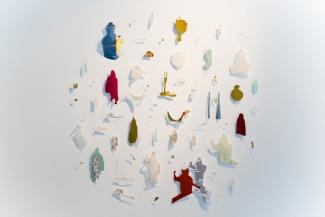
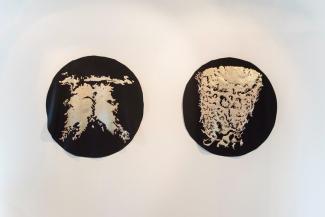
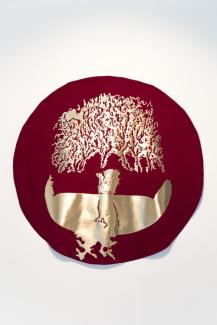
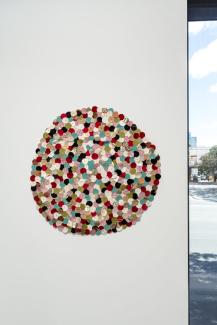
Una exposición de Nicole Barakat que encarna su reconexión con los objetos de la diáspora de sus tierras ancestrales en la región del Sudoeste Asiático y África del Norte (SWANA, por sus siglas en inglés).
Barakat presenta una colección de obras textiles como manifestaciones de su práctica de conectarse con los objetos desplazados, y a menudo robados, que son exhibidos en colecciones de museos occidentales que incluyen el Museo del Louvre de París, el Museo Británico de Londres y el Nicholson Museum de Sydney.
Para burlar a los guardianes y fisurar las vitrinas que retienen estos objetos ancestrales, Barakat recupera formas de conocimiento precoloniales, no lineales y receptivas que son, a menudo, devaluadas y desestimadas por las instituciones coloniales y patriarcales, utilizando la adivinación con la borra del café, el trabajo con los sueños, la escucha intuitiva y las conversaciones con los objetos mismos (fuente).
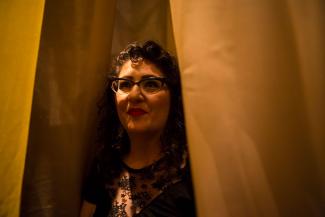
nous estimons que pour être transformateurs et forts, les mouvements féministes doivent continuer à travailler au-delà de leurs similitudes et de leurs différences. Nous devons également interroger le pouvoir et les privilèges, tant au sein qu'à l'extérieur de nos mouvements.
При необходимости, вы можете сохранить свои ответы и вернуться к опросу позже. Eсли Вы хотите сохранить ответы и вернуться к опросу позже, это можно сделать при условии, что Вы продолжите работу на том же устройстве. KOBO сохранит Ваши ответы в левом верхнем углу страницы опросника и подгрузит Ваш черновик, когда Вы вернетесь к опросу.
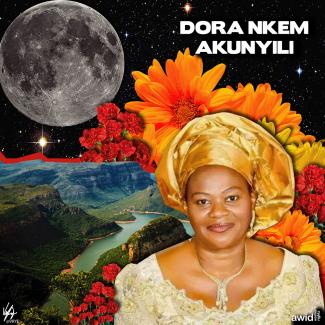
Dora nació en el estado de Benue, Nigeria. Fue una farmacéutica, tecnócrata, investigadora erudita y líder comunitaria reconocida mundialmente.
El trabajo revolucionario de Dora produjo un cambio de paradigma en el servicio público nigeriano cuando se desempeñó como Directora General de la Agencia Nacional para la Administración y Control de Alimentos y Medicamentos, entre 2001 y 2008. Encabezó reformas en la aplicación de políticas y regulaciones que redujeron drásticamente la cantidad de drogas falsas que asolaban el sector farmacéutico nigeriano cuando asumió su cargo.
Se convirtió en un ícono del empoderamiento de las mujeres, porque fue un ejemplo real de mujer valiente y competente que desafió los males de una sociedad predominantemente patriarcal. Fue nombrada Ministra de Información y Comunicación entre 2008 y 2010.
Murió luego de una batalla contra el cáncer, y le sobreviven su esposo, seis hijxs y tres nietxs.
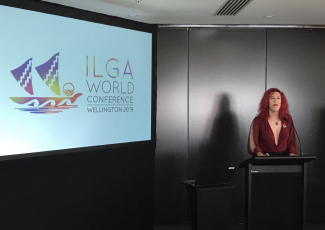
À la Commission africaine et au Système interaméricain, les antidroits promeuvent les notions essentialistes de culture et de genre pour miner les avancées en matière de droits et décrédibiliser la redevabilité. Les antidroits gagnent en influence dans les systèmes de protection des droits humains régionaux et internationaux.
La Commission africaine des droits de l’Homme et des peuples commence à présenter les droits des femmes et droits sexuels comme mettant en danger sa capacité à adresser les « droits réels » et contraires aux « valeurs africaines », un précédent inquiétant à l’égard des droits. Le retrait de son statut d’observatrice à la Coalition des lesbiennes africaines est un exemple de cette tendance, et traduit la répression de l’engagement féministe panafricaniste.
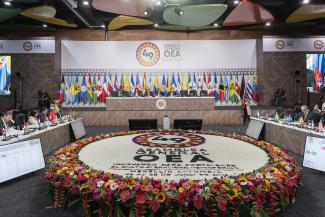
Au sein de l’Organisation des États américains (OEA) et du Système interaméricain de protection des droits humains, les stratégies antidroits incluent l’ONGisation de groupes religieux, l’adoption d’un langage séculier et la prise de contrôle de cadres discriminatoires. L’influence antidroits a pris plusieurs formes, et notamment l’intimidation d’activistes trans et l’entrave à l’introduction d’un langage progressif dans les résolutions.
"I participated in a member-only activity and I was particularly moved to see how there was space for everyone to share and that there was no judgment whatsoever. The entire session was energetic and vibrant."
- Kirthi Jayakumar, Founder, The Gender Security Project, India
Tem o direito de eliminar a sua resposta, por qualquer motivo e se assim o desejar. Queira entrar em contacto connosco através deste formulário, ao indicar "WITM Survey" ("Inquérito WITM") no título da sua mensagem, e iremos proceder à eliminação da sua resposta.