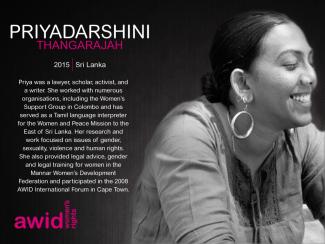
Priyadarshini Thangarajah
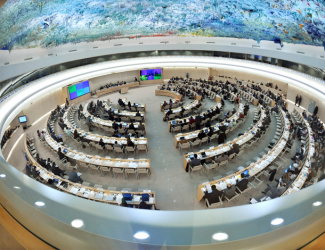
The Human Rights Council (HRC) is the key intergovernmental body within the United Nations system responsible for the promotion and protection of all human rights around the globe. It holds three regular sessions a year: in March, June and September. The Office of the UN High Commissioner for Human Rights (OHCHR) is the secretariat for the HRC.
Debating and passing resolutions on global human rights issues and human rights situations in particular countries
Examining complaints from victims of human rights violations or activist organizations on behalf of victims of human rights violations
Appointing independent experts (known as “Special Procedures”) to review human rights violations in specific countries and examine and further global human rights issues
Engaging in discussions with experts and governments on human rights issues
Assessing the human rights records of all UN Member States every four and a half years through the Universal Periodic Review
AWID works with feminist, progressive and human rights partners to share key knowledge, convene civil society dialogues and events, and influence negotiations and outcomes of the session.
As world leaders gather in Brazil, it’s vital that feminist movements especially from the Global Majority have autonomous spaces to gather, strategize, and disrupt.
These Hubs challenge the elitism of climate talks, center lived experiences, and aim to build collective power across borders. They offer a critical counterbalance to top-down, often exclusionary international negotiations. The Hubs aim to foster community-driven solutions, amplify feminist demands, and ensure that feminist principles of care and solidarity shape the climate agenda. It’s not just about being present at COP30, it’s about reshaping the conversation on climate justice on feminist terms.
Por primera vez, el Foro de AWID ofrece tres modos de participación:
Lxs participantes se reunirán en Bangkok, Tailandia. ¡No podemos esperar!
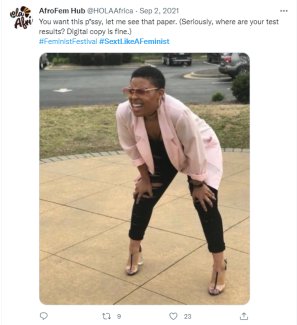
Tu veux cette ch*tte? Montre-moi ton doc. (Mais vraiment, où sont tes résultats de tests? En numérique ça ira.)
Âurea Mouzinho est une organisatrice féministe dans le domaine de la justice économique. Originaire de Louanda en Angola, elle compte 10 ans de carrière dans la recherche, le subventionnement, le plaidoyer et le renforcement de mouvement pour les droits des femmes et la justice économique en Afrique et dans le Sud global. Actuelle responsable des programmes pour l’Afrique chez Thousand Currents, elle participe également au comité de rédaction de Feminist Africa et est membre d’Ondjango Feminista, un collectif féministe qu’elle a co-fondé en 2016. Tout juste maman d’un petit garçon Gémeaux, Ȃurea aime les journées tranquilles avec sa petite famille et les longues promenades sur la plage. Il lui arrive parfois de tweeter via son compte @kitondowe.
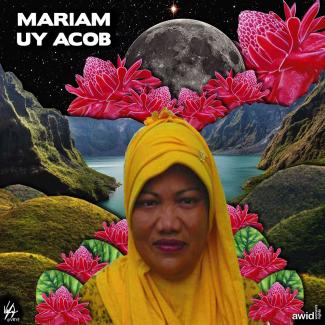
Mariam was a paralegal at the Kawagib Moro Human Rights Alliance.
Mariam was a staunch critic of militarization in Moro communities, and consistently denounced aerial bombardment and encampment. She had to seek sanctuary after exposing and calling out the injustices committed against Muslim communities in the Philippines.
She is believed to have been killed by suspected military agents because of her work as a WHRD. The assailants who killed Mariam waited for her, caught up with the vehicle she was using and shot her seven times.
The current global economic crisis provides stark evidence that the economic policies of the last 3 decades have not been working.
The devastation that the crisis has wrought on the most vulnerable households in the Global North and Global South is a reminder that the formulation of economic policy and the realization of human rights (economic, social, political, civil and cultural) have for too long been divorced from one another. Economic policy and human rights do not have to be opposing forces, but can exist symbiotically.
Macroeconomic policies affect the operation of the economy as a whole, shaping the availability and distribution of resources. Within this context, fiscal and monetary policies are key.
These policies affect key prices such as interest and exchange rates that directly influence, among other things, the level of employment, access to affordable credit, and the housing market.
Applying a human rights framework to macroeconomic policy allows States to better comply with their obligation to respect, protect, and fulfill economic and social rights. Human rights are internationally agreed-upon universal standards. These legal norms are articulated in United Nations treaties including, the Universal Declaration of Human Rights (UDHR), the International Covenant on Civil and Political Rights (ICCPR), and the International Covenant on Economic, Social and Cultural Rights (ICESCR).
Article 1 of the UDHR states that, “All human beings are born free and equal in dignity and rights.”
Although the UDHR was written about six decades ago its relevance is enduring. Many of the ideas address concerns and critical issues that people continue to face globally. Issues regarding inhuman punishment (Art. 5), discrimination (Art. 7), property ownership (Art. 17), equal pay for equal work (Art. 23/2), and access to education (Art. 26/1) are pertinent matters in countries South and North of the equator.
More specifically, States have an obligation under international law to respect, protect and fulfill human rights, including the economic and social rights of people within their jurisdiction. This is particularly relevant now given the financial crisis. In the U.S., regulation is skewed in favor of certain interests. The failure to extend government’s supervisory role in the context of social and economic change is a failure with regard to the obligation to protect human rights.
States should abide by key human rights principles to achieve economic and social rights. Some of the principles have potentially important implications for governance of financial institutions and markets, yet these possibilities have been underexplored.
Economic and social rights have a concrete institutional and legal grounding. Global declarations, international treaties, covenants, and, in a number of cases, national constitutions have incorporated aspects of the economic and social rights framework—providing an institutional infrastructure in national and international law.
Some have suggested that a consideration of global justice may not be a useful pursuit because of the institutional complexities involved. However, this does not get around that fact that global institutions already have an impact on social justice, both positive and negative.
It is useful to tease out the implications that elements of alternative frameworks have for economic governance, specifically those supported by existing institutions. Economic and social rights represent one such concrete framework. The framework is an evolving one, and ongoing discussion and deliberation is necessary to address underdeveloped areas and potential deficiencies.

This section is based on CWGL’s blog “Applying a Human Rights Framework to Macroeconomic Policies” (2012).
A tool for feminist activists at COP30 fighting for transformative, equitable and community-centred solutions to address the climate crisis.
جديد
سيجتمع المشاركات/ون فعليًا في عدد من المواقع خارج مكان انعقاد المنتدى في بانكوك، في أجزاء مختلفة من العالم، في كل يوم من أيام المنتدى. وستكون جميع هذه المواقع ذاتية التنظيم مرتبطة افتراضيًا لموقع انعقاد المنتدى في بانكوك. كما هو الحال مع الأفراد المتواصلون عبر الإنترنت، سيتمكن المشاركون/ات من تسيير النشاطات والمشاركة في المحادثات والاستمتاع ببرنامج غني ومتنوع.
سيتم الإعلان عن مواقع التجمعات في عام 2024.
Una nómada de las culturas, nacida en Hong Kong y con raíces turco-paquistaníes, el amor de Fatima por la narración, ya sea su lectura o su creación conjunta, le infundió la pasión por el activismo de las comunicaciones. Formada en periodismo, ha trabajado durante siete años en los ámbitos de la comunicación digital y los medios de comunicación con ONG que brindan oportunidades educativas y asistencia jurídica a personas refugiadas y solicitantes de asilo, así como con el movimiento feminista musulmán, que aplica un enfoque feminista y de derechos para comprender y buscar la igualdad y la justicia en la tradición jurídica musulmana. Escribe con habitualidad artículos de opinión sobre asuntos feministas en el Sur Global.
Mediante la narración en esta era hiperdigital de las redes sociales, Fatima sigue colaborando con organizadores comunitaries y activistas de base para crear contenido audiovisual, a fin de tender puentes de comprensión hacia la liberación colectiva y la descolonización. Durante los días en que no trabaja, mira atentamente largometrajes feministas independientes de Irán, Marruecos y Pakistán, e interpreta poesía oral con sus camaradas de Kuala Lumpur.
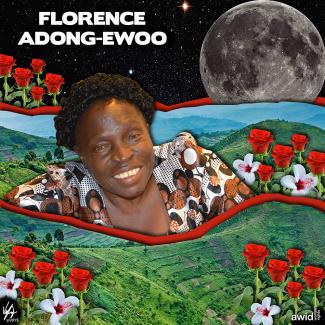
Florence fue una activista por los derechos de las personas con discapacidad que trabajó con varias organizaciones de mujeres con discapacidad en Uganda.
También ocupó la Dirección del Distrito de Lira de la Asociación de Mujeres con Discapacidad, así como del foro de Consejeras Mujeres del Distrito de Lira. Formada como consejera para personas con discapacidad y para madres y padres de niñxs con discapacidad, apoyó muchos proyectos que reclamaban mayor representación de las personas con discapacidad.
Murió en un accidente de motocicleta.
Anti-rights actors have had a substantive impact on our human rights framework and the progressive interpretation of human rights standards, especially rights related to gender and sexuality.
When it comes to the impact of conservative actors in international policy spaces, the overall picture today is of stasis and regressions.
We have witnessed the watering down of existing agreements and commitment; deadlock in negotiations; sustained undermining of UN agencies, treaty review bodies and Special Procedures; and success in pushing through regressive language in international human rights documents.
The CSW, held annually in March, has long been one of the most contested sites in the UN system. In March 2015, conservative efforts set the tone before events or negotiations even began; the outcome document of the Commission was a weak Declaration negotiated before any women’s rights activists even arrived on the ground.
At 2016’s CSW, the new Youth Caucus was infiltrated by large numbers of vocal anti-abortion and anti-SRHR actors, who shouted down progressive youth organizations. Again, intensive negotiations resulted in a lacklustre text, which included regressive language on ‘the family.’
Precisely when addressing women’s human rights is of urgent importance, the CSW has been rendered a depoliticized and weakened space. Using it to advance rights has become harder and harder since progressives’ energy is taken up trying to hold the ground against conservative backlash.
As the intergovernmental body responsible for the promotion and protection of human rights around the globe, the HRC is a key entry point for conservative actors. In recent years, this mechanism has been the scene for a number of damaging anti-human rights moves.
In conversation with other anti-rights actors, one strategy of conservative states, and blocs of states, is to aggressively negotiate out positive language and to introduce hostile amendments to resolutions, most often resolutions focusing on rights related to gender and sexuality.
To take one example, during the June 2016 session of the HRC, opposition was mounted towards a resolution on discrimination against women by the member states of the Organization of Islamic Cooperation (OIC) and allies. During contentious negotiations, multiple provisions were removed, including women’s and girls’ right to have control over their sexuality, sexual and reproductive health, and reproductive rights; and the need to repeal laws which perpetuate the patriarchal oppression of women and girls in families, and those criminalizing adultery or pardoning marital rape.
The HRC has also been the site of pernicious conservative initiatives to co-opt human rights norms and enact conservative “human rights” language, such as that of the Russia-led “traditional values” resolutions, and more recently the “Protection of the Family” agenda.
In 2015, moving their sights to another front, a number of religious right organizations began to target the Human Rights Committee, the treaty monitoring body for the International Covenant on Civil and Political Rights (ICCPR), a pivotal human rights instrument.
Anti-human rights groups mobilized in hopes of cementing their anti-abortion rhetoric into the treaty.
When the Committee announced it was drafting a new authoritative interpretation of the right to life, over 30 conservative non-state actors sent in written submissions, advocating their misleading discourse on ‘right to life’ - that life begins at conception and that abortion is a violation of the right - be incorporated in the Committee’s interpretation of article 6.
Conservative groups targeting the Human Rights Committee was a shift considering that historically anti-human rights actors have repeatedly attempted to undermine and invalidate the essential work of the treaty monitoring bodies, including the Human Rights Committee.

Anti-human rights actors were involved in lobbying towards the development of the new Sustainable Development Goals (SDGs) in 2015, focusing again on rights relating to gender and sexuality. These efforts had limited traction in their attempts to embed regressive language in Agenda 2030.
However, after successfully pushing back against progressive language in the final text, conservative actors then pivoted to another strategy. In an attempt to evade state accountability and undermine the universality of rights, several states have repeatedly made reservations to the Goals.
On behalf of the African Group, Senegal claimed that African states would only “implement the goals in line with the cultural and religious values of its countries.”
The Holy See also made a number of reservations, stating it was “confident that the related pledge ‘no one will be left behind’ would be read” as meaning “the right to life of the person, from conception until natural death.”
Saudi Arabia went one step further, declaring that the country would not follow any international rules relating to the SDGs that reference sexual orientation or gender identity, describing them as running “counter to Islamic law.”
Anti-rights actors have made increasing headway at the UN General Assembly (GA). Most recently, during the 71st session in 2016, the GA was the scene of feverish anti-rights organizing in opposition to the new mandate created by the Human Rights Council resolution on sexual orientation and gender identity in June 2016: the Independent Expert on SOGI. Four separate attempts were made to undercut the mandate in GA spaces.
One approach was to introduce a hostile resolution at the Third Committee[1], led by the African Group, which in essence aimed to indefinitely defer the new mandate. While this approach was not successful, such an attempt in the GA to retroactively block the creation of a mandate brought forward by the Human Rights Council represented a new and troubling tactic - anti-right actors are now working to directly undermine the HRC’s authority respective to the General Assembly.
Another approach targeted the Fifth Committee (responsible for administration and budgetary matters) as an entry point to attack the mandate. In an unprecedented move a number of States attempted (again, unsuccessfully) to block the funding of UN human rights experts, including the new IE on SOGI[2],.
While these multiple efforts were unsuccessful in blocking the creation and continuation of the new mandate, the significant support they received, the novel strategizing employed, and the strong alliances built along regional lines through negotiations point to difficulties ahead.
[1] The Third Committee of the GA deals with agenda items relating to a range of social, humanitarian affairs, and human rights issues. Each year it discusses and issues resolutions on issues including the advancement of women, the protection of children, family, and youth.
[2] While UN Special Procedures experts (i.e. Special Rapporteurs, Working Group members and Independent Experts) work pro bono, some funds are generally allocated to facilitate country visits on the invitation of the national government, and support staff.
Les membres de l’AWID exploreront et feront une évaluation critique du rôle que l’entraide peut jouer pour financer et apporter des ressources aux mouvements, en se livrant à un collage collectif.
📅 Mercredi 12 novembre 2025
📍 Espace COP Populaire
Site web en anglais, espagnol et portugais
La comunicación del deseo
Anfitrionx: Tendemos a pensar en la comunicación del deseo como algo circunscrito a la intimidad de la alcoba y nuestras relaciones personales. Sin embargo, ¿podemos también pensar este tipo de comunicación como una estructura, una práctica que nutre nuestro trabajo, y cómo somos, y cómo actuamos en el mundo?
LindiweCreo que, desafortunadamente, en el pasado expresar tu sexualidad tenía sus limitaciones. Se te permitía expresarla dentro de los confines del matrimonio, lo cual estaba permitido; siempre el tabú y el estigma estuvieron asociados a todo intento de expresarla de una forma distinta. Cuando se trata de comunicar, obviamente, el hecho de que ciertos estigmas se asocien a la expresión de tu sexualidad o la expresión de tu deseo hace mucho más difícil comunicar eso en la alcoba o en la intimidad con tu pareja. Desde mi experiencia personal creo que, obviamente, si me siento más cómoda expresándome fuera de la alcoba acerca de otros asuntos u otros temas, para mí es más fácil construir esa confianza, porque comprendes la resolución de conflictos con esa persona en particular, comprendes exactamente qué hacer para que esa comunicación sea especial para esa persona en particular. No es fácil. Se hace constantemente en todo tipo de relación, ya sea la pareja, algo casual o solo un momento. Pero creo que la confianza en el afuera puede traducirse definitivamente en cómo comunicas tu deseo.
Manal
Desde la infancia, a una mujer se la cría con eso de: «no tienes permiso para hablar de tu cuerpo, no tienes permiso para hablar de tu deseo», lo que hace recaer una enorme responsabilidad en las mujeres, sobre todo en las niñas en su adolescencia, cuando necesitan expresarse y hablar de estos temas. Por lo tanto, en mi opinión, este es un gran problema. ¿Sabes? Llevo casada más de 25 años, pero todavía, hasta el día de hoy, no puedo hablar de mis deseos. No puedo decir lo que quiero o prefiero, porque es como si no tuviera permitido cruzar esa línea. Es como un pecado, a pesar de ser mi derecho. Lo mismo sucede con todas mis amigas, no pueden expresarse de forma correcta.
Louise
Personalmente creo que expresar nuestros deseos, mis deseos, sea como sea que se expresen, tiene que ver con la otra persona y la mirada que esa otra persona tenga sobre mí. Así que esto también es algo que podemos vincularlo con el cine. Y la mirada que tenga sobre mí misma también: lo que creo que soy como persona, pero también lo que la sociedad espera de mí y mi sexualidad. En el pasado, de algún modo, solía establecer una analogía entre lo que sucede en la alcoba y lo que sucede en el lugar de trabajo, porque a veces se da esta dinámica de poder, lo quiera o no. Y a menudo, la comunicación verbal es más difícil de lo que pensamos. Pero cuando se trata de representarlo en el cine, es un juego absolutamente distinto. Estamos muy lejos de lo que supongo que a todxs lxs presentes nos gustaría ver en la pantalla cuando se trata de comunicar deseos sexuales dentro y fuera de la alcoba.
Anfitrionx: Podemos pensar en el mundo digital como hecho cuerpo: aunque sea virtual, no es menos real. Y eso quedó claro en el contexto del festival de las Realidades Feministas de AWID, el cual se celebró íntegramente en línea. Entonces, ¿qué implica hablar de sexualidad de forma colectiva, política, en los espacios en línea? ¿Navegamos por los espacios virtuales con nuestros cuerpos y afectos y, en dicho caso, cuáles son las distintas consideraciones en juego? ¿Qué implica para la comunicación y la representación?

LindiweLas redes sociales te hacen sentir en comunidad. Cuando expresas lo que quieres o lo que te agrada, habrá alguien que va a estar de acuerdo o en desacuerdo, pero quienes concuerdan contigo te hacen sentir que perteneces a una comunidad. Así que es más fácil lanzarlo al universo, o que otras personas lo vean, y potencialmente que no se te juzguen tanto. Y digo esto muy libremente porque a veces, según lo que expreses, serás humilladx o aprobadx. Pero cuando se trata de la alcoba, hay una intimidad y casi una vulnerabilidad que te expone a ti y a diferentes partes tuyas sobre las cuales no es fácil opinar. Cuando se trata de expresar tu deseo, hablarlo y manifestarlo y, quizás crear un tuit o un posteo en una red social, o incluso darle un «me gusta» y leer a otras comunidades con ideas afines, eso es más fácil que decirle a tu pareja, «así es como quiero recibir placer» o «así quiero que hagas ahora», debido al temor al rechazo. Pero no es eso únicamente. Sólo el aspecto de la vulnerabilidad – permitirte desnudarte a tal punto que la otra persona vea lo que estás pensando, sintiendo, deseando –, creo que es ahí donde radica la diferencia. Siento que en las redes sociales hay más comunidad y es más fácil involucrarse en conversaciones. Mientras que en la habitación, no quieres arruinar el momento necesariamente. Pero creo que eso, en cierta forma, te ayuda a comprender, según la relación con la persona, cómo te relacionarías de allí en más. Así que siempre sé que si intento comunicar algo y no lo logro en el momento, siempre puedo mencionarlo fuera de ese momento y ver cuál sería la reacción para saber cómo abordarlo en el futuro.
Louise¿Sabes? La cuestión con las películas es que no sé si la mirada masculina es intencionada o no. En verdad no lo sabemos. Lo que sí sabemos es la razón por la que la sexualidad en general ha sido tan heteronormativa y se ha centrado en la penetración, y por qué a las mujeres no se les da ningún espacio para realmente pedir algo en el cine: es porque la mayoría de la gente que ha trabajado en esta industria y tomado decisiones en cuanto a, ya sabes, la narración y la edición, han sido varones blancos. La venganza por violación es este género cinematográfico tan extraño que nació en la década de 1970, en donde la mitad de la historia sería sobre una mujer que fue violada por una o varias personas y, en la otra mitad, ella busca vengarse. Generalmente la mujer asesinará y matará a la persona que la violó y, en algunos casos, a otras personas cercanas al violador. Cuando este género comenzaba a surgir y, durante 30 años como mínimo, los varones eran quienes escribían, producían y dirigían esas películas. Por eso también buscamos tanto la representación. Muchxs feministas y pionerxs en la cinematografía queer también usaron el acto de filmar para hacerlo y reivindicar su propia sexualidad. Se me viene a la mente Barbara Hammer, una pionera queer y feminista del cine experimental de los Estados Unidos, que decidió filmar a mujeres teniendo sexo en 16mm., y, al hacerlo, reclamó un espacio dentro de la narrativa que se exhibía en el cine en aquel momento. Y también está el tema de la invisibilización: ahora sabemos, por Internet y el intercambio de conocimientos, que cineastas mujeres y queer vienen intentando y filmando desde los inicios del cine. Recién ahora nos damos cuenta porque tenemos acceso a bases de datos y al trabajo de activistas y curadorxs y cineastas.
Anfitrionx: Y esto abre la conversación sobre la importancia de mantener vivas las historias feministas. Los mundos en línea también han desempeñado un rol crucial en la documentación de las protestas y las resistencias. Desde Sudán hasta Palestina, pasando por Colombia, los feminismos han tomado nuestras pantallas por asalto y desafiado las realidades de la ocupación, el capitalismo y la opresión. Entonces, ¿podemos hablar de la comunicación del deseo, del deseo de algo más, como la descolonización?
ManalQuizás porque en mi pueblo hay apenas 600 habitantes y es una única familia – la Tamimi – no hay barreras entre varones y mujeres. Hacemos todo de manera conjunta. Entonces, cuando comenzamos nuestra resistencia no violenta o cuando nos unimos a la resistencia no violenta en Palestina, nadie discutió si las mujeres debían participar o no. Asumimos un papel muy importante en el movimiento aquí en el pueblo. Pero cuando otros pueblos u otros lugares comenzaron a sumarse a nuestras protestas semanales, algunos hombres pensaban que, si estas mujeres participaban o se unían a las manifestaciones, ellas lucharían con los soldados y entonces serían mujeres fáciles. Algunos hombres que no eran del pueblo intentaron acosar sexualmente a las mujeres. Pero una mujer fuerte que es capaz de enfrentar a un soldado puede también confrontar el acoso sexual. En ocasiones, cuando otras mujeres de otros lugares se suman a nuestra protesta, en un principio son tímidas; no se quieren acercar porque hay muchos hombres. Si quieres participar en la protesta, si quieres ser parte del movimiento no violento, tienes que quitarte todas esas restricciones y todas esas ideas de la cabeza. Tienes que enfocarte simplemente en luchar por tus derechos. Desafortunadamente, la ocupación israelí conoce todo esto. Por ejemplo, la primera vez que me arrestaron, tenía puesta la hijab, entonces intentaron quitármela, intentaron sacarme la ropa, frente a todo el mundo. Había entre 300 y 400 personas y lo intentaron. Cuando me llevaron para interrogarme, el interrogador dijo: «lo hicimos para castigar a otras mujeres a través suyo. Conocemos su cultura». Yo le respondí: «No me importa, creo en lo que hice. Aun si me quitaran toda la ropa, todo el mundo sabe que Manal está resistiendo».
LindiwePienso que incluso desde una perspectiva cultural, lo cual es muy irónico, si observas la cultura en África, antes de ser colonizada, se ve que mostrar la piel no era un problema. Usar piel animal o cuero para protegerte, no era ningún problema y la gente no estaba sexualizada salvo que se diera en un contexto determinado. Pero nos hemos condicionado a decir «deberías cubrirte» y cuando no te cubres, quedas expuesta y, por lo tanto, estarás sexualizada. La desnudez se sexualiza en lugar de estar simplemente desnuda; no quieres que a una niña pequeña la vean desnuda. ¿Qué tipo de sociedad nos hemos condicionado a ser si vamos a sexualizar a alguien que está desnudx fuera del contexto del vínculo sexual? Pero el entorno definitivamente juega un papel importante, porque tu madre y tu padre y tus abuelas y abuelos y tías y tíos dicen «no, no te vistas de manera inapropiada», o «no, eso es muy corto». Entonces, primero escuchas todo eso en el hogar, y luego, en el momento en que te expones al exterior, según el entorno, ya sea eurocéntrico o más occidentalizado que el que estás acostumbrada, entonces eres un poco libre de hacerlo. E incluso entonces, por más libre que seas, eso trae consigo muchas otras cuestiones en términos de abucheos y la gente que todavía sexualiza tu cuerpo. Puedes vestir una falda corta, y alguien se siente con derecho de tocarte sin tu permiso. Hay tanto asociado a la regulación y el control sobre el cuerpo de las mujeres, y la narrativa comienza en casa. Y luego sales a la comunidad, a la sociedad, y la narrativa se perpetúa, y te das cuenta de que la sociedad te sexualiza en general, sobre todo si eres una persona de color.

Anfitrionx: Por último, ¿cómo puede nuestra resistencia traspasar lo que está permitido? ¿Hay un lugar para el placer y el gozo para nosotrxs y nuestras comunidades?
LouiseEncontrar placer en la resistencia y resistencia en el placer; en primer lugar, para mí está la idea del cine de guerrilla o el acto de filmar cuando se supone que no deberías o cuando alguien te dijo que no lo hagas, lo cual es el caso de muchas realizadoras, incluidas lxs realizadorxs queer, en el mundo de hoy. Por ejemplo, en el Líbano, que es un terreno cinematográfico que conozco muy bien, la mayoría de las historias de lesbianas que he visto las han rodado estudiantes en formatos muy cortos «sin valor de producción», como se diría en Occidente: sin dinero, debido a la censura en el ámbito institucional, pero también en la esfera familiar y privada. Creo que filmar lo que sea, pero también filmar el placer y el placer en la narrativa lesbiana, es un acto de resistencia en sí mismo. Muchas veces, tan solo tomar una cámara y conseguir que alguien edite y que alguien interprete es sumamente difícil y requiere de mucha convicción política.
LindiweTengo un grupo de apoyo para casos de violación. Intento asistir a las mujeres para que se restablezcan desde una perspectiva sexual: si quieren volver a tener intimidad, que los traumas del pasado no influyan a la hora de seguir adelante. No es fácil, pero es individual. Por eso siempre comienzo por comprender el cuerpo. Creo que cuanto más lo comprendes y lo amas y más orgullo sientes por él, serás mucho más capaz de recibir a alguien en ese espacio. Lo denomino entrenamiento en la sensualidad, donde hago que comiencen a verse a sí mismas no como objetos sexuales, sino como objetos de placer y deseo que pueden ser intercambiables. De ese modo eres tan digna de recibir como de dar. Pero no solo desde un punto de vista psicológico, también es físico. Cuando sales de la ducha, sales de la tina, y te pasas loción por el cuerpo, miras cada parte de tu cuerpo, sientes cada parte de tu cuerpo, sabes cuando hay cambios, conoces tu cuerpo tan bien que si te sale un grano nuevo en la rodilla, eres tan consciente de ello porque hasta hace unas horas no lo tenías. Con este tipo de cosas intento hacer que las personas se amen a sí mismas desde su interior, se sientan que son dignas de recibir amor en un espacio seguro, así las guío hacia la reivindicación de su sexualidad y su deseo.
Manal
¿Sabes? Comenzamos a ver mujeres de Nablus, de Jerusalén, de Ramallah, incluso de las 48 zonas ocupadas, que tienen que conducir entre tres y cuatro horas solo para sumarse a las protestas. Luego intentamos ir a otros lugares, hablar con las mujeres, decirles que no sean tímidas, que simplemente tienen que creer en sí mismas y que no hay nada de malo en lo que estamos haciendo. Puedes protegerte, entonces, ¿qué tiene de malo participar o sumarte? Cuando les pregunté a algunas de ellas por qué se habían sumado, respondieron, «si las mujeres Tamimi pueden, nosotras también». Con toda honestidad, escuchar esa respuesta me hizo muy feliz porque éramos una especie de modelo para otras mujeres. Si tengo que defender mis derechos, deberían ser todos mis derechos, no apenas uno o dos. Los derechos no se dividen.

Nana est militante féministe et chercheuse spécialisée dans les droits reproductifs et les politiques démographiques. Elle exerce ses activités en Égypte. Elle collabore avec Realizing Sexual and Reproductive Justice (RESURJ), siège au conseil consultatif de l’A Project au Liban et fait partie du comité communautaire de Mama Cash. Nana est diplômée d’un master en santé publique de l’Institut KIT et de l’Université Vrije d’Amsterdam. Son travail consiste à analyser et contextualiser les politiques démographiques nationales tout en documentant les questions liées à l’eugénisme contemporain, aux programmes d’aide internationale régressifs et aux régimes autoritaires. Auparavant, elle a collaboré avec la Fondation genevoise pour la formation et la recherche médicales, l’Initiative égyptienne pour les droits de la personne, ainsi qu’avec le Collectif féministe Ikhtyar au Caire.
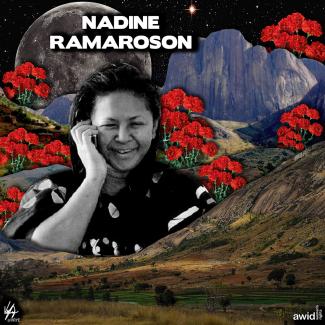
Son soutien aux femmes et aux personnes les plus vulnérables de sa communauté a fait que Nadine était un modèle pour beaucoup. Elle était déterminée à aider les pauvres et les sans-abri en particulier.
Bien que sa mort ait été déclarée comme étant accidentelle, la famille Ramaroson, sur l’initiative de son père André Ramaroson, a mené une enquête qui a mis en évidence des preuves de son assassinat. Elle serait décédée dans un accident mortel survenu entre Soanierano - Ivongo et Ste Marie - une histoire qui a été réfutée par sa famille. Elle avait reçu de nombreuses menaces de mort pour ses positions politiques résolues. L’affaire est toujours en cours auprès des tribunaux à Antananarivo (la capitale de Madagascar).