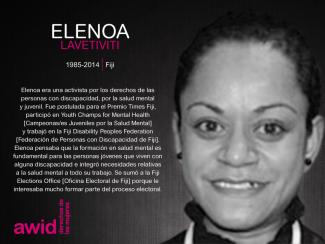
Elenoa Lavetiviti
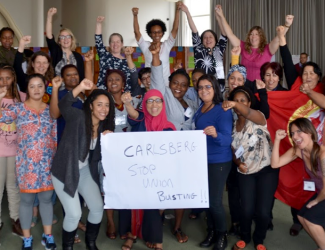
Women human rights defenders (WHRDs) worldwide defend their lands, livelihoods and communities from extractive industries and corporate power. They stand against powerful economic and political interests driving land theft, displacement of communities, loss of livelihoods, and environmental degradation.
Extractivism is an economic and political model of development that commodifies nature and prioritizes profit over human rights and the environment. Rooted in colonial history, it reinforces social and economic inequalities locally and globally. Often, Black, rural and Indigenous women are the most affected by extractivism, and are largely excluded from decision-making. Defying these patriarchal and neo-colonial forces, women rise in defense of rights, lands, people and nature.
WHRDs confronting extractive industries experience a range of risks, threats and violations, including criminalization, stigmatization, violence and intimidation. Their stories reveal a strong aspect of gendered and sexualized violence. Perpetrators include state and local authorities, corporations, police, military, paramilitary and private security forces, and at times their own communities.
AWID and the Women Human Rights Defenders International Coalition (WHRD-IC) are pleased to announce “Women Human Rights Defenders Confronting Extractivism and Corporate Power”; a cross-regional research project documenting the lived experiences of WHRDs from Asia, Africa and Latin America.
"Women Human Rights Defenders confronting extractive industries: an overview of critical risks and Human Rights obligations" is a policy report with a gender perspective. It analyses forms of violations and types of perpetrators, quotes relevant human rights obligations and includes policy recommendations to states, corporations, civil society and donors.
"Weaving resistance through action: Strategies of Women Human Rights Defenders confronting extractive industries" is a practical guide outlining creative and deliberate forms of action, successful tactics and inspiring stories of resistance.
The video “Defending people and planet: Women confronting extractive industries” puts courageous WHRDs from Africa, Asia, and Latin America in the spotlight. They share their struggles for land and life, and speak to the risks and challenges they face in their activism.
Challenging corporate power: Struggles for women’s rights, economic and gender justice is a research paper outlining the impacts of corporate power and offering insights into strategies of resistance.
AWID acknowledges with gratitude the invaluable input of every Woman Human Rights Defender who participated in this project. This project was made possible thanks to your willingness to generously and openly share your experiences and learnings. Your courage, creativity and resilience is an inspiration for us all. Thank you!
تحذير: عنف ضد المرأة و البنت (لانو في فرق بيناتهم) ، اعتداء.
لطالما كنت جزء منك. لما كنت صغيرة لم أكن أعرف أن كلمة - نسوية - مقصودة لنا نحن ، الي نطمح إلى التغلب على النظام الأبوي وتفكيكه ، الي نلتمس اللجوء في أحضان الشمول والنسوية التقاطعية ، الي يعاملو الناس على قدم المساواة بغض النظر عن جنسهم ، عرقهم، توجهاتهم الجنسية أو دينهم ، الي يحبو يكونوا أفضل ويستخدموا صلاحياتهم لرفع مستوى الآخرين.
كان عمري 14 سنة ،لما اعتدى مدرس اللغة الفرنسية في المدرسة الإعدادية على طالبة في صفي ، رجل يبلغ طوله ستة أقدام و عمره ثلاثين عامًا. ذهبت مع الطالبة ، التي كانت صديقة طفولتي ، والعديد من الفتيات في صفي إلى مدير المدرسة للإبلاغ عنه ، وشهد الفصل بأكمله المكون من 30 طالبًا عن الاعتداء. لكن كل محاولاتنا لمحاسبته باءت بالفشل ، وغطت الإدارة قصة الفتاة ولم يُطرد مدرس الفرنسية. أنا والفتيات في صفي شعرنا بغضب كبير، لذلك فعلنا ما كانت ستفعله كل ناشطة نسوية في مراهقته:رمينا بيض علي سيارته! وعلى الرغم من أن البيض بيتغسل بسهولة ، إلا أن الطلاء الذي استخدمناه في كتابة "خنزير" و "خماج" بقى. لن أنسى أبدًا كيف شعرنا بهداك الوقت. متحررات ، غاضبات ، سعيدات ، متماسكات ، وجبارات.منذ ذلك الحين، نفس الشعور يتكرر في كل بيئة نسوية كان لي الشرف ان احضر فيها. نشأت الناشطة النسوية في داخلي لتنضم إلى Women Deliver ، و AWID ، و Unootha ، ولتنسق ورش نسوية في الجامعة ، بل وتتعرض للاضطهاد بسبب انتمائي النسوي في سن التاسعة عشرة ، لكن هذه قصة أخرى لرسالة أخرى.
توفر لي المساحات النسوية الأمان والتمكين. تلك المساحات هن الأمهات اللواتي تمنينهم والرابط الذي كنا بحاجة إليه للتواصل مع بعضنا وتنظيم أنفسنا على الرغم من خلافاتنا ضد عدو مشترك، الباترياركية. من خلالك تعلمت أن أجمع نقاط قوتي ومهاراتي وأوجههم نحو النهوض بالآخرين وإبراز المهمشين وإعطاء صوت لمن لا صوت لهم.
أكثر ما أحبه فيك ، هو أنك تخطئين أحيانًا ، وتتجاهلين وتهمشين أيضًا ، ولديك تحيزات كما لدى كل حركة أخرى ، لكن ما يجعلك مختلفًتن هو أنكي تسعين دائمًا إلى أن تكوني أفضل. المساءلة ليست شيئًا يرعبكي وأنت حركة دائمة التغير تعكسين كيف يتغير العالم والعمل الخيري في جهود المساواة مع مرور الوقت.
أتمنى أن تنمي دائمًا ، أن تفعلي ما هو أفضل ، وأن تغضبي دائمًا ، وأن تزأري دائمًا ، وأن تحبي دائمًا ، أن تتحدثي بلغات مختلفة ، وأن تكوني دائمًا في السلطة.
كل حبي ونوري وغضبي لكي ،
لينة
¿Es usted una persona que diseña políticas en la ONU y quiere saber quiénes son los principales grupos anti-derechos y frente a qué discursos mantenerse alerta? ¿O unx feminista que busca argumentos para refutar esos discursos rápidamente? Esta cartilla de 8 páginas le ofrece información importante de un vistazo.
With 1,773 fossil fuel lobbyists at last year's COP29, we're heading alongside other feminists to Belém, Brazil for COP30, from 10 November – 21 November 2025, where we will continue to denounce false solutions, call out corporate capture, demand that States uphold their commitments under the Common but Differentiated Responsibilities and Respective Capabilities and push for feminist economic alternatives.
$2.7 trillion for the military. $300 billion for climate justice. We're here to flip the script.
The Women’s Working Group on Financing for Development (WWG on FfD), an alliance of women’s rights organizations and networks, was launched in October 2007 to advocate for the advancement of gender equality, women’s empowerment and human rights in the FfD related UN processes.
We believe so! It is still very early in the planning process, so please stay tuned as plans are forming.
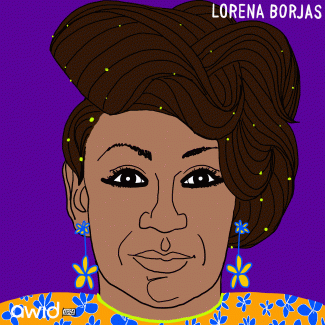
Lorena Borjas, a trans Latina woman and activist, lived and worked in the Jackson Heights neighborhood of Queens, New York City. In those streets, she looked after her community for years, advocating for trans and immigrant rights, supporting survivors of human trafficking and abuse, campaigning for sex workers’ rights and those of people living with HIV and AIDS.
Lorena was strong and tireless in her fight to support, defend, and have the back of those most marginalized and discriminated by transphobia, misogyny and racism.
“She pushed us to shine authentically, to become a scream of subversion that says, ‘I am here, and I deserve happiness, too.’” - Cecilia Gentili, a trans activist and Lorena’s friend
Having faced numerous traumas and hardships herself, as a trans immigrant woman and victim of human trafficking, Lorena pulled knowledge and emotional memory from the well of her experiences in order to help build and strengthen the community she was part of and which was part of her. Some of the ways she did this was to organize and mobilize support ranging from providing condoms and connecting trans women to different services, to setting up an HIV testing clinic in her own home.
"She was such a beautiful soul who helped others when her journey was difficult and painful as an immigrant, as a trans immigrant. She believed the trans community needed love, acceptance, and compassion, and she gave it all.” - Luchia Dragosh, QPTV Supervising producer of a documentary about Lorena
In more than 25 years of activism, she also founded the Lorena Borjas Community Fund together with Chase Strangio (lawyer and trans rights activist). The Fund helps the many different members of her community (and especially trans persons) dealing with immigration challenges to avoid the cycle of arrest-jail-deportation.
Lorena passed away in March 2020 of complications from COVID-19.
Her enormous and beautiful legacy will be taken forward through the streets of Queens by the network and community she co-created.
“We will pick up her work where she left it, work that is essential to the well-being of “mis pajaras” as she called the trans girls of Queens under her wing.” - Cecilia Gentili
"Lorena brought light to us when we were living through a very dark time here in New York. She brought us light when we were dealing with the crack epidemic, when we were dealing with the AIDS crisis, dealing with changes in immigration policies." - Cristina Herrera, founder and CEO of Translatina Network and Lorena’s friend
"Lorena has done more than anyone else I know to shine a light on the epidemic of trafficking in transgender communities and to help other trans women escape exploitation." - Lynly Egyes (represented Borjas on behalf of the Transgender Law Center)
Watch a documentary about Lorena Borjas
Read a postscript in The New Yorker about Lorena Borjas
Read an opinion piece in the New York Times by Cecilia Gentilin
Bonjour encore, et encore, et encore. Je vous connais et je vous aime depuis le début de ma vie d’adulte, depuis que je vous ai réellement rencontrés, dès la fin de mes études universitaires. Je ne vous avais vus qu’à une seule reprise avant cela. Cette fois où vous êtes apparus en tant que Betty Friedan dans une émission de télé locale dans le Midwest, à la fin des années 1960. À l’époque, Mme Wells, mon autre mère, et moi-même avions commenté les idées folles et tirées par les cheveux de cette femme qui essayait de nous convaincre. Depuis, des décennies et des décennies après, je continue à tomber éperdument en amour avec vous, mes adorés, et je comprends et j’assiste à votre érudition théorique, votre autorité éthique et morale, votre créativité, votre joie, et votre amour, avant tout. Près de 60 ans plus tard, je sais que nous sommes ensemble pour l’éternité.
Les premières années de notre relation étaient pas mal. J’étais plutôt tournée vers moi-même – j’essayais de comprendre mon identité raciale, de genre et sexuelle; j’essayais de définir mes opinions politiques, mes valeurs essentielles et mon éthique; et de terminer mes études universitaires – et vous m’apportiez plusieurs contextes, des lieux de réflexion intellectuelle où l’on pouvait passer, et des environnements réconfortants et accueillants où, et grâce auxquels j’ai pu façonner les fondations de l’être humain et féministe que j’allais devenir.
Le mouvement de femmes principalement blanches de Cambridge et de Boston, et notamment les Filles de Bilitis, a été mon point de départ. Ça me convenait à l’époque mais j’ai rapidement pris conscience que je désirais quelque chose de plus. Pouf! Comme par magie (heureux hasard), je suis entrée en contact avec un petit groupe de femmes lesbiennes radicales, anti-impérialistes, noires et socialistes, et nous allions rapidement devenir le Combahee River Collective.
Cette première expérience du Collectif, combinée aux dures leçons de vie et particulièrement les politiques raciales d’immigration afro-américaines/coréennes du début des années 1990 aux États-Unis, m’ont préparée à une trajectoire au bout de laquelle je me suis identifiée et je travaille en tant que féministe transnationale contre le militarisme, et par laquelle je m’efforce d’imaginer d’autres mondes dans lesquels tous les êtres humains s’épanouiront.
Les deux moments cruciaux de mouvement de femmes suivants sont venus pour moi des décennies après mes années avec le collectif, mais étaient néanmoins profondément liés. Le premier a été de rencontrer et d’être invitée au mouvement féministe coréen qui s’organisait contre les bases militaires américaines et qui soutenait les « femmes kijichon », les femmes coréennes dont les vies, y compris pour certaines avec des enfants métis, tournaient de diverses manières autour du service au personnel militaire américain dans les villages et les villes adjacentes aux bases. Des féministes coréennes adorées, et particulièrement Kim Yon-Ja et Ahn Il-Soon, les premières sœurs que j’ai rencontrées et avec qui j’ai travaillé, m’ont fait voir et comprendre l’importance essentielle de la nation en tant que principe d’analyse et d’organisation. Le point culminant a été de vivre et de travailler en Palestine occupée. La regrettée Maha Abu-Dayyeh m’a présentée au mouvement des femmes palestiniennes, avec un commentaire profond : « tu peux quitter la Palestine, mais la Palestine ne quittera jamais ». C’est tellement vrai. Et ensuite, tout mon travail et mes expériences par-delà de nombreuses frontières m’ont portée jusqu’à l’AWID - ma deuxième maison.
Comme vous le savez, mes adorés, être avec vous n’a pas été facile ni simple. En effet, vous êtes exigeants, constamment pleins de contradictions, et parfois même blessants. Néanmoins, vous continuez à vous développer et à croître, à mesure que vous soutenez mon développement et ma croissance politiques, émotionnels et spirituels. Je suppose qu’on se fait croître mutuellement - un processus très profond auquel je dédierai le reste de mon temps sous ma forme actuelle.
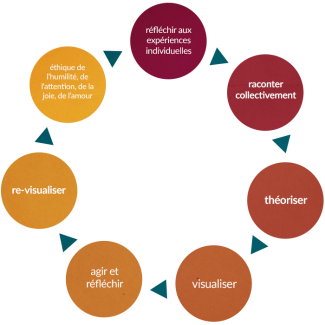
La constante d’avoir été avec vous toutes ces décennies est celle-ci :
Des féministes qui mobilisent collectivement les têtes, les cœurs, les mains et les esprits pour transformer nos mondes
Avec tout mon amour et plus, mouvements féministes!
Votre Margo
AKA DJ MOR Move and Joy
Wellfleet, Massachusetts, États-Unis
Le premier rapport de l’Observatoire sur l’universalité des droits (OURs) - disponible en anglais et en espagnol - compile les informations disponibles sur les tendances antidroits dans les sphères internationales. Découvrez les principaux groupes religieux, les discours et les tactiques antidroits à l’œuvre au sein de l’ONU.
Panels, workshops, plenaries and spaces for exchange between collectives, activists and organizations in struggle to collectively walk the path towards an agenda and a program of struggle for ecosocialism.
📅 November 8 - November 11, 2025
📍 Buenos Aires, Argentina
Te invitamos a que te pongas en contacto con nosotrxs para explorar formas de colaborar de manera más significativa con el Foro.
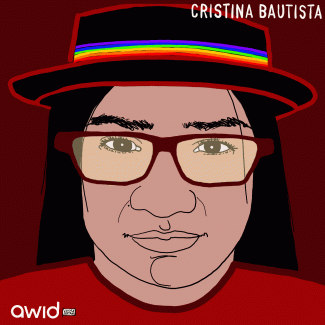
“Si nos mantenemos en silencio, nos matan. Si hablamos (nos matan) también. Así que, hablemos” Cristina Bautista, 2019.
Incansable defensora de los derechos del pueblo Nasa, Cristina habló alto y claro sobre la violencia dirigida contra su comunidad. En un discurso ante las Naciones Unidas, Cristina reclamó la protección de las vidas de las mujeres indígenas, y su participación en las diferentes esferas de la vida. En 2017, Cristina entró en el programa de Becas Indígenas de la Oficina de Derechos Humanos de la ONU y en 2019 recibió una subvención del Fondo de Contribuciones Voluntarias de la ONU para los Pueblos Indígenas.
"Me gustaría sacar a la luz la situación actual de los pueblos indígenas en Colombia, el asesinato de líderes indígenas, la represión de las protestas sociales. El acuerdo de paz, en lugar de ayudar, lo que ha hecho es reforzar el conflicto y la explotación de territorios sagrados en Colombia... En la situación actual, en casi todas las naciones indígenas, como mujeres, estamos trabajando para encontrar un futuro mejor para nuestras familias. No quiero que más mujeres del campo vivan en estas circunstancias. Las mujeres indígenas necesitamos oportunidades para participar en la vida política, económica, en la sociedad y en la cultura. Hoy me da fuerzas ver a todas estas mujeres aquí y ver que no estoy sola". - Cristina Bautista, 2019
El 29 de octubre de 2019, Cristina fue asesinada junto a cuatro guardias indígenas desarmados en un ataque que, supuestamente, fue llevado a cabo por miembros armados del grupo disidente de las FARC "Dagoberto Ramos".
Según Global Witness, "en los últimos años el asesinato de líderes comunitarios y sociales ha aumentado dramáticamente en Colombia".
"La comunidad Nasa ha alertado repetidamente a las autoridades sobre las amenazas que reciben y que ponen en peligro su seguridad. Sin embargo, a pesar de los esfuerzos que ponen los sucesivos gobiernos colombianos, los pueblos indígenas siguen corriendo grandes riesgos, especialmente, las figuras clave religiosas o comunitarias como Cristina Bautista". - Reunión informativa de la ONU para la prensa (en inglés), 1 de noviembre de 2019.
I never knew I have a close family who loves me and wants me to grow, My mum has always been there for me, but I never imagined I would have thousands of families out there who are not related to me by blood.
I found out family are not just people related by blood ties, but people who love you unconditionally, not minding your sexual orientation, your health status, social status, or your race.
Thinking about the precious moments I listened to all my sisters around the world who are strong feminists, people I have not meet physically, but who support me, teach me, fight for me: I am short of words, words cannot express how much I love you mentors and other feminists, you’re a mother, a sister, a friend to millions of girls.
You are amazing, you fought for people you don’t know - and that is what makes you so special.
It gladdens my heart to express this through writing.
I love you all and will continue to love you. I have not seen any one of you physically but it seems we have known each other for decades.
We are feminists and we are proud to be women.
We will keep letting the world know that our courage is our crown.
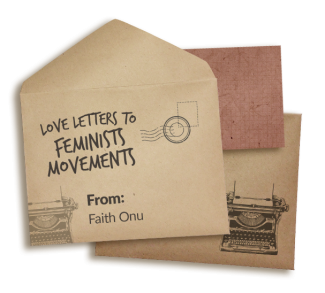
A love letter from FAITH ONUH, a young feminist from Nigeria
Avec Manal Tamimi, Bubulina Moreno, Karolina Więckiewicz et Anwulika Ngozi Okonjo..

*Sitios web en inglés
**Sitio web en francés
Sessions de consultation complémentaires sur la version préliminaire du document final
For the first time, the AWID Forum offers three modes of participation
Participants will come together in Bangkok, Thailand. We can’t wait!