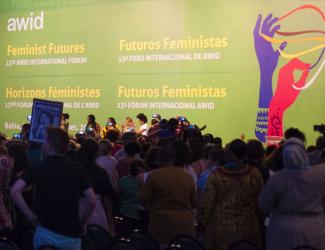
In September 2016, the 13th AWID international Forum brought together in Brazil over 1800 feminists and women’s rights advocates in a spirit of resistance and resilience.
This section highlights the gains, learnings and resources that came out of our rich conversations. We invite you to explore, share and comment!
What has happened since 2016?
One of the key takeaways from the 2016 Forum was the need to broaden and deepen our cross-movement work to address rising fascisms, fundamentalisms, corporate greed and climate change.
With this in mind, we have been working with multiple allies to grow these seeds of resistance:
Movements can also benefit from new methodologies on Visioning Feminist Futures (Coming up soon!)
And through our next strategic plan and Forum process, we are committed to keep developing ideas and deepen the learnings ignited at the 2016 Forum.
What happens now?
The world is a much different place than it was a year ago, and it will continue to change.
The next AWID Forum will take place in the Asia Pacific region (exact location and dates to be announced in 2018).
We look forward to you joining us!
About the AWID Forum
AWID Forums started in 1983, in Washington DC. Since then, the event has grown to become many things to many peoples: an iterative process of sharpening our analyses, vision and actions; a watershed moment that reinvigorates participants’ feminisms and energizes their organizing; and a political home for women human rights defenders to find sanctuary and solidarity.
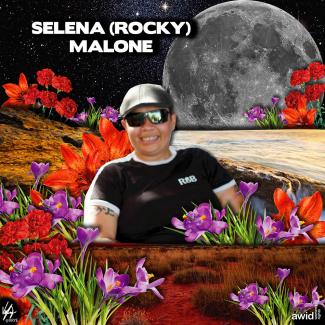
Rocky showed inspirational leadership and direction in working with Lesbian, Gay, Bisexual, Transgender, Intersex, Queer, Brotherboy and Sistergirl (LGBTIQBBSG) youth at risk.
Rocky started her career with the Queensland Police Service as a Police Liaison Officer. Making a difference was important to her. She led an impressive career working with young LGBTIQBBSG people as the Manager of Open Doors Youth Service.
Rocky worked through complex situations with clients relating specifically to gender and sexual identity. She was a natural in this line of work - a strong community leader, a quiet achiever, a loyal friend, a compassionate nurturer, and a change maker. Rocky was a founding member of IndigiLez Leadership and Support Group.
In 2016 at the Supreme Court in Brisbane, Former High Court Justice Michael Kirby mentioned Rocky by name when praising the work of the LGBTI Legal Service over the years. Rocky fought extremely hard for the human rights of the LGBTIQBBSG community, pushed boundaries and created change in a respectful, loving way.
Maria is a graphic designer and visual communicator. Maria has worked with NGOs and Human Rights like Profamilia and OXFAM. As a woman of the Global South, she feels especially called to use her skills to work with organizations that help protect the wellbeing, as well the rights of millions of girls and women in Latin America.
Position
Digital Communications Coordinator
Add to stories
Off
Snippet FEA ASOM’s activists in encounters (FR)
Les militants de l'ASOM dans les rencontres, les défilés et les événements
Snippet - CSW68 - Follow Socials - FR
Suivez-nous!
À travers des événements en présentiel, des lives sur nos réseaux sociaux, un stand d'exposition et bien plus encore, nous visons à nous rassembler, amplifier et soutenir les voix et la participation de nos membres et allié.e.s.
Ensemble, nous allons Récuperer Notre Pouvoir Féministe et centrer les alternatives et visions féministes autour d'économies basées sur les soins des personnes et de la planète.
Suivez-nous sur les réseaux sociaux pour plus de détails sur la façon de participer ! Participez aux conversations en utilisant les hashtags #AWIDatCSW68 et #RécupererNotrePouvoirFéministe
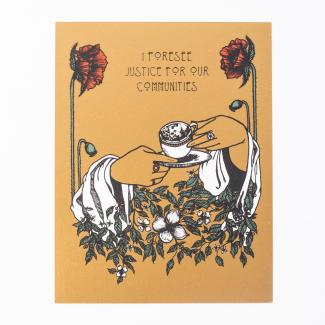
Impression sur papier, sérigraphie 4 couleurs, 8.5x11, 2016
«Tasseography» (Tasséomancie)
La tasséomancie est une méthode de divination qui interprète les motifs dans les feuilles de thé et/ou le marc de café. Il s’agit d’une pratique qui se transmet par les femmes de mon côté arménien et qui m’a été enseignée par ma mère, qui elle-même l’a apprise de sa mère, et ainsi de suite. Lorsque je regardais ma grand-mère lire le marc de café du café arménien préparé pour la famille et les amis, je remarquais que, souvent, elle voyait ce qu'elle avait envie de dire. Ces gravures disent certaines des choses que j’ai envie de voir dans le monde ; j'espère que vous aussi.
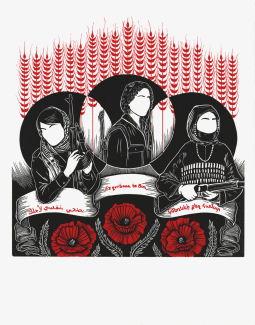
Impression relief sur papier, 11 × 14 in, 2021
«Our Promise» (Notre promesse)
Cette gravure célèbre la résilience, le sacrifice et la force des combattant·e·s de la liberté de l’Asie du Sud-Ouest et de l’Afrique du Nord à travers l'histoire et la solidarité qui existe. Elle a été inspirée à l'origine par un article que j'ai lu sur une exposition organisée à Tatvan, un district de Bitlis, qui mettait en lumière la présence arménienne dans la région. Mes ancêtres sont originaires de Bitlis, se situant aujourd'hui sur le territoire de la Turquie actuelle.
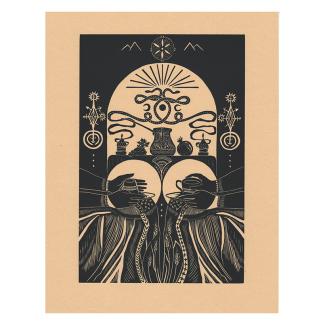
Impression relief sur papier, 8.5 × 11 in, 2020
«Looking at the Cup» (Regarder la tasse)
La tasséomancie (la lecture du marc de café) est une pratique culturelle utilisée par les femmes arméniennes depuis des siècles pour se parler entre elles et les unes aux autres, un langage codé permettant d'entamer des conversations, d'établir des relations et de tisser des liens.
À propos d’Ali Chavez Leeds
Ali Cat Leeds (elle/iel) est une artiste et graveuse qui vit sur les territoires non cédés de Cowlitz, Multnomah et des tribus confédérées de Grand Ronde, au confluent de deux rivières, également connu sous le nom de Portland, Oregon. Elle produit ses œuvres sous le nom de Entangled Roots Press. Ses impressions mêlent le littéral et le métaphorique pour éclairer et commenter le monde qui nous entoure. Les impressions en relief, sérigraphiques et typographiques vont du carnage de la déforestation à la beauté des mouvements des peuples. Les impressions d'Ali s'inspirent d'histoires ancestrales et s'orientent vers des avenirs libérateurs ; elles enchevêtrent les leçons des jardins, les symboles dans le marc de café, les fils tissés d'Arménie et d'Euskal Herria, jusqu'à la page imprimée.
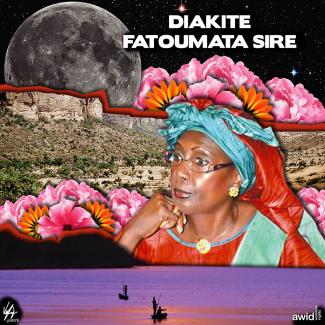
Diakite estuvo activamente comprometida con la defensa de las mujeres en la vida política y pública de Mali.
Trabajó para apoyar la capacitación de candidatas electorales y habló en contra de la práctica de la mutilación genital femenina (MGF). Fue una firme defensora de la salud y los derechos reproductivos.
Leila es una líder, defensora y consultora feminista transnacional, con más de veinticinco años de experiencia en la promoción de los derechos humanos, la igualdad de género y la justicia sexual y reproductiva en salud, derechos y justicia a nivel local y global. Leila nació en Argelia y se educó en Estados Unidos, Francia y Marruecos; a lo largo de su carrera profesional, ha vivido y trabajado en África, Europa y Estados Unidos.
Durante más de cinco años fue Vicepresidenta de Programas en el Fondo Global de Mujeres (GFW), supervisando el otorgamiento estratégico de subvenciones, el fortalecimiento de los movimientos, la incidencia global y las colaboraciones filantrópicas. En GFW duplicó las subvenciones otorgadas a más de 17 millones USD, inauguró el trabajo sobre movimientos feministas y de género en las crisis, creó un programa para niñas adolescentes liderado por un consejo asesor de niñas, y dirigió su trabajo de incidencia filantrópica. Antes de eso, entre 2002 y 2016 se desempeñó en el equipo de dirección de Ipas, donde publicó extensamente sobre derecho al aborto y justicia, lideró tareas de incidencia globales, y se asoció con grupos feministas que trabajan sobre gestión autónoma, movilización comunitaria y reducción de estigmas respecto de la integridad corporal y de los derechos sexuales y reproductivos. Mientras vivió en África del Norte, cofundó una empresa consultora feminista interseccional, Strategic Analysis for Gender Equality (SAGE), que trabajaba en las intersecciones de los derechos económicos, de género y sexuales y reproductivos, y dirigió el trabajo nacional, regional y mundial sobre género de la oficina de El Cairo de la Fundación Ford durante cinco años.
Leila tiene una vasta experiencia en educación popular, incidencia, organizaciones sin fines de lucro, juntas de desarrollo, filantropía, y monitoreo y evaluación. Es una hábil comunicadora comprometida con la utilización del enfoque interseccional para priorizar y difundir las voces y las experiencias de las personas más marginadas. Ha recibido la beca «Op-ed Public Voices» de la Fundación Ford, y fue becaria Fulbright en Marruecos. Sus publicaciones cubren una amplia gama de tópicos, incluyendo enfoques feministas y decoloniales a la filantropía, la promoción de los derechos humanos de las mujeres en contextos mayoritariamente musulmanes, estrategias feministas para impulsar la justicia reproductiva, el fomento de los abortos autogestionados, y la lucha contra los estigmas y la discriminación.
Actualmente Leila se desempeña como Copresidenta de la Junta Directiva del Centro por los Derechos Constitucionales (CCR), e integra la Junta Directiva del Highlander Research and Education Center. Es también funcionaria del consejo de rendición de cuentas del Numun Feminist Technology Fund y del comité asesor de la African Women’s Human Rights Defenders Platform. Anteriormente ha integrado las Juntas de la SisterSong Women of Color Reproductive Justice Collective, de la Red Mundial de Mujeres por los Derechos Reproductivos (WGNRR), del Fondo Global de Mujeres (GFW), del Fondo de Acción para el Aborto Seguro (SAAF), y del Proyecto de Tecnologías para la Salud Reproductiva (RHTP). Fue elegida Tesorera e integrante del Comité Ejecutivo de la Junta Directiva de Prospera, y del Comité de Dirección de Fenomenal Funds por cuatro años. Leila tiene una Maestría en Salud Pública, y una Maestría en Estudios de Medio Oriente y Norte de África; ha estudiado derecho islámico en Marruecos, y cursó estudios doctorales en sociología en Francia. Ha estudiado árabe y alemán, habla francés e inglés en forma fluida.
Position
Tesorera
Add to stories
Off
Snippet FEA Environments Of Shelter (EN)
Metzineres provides the following kinds of support, known as
Environments of Shelter:
Snippet - WITM To share - FR
Pour nous faire part de l’expérience vécue du financement de votre organisation.
Feminist Embodiments of Hope and Power
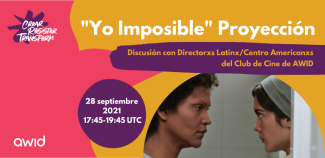
A Film Series on Feminist Realities from the SWANA region
by Esra Ozban
In a product-obsessed world, prioritizing process is a fundamental feminist method. Processes matter, and curation is no exception. While figuring out which of the films from the SWANA region would speak the loudest to the Feminist Realities theme, the global pandemic we are still facing shifted our everyday lives tremendously. Even to think, write, or express myself has become an everyday struggle. I kept missing all of my deadlines and sending apology emails to Kamee Abrahamian, whom I was working with as an independent curator for AWID’s Feminist Film Club. Kamee’s invaluable support, understanding, and suggestions reminded me that even in two different parts of the world, as colleagues who never met in person, we can co-create micro versions of the Feminist Realities for which we live and yearn.
Feminist Realities for me have a lot to do with sisterhoods. Sisterhoods that help womxn clearing mines in Artsakh/Nagorno-Karabakh. Sisterhoods baked in Vegan Inclusive Trans Cake by young trans feminists in Ankara that remind cis-ters that they are not welcomed by the Z generation. Sisterhoods that are growing into the mint on Dragica Alafandi’s rooftop in the Dheisheh Refugee Camp in Occupied Palestine in Sowing seeds of resistance. Sisterhoods that embrace intimate, sexual, and revolutionary proximities in Gezi Park in #resistayol. Sisterhoods that unearth an imagined encounter between two generations of womxn in exile in the streets of Haifa in Your father was born 100 years old and so was the Nakba. Cross-species sisterhoods that build in a fictional (brave) space created by Mounia Akl in Submarine for her rebel character Hala, who refuses to evacuate from a city full of garbage and is left behind with a dog friend.
This selection gathers bits and pieces of many Feminist Realities that have been realized in the SWANA region over the last couple of years. We will continue to imagine, learn, and share feminist embodiments of hope and power. In the meantime, let’s immerse ourselves in the powerful alternatives brought to life by the filmmakers and protagonists of these films. We may co-create every step, every act, and every attempt as we continue to cohabitate this world with others who are living Feminist Realities and continue to dream more of them into existence.
MOTHERLAND
By Emily Mkrtichian& Jesse Soursourian
“With beautiful visuals paired with compelling verité scenes, Motherland is a show of female camaraderie and strength… The film is a testament of women around the world who are willing to work harder to overcome any obstacle they meet.”
- Nosarieme Garrick, award winning filmmaker
“Motherland is an inspiring visualization of solidarity, courage, and grit…”
- Hers is Ours Collective, organizers of the Outsider Moving Art & Film Festival
Emily Mkrtichian on Feminist Realities and Artsakh/NKR: We shot the short film, Motherland, in the Republic of Artsakh in 2018. I was drawn to each of these women for their strength, their resilience and their humor -- despite the context in which they lived. In 2018, that context was the aftermath of a brutal war in the 1990’s, after which their country remained an unrecognized (or, in the international community, disputed) territory that was not given the autonomy and independence so many other countries enjoy. Artsakh was also deeply affected by the consequences we see in almost all places that go through violent conflict -- consequences that so often fall on women to bear: PTSD, high rates of alcoholism, high rates of domestic abuse, less equality and freedoms granted to women, little to no representation of women in politics and civil service. In the face of all these challenges, this film tries to capture the fire and power of the women of Artsakh, one that might not fit the traditional Western feminist paradigm, but one they have created for themselves through deep community ties, care for their families, hard work, and the ability to laugh with eachother through it all. Today, the Republic of Artsakh has been newly devastated by another war that left it without 70% of the lands these women grew up understanding were theirs. Yet, I can promise you that these women, and thousands of others, continue to pull their families, communities, and culture together through the same networks of care, commitment to hard work, and deep riotous laughter in the face of an uncertain future.
SOWING SEEDS OF RESISTANCE
By Baladi-Rooted Resistance
“A timely film to watch after having born witness to the latest bombardment of Gaza by Israeli Defence Forces. A glimpse into the way that women in Palestinian communities survive structural oppression, through the story of a library of traditional seeds.. and the women that sustain them as a form of nourishing rebellion.”
- Jessica Horn, PanAfrican feminst strategist, writer and co-creator of the temple of her skin
“Watching women coming together and working collectively for food autonomy is both therapeutic and empowering for me.”
- Hers is Ours Collective, organizers of the Outsider Moving Art & Film Festival
Baladi-Rooted Resistance Team on Feminist Realities: How to talk about Feminist Realities when you live in Deheisheh, a Palestinian refugee camp, built 70 years ago to serve 3000 refugees, but now home to 15000 people, in the occupied West Bank? Or when the land you farm is under constant threat by illegal settlers.
If you’re a woman in occupied Palestine you will have to struggle not only against patriarchy but also against colonialism and a brutal military occupation.
Dragiča and Vivien are fighting these multiple systems of domination in their own way.
Vivien uses native seeds to help Palestinians maintain their identity. Growing traditional food in traditional ways has great significance: “If you’re not a producer anymore, you’re a consumer, and what better way to enslave someone than turning them into your consumer. This is happening all around the world, but here you have it doubled with the military occupation.”
31.5% of households in the West Bank are food insecure. Through a rooftop edible garden, Dragiča managed to increase her family’s food autonomy. In the crowded camp, where the Israeli army conducts regular nighttime incursions to arrest and harass residents, Dragiča’s rooftop garden not only nourishes her family, but it especially nourishes her soul.
#RESISTAYOL
By Ruzgar Buski
Ruzgar Buski on Feminist Realities: I don’t know what to say about Feminist Realities but as a trans artist, an activist from Turkey, I know our realities are harsh. We live with violences- physical, emotional, economical, sexual! That is why we have to build our own networks, and co-creating micro realities for each other is a Feminist Reality for me. #resistayol is my first film, and at the beginning I was planning to make a film by/for/with trans people that does not try to convince anyone to the fact that trans people are human or focuses on raising awareness on trans issues. However, Gezi Uprising, one of the biggest uprising in the history of Turkey, happened and the film became something different.
I believe the production process really affects what the film is. We tried very hard for women, trans and non-binary people to work on every step of the film. This film is made by people who gathered with camaraderie and friendship. Kanka Productions is founded on transfeminist comradeship. I want the film to give hope, to heal because we carry a lot of traumas in our bodies- this is what makes us and what bonds us. Healing is a never-ending process and we have to create spaces to breath. #resistayol is an hour of breathing collectively.
Boysan Yakar in #resistayol: Well lubunyas (queers) were sitting in the park, all of a sudden bulldozers arrived and everyone got pissed off. Actually in summary this is it. It's Lubunya's park,and we had thirty days to explain that to this huge city. Everyone acknowledged that at night ibnes (faggots) fuck in that park...LGBTI Block carried our commune there. We already didn't trust the state and police and didn't have any security, we've established our own ways of doing things, our own laws and customs to survive... We carried our law to Gezi rapidly...With an effort to establish some common language and understanding among all these groups, the LGBT language of togetherness spread all through the park. Every day was a Pride march, everyone was continuously saying ‘ayol’. We spruced up the stinky, fusty language of the left. I guess we had such an impact because we've been disowned for all these years. From the most radical ones to the most conservative and nationalist ones, they all needed us, because everyone got used to being confronted with everything. Τhey were not used to such energy, our energy. That’s why it was a great political space for us. Every day, we actualized our biggest and main struggle there, that is, a struggle for visibility and recognition. That’s why we left Gezi with a huge gain.
VEGAN INCLUSIVE TRANS CAKE
By Pembe Hayat
“...a multifaceted statement, showing the joy that exists in the friendships within the queer community in Turkey as a display of rebellion and resistance.”
- Nosarieme Garrick, award winning filmmaker
“...fun, light, and random. In a world constantly marked and scarred by violence against the trans community, nothing, no action, is (unfortunately) deprived of meaning. So to more joy, love, and meaningful randomness!”
Cayan Azadi in Vegan Inclusive Trans Cake: Hello Barbies, Kens, porcelain dolls, Olive Oyls, cabbage dolls. Brides of Chucky, sisters of Chucky, brother-in-laws of Chucky and last but not least, esteemed brother-in-law lovers.
So why did we make this cake.
Now we got the news that a trans woman sex worker has attempted suicide due to the violence from street-guards and police on the street. She’s being kept at a police station now and that’s exactly why we made this cake. This transvestite cake is baked to show that we exist in every part of life, that we exist persistently and this cake shows that won’t be wiped off or ignored in this society.
Yes, there is violence in our lives, yes there is a lot of shade as well but despite all of that, we can still have fun, enjoying life as much as we can. Bon appetit, sis!
YOUR FATHER WAS BORN 100 YEARS OLD AND SO WAS THE NAKBA ابوكي خلق عمره ١٠٠ سنة، زي النكبة
By Razan AlSalah
SUBMARINE
By Mounia Akl
“It is directed as a poem is written… simple, a touch abstract, and moving.”
Esra Ozban: Esra Ozban is a film programmer and filmmaker from Turkey. Their artistic, curatorial, and scholarly work intersects critical archival practices, sex work, pornography, feminist/queer film cultures among others.
Follow us on Social Media to receive news about upcoming events and screenings:
Facebook: @AWIDWomensRights
Instagram: @awidwomensrights
Twitter ENG: @awid
Twitter FR: @awid_fr
Twitter ES: @awid_es
LinkedIn: Association for Women's Rights in Development (AWID)
Andaiye' en swahili significa 'una hija vuelve a casa'. Nació como Sandra Williams el 11 de septiembre de 1942 en Georgetown, Guyana, y cambió su nombre por el de 'Andaiye' en 1970, cuando los movimientos del Black Power [Poder Negro] arrasaron en su país y en la región del Caribe.
Andaiye fue considerada una figura transformadora al frente de las luchas por la liberación y la libertad. Fue una de lxs primerxs integrantes y líder activa de la Working People’s Alliance [Alianza de la Gente Trabajadora] (WPA, por sus siglas en inglés), un partido socialista de la Guyana que luchó contra el régimen autoritario existente y continuó, a lo largo de su vida, centrando su activismo en la justicia para la clase trabajadora y los derechos de las mujeres rurales, y en la superación de las barreras étnicas entre las mujeres Indo y Afro-Guyanesas.
Andaiye fue cofundadora de la Red Thread Women [Hilo Rojo Mujeres], una organización que aboga para que el trabajo de cuidados de las mujeres fuese remunerado justamente, también trabajó en la Universidad de West Indies y con el CARICOM. Andaiye señaló, sin ningún temor a desafiar a los gobiernos, los desequilibrios de género en las juntas estatales, la discriminación de lxs trabajadorxs sexuales en las leyes existentes, reclamó el derecho al aborto en Jamaica, y se pronunció abiertamente contra los acuerdos comerciales como el Caribbean Single Market and Economy [Mercado y Economía Únicos del Caribe] (CSME, por sus siglas en inglés) que permitía la libre circulación de las trabajadoras domésticas migrantes, pero no otorgaba esos mismos derechos a sus hijxs.
Andaiye publicó varios ensayos académicos, escribió columnas de prensa y también editó los últimos libros de Walter Rodney, un activista político guyanés y líder de la AMP, que fue asesinado en 1980. Andaiye sobrevivió a un cáncer y fue una de lxs fundadorxs de la Guyana Cancer Society [Sociedad de Guyana Contra el Cáncer] y del Cancer Survivors’ Action Group [Grupo de Acción de Sobrevivientes del Cáncer]. También fue integrante de la Junta Directiva de la Caribbean Association for Feminist Research and Action [Asociación Caribeña para la Investigación y la Acción Feminista] (CAFRA, por sus siglas en inglés), y Directora del Help and Shelter [Ayuda y Refugio] e integrante de la Junta Directiva de la Guyana National Commission on Women [Comisión Nacional de Guyana sobre las Mujeres]. Andaiye recibió varios premios a lo largo de su vida, entre ellos, la Flecha de Oro de los Logros de Guyana (el cuarto premio nacional más importante del país).
Andaiye falleció el 31 de mayo de 2019 a la edad de 77 años. Los homenajes que posteriormente le rindieron activistas, amigxs y personas inspiradas por su vida dan cuenta, elocuentemente, de su asombroso legado y su hermosa humanidad.
Algunos ejemplos:
"Andaiye tuvo un profundo efecto en mí... fue tantas cosas: una educadora, una luchadora; me enseñó a ser autocrítica, a pensar con más claridad, me enseñó sobre la supervivencia, sobre lo increíble que puede ser el coraje, sobre la compasión, a ir más allá de las apariencias externas y a tratar a la gente como personas y no dejarse distraer por su estatus, clase, raza... o cualquier otra cosa". Peggy Antrobus, activista feminista, autora, académica, Barbados.
"El tipo de idealismo convencido que Andaiye expresó, su voluntad de confrontar el mundo y su creencia obstinada en que realmente lo puedes cambiar... Esa política de la esperanza... ¿De qué otra forma podemos rendir homenaje a su vida, legado y memoria si no es haciendo nuestro trabajo de forma ética y con una autocrítica continua? Y situando el trabajo de cuidados de las mujeres en el centro de todo esto." - Tonya Haynes, Barbados.
"Puedo escuchar sus ocurrencias en nuestro entusiasmo colectivo. Así, a través de las lágrimas, puedo reír. Mis más profundas reverencias a ti, querida Andaiye, gracias por todo. Te deseo amor y luz para el viaje de tu espíritu. Saluda a Walter y a todxs lxs ancestrxs". - Carol Narcisse, Jamaica.
Alexandra is an anglo-colombian feminist with over 20 years of experience in local, national and international HIV and sexual and reproductive health and rights programming. She has extensive experience in resource mobilization and donor relations with private philanthropic foundations and multilateral agencies on behalf of international, national and local NGOs, predominantly in Latin America and the Caribbean. Prior to AWID, Alexandra worked at Fundación Si Mujer, a feminist abortion provider and educator in Colombia, RedTraSex and the International HIV/AIDS Alliance.
Alexandra has a BA in International Relations and Development Studies from Sussex University and a MSc in Public Health from the London School of Hygiene and Tropical Medicine. In rare moments when she is not working or parenting, she loves to swim, eat and has recently begun to play Zelda: Breath of the Wild with her son.
Position
Resource Mobilization Lead
Add to stories
Off
Snippet FEA Occupation’s kitchen Instagram 2 (ES)
Campaña de la cocina de Ocupação 9 Julho
Las Mujeres Sostienen el Cuidado | El Cuidado Sostiene la Vida | La vida Sostiene la Economía | ¿Quién Cuida a las Mujeres? | Ni Una Menos1 | Juntas, Juntos, Juntes | Almuerzo de Domingo
1Ni una menos es un eslogan feminista famoso en América Latina que surgió en Argentina como respuesta a la creciente violencia de género.
Snippet - WITM Why now_col 1 - ES
¿Por qué ahora?
Los movimientos feministas, por los derechos de las mujeres, la justicia de género, las personas LBTQI+ y demás movimientos aliados de todo el mundo atraviesan un momento crítico en el que se enfrentan a una poderosa reacción contra los derechos y libertades ya conquistados.
Los últimos años han traído el rápido auge del autoritarismo, la represión violenta de la sociedad civil y la criminalización de lxs defensores de los derechos humanos de las mujeres y las personas de género diverso, la escalada de la guerra y el conflicto en muchas partes del mundo, la perpetuación continua de las injusticias económicas y la intersección de crisis sanitarias, ecológicas y climáticas.
![]Ali Chavez Leeds portrait](/sites/default/files/styles/max_325x325/public/2021-10/portrait.jpeg?itok=0yU3PqLe)