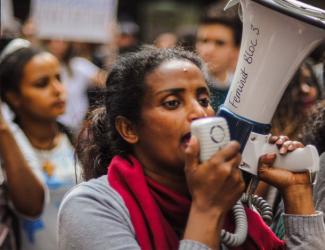
Resourcing Feminist Movements
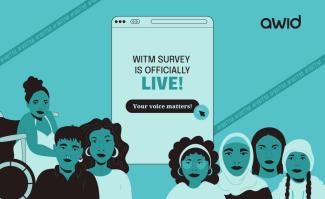
The “Where is the Money?” #WITM survey is now live! Dive in and share your experience with funding your organizing with feminists around the world.
Learn more and take the survey
Around the world, feminist, women’s rights, and allied movements are confronting power and reimagining a politics of liberation. The contributions that fuel this work come in many forms, from financial and political resources to daily acts of resistance and survival.
AWID’s Resourcing Feminist Movements (RFM) Initiative shines a light on the current funding ecosystem, which range from self-generated models of resourcing to more formal funding streams.
Through our research and analysis, we examine how funding practices can better serve our movements. We critically explore the contradictions in “funding” social transformation, especially in the face of increasing political repression, anti-rights agendas, and rising corporate power. Above all, we build collective strategies that support thriving, robust, and resilient movements.
Our Actions
Recognizing the richness of our movements and responding to the current moment, we:
-
Create and amplify alternatives: We amplify funding practices that center activists’ own priorities and engage a diverse range of funders and activists in crafting new, dynamic models for resourcing feminist movements, particularly in the context of closing civil society space.
-
Build knowledge: We explore, exchange, and strengthen knowledge about how movements are attracting, organizing, and using the resources they need to accomplish meaningful change.
-
Advocate: We work in partnerships, such as the Count Me In! Consortium, to influence funding agendas and open space for feminist movements to be in direct dialogue to shift power and money.
Related Content
هل عليّ القيام بأي تجهيزات قبل تعبئة الاستطلاع؟
يركّز استطلاع "أين المال" على وقائع التمويل للتنظيمات النسوية، تسأل أغلبية الأسئلة عن تمويل مجموعتكم/ن بين الأعوام 2021-2023. سوف تحتاجون أن تكون لديكم/ن معلومات معيّنة عند تعبئة الاستطلاع مثل ميزانيتكم/ن السنوية ومصادر التمويل الأساسية.
Snippet The revolution will be feminist_Fest (EN)
Plenary session:
The revolution will be feminist—or it won’t be a revolution
Manal Tamimi Palestine
Bubulina Moreno, Colombia
Karolina Więckiewicz, Poland
Anwulika Ngozi Okonjo, Nigeria
Вы просите указать название группы/организации и/или движения и контактную информацию – почему?
Мы запрашиваем эти данные, чтобы облегчить просмотр ответов, избежать дублирования и иметь возможность связаться с вашей организацией в случае, если вы не смогли завершить опрос и/или если у вас возникли сомнения или дополнительные вопросы. Здесь вы можете узнать больше о том, как мы используем личную информацию, которую собираем в ходе нашей работы.
O questionário está disponível durante quanto tempo?
O questionário está disponível até o final de julho de 2024. Queira preencher o mesmo dentro deste prazo para garantir que as suas respostas são incluídas na análise.
Membership why page - Paz Romero
"This community is a place for connections, to understand our individual fights as part of global struggles, and sometimes even dance! There aren’t places like this online where you can meet real grassroots activists from all over the world and build solidarity and sisterhood."
- Paz Romero, Argentina
Snippet - Feminist Community Evening - EN
A Feminist Community Evening
✉️ By registration only. Register here
📅 Wednesday, March 12, 2025
🕒 5.00-7.00pm EST
🏢 Chef's Kitchen Loft with Terrace, 216 East 45th St 13th Floor New York
Organizers: Women Enabled International and AWID
Snippet - if the positions have closed
If the positions advertised have closed, or just don’t match your area of interest and expertise, we suggest the following resources for your job search.
2022: Transitions, Inspiration & Collective Power
Our strategic plan “Feminist Realities” completed its final year at the end of 2022. For the past five years, this bold framework pushed us to go beyond feminist futures and to recognize the feminist solutions and ways of life that already exist in the here and now. Realities that must be uplifted, celebrated, and popularized. The Feminist Economies We Love multimedia story project and Our:Resource knowledge hub on autonomous ways to resource feminist activism are just two examples of this visionary work, always deeply collective with diverse feminist movements.
Download the full 2022 Annual review
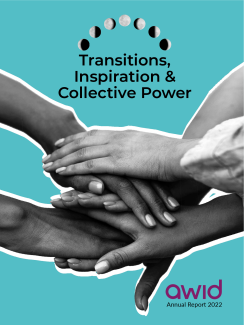
2022 was a year of transitions in AWID.
With this reflection on the year, we invite you to celebrate with us beautiful closures and promising beginnings. Change and transitions are an inseparable part of life and movements, which we seek to embrace with intention and care.
Snippet - WCFM Registration status - EN
Registration status:
Search for funders based on their requirements for groups to be registered.
Marta Musić
Marta is a queer, transfeminist non-binary activist-researcher from ex-Yugoslavia, currently based in Barcelona. They work as a transnational movement organizer, a feminist economist and a weaver of systemic alternatives. They are the co-founder and one of the coordinators of the Global Tapestry of Alternatives, a global process that seeks to identify, document and connect alternatives on local, regional and global levels. Locally, they are engaged in anti-racist, transfeminist, queer, migrant organizing. They also hold a doctoral degree in Environmental Science and Technology from the Autonomous University of Barcelona, dedicated to decolonial feminist perspectives of a pluriverse of systemic alternatives and the creation of feminist alternative systems based on care and the sustainability of life. During their free time, they enjoy boxing, playing the guitar and the drums as part of a samba band, photography, hiking, cooking for loved ones and spoiling their two cats.
Snippet - Take the quiz
Take the Quiz!
"Where is the money for feminist organizing?"
How much do you know about feminist resourcing? 📊 Take AWID's "Where is the Money for Feminist Organizing?" quiz to test your knowledge:
Take the quiz onlineDownload and print it
Leila Hessini
Leila is a transnational feminist leader, strategist, and advisor with over 25 years of organizing, advocacy and philanthropic experience advancing human rights, gender equality, and sexual and reproductive rights and justice. She was born in Algeria and educated in the U.S., France, and Morocco; over her professional career, she has lived and worked in forty countries across Africa, Europe, Latin America and Asia. Leila currently serves as a Senior International Fellow at the Asfari Institute for Civil Society and Citizenship at the American University of Beirut in Lebanon and as Senior Strategist for various feminist movements and organizations as well as the the Urgent Action Fund-Africa and Trust Africa on an initiative on Reimagining Feminist and Pan-African Philanthropies.
From 2017-2023, Leila held the position as Vice-President of Programs at Global Fund for Women where she oversaw its strategic grantmaking, movement-strengthening, global advocacy and philanthropic collaborations. At GFW, she doubled its grantmaking to over $17 million, launched its feminist and gender-based movements and crises work, created an adolescent girls program led by a girls’ advisory council and led its philanthropic advocacy work. Prior to that she served on the senior leadership team of Ipas from 2002 to 2016 where she published extensively on abortion rights and justice, lead global advocacy efforts and partnered with feminist groups working on self-management, community strategies and stigma reduction around bodily integrity and sexual and reproductive rights.
Leila is currently researching shifts in the philanthropic sector including recognizing non-institutional practices of giving resources in the Global South and efforts to decolonize practices in the Global North. She has written extensively on the political nature of veiling across North Africa and the Middle East, abortion practices in majority Muslim contexts and feminist approaches to sexual and reproductive health, rights and justice.
Leila holds an MPH in public health and a MA in Middle Eastern and North African Studies, studied Islamic law in Morocco and pursued doctoral studies in sociology in France. She studied Arabic and speaks French and English fluently. She is a mother of two feminist young women, an avid scuba diver, mountain bike rider, skier, and outdoor enthusiast.
Snippet - COP30 - Resistance Hubs Section Title - EN
Resistance Hubs for Climate Justice
Who are AWID's members?
A dynamic network of people around the world, AWID members are researchers, academics, students, educators, activists, business people, policy-makers, development practitioners, funders, and more. Our members - of every age - are those who make AWID a unique global feminist association.
Membership with AWID is open to anyone who shares our values
We offer different types of memberships geared to income level and whether you are an individual or an organization. Currently we have over 5000 members, individual and institutional, from 164 countries.
Our members are an important part of our work
We collaborate for advocacy on specific issues, members vote in elections for our Board, and can also participate in and contribute to our Priority Areas through webinars, surveys, or urgent actions, for example.
Our institutional membership draws from a broad range of organizations interested in advancing gender justice and women’s human rights, including women’s rights organizations, from the local to the global levels, grassroots networks, major international institutions, government departments, university programs and more. 63% of our members are from the global South and 38% are under the age of 30.
Snippet - COP30 Join thousands CTAs - EN
Join thousands demanding real climate justice:
Follow the campaign:
Join us!
Join our Membership| Join AWID Community
Stay updated
Questions?
Contact us: communications @ awid.org
I am experiencing violence in one or more of my relationships. Can AWID advocate on my behalf?
Unfortunately, no. AWID is not a direct service or individual advocacy organization.
It would be better for you to seek legal advice and contact a women’s shelter or referral centre in your area.
The HotPeachPages is an online resource that offers links to women’s shelters around the world. AWID cannot vouch for the accuracy or quality of its listings, but it may be a good place to start if you don’t know of organizations in your area.
Snippet - WD2026 - Program title_EN
AWID at Women Deliver Conference
June 2015
Further drafting sessions on the Addis Ababa outcome document
- Additional sessions in support of continued progress on the Outcome Document continued from 1-5 June 2015.
- From 15 – 19 June the scheduled 3rd drafting session of the outcome document of the conference took place at UN headquarters
Learn more from the CSO Hitchhiker’s Guide
Women Human Rights Defenders
WHRDs are self-identified women and lesbian, bisexual, transgender, queer and intersex (LBTQI) people and others who defend rights and are subject to gender-specific risks and threats due to their human rights work and/or as a direct consequence of their gender identity or sexual orientation.
WHRDs are subject to systematic violence and discrimination due to their identities and unyielding struggles for rights, equality and justice.
The WHRD Program collaborates with international and regional partners as well as the AWID membership to raise awareness about these risks and threats, advocate for feminist and holistic measures of protection and safety, and actively promote a culture of self-care and collective well being in our movements.
Risks and threats targeting WHRDs
WHRDs are exposed to the same types of risks that all other defenders who defend human rights, communities, and the environment face. However, they are also exposed to gender-based violence and gender-specific risks because they challenge existing gender norms within their communities and societies.
By defending rights, WHRDs are at risk of:
- Physical assault and death
- Intimidation and harassment, including in online spaces
- Judicial harassment and criminalization
- Burnout
A collaborative, holistic approach to safety
We work collaboratively with international and regional networks and our membership
- to raise awareness about human rights abuses and violations against WHRDs and the systemic violence and discrimination they experience
- to strengthen protection mechanisms and ensure more effective and timely responses to WHRDs at risk
We work to promote a holistic approach to protection which includes:
- emphasizing the importance of self-care and collective well being, and recognizing that what care and wellbeing mean may differ across cultures
- documenting the violations targeting WHRDs using a feminist intersectional perspective;
- promoting the social recognition and celebration of the work and resilience of WHRDs ; and
- building civic spaces that are conducive to dismantling structural inequalities without restrictions or obstacles
Our Actions
We aim to contribute to a safer world for WHRDs, their families and communities. We believe that action for rights and justice should not put WHRDs at risk; it should be appreciated and celebrated.
-
Promoting collaboration and coordination among human rights and women’s rights organizations at the international level to strengthen responses concerning safety and wellbeing of WHRDs.
-
Supporting regional networks of WHRDs and their organizations, such as the Mesoamerican Initiative for WHRDs and the WHRD Middle East and North Africa Coalition, in promoting and strengthening collective action for protection - emphasizing the establishment of solidarity and protection networks, the promotion of self-care, and advocacy and mobilization for the safety of WHRDs;
-
Increasing the visibility and recognition of WHRDs and their struggles, as well as the risks that they encounter by documenting the attacks that they face, and researching, producing, and disseminating information on their struggles, strategies, and challenges:
-
Mobilizing urgent responses of international solidarity for WHRDs at risk through our international and regional networks, and our active membership.
Related Content
What languages will be included in the Forum?
English, French, Spanish and Mandarin.