Left
Half
Left

Analyses Spéciales

L´AWID est une organisation féministe mondiale qui consacre ses efforts à la justice de genre, au développement durable et aux droits humains des femmes

La mémoire comme forme de résistance : un hommage

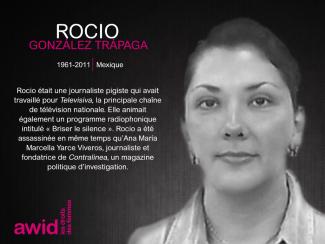
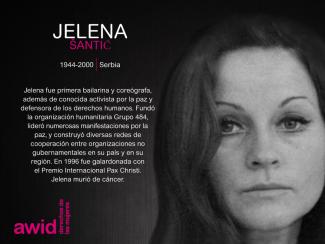
L’hommage se présente sous forme d’une exposition de portraits d’activistes du monde entier qui ne sont plus parmi nous qui ont lutté pour les droits des femmes et la justice sociale. 


En 2020, nous adoptons une démarche légèrement différente 

Cette année, tout en continuant à convoquer la mémoire de celleux qui ne sont plus parmi nous, nous souhaitons célébrer leur héritage et souligner les manières par lesquelles leur travail continue à avoir un impact sur nos réalités vécues aujourd’hui.

49 nouveaux portraits de féministes et de défenseur·e·s viennent compléter la gallerie. Bien que de nombreuses des personnes que nous honorons dans cet hommage sont décédé·e·s du fait de leur âge ou de la maladie, beaucoup trop d’entre iels ont été tué·e·s à cause de leur travail et de qui iels étaient.

Les histoires des activistes à l'honneur dans cet Hommage font vivre leur héritage et continuent d'inspirer le travail et l’action de nos mouvements.

Visiter notre exposition virtuelle

Les portraits de l'édition 2020 ont été illustrés par Louisa Bertman, artiste et animatrice qui a reçu plusieurs prix.

L’AWID tient à remercier nos membres, les familles, les organisations et les partenaires qui ont contribué à cette commémoration. Nous nous engageons auprès d’elleux à poursuivre le travail remarquable de ces féministes et défenseur·e·s et nous ne ménagerons aucun effort pour que justice soit faite dans les cas qui demeurent impunis.

« Ils ont essayé de nous enterrer. Ils ne savaient pas que nous étions des graines » - Proverbe mexicain

L'Hommage a été inauguré en 2012

Le premier hommage aux défenseur-e-s des droits humains a pris la forme d’une exposition de portraits et de biographies de féministes et d’activistes disparu·e·s lors du 12e Forum international de l’AWID en Turquie. Il se présente maintenant comme une gallerie en ligne, mise à jour chaque année.

Depuis, 467 féministes et défenseur-e-s des droits humains ont été mis·es à l'honneur.

Visiter notre exposition virtuelle

Contenu lié

FRMag - Between Two Worlds

Entre deux mondes : la double conscience des femmes en Gambie

par Haddy Jatou Gassama

Il est de coutume pour la tribu mandingue, en Gambie, de mesurer la première écharpe utilisée par les mères pour porter leur nourrisson sur leur dos.  (...)

Lire

illustration : « Puta sacrée », par Pia Love >

Carol Thomas

Carol Thomas fue una pionera en el trabajo por los derechos sexuales y reproductivos de las mujeres en Sudáfrica. Fue una ginecóloga de gran talento y la fundadora del WomenSpace [EspacioDeMujeres].

No sólo las empleó en su práctica, sino que también abogó por proporcionar formas no tradicionales de asistencia sanitaria a las mujeres, ofreciendo servicios de alta calidad, empáticos y accesibles.

"Ella recibió no sólo la alegría de los embarazos y la llegada de nuevxs bebés, sino también la ansiedad que puede generar la infertilidad, un parto prematuro, el cáncer femenino, así como también la angustia de los abortos espontáneos y lxs mortinatxs". Helen Moffett

Carol pensó en nuevos paradigmas cuyo centro de atención fuesen las necesidades de las mujeres con menor acceso a los servicios y derechos que puede aportar una sociedad:

"El entorno socioeconómico imperante en el que nos encontramos hoy se traduce en una carga desproporcionada de enfermedades y desempleo que las mujeres tienen que soportar... Como mujer negra, desfavorecida en el pasado, tengo una idea clara de lo que está sucediendo en nuestras comunidades". - Carol Thomas

La innovadora y multipremiada empresa social de Carol, "“iMobiMaMa”, utilizaba los quioscos móviles y la tecnología interactiva para conectar directamente a las mujeres con servicios de salud prenatal y reproductiva, información y apoyo en  las comunidades de toda Sudáfrica. 

Carol apoyó a las mujeres tanto en los embarazos deseados como en los no deseados, y fue mentora de muchxs enfermerxs y doctorxs a lo largo de su vida.

Fue calificada, además, como ginecóloga de referencia "para las personas trans que podían recibir de ella una atención afirmativa. Ella supo cómo manejarse cuando muchas personas no tenían todavía en claro el lenguaje o los pronombres. Sus mantas calientes, su capacidad para escuchar y decir lo que necesitabas oír eran muy reconfortantes." -Marion Lynn Stevens.

Carol Thomas falleció el 12 de abril de 2019 a causa de una serie de complicaciones tras un doble trasplante de pulmón, en el punto más álgido de su carrera profesional.

Los homenajes que llegaron después de su muerte inesperada se refieren a ella de muchas formas: como " modelo a seguir, mujer guerrera, innovadora, líder dinámica, rompe-moldes, dínamo, científica brillante, doctora compasiva".

Sin duda, Carol Thomas será recordada y honrada por ser todo esto y mucho más.

Snippet Forum Location Announcement Body (FR)

Le Forum de l’AWID est le plus grand événement mondial axé sur les mouvements féministes et de justice de genre dans toute leur diversité. Il s'agit d'un espace de transformation créé par et pour les mouvements féministes, où les féministes du Sud Global et autres communautés historiquement marginalisées occupent le devant de la scène, élaborent des stratégies pour changer le pouvoir et se connectent avec les mouvements alliés, la philanthropie et les politiques. C'est donc avec le cœur plein que nous vous annonçons que...

Le 15e Forum international de l'AWID se tiendra du 2 au 5 décembre 2024 à Bangkok, en Thaïlande !

Nous espérons réunir 2 500 participant.e.s en personne et 3 000 participant.e.s en ligne/hybride.

Lorsque des milliers de féministes se réunissent, nous créons une force de solidarité écrasante qui a le pouvoir de changer le monde. Nous sommes enthousiastes, et nous savons que vous l'êtes aussi, alors restez à l'écoute pour plus de détails, y compris l'inscription et nos plans pour un programme plein de magie féministe.

Snippet - WCFM Regional focus: - EN

Regional focus:

Filter for funders that support initiatives in your geographical area.

WHRDs from the Pacific Region

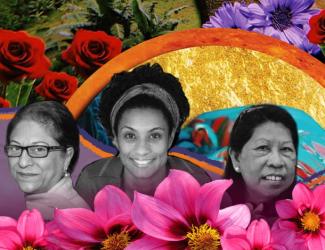
The 3 Women Human Rights Defenders (WHRDs) from the Pacific we are featuring in this year's Online Tribute have worked in the media, campaigned for disability rights and advocated for women’s rights. Their contributions are missed and we honor them in this Tribute. Please join AWID in commemorating these WHRDs, their work and legacy by sharing the memes below with your colleagues, networks and friends and by using the hashtags #WHRDTribute.


Please click on each image below to see a larger version and download as a file 


Film club - Films from Nuestramérica

Our final Feminist Film Club program is now available to view: “Films from Nuestramérica” is a film series on Latin/Central American Feminist Realities curated by Alejandra Laprea (Venezuela).

WATCH

Mereani Naisua Senibici

Mereani Naisua Senebici, que l’on appelait aussi « Sua », a été membre de l’Association des jeunes femmes chrétiennes (YWCA) des Fidji pendant de longues années.

En plus d’avoir travaillé avec divers groupes de femmes dans des contextes multiraciaux, ruraux et urbains, elle s’est impliquée dans le soutien et la promotion des droits des femmes et des jeunes femmes.

Au YWCA de Lautoka, elle travaillait avec des femmes d’origine indienne et comptait parmi les pionnières du développement de la pratique sportive et la participation des femmes et athlètes trans localement.

« Les membres du YWCA des Fidji ont profondément aimé Sua pour son dévouement et son soutien inébranlable envers tous les efforts déployés par l’organisation » – Tupou Vere

Mereani faisait partie de la House of Sarah (HoS), une initiative de l’Association of Anglican Women (AAW) lancée en 2009, un organisme de sensibilisation autour des violences basées sur le genre et de soutien des femmes victimes de violence. Ayant commencé sa pratique en tant que bénévole dévouée, elle offrait notamment son soutien aux femmes dans tout le Pacifique.
Mereani s’est éteinte en 2019.

« Une personne qui aimait les gens, qui était présente sur tous les fronts de l’autonomisation des femmes et du travail du mouvement au niveau communautaire. Repose en paix, Sua. » – Tupou Vere

What is the AWID International Forum?

Every three to four years, AWID hosts its flagship international event. It is the world’s largest event that wholeheartedly centers feminist and gender justice movements in all their diversity. It is a global gathering of feminist activists, allied movements, scholars, funders and policymakers. The Forums rotate between different regions and countries in the global South.

Snippet2 - WCFM Explore and share - EN

Explore and share the databases with your network now!

Foro de AWID 2016: Kit para redes sociales

¡Ayúdanos a difundir el Foro de AWID 2016!

Este kit incluye ejemplos de mensajes para ser utilizados en Twitter, Facebook y LinkedIn, como así también imágenes que puedes usar para acompañar a estos mensajes.

La utilización de este kit es muy simple. Solo tienes que seguir estos pasos:

  1. Elige tus mensajes favoritos:
    Twitter
    Facebook 
    LinkedIn

  2. Descarga aquí tus imágenes favoritas:
    Twitter
    Facebook
    Instagram

  3. Combina los mensajes con las imágenes de la forma que desees.
  4. Compártelos a través de tu cuenta personal y/o profesional de las redes sociales
¡Y listo! ¡Ya mismo puedes comenzar!

Twitter

Combina estos mensajes con las imágenes para Twitter


Tweets utilizando tu nombre de usuarix (handle)

Yo voy al #AWIDForum. Es EL lugar para conectar con los movimientos por los derechos de las mujeres y la justicia social ¡Únete a mi!: http://forum.awid.org/forum16/es

¡Ya quiero re-imaginar los #FuturosFeministas c/ otrxs activistas x los DD. de las mujeres y la justicia social en el #AWIDForum! Únete: http://forum.awid.org/forum16/es

Me entusiasma poder asistir al Foro de AWID el próximo mes de mayo ¡Ahora ya podemos registrarnos! ¡Únete a mi! http://forum.awid.org/forum16/es


Tweets para utilizar con tu nombre de usuarix institucional

Se encuentra abierta la inscripción para participar del #AWIDForum! en Costa do Sauípe, Brasil, 8-11 de sept 2016: http://forum.awid.org/forum16/es

Únete al #AWIDForum, un encuentro histórico global de activistas x los derechos de las mujeres y la justicia social: http://forum.awid.org/forum16/es

Únete al #AWIDForum para celebrar los logros de nuestros movimientos y las lecciones aprendidas para seguir avanzando http://forum.awid.org/forum16/es

El #AWIDForum, no es solo un evento sino una oportunidad para confrontar la opresión y promover el avance de la justicia: http://forum.awid.org/forum16/es

Únete al #AWIDForum para celebrar, pensar estrategias y renovar nuestros movimientos y a nosotrxs mismxs: http://forum.awid.org/forum16/es


Futuros Feministas

Construyamos juntxs los #FuturosFeministas. Inscríbete al #AWIDForum. Costa do Sauípe, Brasil: http://forum.awid.org/forum16/es

Únete a nosotrxs para re-imaginar y crear juntxs los #FuturosFeministas en el #AWIDForum. Inscríbete: http://forum.awid.org/forum16/es

#FuturosFeministas: aprovecha el momento en el #AWIDForum para promover nuestras visiones de un mundo mejor: http://forum.awid.org/forum16/es

Seremos 2000 activistas de movimientos sociales en el #AWIDForum, pensando estrategias para nuestros #FuturosFeministas http://forum.awid.org/forum16/es


Construcción entre movimientos

Somos mucho más que una sola lucha. Únete a nosotrxs en el #AWIDForumhttp://forum.awid.org/forum16/es

Únete al #AWIDForum, un espacio para pensar estrategias entre movimientos y hacer uso de nuestro poder colectivo: http://forum.awid.org/forum16/es

Movilicemos la solidaridad y el poder colectivo entre movimientos sociales en el #AWIDForumhttp://forum.awid.org/forum16/es

Rompamos el aislamiento entre nuestros movimientos. Re-imaginemos y creemos juntxs nuestros futuros en el #AWIDForumhttp://forum.awid.org/forum16/es

Solidaridad es un verbo. Pongámosla en acción en el #AWIDForumhttp://forum.awid.org/forum16/es


Mensajes especiales

Donantes se comprometen con los derechos de las mujeres y los movimientos sociales en el #AWIDForumhttp://forum.awid.org/forum16/es

Los medios de comunicación y los movimientos amplifican los #FuturosFeministas en el #AWIDForumhttp://forum.awid.org/forum16/es

Volver arriba


Facebook 

Combina estos mensajes con las imágenes para Facebook
Estos mensajes pueden ser usados en Twitter también vía mensaje privado directo, ya que allí no hay límites de carácteres.


Mensajes para tu perfil personal

¡La espera terminó! Todxs podemos registrarnos en el Foro de AWID 2016. Me entusiasma tanto saber que volveré a conectar con otrxs activistas y que re-imaginaremos nuestros futuros feministas ¡Nos vemos allí, en Brasil! http://forum.awid.org/forum16/es

Me entusiasma poder asistir al Foro de AWID el próximo mes de mayo ¡Ahora ya podemos registrarnos! ¡Únete a mi! http://forum.awid.org/forum16/es

Me encanta la idea de re-imaginar futuros feministas en el Foro de AWID, con 2.000 personas maravillosas pertenecientes a una gran cantidad de movimientos por los derechos de las mujeres y la justicia social ¡Regístrate y reúnete conmigo en Brasil! http://forum.awid.org/forum16/es

Mensajes para la página de tu organización


La inscripción al Foro de AWID 2016 ya se encuentra abierta. El mismo se realizará en Costa do Sauípe, Brasil! Este no es solo un evento, es un espacio clave para que activistas por los derechos de las mujeres y la justicia nos reunamos y juntxs volvamos a imaginar nuestros futuros feministas ¡No vas a querer perdértelo! http://forum.awid.org/forum16/es

¡Únete a nosotrxs en el Foro de AWID 2016 en Brasil! Activistas y movimientos de todo el mundo nos reuniremos allí para celebrar, pensar estrategias, inspirarnos y renovar nuestras luchas colectivas y a nosotrxs mismxs ¡Regístrate ahora! http://forum.awid.org/forum16/es

El Foro de AWID 2016 será un encuentro histórico de activistas por los derechos de las mujeres y movimientos por la justicia social de todo el mundo. Únete a nosotrxs allí para romper el aislamiento, reforzar la solidaridad y hacer uso nuestro poder colectivo ¡Regístrate ahora! http://forum.awid.org/forum16/es

Volver arriba 


LinkedIn

El Foro de AWID 2016 en Brasil será un encuentro histórico de activistas por los derechos de las mujeres y movimientos por la justicia social de todo el mundo. Únete a nosotrxs allí para romper el aislamiento, reforzar la solidaridad y hacer uso de nuestro poder colectivo. Ya se encuentra abierta la inscripción al mismo. http://forum.awid.org/forum16/es

Instagram

Descarga tus imágenes favoritas para usar en Instagram


Volver arriba

Crear Resistar Snippet

Crear | Résister | Transform

Crear | Résister | Transform es para ti y para todxs lxs increíbles activistas feministas y por la justicia social que conozcas. Reunámonos para compartir nuestras estrategias de resistencia, para crear conjuntamente algo de magia feminista, y para transformar juntxs este mundo.

un festival para movimientos feministas!

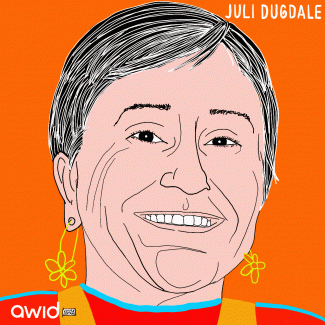
Juli Dugdale

Juli Dugdale was an Australian feminist who practiced intergenerational leadership rooted in principles of feminism, inclusion and equality. She was a leader, peer and mentor for many women and especially young women around the world. 

Juli was a dedicated staff member, volunteer and fervent advocate for young women’s leadership with the Young Women's Christian Association (YWCA) movement for over 30 years.

She offered a strong link between the Australian movement and the World YWCA Office. Her trust in the leadership capacity of young women led to a multi-year partnership with the Australian Department of Foreign Affairs and Trade and the creation of the Rise Up manual, a global guide for young women’s transformative leadership, launched in 2018.

Juli passed away in Geneva on 12 August 2019.


Tributes:

“For those who got to work with Juli, it was a privilege. For those who didn’t, be assured that her legacy continues in the work we do every day and in the mission of the YWCA movement.” - YWCA Australia

“Juli Dugdale will forever hold a deep place in many people's hearts in the YWCA movement, especially here in Aotearoa and across the Pacific. Juli had a special relationship with the Pacific and was an incredible supporter of the young women there. She was humble, gracious, loving, caring, dedicated, passionate and had a generous heart. She embodied the YWCA's vision of 'transformative leadership' with extraordinary vision and foresight, and helped empower generations of young women leaders around the world.” - YWCA New Zealand

¿Qué hará diferente a este Foro?

Con una asistencia de hasta 2500 participantes presenciales y 3,000 conectadxs de manera virtual, este será el Foro de AWID más grande hasta ahora. Vislumbramos múltiples espacios para establecer conexiones significativas, aprender, intercambiar ideas, tener conversaciones estratégicas, sanar y celebrar. Es la primera vez que nos reunimos en este espacio desde la pandemia, y estamos muy deseosxs de hacerlo.

Clone of Snippet - Intro WITM - FR

Where is the Money for Feminist Organizing? Survey Results

Thanks to our global feminist community! From May to August 2024, nearly 1,200 organizations working for Women's rights, gender justice, and LBTQI+ equality shared their experiences in the WITM survey. The results offer a unique picture of how feminist movements are resourced and where gaps remain.

Stay tuned for the upcoming report for more analysis!
 

Learn more about the insights

3. Design your survey

After assessing your organization’s capacity and research goals, you may choose to conduct a survey as one of the methods of data collection for your research analysis.

In this section:

Why conduct a survey?

A survey is an excellent way to gather information on individual organizations to capture trends at a collective level.

For example, one organization’s budget size does not tell you much about a trend in women’s rights funding, but if you know the budgets of 1,000 women’s rights organizations or even 100, you can start to form a picture of the collective state of women’s rights funding.

As you develop your survey questions, keep in mind the research framing that you developed in the previous section.

Remember: Your framing helps you determine what information you are trying to procure through your survey. The data collected from this survey should allow you to accomplish your goals, answer your key questions, and create your final products.

See examples of survey questions in AWID’s Sample WITM Global Survey

Back to top


Identify your survey population

This is an important step – the clearer you are about which populations you want to survey, the more refined your questions will be. 

Depending on your research goals, you may want to create separate surveys for women’s rights organizations, women’s funds and donors. Or you may want to focus your survey on women’s groups and collect interviews for women’s funds and donors, as a survey for each population can be resource-intensive.

The questions you ask women’s groups may be different than ones you would ask women’s funds. If you plan on surveying more than one population, we encourage you to tailor your data collection to each population.

At the same time, some key questions for each population can and should overlap in order to draw comparative analysis from the answers.

Online survey

If you can reach your survey population online, it is useful and efficient to create an online survey.

We recommend two online tools, both which offer free versions:

Survey Gizmo allows you to convert your data for SPSS, a statistical software useful for advanced data analysis

Your data analyst person(s) will be the best person(s) to determine which tool is best for your survey based on staff capacity and analysis plans.

For accessibility, consider making a PDF form version of your survey that you can attach via email. This ensures organizations that have sporadic internet connections or those that pay for it by the minute can download the survey and complete it without requiring a constant online connection.

Paper survey

You may decide that an online approach is not sufficiently accessible or inclusive enough for your popuation.

In this case, you will need to create a paper survey and methods to reach offline populations (through popular events or through post, with pre-stamped envelopes for returning).

Back to top


Create your questions

Make it easy for participants to complete your survey.

1. Short and clear questions

If the questions are confusing or require complex answers, you risk having participants leave the survey unfinished or providing answers that are unusable for your analysis.

Ensure your questions only ask for one item of information at a time.

For example:

  • What is your organization’s budget this year?
    Easy to answer: participant can easily locate this information for their organization, and it is only asking for one item of information.
  • What percentage of your budget have you identified as likely sources for funding for your organization, but are still unconfirmed? 
    Confusing and difficult to answer: are you asking for a list of unconfirmed funding sources or percentage of funding that is likely but unconfirmed?
    This information is difficult to obtain: the respondent will have to calculate percentages, which they may not have on hand. This increases the risk that they will not complete the survey.

2. Simple and universal language

Many words and acronyms that are familiar to you may be unknown to survey participants, such as “resource mobilization”, “WHRD”, and “M&E”, so be sure to choose more universal language to express your questions.

If you must use industry lingo – phrases and words common to your colleagues but not widely known – then providing a definition will make your survey questions easier to understand.

Be sure to spell out any acronyms you use. For example, if you use WHRD, spell it out as “Women’s Human Rights Defenders".

3. "Closed” and "Open" questions

Closed questions:

Only one response is possible (such as “yes,” “no” or a number). Survey participants cannot answer in their own words and they typically have to choose from predetermined categories that you created or enter in a specific number. Responses to closed questions are easier to measure collectively and are often quantitative.

Example of a closed question: What is your organization’s budget?

Open-ended questions:

These are qualitative questions that are often descriptive. Respondents answer these questions entirely in their own words. These are more suitable for interviews than surveys.

They are harder to analyze at a collective level as compared to closed-end questions, especially if your survey sample is large. However, by making open-ended questions very specific, you will make it easier to analyze the responses.

Whenever possible, design your survey questions so that participants must select from a list of options instead of offering open-ended questions. This will save a lot of data cleaning and analysis time.

Example of open-ended question: What specific challenges did you face in fundraising this year?

Familiarize yourself with different types of questions

There are several ways to ask closed-ended questions. Here are some examples you can review and determine what fits best for the type of data you want to collect:

  • Multiple choice questions: the participant can select one or several options you pre-entered
  • Rating scales: the participant gives a note on a scale you pre-determine.
    For this type of questions, make sure to clearly state what the bottom and the top of your scale mean
  • Ranking: the participant will choose and organize a certain number of answers you pre-determine.

View more question types

4. Logical organization

If you plan to conduct this research at regular intervals (such as every two years), we recommend developing a baseline survey that you can repeat in order to track trends over time.

Set 1: Screening questions

Screening questions will determine the participant’s eligibility for the survey.

The online survey options we provided allow you to end the survey if respondents do not meet your eligibility criteria. Instead of completing the survey, they will be directed to a page that thanks them for their interest but explains that this survey is intended for a different type of respondent.

For example, you only want women’s rights groups in a given location to take this survey. The screening questions can determine the location of the participant and prevent respondents from other locations from continuing the survey.

Set 2: Standardized, basic demographic questions

These questions would collect data specific to the respondent, such as name and location of organization. These may overlap with your screening questions.

If resources permit, you can store these answers on a database and only ask these questions the first year an organization participates in your survey.

This way when the survey is repeated in future years, it is faster for organizations to complete the entire survey, increasing chances of completion.

Set 3: Standardized and mandatory funding questions

These questions will allow you to track income and funding sustainability. Conducted every year or every other year, this allows you to capture trends across time.

Set 4: Special issues questions

These questions account for current context. They can refer to a changing political or economic climate. They can be non-mandatory funding questions, such as attitudes towards fundraising.

For example, AWID’s 2011 WITM Global Survey asked questions on the new “women & girls” investment trend from the private sector.

5. Less than 20 mins

The shorter, the better: your survey shouldn’t exceed 20 minutes to ensure completion and respect respondents’ time.

It is natural to get excited and carried away by all the types of questions that could be asked and all the information that could be obtained. However, long surveys will lead to fatigue and abandonment from participants or loss of connection between participants and your organization.

Every additional question in your survey will add to your analytical burden once the survey is complete.

6. Simple and exciting

  • Let participants know the estimated time to complete the survey before they begin
  • Specify what information they will need to complete it so they have it on hand (for example, if you are asking for financial data, say it at the outset so they can prepare)
  • Request information that organizations can easily access and provide – for example, requesting financial information from 20 years ago may be difficult (or impossible) for organizations to provide.
  • Create an incentive to convince your survey population to complete the survey, such as a prize raffle. For example, AWID held a raffle draw for a round-trip flight to the AWID Forum as a prize for completing our 2011 WITM Global Survey.

General tips

  • Ask for exact budgets instead of offering a range (in our experience, specific amounts are more useful in analysis).
  • Specify currency! If necessary, ask everyone to convert their answers to the same currency or ask survey takers to clearly state the currency they are using in their financial answers.
  • Ensure you collect enough demographic information on each organization to contextualize results and draw out nuanced trends.
    For example, if you are analyzing WITM for a particular country, it will be useful to know what region each organization is from or at what level (rural, urban, national, local) they work in order to capture important trends such as the availability of greater funding for urban groups or specific issues.

Back to top


Test and translate

1. Your advisors

Involving your partners from the start will allow you to build deeper relationships and ensure more inclusive, higher quality research.

They will provide feedback on your draft survey, pilot test the survey, and review your draft research analysis drawn from your survey results and other data collection.

These advisors will also publicize the survey to their audiences once it is ready for release. If you plan on having the survey in multiple languages, ensure you have partners who use those languages.

If you decide to do both survey and interviews for your data collection, your advisor-partners on your survey design can also double as interviewees for your interview data collection process.

2. Draft and test

After your survey draft is complete, test it with your partners before opening it up to your respondents. This will allow you to catch and adjust any technical glitches or confusing questions in the survey.

It will also give you a realistic idea of the time it takes to take the survey.

3. Translation

Once the survey is finalized and tested in your native language, it can be translated.

Be sure to test the translated versions of your survey as well. At least some of your pilot testers should be native speakers of the translated languages to ensure clarity.

Back to top


Target the right population

1. Sample size

Your survey sample size is the number of participants that complete your survey.

Your survey sample should reflect the qualities of the larger population you intend to analyze.

For example: you would like to analyze the millions of women’s rights groups in Valyria but you lack the time and resources to survey every single one.
Instead, you can survey only 500 of the Valyrian women’s rights groups – a sample size - to represent the qualities of all the women’s groups in the region.

Recommended sample size

  • 100 survey participants or less tend to be unreliable
  • 250 to 400 will yield results of reasonable accuracy
  • over 400 are fully adequate and will also allow accurate analysis of subgroups (for example, age groups).

Although it is not necessary to determine your exact sample size before you launch your survey, having a size in mind will allow you to determine when you have reached enough participants or whether you should extend the dates that the survey is available, in case you feel that you have not reached enough people.

2. Degree of participation

Even more important than size of a sample is the degree to which all members of the target population are able to participate in a survey.

If large or important segments of the population are systematically excluded (whether due to language, accessibility, timing, database problems, internet access or another factor) it becomes impossible to accurately assess the statistical reliability of the survey data.

In our example: you need to ensure all women’s groups in Valyria had the opportunity to participate in the survey.

If a segment of women’s groups in Valyria do not use internet, and you only pull participants for your sample through online methods, then you are missing an important segment when you have your final sample, thus it is not representative of all women’s groups in Valyria.

You cannot accurately draw conclusions on your data if segments of the population are missing in your sample size; and ensuring a representative sample allows you to avoid this mistake.

3. Database and contact list

To gain an idea of what the makeup of women’s groups for your area of research (region, population, issue, etc) looks like, it may be useful to look at databases.

  • Some countries may have databases of all registered nonprofits, which will allow you to know your full population.
  • If databases are not available or useful, you can generate your own list of groups in your area of research. Start with networks and coalitions, ask them to refer you to additional groups not in the membership lists.

By understanding the overall makeup of women’s groups that you plan to target, you can have an idea of what you want your sample to look like - it should be like a mini-version of the larger population.

After participants have taken your survey, you can then gauge if the resulting population you reached (your sample size) matches the makeup of the larger population. If it doesn’t match, you may then decide to do outreach to segments you believe are missing or extend the window period that your survey is open.

Do not be paralyzed if you are unsure of how representative your sample size is – do your best to spread your survey as far and wide as possible.

Back to top


Previous step

2. Frame your research

Next step

4. Collect and analyze your data

Estimated time:
• 2 - 3 months
People needed:
• 1 or more Research person(s)
• Translator(s), if offering survey in multiple languages
• 1 or more Person(s) to assist with publicizing survey to target population
• 1 or more Data analysis person(s)
Resources needed:
• List of desired advisors: organizations, donors and activists
• Optional: an incentive prize to persuade people to complete your survey
• Optional: an incentive for your advisors
Resources available:
Survey Monkey or Survey Gizmo
Sample of WITM Global Survey

Previous step

2. Frame your research

Next step

4. Collect and analyze your data

Ready to Go? Worksheet

Download the toolkit in PDF

ours chapter 3

Chapter 3
Anti-Rights Discourses

Anti-rights discourses continue to evolve.  As well as using arguments related to religion, culture, and tradition, anti-rights actors co-opt the language of social justice and human rights to conceal their true agendas and gain legitimacy.

Read more
 

Sarah Maldoror

«No adhiero al concepto de “Tercer Mundo”. Hago películas para que las personas (no importa de qué raza o color sean) puedan entenderlas. Para mí, solamente existen explotadores y explotadxs, eso es todo. Hacer una película significa tomar una posición.» - Sarah Maldoror

Sarah Maldoror, una cineasta francesa descendiente de una familia de las Indias Occidentales, fue una pionera del cine panafricano. Sus inquietudes políticas ocupaban el centro de su trabajo, junto con su permanente involucramiento en los movimientos de descolonialización.

La innovadora Sambizanga (1972), su «película revolucionaria», sigue la lucha de liberación anticolonial de lxs militantes de Angola y capta la perspectiva de una mujer en el momento histórico en que se encuentra.

«Para muchxs cineastas africanxs, el cine es una herramienta revolucionaria, una educación política para crear consciencia. Se inscribe en la evolución de un Tercer Cine,  que se orienta a descolonizar el pensamiento y promover cambios radicales en la sociedad.» - Sarah Maldoror

A lo largo de su carrera, Sarah (junto con otrxs artistas africanxs y caribeñxs) cofundó, en 1956, la primera troupe de teatro negra de Francia. Realizó alrededor de cuarenta películas, incluidos importantes documentales que difundieron la vida y la obra de artistas negrxs, entre lxs cuales se encuentra su amigo y poeta, Aimé Césaire, quien le escribió:

«A Sarah Maldo
que, cámara en mano,
lucha contra la opresión, la alienación
y se planta de cara
frente a la estupidez humana.»

Sarah estaba también dedicada a lograr que las mujeres africanas se apropiaran más del proceso de filmación. En una entrevista, señaló:

«Las mujeres africanas deben estar en todos lados. Deben estar en las imágenes, detrás de la cámara, en la sala de edición, y participar en todas las etapas de la realización de una película. Ellas deben ser quienes hablen sobre sus problemas.»

Sarah dejó un legado formidable para que sea continuado.

Nacida el 19 de julio de 1929, Sarah falleció el 13 de abril de 2020 debido a complicaciones por el coronavirus.


Mira Sambizanga y lee una reseña de la película en un artículo del New York Times de 1973 (solo en ingles)