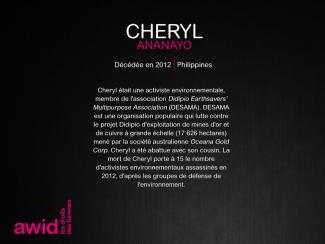
Cheryl Ananayo
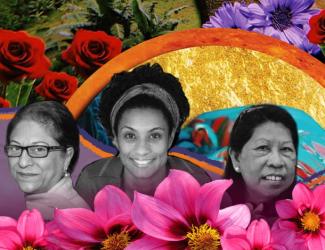
L’hommage se présente sous forme d’une exposition de portraits d’activistes du monde entier qui ne sont plus parmi nous qui ont lutté pour les droits des femmes et la justice sociale.
Cette année, tout en continuant à convoquer la mémoire de celleux qui ne sont plus parmi nous, nous souhaitons célébrer leur héritage et souligner les manières par lesquelles leur travail continue à avoir un impact sur nos réalités vécues aujourd’hui.
49 nouveaux portraits de féministes et de défenseur·e·s viennent compléter la gallerie. Bien que de nombreuses des personnes que nous honorons dans cet hommage sont décédé·e·s du fait de leur âge ou de la maladie, beaucoup trop d’entre iels ont été tué·e·s à cause de leur travail et de qui iels étaient.
Visiter notre exposition virtuelle
Les portraits de l'édition 2020 ont été illustrés par Louisa Bertman, artiste et animatrice qui a reçu plusieurs prix.
L’AWID tient à remercier nos membres, les familles, les organisations et les partenaires qui ont contribué à cette commémoration. Nous nous engageons auprès d’elleux à poursuivre le travail remarquable de ces féministes et défenseur·e·s et nous ne ménagerons aucun effort pour que justice soit faite dans les cas qui demeurent impunis.
« Ils ont essayé de nous enterrer. Ils ne savaient pas que nous étions des graines » - Proverbe mexicain
Le premier hommage aux défenseur-e-s des droits humains a pris la forme d’une exposition de portraits et de biographies de féministes et d’activistes disparu·e·s lors du 12e Forum international de l’AWID en Turquie. Il se présente maintenant comme une gallerie en ligne, mise à jour chaque année.
Depuis, 467 féministes et défenseur-e-s des droits humains ont été mis·es à l'honneur.
أنتم/ن مدعوون/ات لتقديم ما يصل إلى نشاطين كمنظم/ة. لا يزال بإمكانك أن تكون شريكًا/ة في المقترحات الأخرى.
La activista y académica Soma Kishore Parthasarathy señala que existen diversas formas de pensar los bienes comunes.
En un sentido más convencional, se los entiende como recursos naturales destinados a ser usados por quienes dependen de su uso. Sin embargo, el concepto de «bienes comunes» se ha expandido para incluir recursos como los conocimientos, la herencia, la cultura, espacios virtuales e incluso el clima. Es un concepto anterior al régimen de propiedad individual y que aportó las bases para la organización social. Las definiciones que aportan las entidades gubernamentales limitan su alcance a los recursos de la tierra y materiales.
El concepto de los bienes comunes se apoya en la práctica cultural de compartir espacios de subsistencia y recursos como dones de la naturaleza, para el bien común, y para la sostenibilidad de lo que es común a todxs.
Los bienes comunes de la humanidad están cada vez más amenazados porque las naciones y fuerzas del mercado continúan colonizándolos, explotándolos y ocupándolos.
En algunos contextos favorables, los «bienes comunes» tienen el potencial de habilitar una posición de autonomía sobre todo para las mujeres bajo opresión económica desde la que pueden negociar sus múltiples necesidades y aspiraciones.
Cuando a las mujeres y a otros géneros oprimidos se les niega el acceso a los bienes comunes y la posibilidad de controlarlos, se refuerza el patriarcado.
Por eso, una economía feminista busca restaurar los derechos legítimos de las comunidades a estos recursos comunes. Esa autonomía les permite mantenerse a sí mismas al mismo tiempo que desarrollan sistemas más igualitarios de gobernabilidad y de uso de esos recursos. Una economía feminista reconoce los roles de las mujeres y les ofrece las mismas oportunidades para tomar decisiones, es decir, las coloca en igualdad de condiciones como demandantes de esos recursos.
En esta selección de películas encontrarán las voces de realizadoras que no solo se contentan con plasmar las realidades feministas que palpitan en cada rincón de este vasto y diverso territorio sino también trabajos que desde su gestación misma están cuestionando el para qué, quién y cómo se hace cine o audiovisual. Realizadoras o colectivos que entienden al cine como una herramienta de lucha, como algo más que imágenes que se disfrutan en una pantalla, que ven al cine y al audiovisual como instrumentos para potenciar una discusión o abrir un debate; en fin, como un recurso para la pedagogía popular y feminista.
(نظرًا لأننا نقدم الطلب قبل عام تقريبًا من الحدث الفعلي.)
نعم! يطلب النموذج حاليًا إدراج مقدمي/ات المقترح حتى لو لم يتم تأكيدهم/ن بعد. نحن ندرك أنه من المحتمل أن تحدث التغييرات في غضون عام.
ตอบแบบสั้นคือ ใช่! AWID กำลังทำงานร่วมกับคณะกรรมการการเข้าถึงเพื่อให้มั่นใจว่าฟอรัมนี้จะสามารถเข้าถึงได้มากที่สุดเท่าที่จะเป็นไปได้ เรากำลังทำการตรวจสอบการเข้าถึงสถานที่จัดงานฟอรัม โรงแรมโดยรอบ และการคมนาคมขนส่ง ข้อมูลโดยละเอียดเกี่ยวกับการช่วยการเข้าถึงของ AWID ฟอรัม จะถูกอัปเดทเนื้อหาที่นี่ก่อนที่จะเปิดการลงทะเบียน ในระหว่างนี้ หากมีคำถามใดๆ โปรดติดต่อเรา

This bibliography intends to contribute to the desire for learning and engagement identified by activists in the Middle East and North Africa region when reflecting on the aftermath of fast unfolding transitions in the region. Such transitions, while specific to the context of MENA, are not unique in their occurrences around the world. Experiences and practices of feminists from around the world engaged in similar, even if not identical, struggles towards the democratization of their countries with a gendered lens and a feminist politics constitute an important knowledge bank that activists can draw upon, learn from, and engage with. This resource mapping aims to fill the gap realized in various convenings and conversations of a lack of information sharing and knowledge bridging among feminists across the regions that experienced similar uprisings; particularly along south-south and east-south lines.
This publication represents a research mapping of key resources, publications and materials on transitions to democracy and women’s rights in different countries of the world that have undergone such processes, such as: Indonesia, Chile, South Africa, Nepal, Mexico, Argentina, Poland, Ukraine, as well as within the Middle East and North Africa (MENA). It provides bibliographic information and short summaries of resources which succinctly identify the contextual changes and challenges facing women in those particular transitional moments, as well as clearly delineates the ways in which women’s rights activists sought to confront those challenges and what lessons were learned.
We hope that this collection of ideas, research, analysis and experiences provides the kind of rich ingredients needed to create new recipes for confronting old and new challenges. By sharing these texts, our goal is to make links across borders, expand possibilities and knowledge, and invite debate, reflection, and inspiration for women’s rights organizations and activists in the MENA region. While every moment and space has its own unique flavor and history, highlighting connections to similar challenges and aspirations allows us all to bring things in conversation with one another, imagine a new vantage point into a problem, and increase our sense of belonging and purpose and thus our capacity to stay strong in the face of the seemingly impossible. It is the collective strength of a movement that gives it the power to create change. The goal with this publication is not that one specific text will necessarily help illuminate new solutions, but that the combined knowledge and analysis from a variety of sources will provide readers with an opportunity to expand their horizons and foster connections. In our small way, we hope to contribute to furthering the democratization of knowledge, and supporting women’s rights movements in the MENA to continue building an inclusive transition process that will result in advancements of social justice and gender equality.
This year, we, alongside feminist activists from across the world, will be at CSW68 in New York, to challenge capitalist, neoliberal narratives and false solutions around poverty, development and financing. Through in-person events, lives on our socials, an exhibit booth and more; we are showing up to convene, amplify and support the voices and participation of our members, partners and allies.
Learn more about our program this year below.
Contenu lié
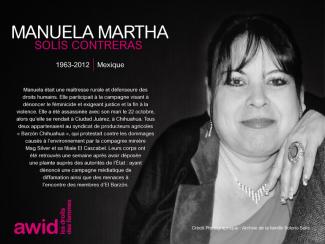
RFI: Une journaliste tuée au Mexique, la troisième en moins d’un mois
