Left
Half
Left

Analyses Spéciales

L´AWID est une organisation féministe mondiale qui consacre ses efforts à la justice de genre, au développement durable et aux droits humains des femmes

La mémoire comme forme de résistance : un hommage

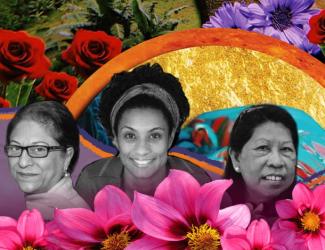
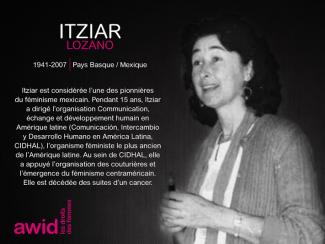
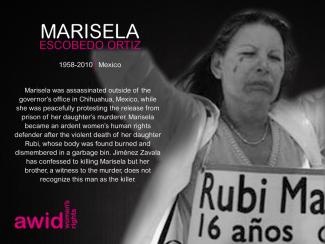
L’hommage se présente sous forme d’une exposition de portraits d’activistes du monde entier qui ne sont plus parmi nous qui ont lutté pour les droits des femmes et la justice sociale. 


En 2020, nous adoptons une démarche légèrement différente 

Cette année, tout en continuant à convoquer la mémoire de celleux qui ne sont plus parmi nous, nous souhaitons célébrer leur héritage et souligner les manières par lesquelles leur travail continue à avoir un impact sur nos réalités vécues aujourd’hui.

49 nouveaux portraits de féministes et de défenseur·e·s viennent compléter la gallerie. Bien que de nombreuses des personnes que nous honorons dans cet hommage sont décédé·e·s du fait de leur âge ou de la maladie, beaucoup trop d’entre iels ont été tué·e·s à cause de leur travail et de qui iels étaient.

Les histoires des activistes à l'honneur dans cet Hommage font vivre leur héritage et continuent d'inspirer le travail et l’action de nos mouvements.

Visiter notre exposition virtuelle

Les portraits de l'édition 2020 ont été illustrés par Louisa Bertman, artiste et animatrice qui a reçu plusieurs prix.

L’AWID tient à remercier nos membres, les familles, les organisations et les partenaires qui ont contribué à cette commémoration. Nous nous engageons auprès d’elleux à poursuivre le travail remarquable de ces féministes et défenseur·e·s et nous ne ménagerons aucun effort pour que justice soit faite dans les cas qui demeurent impunis.

« Ils ont essayé de nous enterrer. Ils ne savaient pas que nous étions des graines » - Proverbe mexicain

L'Hommage a été inauguré en 2012

Le premier hommage aux défenseur-e-s des droits humains a pris la forme d’une exposition de portraits et de biographies de féministes et d’activistes disparu·e·s lors du 12e Forum international de l’AWID en Turquie. Il se présente maintenant comme une gallerie en ligne, mise à jour chaque année.

Depuis, 467 féministes et défenseur-e-s des droits humains ont été mis·es à l'honneur.

Visiter notre exposition virtuelle

Contenu lié

Merci d'avoir participé à la création de nos Horizons féministes

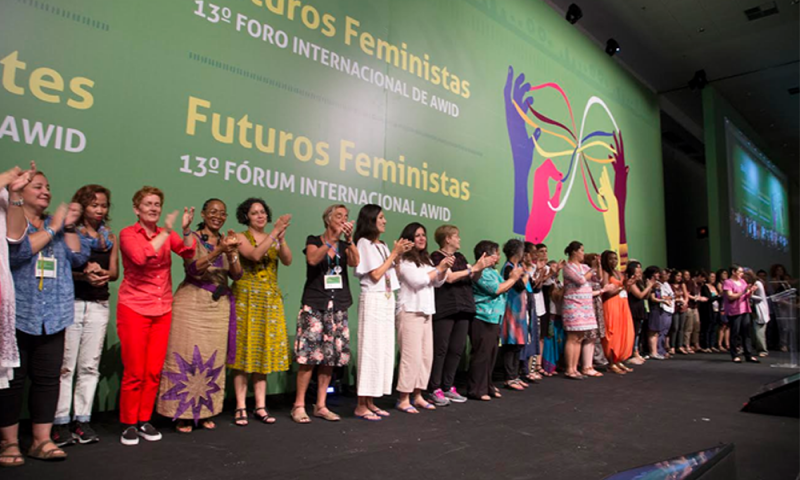
Un grand MERCI d'avoir pris part au 13ème Forum international de l'AWID !

Toute l'équipe de l'AWID vous remercie de nous avoir rejoint pour ces quatre jours d'apprentissage et de célébrations, pour envisager, rêver et co-créer nos Horizons féministes.

Nous avons été incroyablement inspiré-e-s et enthousiasmé-e-s par tout ce travail collectif que nous avons accompli ensemble !

Pour plus d'images, d'inspiration et de ressources :

Visitez le site du Forum

Bonne lecture !


Connectez-vous au #AWIDForum

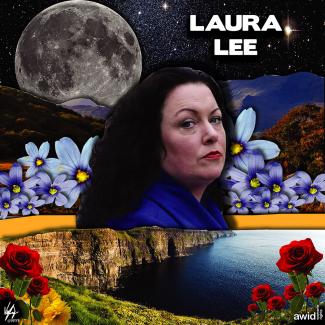
Laura Lee

Laura fue una abogada y líder activista que luchó valientemente por la descriminalización del trabajo sexual en Irlanda.

Es recordada como «una combatiente por la libertad de lxs trabajadorxs sexuales, una feminista, una madre para su hija y una amiga necesaria para mucha gente».

Laura promovió el reconocimiento de las personas de la industria del sexo como trabajadorxs merecedorxs de derechos. Presentó demandas por la descriminalización, e inició una revisión judicial en la Corte Suprema de Belfast respecto de las provisiones que criminalizan la compra de servicios sexuales. Declaró que su intención era llevar el caso a la Corte Europea de Derechos Humanos.


Laura Lee, Ireland

Snippet FEA 1 of 3 trans and travesti people (EN)

This is an illustration that depicts a burgundy building next to a duck blue building

1 of 3 trans and travesti people in Argentina live in a poor household

Snippet - WITM About the survey - RU

Об опросе

  • Глобальный и разнообразный: Размышления о ресурсных реалиях феминистских организаций в глобальном и региональном масштабе.
  • Контекстуализированный: Объединение голосов, точек зрения и опыта феминистских движений во всем их богатстве, смелости и разнообразии.
  • Совместно созданный: Разработка и апробация опроса в тесном сотрудничестве с членами AWID и партнерками(-рами) по движению.
  • Дополняющий: С помощью активисток(-тов), феминистских грантодательниц(-телей) и союзниц(-ков), дополняет и усиливает имеющуюся информацию о состоянии ресурсов организаций, занимающихся вопросами феминизма, прав женщин и гендерной справедливости.
  • Многоязычный: Доступен на арабском, английском, французском, португальском, русском и испанском языках.
  • Конфиденциальность и безопасность прежде всего: Мы обязуемся обеспечить конфиденциальность и неприкосновенность ваших данных. Ознакомьтесь с нашей политикой конфиденциальности, чтобы понять, какие меры мы принимаем, чтобы защитить полученные от вас сведения.
  • Доступный: Доступен для людей с различными нарушениями слуха, зрения, движений и когнитивных способностей. Прохождение опроса занимает около 30 минут.
  • Воспроизводимый: Может быть воспроизведен различными организациями в специфических контекстах; инструменты для проведения опроса будут доступны для широкой аудитории для проведения дополнительных исследований и адвокации.

Juhi

Biography

Juhi is a tech enthusiast with a Bachelor's degree in Computer Engineering from Gujarat Technological University and a postgraduate background in Wireless Telecommunications and Project Management from Humber College. With a passion for problem-solving and a love for staying ahead in the ever-evolving tech landscape, Juhi has found herself navigating through various industries as an IT Technician. to the nurturing environment of the School Board, Juhi has had the opportunity to apply her technical skills in diverse settings, always embracing new challenges with enthusiasm. Beyond the code and circuits, Juhi loves life's adventures. Exploring new places and cultures is like a breath of fresh air to her. Whether it's discovering hidden gems in the city, trying out exotic cuisines, or embarking on thrilling adventure sports, Juhi is always up for new experiences.

Position
IT Support Coordinator
Add to stories
Off

Agroecology and Food Sovereignty

Context

The search for alternative means of food production based on environmental sustainability is gaining ground across regions. This worldwide search comes with a common characteristic: the need to involve rural people and particularly women, building on their local priorities and knowledge by employing the principle of agroecology.

Definition

Agroecology is a way of practicing agriculture or using technologies that do not harm the environment. It proposes breaking with the hegemonic rural development model based on large landed estates and single-crop plantations that benefit mostly agricultural businesses and entrenches social exclusion.   

In family farming, agroecology manifests as a resistance to the current development model and its social, cultural, environmental, and economic problems. It opposes the lack of the farmer’s financial capital autonomy; and it symbolizes a resistance to the current agribusiness model.

Feminist perspective

Efforts based solely on agroecology may not be sufficient to solve all problems of women’s marginalization and invisibility. A feminist perspective is then crucial to analyze the norms associated with the idea of family as currently constituted as the perfect institution, as well as with the condition of women’s subordination.

In simpler terms, it is important to include in this debate a reflection on socially constructed gender roles to advance the emancipatory potential of agroecology.


Learn more about this proposition

Part of our series of


  Feminist Propositions for a Just Economy

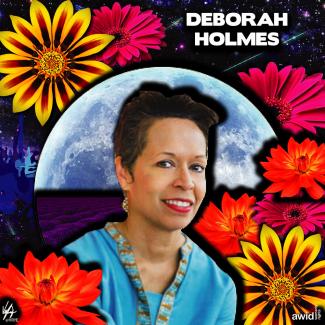
Deborah Holmes

Jusqu’à son décès, à la suite d’une lutte brève mais agressive contre le cancer, Deborah était la directrice de la communication et de la mobilisation au Women’s funding network (le réseau de financement des femmes), WFN.

Entre 2008 et 2017, elle avait également travaillé auprès du Fonds mondial pour les femmes. Deborah était extrêmement appréciée et respectée par le conseil d'administration, l’équipe et les partenaires du Fonds mondial pour les femmes.

Kavita Ramdas, ex-PDG a déclaré, à juste titre, que Deborah était « la combinaison unique d’un être mêlant chaleur, générosité, intelligence et style, avec un engagement passionné pour faire fusionner la beauté et la justice. Elle avait compris le pouvoir des histoires. Le pouvoir de la voix des femmes. Le pouvoir de l'expérience vécue. Le pouvoir de renaître de ses cendres et de dire aux autres que c'était possible. Et nous continuons à nous relever. »

Musimbi Kanyoro, l'actuelle PDG du Fonds mondial pour les femmes, a ajouté: « Nous avons perdu une sœur et sa vie illumine des valeurs qui nous unissent et nous inspirent tou-te-s. Alors que nous sommes tou-te-s réuni-e-s pour pleurer le décès de Deborah, souvenons-nous et célébrons sa vie remarquable, audacieuse et passionnée. »


Deborah Holmes, USA

Snippet FEA Trans and Travesti people (ES)

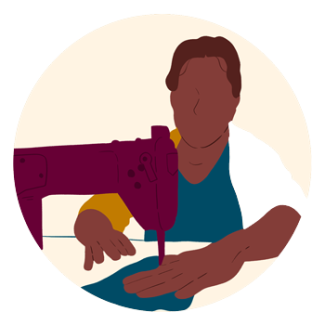
This image represents a faceless person with short dark hair, and dark skin, with a navy blue shirt, and yellow sweater, working behind a burgundy sewing machine on a navy blue piece of fabric

EL CUPO LABORAL TRANS
no está siendo respetado por las empresas

Snippet - WITM FAQ - AR

الأسئلة الأكثر شيوعاً

Patience Chabururuka

Biography

Patience es profesional global en recursos humanos y ha acumulado más de 10 años de experiencia en la gestión de recursos humanos (RRHH) en el sector sin fines de lucro. Anteriormente, trabajó en Mercy Corps como Oficial Global de Recursos Humanos para África, donde brindaba apoyo en todo lo concerniente al ciclo de vida del personal para personas expatriadas en la región de África oriental y meridional, y brindaba orientación técnica en recursos humanos a les encargades de recursos humanos en las oficinas nacionales de la región africana. Antes de sumarse al equipo global de personal, se desempeñaba como Punto Focal Nacional de Recursos Humanos y Salvaguardia, formó parte del equipo de gestión superior encargado de dirigir todos los asuntos de recursos humanos y salvaguardia. Antes de Mercy Corps, dirigió el Departamento de Recursos Humanos y Operaciones de SNV Netherlands Development Organization e integró el equipo de gestión nacional. Asimismo, posee experiencia de consultoría en Recursos Humanos que adquirió mientras estudiaba para su licenciatura en Gestión de Recursos Humanos que terminó con honores. Es una apasionada de la gestión de recursos humanos, le encanta trabajar con la gente y tiene al bienestar y la salvaguardia como sus valores fundamentales, los que aplica en su vida profesional. Por su pasión por los deportes, también se puede encontrar a Patience en un estadio de baloncesto, de tenis o de fútbol.

Position
Coordinadora de Recursos Humanos
Add to stories
Off

AWID Members Engaging at CSW61

Member states and women's rights advocates and organisations are gathering at the United Nations Headquarters in New York from 13 - 24 March for the 61st Commission on the Status of Women to address ‘women’s economic empowerment’ in the context of Sustainable Development Goal 5.

Whilst AWID is looking forward to physically meeting those of you who will be in New York, we want to engage with all those who cannot attend CSW, and as much as possible, amplify your voices in relevant spaces.

Continue reading to find out how to engage with AWID around CSW, whether you are attending physically or not.


Participate in an artistic takeover!

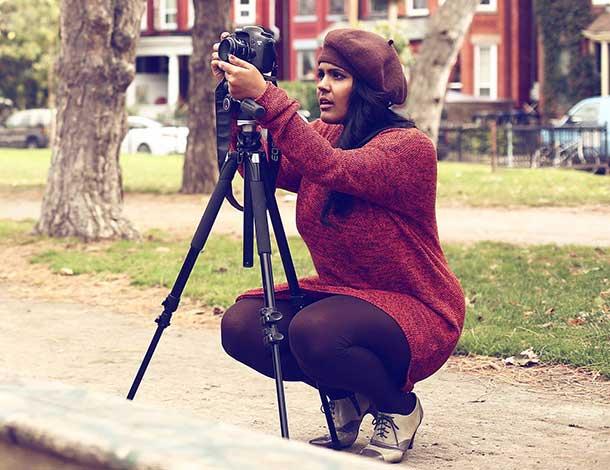
We are thrilled that AWID member Nayani Thiyagarajah is attending CSW this year and will take over the AWID Instagram. She will be available onsite to connect with other members for a possible feature on our Instagram. She will also explore possibilities of including some AWID members in a short film on the theme, ‘The personal is political’, a story of Nayani’s participation in this year’s CSW.

Nayani Thiyagarajah

Who is Nayani?

Nayani Thiyagarajah is a director, producer, and writer, dedicated to stories for the screen. A daughter of the Tamil diaspora, she calls Toronto home. For over 10 years, Nayani has worked in the arts and cultural industries. Her first independent feature documentary Shadeism: Digging Deeper (2015) had its World Premiere at the 2015 Zanzibar International Film Festival, where it won a Special Jury Prize. Nayani recently launched [RE]FRAME, with her producing partner Camaro West, a production company based out of Atlanta and Toronto, focused on re-framing the narratives around Black, Indigenous, and other people of colour through storytelling on screen.

On a more serious note, it should be noted that Nayani has a strange laugh, she's quite awkward, and her head is always in the clouds. She feels blessed beyond belief to create stories for the screen and play make believe for a living. Above all else, she believes in love.

(Biography submitted by Nayani)

Interested in meeting Nayani and being considered for inclusion in the film?

  • Send an email to membership@awid.org with the subject line “CSW Artistic Takeover”

  • By 13 March 2017

  • Please include your full name and country information.


Can't attend? Voice it!

If you are not able to attend CSW61 because of a travel ban, either due to the one imposed by the Trump administration or one you are facing from your own government, please share your story with us.

Send us messages you want heard in the United Nations spaces concerning funding, the impact of the reinstatement of the Global Gag Rule, and the need to push back against all types of religious fundamentalisms. You can send these in the following formats:

  • Video: no longer than two minutes and sent through a file sharing folder (for example dropbox, google drive) 

  • Audio: no longer than two minutes and sent through a file sharing folder (for example dropbox, google drive)

  • Image: you can share a photo or a poster of your message 

  • Text: no longer than 200 words and sent in the body of an email or in a word document

Share your message with us


Meet other members @CSW61

AWID members tell us that connecting with other members at CSW is valuable. In such a huge advocacy space, it is useful to connect with others including activists working on similar issues, or originating from the same country or region. Recognising the importance of connecting for movement building, we invite you to:

Interested in connecting with other members @CSW61?

  • Email membership@awid.org with the subject line “CSW AWID Members

  • NOTE: Please let us know your full name and country, and if we can share your email address with other members interested in meeting at CSW. 

Meet current AWID members


Take a picture!

If you are attending the CSW, we’d love to see what’s going on through your eyes!

Show us by capturing a moment you find speaks to the energy in the CSW space, be it on or off site. We hope to publish some of your ‘images’ on our social media channels and share on awid.org

You can send us: 

  • colour and/ or black and white photographs with a title (if you wish) and 

  • a caption (no longer than 100 words) about the story your image tells.

​Please also include:

  • your full name and country of origin and

  • let us know if we can publish the information you shared (in part or in full).

Send your images:

  • Email membership@awid.org with the subject line “CSW: Take a Picture!

  • During the whole CSW or shortly after until Tuesday 28 March 2017. 

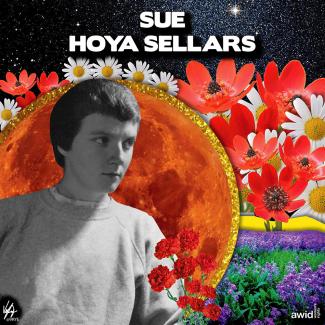
Sue Hoya Sellars

Sue was an artist, activist and teacher born in 1936 in Maryland, USA.

Sue created art for women, about women. As a lesbian feminist, and for a time, a separatist, she was committed to creating women-only spaces. In 1976 she purchased land that is still held by women who visit to make art. Sue took a fierce stand on the protection of women and girls.

With her groundbreaking futuristic, classical and anthropological approach, she filled any room she entered with intellect, authentic eccentricity, unforgiving wit, and humor.  Her ideas about consciousness and creativity continue to inspire many people.


Sue Hoya Sellars, USA

Snippet FEA Brisa Escobar Quote (FR)

« Mes rêves et mes objectifs ont toujours été les mêmes que ceux de Lohana Berkins : que la coopérative continue à exister et non à fermer. Continuez à offrir cet endroit à nos collègues travesti, à leur donner du travail et un lieu de soutien»

Brisa Escobar,
présidente de la Coopérative

أنا ناشط/ة فردي/ة ولا أعمل مع أي مجموعة، منظمة و\ أو حركة في الوقت الحالي. هل عليّ تعبئة الاستطلاع؟

كلا. نقدّر عملك لكننا لا نطلب من الأفراد تعبئة الاستطلاع في الوقت الحالي.

Debbie Stothard

Biography

Tout au long de ses 38 années de carrière, Debbie Stothard a collaboré avec diverses communautés pour impliquer des États, des organisations intergouvernementales et autres parties prenantes en Asie, en Afrique, en Europe et dans les Amériques sur des questions de droits humains et de justice. Son travail porte essentiellement sur les thématiques des affaires et des droits humains, de la prévention des atrocités et du leadership des femmes. Elle a, de ce fait, animé ou secondé près de 300 formations au cours des 15 dernières années. La plupart de ces formations était des ateliers à destination de groupes de base et organisés sur le terrain, centrés sur le plaidoyer en faveur des droits humains, les connaissances économiques fondamentales, les affaires et les droits humains, la justice transitionnelle et la prévention des atrocités. Son travail dans le domaine de la justice transitionnelle et de la prévention des atrocités s’est principalement déroulé au Myanmar, mais elle a également été conseillère en matière d’interventions dans d’autres situations nationales dans le monde.

Entre 1981 et 1996, Debbie a été reporter spécialisée dans les affaires criminelles, organisatrice d’évènements étudiants, analyste politique, universitaire, conseillère gouvernementale et traiteure en Malaisie et en Australie, tout en étant bénévole pour des causes en lien avec les droits humains. Elle a fondé ALTSEAN-Burma en 1996, qui fut à l’initiative d’un large éventail de programmes sur les droits humains à la fois innovants et autonomisants. ALTSEAN mène notamment un programme permanent et intensif de leadership à destination de diverses jeunes femmes à Burma qui, au cours des 22 dernières années, a aidé à renforcer et élargir le leadership des femmes dans les zones touchées par un conflit. Debbie Stothard a siégé au Conseil de la fédération internationale des droits humains (FIDH) pendant neuf années en sa qualité de secrétaire générale adjointe (2010–2013) puis de secrétaire générale (2013–2019). Elle a mis cette période à profit en promouvant la mission et le profil de la FIDH lors de près de 100 réunions et conférences par année.

Add to stories
Off

Background

Why this resource?

While active participants on the front lines of protests and uprisings in the Middle East and North Africa (MENA), women became invisible, absent from processes of formation of the new states, and excluded from decision-making roles, responsibilities, and positions in the aftermath of the uprisings. Except in rare cases, men dominated leadership positions in transitional structures, including the constitutional reform and electoral committees[i]. Subsequent elections brought very few women to parliamentary and ministerial positions.

Additionally, a strong and immediate backlash against women and women’s rights has clearly emerged in the aftermath. The rise of new religious fundamentalist groups with renewed patriarchal agendas aiming to obliterate previous gains of the women’s movements even in countries with longer histories of women’s rights, such as Tunisia, has been very alarming.

The varying contexts of governance and transition processes across the MENA countries presents an important opportunity for women human rights defenders to shape the future of these democracies. However, the lack of prioritization of women’s rights issues in the emerging transitions and the aforementioned backlash have posed a variety of complex challenges for the women’s movements. Faced with these enormous challenges and possibilities, women’s rights activists have been struggling to forge ahead a democratic future inclusive and only possible with women’s rights and equality. The particular historical and contextual legacies that impact women’s movements in each country continue to bear on the current capacities, strategies, and overall preparedness of the women’s movements to take on such a challenge. Burdened with daily human rights violations in one context, with lack of resources and tools in another, with organizational tensions in a third, in addition to the constant attacks on them as activists, women human rights defenders have voiced their desire to be more equipped with knowledge and tools to be effective and proactive in engaging with these fast-changing environments. Conceptual clarity and greater understanding of notions and practices of democratization, transitional justice tools and mechanisms, political governance and participation processes, international and local mechanisms, movement building strategies, constitutional reform possibilities, and secularization of public space and government are important steps to defining future strategic action.

It is clear that feminists and women’s rights activists cannot wait for women’s rights to be addressed after transitions – issues must be addressed as the new power configurations are forming. Experiences of earlier moments of transition, namely from colonial rule, have clearly demonstrated that women’s rights have to be inherently part of the transition movement towards a more just and equal society.

What is included?

This publication represents a research mapping of key resources, publications and materials on transitions to democracy and women’s rights in different countries of the world that have undergone such processes, such as: Indonesia, Chile, South Africa, Nepal, Mexico, Argentina, Poland, Ukraine, as well as within the Middle East and North Africa (MENA). It provides bibliographic information and short summaries of resources which succinctly identify the contextual changes and challenges facing women in those particular transitional moments, as well as clearly delineates the ways in which women’s rights activists sought to confront those challenges and what lessons were learned.

A key criterion in the selection process was the primacy of a women’s rights/feminist perspective; the few exceptions to this rule offer a unique and, we hope, useful, perspective on the issues that women’s rights organizations and activists face in the region.  The texts have been selected to provide a wide range of information, relevant to women human rights defenders working from the grassroots to the international level, across issues (including different case studies and examples), from different perspectives (international human rights bodies, academic institutions, NGO contributions, activists’ experiences, etc.), and at a wide range of levels of complexity, in order to respond to the needs of as many readers as possible.

The mapping clusters resources under six major categories:

  • Transitions to Democracy
  • Political Participation
  • Movement Building
  • Transitional Justice
  • Constitutional/Legal Reform
  • Responses to Fundamentalisms



[i]This and other context points are drawn from the report from Pre AWID Forum meeting on Women’s Rights in Transitions to Democracy: Achieving Rights, Resisting Backlash, collaboratively organized by AWID, the Equality Without Reservation Coalition, Global Fund for Women and Women’s Learning Partnership

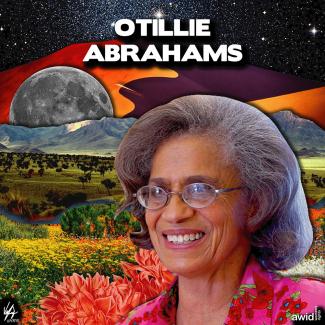
Ottilie Abrahams

Ottilie fue una activista feminista, educadora y política de Namibia.

Fue una de las fundadoras de la Organización Popular del Sudoeste Africano (SWAPO), del Club Yu Chi Chan (un grupo armado revolucionario) y del Frente Nacional de Liberación del Sudoeste Africano (SWANLIF). También fue una de las fundadoras de la Asociación de Mujeres de Namibia y del Proyecto Niñas. A lo largo de su vida, Ottilie defendió el derecho a discutir, a pensar, a disputar y a exigir. Movilizó a las mujeres, organizó a estudiantes y docentes y criticó a otrxs camaradas por su elitismo y su corrupción.

Ottilie trabajó intensamente para desmantelar el patriarcado y para crear una democracia participativa concreta, feminista, transformadora y liberadora.

A menudo decía: «Descansaré cuando muera».


Ottilie Abrahams, Namibia