Philippe Leroyer | Flickr (CC BY-NC-ND 2.0)

Analyses Spéciales

L´AWID est une organisation féministe mondiale qui consacre ses efforts à la justice de genre, au développement durable et aux droits humains des femmes

Défenseur-e-s des droits humains

Les défenseuses des droits humains s’auto-identifient comme des femmes ou des personnes lesbiennes, bisexuelles, transgenres, queer, intersexes (LBT*QI) ou autres qui défendent les droits. Elles sont exposées à des risques et à des menaces de nature genrée à cause du travail qu’elles accomplissent en faveur des droits humains et/ou en conséquence directe de leur identité de genre ou de leur orientation sexuelle.

Les défenseuses des droits humains subissent une violence et une discrimination systématique du fait de leur identité, mais aussi à cause de la lutte indéfectible qu’elles mènent en faveur des droits, de l’égalité et de la justice.

Le programme Défenseuses des droits humains collabore avec des partenaires internationaux et régionaux ainsi qu’avec les membres de l’AWID pour éveiller les consciences à propos de ces risques et menaces, pour plaider en faveur de mesures féministes et holistiques de protection et de sécurité et enfin pour promouvoir activement une culture du souci de soi et du bien-être collectif au sein de nos mouvements.


Les risques et menaces qui planent sur les défenseuses

Les défenseuses des droits humains sont exposées aux mêmes types de risques que toutes les autres personnes qui défendent les droits humains, les communautés et l’environnement. Mais elles se heurtent également à des violences fondées sur le genre et à des risques spécifiques de nature genrée parce qu’elles remettent en cause les normes de genre en vigueur au sein de leur culture et de leur société.

En défendant les droits, les défenseuses des droits humains sont exposées aux risques suivants :

  • les agressions physiques et la mort
  • les tentatives d’intimidation et le harcèlement, y compris dans les espaces en ligne
  • le harcèlement judiciaire et la criminalisation
  • l’épuisement

Une approche holistique et collaborative de la sécurité

Nous travaillons en collaboration avec des réseaux internationaux et régionaux ainsi qu’avec nos membres pour :

  • éveiller les consciences à propos des violations des droits humains et abus dont sont victimes les défenseuses des droits humains ainsi que de la violence systémique et de la discrimination qu’elles subissent ;
  • renforcer les mécanismes de protection et faire en sorte que des réactions plus efficaces et plus rapides s’organisent quand des défenseuses sont en danger.

Nous travaillons à la promotion d’une approche holistique de la protection des défenseuses, qui suppose notamment :

  • de mettre l’accent sur l’importance du souci de soi et du bien-être collectif, et de reconnaître le fait que ces notions peuvent revêtir une signification différente dans chaque culture ;
  • de documenter les violations dont sont victimes les défenseuses des droits humains dans une perspective féministe intersectionnelle ;
  • de promouvoir la reconnaissance et la célébration du travail et de la résilience des défenseuses des droits humains dans la société ; et
  • de construire des espaces civiques propices au démantèlement des inégalités structurelles, sans restrictions ni obstacles.

Nos actions

Nous souhaitons contribuer à l’avènement d’un monde plus sûr pour les défenseuses des droits humains, leurs familles et leurs communautés. Nous pensons que le fait que les défenseuses œuvrent en faveur des droits et de la justice ne devrait pas leur faire courir de risques ; leur action devrait être appréciée et célébrée.

  • Promouvoir la collaboration et la coordination entre organisations de défense des droits humains et des droits des femmes au niveau international, et ce dans le but de d’apporter des réponses plus efficaces dans le domaine de la sureté et du bien-être des défenseuses des droits humains ;

  • Soutenir les réseaux régionaux de défenseur-es et les organisations, parmi lesquels l’Initiative mésoaméricaine des défenseuses des droits humains et la Coalition des défenseuses des droits humains du Moyen-Orient et d’Afrique du Nord, dans leur travail de promotion et de renforcement de l’action collective en faveur de la protection des défenseuses – en mettant en avant l’importance de la création de réseaux de solidarité et de protection, de la promotion du souci de soi ainsi que du plaidoyer et de la mobilisation en faveur de la sécurité des défenseuses ;

  • Faire en sorte que les défenseur-e-s des droits humains et les risques qui les menacent soient plus visibles et mieux reconnus, en rassemblant des informations sur les agressions dont elles sont victimes et en produisant et diffusant des documents sur leurs luttes, leurs stratégies et les difficultés qu’elles rencontrent ;

  • Organiser des réponses urgentes fondées sur la solidarité internationale dès que des défenseuses des droits humains sont en danger, par le biais de nos réseaux internationaux et régionaux mais aussi grâce à nos membres.

Contenu lié

Snippet - WITM to claim - AR

لتجسيد قوتكم/ن كخبيرات عن وضع التمويل للحركات النسوية

Ursula K Le Guin

Ursula fue una novelista estadounidense que trabajó principalmente con los géneros de fantasía y ciencia ficción.

Encontró la fama con La mano izquierda de la oscuridad, novela en la cual imagina una sociedad futura donde la gente es ambisexual: no tienen un sexo fijo. Indaga en los efectos del género y el sexo en la sociedad, y fue uno de los primeros grandes libros feministas de ciencia ficción. Ursula fue una inspiración por su escritura subversiva y original y también por los temas sobre feminismo y libertad a los que les daba tanta importancia.

En un discurso que pronunció en 1983 en el Mills College, en California, les dijo a las graduadas: «¿Por qué una mujer libre con formación universitaria debería o luchar contra el macho o servirlo? ¿Por qué ella debería vivir su vida en los términos de él? Espero que ustedes vivan sin la necesidad de dominar y sin la necesidad de ser dominadas».


Ursula K Le Guin, USA

Snippet FEA Exclusion and Stigma (EN)

An illustration of a megaphone in navy blue. Lines representing sound waves are coming out the speaker end, in burgundy.

THE EXCLUSION, STIGMA AND INSTITUTIONAL ABUSE
that trans and travesti people continue to face on a daily basis

Notre vision : La justice économique dans un monde féministe

En tant que féministes luttant pour la justice de genre, la paix, la justice économique, sociale et environnementale, nous savons qu'il n'existe pas de recette miracle, mais plutôt un éventail de possibilités qui peuvent faire changer les choses, et qui les font changer.


Cet éventail d’options est aussi diversifié que nos mouvements et les communautés dans lesquelles nous vivons et nous luttons.

Avant de vous présenter quelques-unes de ces propositions féministes pour un autre monde, voici les principes qui encadrent nos propositions :

1. Un développement autodéterminé, du local au global

Nous croyons qu'il ne doit pas y avoir un seul modèle pour tous, et que chacun-e doit avoir le droit de revendiquer et de contribuer à la construction d'un autre monde possible, comme le formule le slogan du Forum social mondial.

Cela inclut le droit de participer à la gouvernance démocratique et d'influer sur son avenir, politiquement, économiquement, socialement et culturellement.

L'autodétermination économique permet aux peuples de prendre le contrôle de leurs ressources naturelles et d'utiliser ces ressources pour atteindre leurs propres objectifs ou pour un usage collectif. En outre, le pouvoir d’agir des femmes dans la sphère économique est fondamental pour atténuer le caractère souvent cyclique de la pauvreté, le déni de l'éducation, de la sécurité et de la sûreté.

2. Les droits, l'égalité réelle et la justice au cœur de l'économie

Le principe de l'égalité réelle est énoncé dans la Convention sur l'élimination de toutes les formes de discrimination à l'égard des femmes (CEDAW) et d'autres instruments internationaux relatifs aux droits humains. Ce principe est fondamental pour le développement et la transformation vers une économie juste, car il affirme que tous les êtres humains naissent libres et égaux.

La non-discrimination fait partie intégrante du principe d'égalité, qui veille à ce que personne ne soit privé de ses droits en raison de facteurs tels que la race, le sexe, la langue, la religion, l'orientation sexuelle, l'identité sexuelle, une opinion politique ou autre, l’origine nationale ou sociale, la fortune ou la naissance.

La dignité inhérente à toute personne sans distinction doit être maintenue et respectée. Alors que les États doivent veiller à l'utilisation d’un maximum de ressources disponibles pour la réalisation des droits humains, le fait d’exiger ces droits et la dignité est un enjeu clé pour la lutte de la société civile et la mobilisation populaire.

3. Une redistribution juste pour tous et toutes, sans monopolisation ou accaparement (le principe d’anti-avidité)

Ce principe, mis en œuvre par les efforts coordonnés visant à transformer les institutions injustes, soutient le rétablissement de l’équilibre entre la « participation » (entrées) et la « distribution » (sorties), lorsque celui-ci est rompu.

Il permet de poser des limites à l'accumulation monopolistique de capital et d'autres abus liés à la propriété. Ce concept est fondé sur un modèle économique qui repose sur l'équité et la justice.

4. La solidarité féministe et inter-mouvements est fondamentale

Pour changer les choses, nous avons besoin de réseaux féministes solides et diversifiés. Nous avons besoin de mouvements qui renforcent la solidarité du niveau personnel au niveau politique, du niveau local au niveau global, et inversement.
 
Construire le pouvoir collectif grâce aux mouvements permet de convertir la lutte pour les droits humains, l'égalité et la justice en une force politique pour le changement qui ne peut être ignorée.

 « Seuls les mouvements sont en mesure de créer des changements durables à des niveaux que la politique et les lois seules ne permettraient pas d’atteindre. »


Pour en savoir plus sur ce sujet, consulter S. Batliwala, 2012 Changer leur monde. Mouvements féministes, concepts et pratiques.


Voir également

Le projet

5 menaces principales

Snippet - WITM Survey will remain open - RU

Опрос будет открыт до 31 июля 2024 года

Пройти опрос!

Пожалуйста выберите язык, на котором вы хотите отвечать на вопросы в правом верхнем углу страницы

Если вы хотите узнать больше, присоединяйтесь к нашей встрече участников исследования «Где деньги?», которая пройдет 27 мая, понедельник, в 9:00 UTC – с синхронным переводом на французский и английский языки. 14:00 UTC – с синхронным переводом на испанский и английский языки.

Становиться участником (in English).

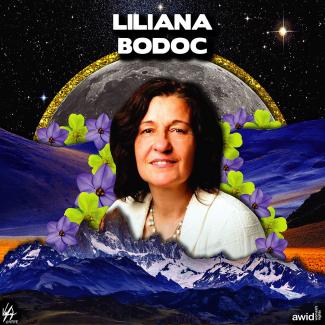
Liliana Bodoc

Liliana était enseignante argentine, tisseuse et également une écrivaine reconnue.

Sa trilogie « La saga des confins » a reçu plusieurs prix. Son œuvre est la seule dans le domaine littéraire fantastique à avoir eu recours et ré-imaginé la mythologie autochtone sud-américaine.

L’engagement de Liliana envers le féminisme s’est exprimé à travers les voix féminines diverses, riches et fortes de ses écrits, et en particulier dans le cadre de ceux à destination du jeune public. Elle a également pris position publiquement en faveur de l'avortement, de la justice économique et de l’égalité de genre.


Liliana Bodoc, Argentina

Snippet FEA Audio Story 3 (ES)

Escucha la historia aquí:

Alternative framework for economic governance

Context

The current global economic crisis provides stark evidence that the economic policies of the last 3 decades have not been working.

The devastation that the crisis has wrought on the most vulnerable households in the Global North and Global South is a reminder that the formulation of economic policy and the realization of human rights (economic, social, political, civil and cultural) have for too long been divorced from one another. Economic policy and human rights do not have to be opposing forces, but can exist symbiotically.

Macroeconomic policies affect the operation of the economy as a whole, shaping the availability and distribution of resources. Within this context, fiscal and monetary policies are key.

Definition

  • Fiscal policy refers to both public revenue and public expenditure, and the relationships between them as expressed in the government budget.
  • Monetary policy includes policies on interest and exchange rates and the money supply, as well as the regulation of the financial sector.
  • Macroeconomic policies are implemented using instruments such as taxation, government spending, and control over the supply of money and credit.

These policies affect key prices such as interest and exchange rates that directly influence, among other things, the level of employment, access to affordable credit, and the housing market.

Applying a human rights framework to macroeconomic policy allows States to better comply with their obligation to respect, protect, and fulfill economic and social rights. Human rights are internationally agreed-upon universal standards. These legal norms are articulated in United Nations treaties including, the Universal Declaration of Human Rights (UDHR), the International Covenant on Civil and Political Rights (ICCPR), and the International Covenant on Economic, Social and Cultural Rights (ICESCR).

Article 1 of the UDHR states that, “All human beings are born free and equal in dignity and rights.”

Although the UDHR was written about six decades ago its relevance is enduring. Many of the ideas address concerns and critical issues that people continue to face globally. Issues regarding inhuman punishment (Art. 5), discrimination (Art. 7), property ownership (Art. 17), equal pay for equal work (Art. 23/2), and access to education (Art. 26/1) are pertinent matters in countries South and North of the equator.

More specifically, States have an obligation under international law to respect, protect and fulfill human rights, including the economic and social rights of people within their jurisdiction. This is particularly relevant now given the financial crisis. In the U.S., regulation is skewed in favor of certain interests. The failure to extend government’s supervisory role in the context of social and economic change is a failure with regard to the obligation to protect human rights.

Feminist perspective

States should abide by key human rights principles to achieve economic and social rights. Some of the principles have potentially important implications for governance of financial institutions and markets, yet these possibilities have been underexplored.

Economic and social rights have a concrete institutional and legal grounding. Global declarations, international treaties, covenants, and, in a number of cases, national constitutions have incorporated aspects of the economic and social rights framework—providing an institutional infrastructure in national and international law.

Some have suggested that a consideration of global justice may not be a useful pursuit because of the institutional complexities involved. However, this does not get around that fact that global institutions already have an impact on social justice, both positive and negative.

It is useful to tease out the implications that elements of alternative frameworks have for economic governance, specifically those supported by existing institutions. Economic and social rights represent one such concrete framework. The framework is an evolving one, and ongoing discussion and deliberation is necessary to address underdeveloped areas and potential deficiencies.


Learn more about this proposition

This section is based on CWGL’s blog “Applying a Human Rights Framework to Macroeconomic Policies” (2012).

Part of our series of


  Feminist Propositions for a Just Economy

Snippet - WITM Acknowledgements - PT

Agradecimentos

A AWID agradece sinceramente às várias pessoas cujas ideias, análises e contribuições moldaram a pesquisa e a defesa do “Onde está o dinheiro” ao longo dos anos.

Em primeiro lugar, os nossos mais sinceros agradecimentos aos membres da AWID e às ativistas que participaram nas colaborações com o WITM e testaram este questionário connosco, ao partilhar tão generosamente o seu tempo, análise e espírito.

Agradecemos aos movimentos feministas, aos aliados e aos fundos feministas, incluindo, mas não se limitando ao Black Feminist Fund, Pacific Feminist Fund, ASTREA, FRIDA Young Feminist Fund, Purposeful, Kosovo Women's Network, Human Rights Funders Network, CEECCNA Feminist Fund e PROSPERA, pelas suas investigações rigorosas sobre o estado de financiamento, pela análise perspicaz e pela defesa contínua de mais recursos de melhor qualidade e poder para a organização feminista e de justiça de género em todos os contextos.

Junte-se à comunidade global de feministas que se manifestam sobre o estado de financiamento, e exigem mais recursos de melhor qualidade e poder para feministas globalmente.

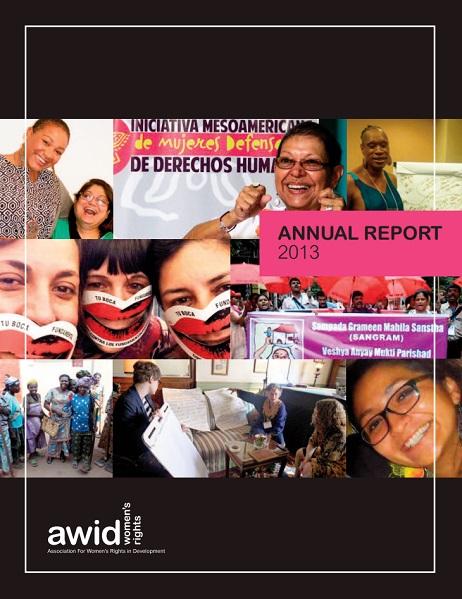
Annual Report 2013

Our 2013 Annual Report provides key highlights of our work during the year to contribute to the advancement of women’s rights and gender equality worldwide.

2013 marked the beginning of our 2013-2016 Strategic Plan, developed in response to the current global context. This report provides highlights of our analysis of the global context, how we position ourselves as a global feminist membership organization in this context, the outcomes we seek to achieve, and how our work is organized to achieve these outcomes.

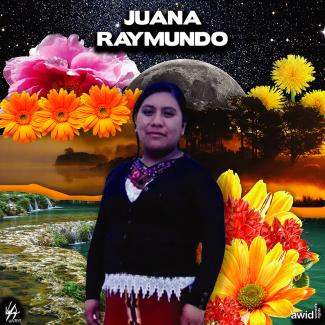
Juana Raymundo

Juana was an Indigenous Mayan Ixil, professional nurse and coordinator of the Farmers’ Development Committee (Comité de Desarrollo Campesino – CODECA).

CODECA is a human rights organisation of Indigenous farmers dedicated to promoting land rights and rural development for Indigenous families) in the Nebaj Quiché micro-region. She first joined CODECA as a member of its youth branch (Juventud de CODECA). At the time of her death had been elected to be part of the Executive Committee of the Movement for the Liberation of Peoples (MLP).

Juana’s body was found by neighbours by a small river on the road near Nebaj and Acambalam Village, Guatemala. According to CODECA, her body showed signs of torture.


Juana Raymundo, Guatemala

Snippet FEA how important essential workers are (FR)

La pandémie de COVID-19 a montré au monde l'importance des travailleur·euses essentiel·les. Nous parlons des personnes qui font le ménage, les travailleur·euses domestiques, les infirmier·ères, les d'ambulancier·ères, les personnes travaillant dans les transports, les supermarchés et autres. Leur travail consiste à prendre soin et à garantir le bien-être des autres et à faire fonctionner nos économies.

Mais pendant qu'iels prennent soin de nous..

Key impacts on the international human rights system

Anti-rights actors have had a substantive impact on our human rights framework and the progressive interpretation of human rights standards, especially rights related to gender and sexuality.

When it comes to the impact of conservative actors in international policy spaces, the overall picture today is of stasis and regressions.


We have witnessed the watering down of existing agreements and commitment; deadlock in negotiations; sustained undermining of UN agencies, treaty review bodies and Special Procedures; and success in pushing through regressive language in international human rights documents.

Commission on the Status of Women (CSW)

The CSW, held annually in March, has long been one of the most contested sites in the UN system. In March 2015, conservative efforts set the tone before events or negotiations even began; the outcome document of the Commission was a weak Declaration negotiated before any women’s rights activists even arrived on the ground.

At 2016’s CSW, the new Youth Caucus was infiltrated by large numbers of vocal anti-abortion and anti-SRHR actors, who shouted down progressive youth organizations. Again, intensive negotiations resulted in a lacklustre text, which included regressive language on ‘the family.’

Precisely when addressing women’s human rights is of urgent importance, the CSW has been rendered a depoliticized and weakened space. Using it to advance rights has become harder and harder since progressives’ energy is taken up trying to hold the ground against conservative backlash.

Human Rights Council (HRC)

As the intergovernmental body responsible for the promotion and protection of human rights around the globe, the HRC is a key entry point for conservative actors. In recent years, this mechanism has been the scene for a number of damaging anti-human rights moves.

In conversation with other anti-rights actors, one strategy of conservative states, and blocs of states, is to aggressively negotiate out positive language and to introduce hostile amendments to resolutions, most often resolutions focusing on rights related to gender and sexuality.

To take one example, during the June 2016 session of the HRC, opposition was mounted towards a resolution on discrimination against women by the member states of the Organization of Islamic Cooperation (OIC) and allies. During contentious negotiations, multiple provisions were removed, including women’s and girls’ right to have control over their sexuality, sexual and reproductive health, and reproductive rights; and the need to repeal laws which perpetuate the patriarchal oppression of women and girls in families, and those criminalizing adultery or pardoning marital rape.

The HRC has also been the site of pernicious conservative initiatives to co-opt human rights norms and enact conservative “human rights” language, such as that of the Russia-led “traditional values” resolutions, and more recently the “Protection of the Family” agenda.

Human Rights Committee

In 2015, moving their sights to another front, a number of religious right organizations began to target the Human Rights Committee, the treaty monitoring body for the International Covenant on Civil and Political Rights (ICCPR), a pivotal human rights instrument.

Anti-human rights groups mobilized in hopes of cementing their anti-abortion rhetoric into the treaty.

When the Committee announced it was drafting a new authoritative interpretation of the right to life, over 30 conservative non-state actors sent in written submissions, advocating their misleading discourse on ‘right to life’ - that life begins at conception and that abortion is a violation of the right - be incorporated in the Committee’s interpretation of article 6.

Conservative groups targeting the Human Rights Committee was a shift considering that historically anti-human rights actors have repeatedly attempted to undermine and invalidate the essential work of the treaty monitoring bodies, including the Human Rights Committee.

SDG negotiations and Agenda 2030

Anti-human rights actors were involved in lobbying towards the development of the new Sustainable Development Goals (SDGs) in 2015, focusing again on rights relating to gender and sexuality. These efforts had limited traction in their attempts to embed regressive language in Agenda 2030.

However, after successfully pushing back against progressive language in the final text, conservative actors then pivoted to another strategy. In an attempt to evade state accountability and undermine the universality of rights, several states have repeatedly made reservations to the Goals.

On behalf of the African Group, Senegal claimed that African states would only “implement the goals in line with the cultural and religious values of its countries.”

The Holy See also made a number of reservations, stating it was “confident that the related pledge ‘no one will be left behind’ would be read” as meaning “the right to life of the person, from conception until natural death.”

Saudi Arabia went one step further, declaring that the country would not follow any international rules relating to the SDGs that reference sexual orientation or gender identity, describing them as running “counter to Islamic law.”

General Assembly (GA)

Anti-rights actors have made increasing headway at the UN General Assembly (GA).  Most recently, during the 71st session in 2016, the GA was the scene of feverish anti-rights organizing in opposition to the new mandate created by the Human Rights Council resolution on sexual orientation and gender identity in June 2016: the Independent Expert on SOGI. Four separate attempts were made to undercut the mandate in GA spaces.

One approach was to introduce a hostile resolution at the Third Committee[1], led by the African Group, which in essence aimed to indefinitely defer the new mandate. While this approach was not successful, such an attempt in the GA to retroactively block the creation of a mandate brought forward by the Human Rights Council represented a new and troubling tactic - anti-right actors are now working to directly undermine the HRC’s authority respective to the General Assembly.

Another approach targeted the Fifth Committee (responsible for administration and budgetary matters) as an entry point to attack the mandate. In an unprecedented move a number of States attempted (again, unsuccessfully) to block the funding of UN human rights experts, including the new IE on SOGI[2],.

While these multiple efforts were unsuccessful in blocking the creation and continuation of the new mandate, the significant support they received, the novel strategizing employed, and the strong alliances built along regional lines through negotiations point to difficulties ahead.


[1] The Third Committee of the GA deals with agenda items relating to a range of social, humanitarian affairs, and human rights issues.  Each year it discusses and issues resolutions on issues including the advancement of women, the protection of children, family, and youth.

[2] While UN Special Procedures experts (i.e. Special Rapporteurs, Working Group members and Independent Experts) work pro bono, some funds are generally allocated to facilitate country visits on the invitation of the national government, and support staff.


Other Chapters

Read the full report
مجموعتنا، منظمتنا و\أو حركتنا غير مسجلة. هل علينا تعبئة الاستطلاع؟

نعم! نريد أن نسمع منكم/ن عن تجربتكم/ن بالتمويل.

Cambios sísmicos: un año de finalización, transición y reflexión | Informe anual 2017

Los últimos cinco años han sido muy importantes para AWID.

Hemos contribuido a algunas victorias importantes, como expandir el panorama de financiamiento para los derechos de las mujeres con investigación e incidencia innovadoras y de gran alcance. Al mismo tiempo, hemos sufrido algunos golpes devastadores, como el asesinato de defensoras de derechos humanos como Berta Cáceres de Honduras, Gauri Lankesh de India y Marielle Franco de Brasil, así como el aumento de la movilización de los sectores antiderechos en los espacios de derechos humanos.

Hace cinco años, nos comprometimos con nuestro papel en la construcción de movimientos al generar conocimiento sobre las tendencias de los movimientos antiderechos, así como sobre temas en los que las feministas tienden a involucrarse menos, como los flujos financieros ilícitos. Activamos junto a los movimientos que son nuestrxs compañerxs, fortaleciendo el activismo feminista joven y el activismo intergeneracional y expandiendo la protección integral de lxs defensorxs de derechos humanos. En el cierre del plan estratégico, estamos orgullosxs de nuestros logros y nuestro crecimiento como organización. ¡Terminamos el 2017 con un compromiso renovado, ideas y aprendizaje para sostener la lucha que tenemos por delante!


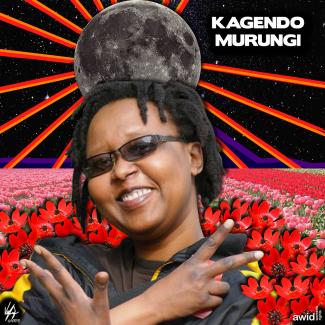
Kagendo Murungi

Kagendo es cariñosamente recordada por su familia y amigxs como una férrea activista feminista africana, artista y realizadora cinematográfica

Dedicó más de 20 años a defender los derechos y la dignidad de las personas LGBTIQ y de género no normativo de África. Lxs colegas de Kagendo la recuerdan como alguien con una personalidad jovial, convicciones férreas y amor a la vida. Kagendo murió por causas naturales en su hogar de Harlem, el 27 de diciembre de 2017.

Al producirse su fallecimiento, la escritora y activista keniata Shailja Patel destacó «el compromiso de toda la vida de Kagendo para establecer una relación entre todas las formas de opresión, mostrando de qué manera el colonialismo alentó la homofobia en el continente africano, para convertir así a Kenia en un país donde las personas queer y las mujeres libres puedan vivir y progresar».


Kagendo Murungi, Kenya

Snippet FEA collaborator and allies Photo 4 (EN)

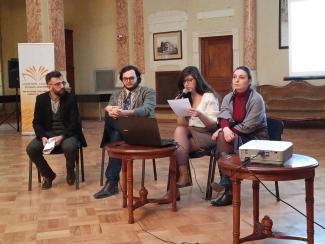
This photo represents Sopo speaking at a public event indoors. She is holding the microphone while reading her notes and sitting on a chair between three other people who are either speakers or moderators.