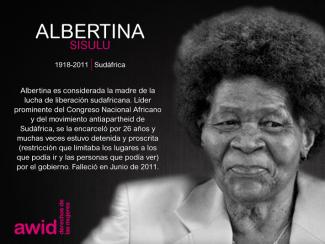
Albertina Sisulu
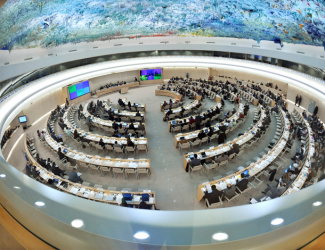
Le Conseil des droits de l'homme (CDH) est un organe intergouvernemental clé du système des Nations Unies, responsable de la promotion et la protection des droits humains autour du globe. Il se réunit trois fois par an en session ordinaire, en Mars, Juin et Septembre. Le Bureau du Haut-Commissariat des Nations Unies aux Droits de l’Homme (HCDH) constitue le secrétariat pour le CDH.
Débat et adopte des résolutions sur les questions globales des droits humains ainsi que sur la situation des droits humains dans des pays particuliers
Examine les plaintes des victimes de violations des droits humains et des organisations activistes, au nom des victimes de violations des droits humains
Nomme des experts indépendants (que l'on connaît sous le nom de « Procédures Spéciales ») pour réviser les cas de violation des droits humains dans des pays spécifiques, ainsi que pour examiner et suivre des questions globales relatives aux droits humains
Prend part à des discussions avec les experts et les gouvernements sur les questions de droits humains
Évalue les bilans des États membres de l'ONU en matière de droits humains tous les quatre ans et demi, dans le cadre de l'examen périodique universel.
La prochaine session du CDH a lieu à Genève, en Suisse, du 30 juin au 17 juillet 2020.
AWID travaille avec des partenaires féministes, progressistes et du domaine des droits humains pour partager nos connaissances clé, convoquer dialogues et évènements avec la société civile, et influencer les négociations et les résultats de la session.
The Sex Workers' Trade Union Organisation (Organización de Trabajo Sexual, OTRAS) is the first union of sex workers in the history of Spain. It was born out of the need to ensure social, legal and political rights for sex workers in a country where far-right movements are on the rise.
After years of struggles against the Spanish legal system and anti-sex workers groups who petitioned to shut it down, OTRAS finally obtained its legal status as a union in 2021.
Its goal? To decriminalize sex work and to ensure decent working conditions and environments for all sex workers.
The union represents over 600 professional sex workers, many of whom are migrant, trans, queer and gender-diverse.
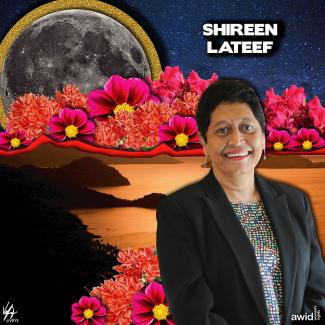
Shireen was an inspiration to many feminists in Fiji and a powerful ally to the women’s movement. She advocated tirelessly for gender equality locally and regionally.
She began her career as a junior gender specialist at the Asian Development Bank and brought about drastic changes to the institution’s gender policies.
Her research, “Rule by the Danda: Domestic violence amongst Indo Fijians” was one of the earliest pieces of research on domestic violence, marriage and women in Fiji. This seminal work has been a catalyst for feminist work in this area.
Shireen’s legacy lives on as many remember her influence, commitment and support to the women’s movement in Fiji and the Pacific.
We celebrate everyone's right to choose their identities, relationships, goals, work, dreams and pleasures, and what they do with their mind, body and spirit. We believe in working towards access to resources, information and safe and enabling environments that allow this to happen.
На данный момент опрос в KOBO доступен на арабском, английском, французском, португальском, русском и испанском языках. В начале опроса у вас будет возможность выбрать нужный вам язык.
Since coming into myself, I have refused to pray in jamaat with my family. Joining in the ranks of hierarchy, “women” behind “men” irks me. It grates my skin and teeth to the degree where I can’t focus, and the standing, bowing, and kneeling feels like a battle against my true being. Each second listening, a betrayal of my nature. Instead, I pray by myself in my own way.
Yet this Ramadan, I feel different. Back in my childhood home after many years, I am choosing to fast. I choose suhoor with my family, and praying together feels like a natural extension of eating together. After eating, my mother, father, brother and I line up for fajr.
I pray behind Baba, but my prayer is my own. I close my eyes, staying with my breath and my body.
My eyes closed, I open my inner sight to a wide open window on a vista of mountains, bright sun spreading over a light mist of clouds. This was the view I had while praying in jamaat at a queer Muslim wedding I attended in the mountains of the South of France last September.
I lined up with the wedding guests, queer and trans folks of North and West African, Arab, and European descent. Folks of all faiths joined while some chose to stand in respect at the sides or behind. The groups did not fall along fault lines of “Muslim” or “non-Muslim,” “religious” or “non religious.” The two lovers marrying each led us in prayer, and so did the Muslim woman officiating the nikkah. Each of the three led us in two rounds of prayers, two raqat.
I showed up as I was, my body uncovered. I had not washed. I only passed my camera to a friend who chose to stand at the side.
In the first sujood, I broke down crying. I wore a jean dress that loves my body, one found at a thrift store my ex-girlfriend pointed me to.
The sobs come through my whole body during the prayer, and I put my head to the earth with my community like a homecoming. A return to the embrace of love both intensely personal and communal, and I am held.
It feels like swimming in the sea with multiple people: joyful togetherness. But when you go beneath the water, it’s just you and the current.
Like a dozen people buried in the same graveyard. Separate, but sharing the same soil. Becoming one with the growing earth.
That was how it felt to pray in communion at a queer Muslim wedding.
I welcomed the light of acceptance while showing up as myself that day, with a group of people who had also chosen to claim all the parts of themselves in love. That light made a home in me, and it illuminates my heart in the dark living room at fajr this Ramadan morning. Though I pray with my birth family who do not accept all of me, I see myself praying in jamaat at that glorious wedding with all of my queer Muslim ancestors, my queer angels, my lineage, my soul family, my queer Muslim family, all standing in prayer. Bowing as one.
My family’s home does not always feel like my own, though I am here now. I take the bukhoor from room to room, barefoot. Smolder from the censer, an incense that says, “Here I am.” Baraka, blessings from the source of all, Allah and the Goddess to each room in the house, bidding good and dispersing the unbidden.
As I write this the sky turns the same royal blue I am familiar with from exiting the club and pulling all-nighters. It is the gradient of morning I step into as I go to sleep.
Ramadan: the Muslim holy month, traditionally observed with 29 days of fasting without food or water during daylight hours
Keffiyah: a patterned scarf common in the SWANA region. The black and white version referred to here is associated with the Palestinian liberation movement
Pray in jamaat: Islamic ritual prayer in a group. Participants follow one person, traditionally male, who calls the prayer aloud.
Suhoor: the meal before the fast starts at dawn
Fajr: the dawn prayer
Baba: father
Raqat: one round of prayer consisting of standing, bowing, kneeling, and pressing the head to the ground
Sujood:the prayer position when one presses one’s head to the earth
Nikkah: the religious marriage ceremony
Bukhoor: an Arabic incense, woodchips soaked in resin
Baraka: blessing
Pictures of angels in my life, just some women and non-binary people of color hanging out, taking care of themselves and expressing love to each other. It's these simplest moments that are the most empowering.


< Freeing the Church, Decolonizing the Bible for West Papuan Women
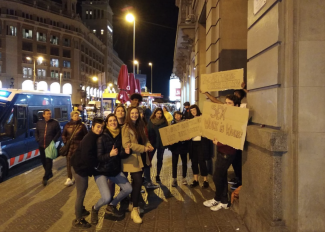
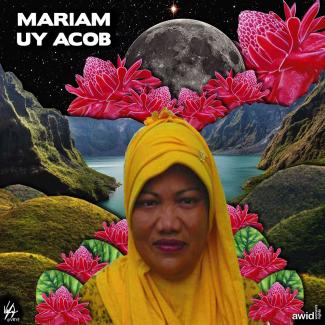
Mariam era asistente jurídica en la Alianza Kawagib Moro por los Derechos Humanos.
Fue una acérrima crítica de la militarización de las comunidades moro, y denunció sistemáticamente los bombardeos aéreos y la concentración de campamentos militares. Tuvo que buscar refugio luego de exponer y denunciar las injusticias cometidas contra las comunidades musulmanas en Filipinas.
Se cree que fue asesinada por agentes militares sospechosos debido a su trabajo como defensora de derechos humanos. Los atacantes que mataron a Mariam la esperaron, se pusieron a la par del vehículo en el que se desplazaba y le dispararon siete veces.
Al unirme a AWID, espero poder ayudar a la movilización del movimiento feminista. No solo para las mujeres privilegiadas, sino para TODAS las mujeres y activistas feministas.- Angelina Mootoo, feminista interseccional y caribeña, Guyana/EEUU
Tendo em conta que o inquérito WITM foca-se nas realidades do financiamento de organizações feministas, a maioria das perguntas aborda o tópico do financiamento do seu grupo entre 2021-2023. Será preciso ter essas informações facilmente acessíveis para preencher o inquérito (por exemplo, os seus orçamentos anuais e as principais fontes de financiamento).
Bienvenue à Crear | Résister | Transform : un festival dédié aux mouvements féministes !
L'AWID s'engage à créer un espace en ligne qui nous invite et nous pousse tou·te·s à faire preuve de courage, de curiosité, de générosité et de responsabilité partagée.
Nous vous invitons à créer à nos côtés des espaces sans harcèlement ni violence, où chacun·e est respecté·e dans son identité et son expression de genre, sa race, ses capacités, sa classe, sa religion, sa langue, son ethnicité, son âge, sa profession, son type d'éducation, sa sexualité, sa taille et son apparence physique. Des espaces où nous reconnaissons les inégalités de notre monde et où nous nous efforçons de les transformer au gré de nos propres interactions avec les autres.
Soyez là les un·e·s pour les autres en étant activement à l’écoute. Essayons de nous sentir proches, même si tout est virtuel. Pour cela, vous aurez accès à l’interprétation de la discussion et à des moyens de communications ouverts (comme la boîte de dialogue et autres outils) pour réagir et échanger. Nous vous recommandons de porter des écouteurs ou un casque pendant la séance pour mieux entendre les autres et vous faire entendre. Dans la mesure du possible, essayez de fermer votre messagerie électronique ou toute autre distraction pendant que vous prenez part à la discussion.
Célébrons les multiples façons dont le savoir se manifeste dans nos vies. Nous vous invitons à aborder la conversation avec curiosité et ouverture d’esprit pour apprendre des autres, en se permettant de désapprendre et de réapprendre à travers ces échanges, comme une manièrede commencer à construire collectivement des connaissances.
Nous nous engageons à adopter une approche holistique de l'accessibilité en tenant compte des différents besoins physiques, linguistiques, mentaux et de sécurité. Nous voulons un espace qui accueille des personnes d'origines, de croyances, de capacités et d'expériences différentes. Nous anticiperons au mieux mais vous demanderons également de nous communiquer vos besoins, et nous ferons de notre mieux pour y répondre.
Nous nous engageons tou·te·s individuellement et collectivement à respecter la vie privée de chacun·e· et à demander le consentement des autres avant de partager des images ou du contenu qui les concerne, générés au cours de la conversation.
Créer un environnement sécurisé, respectueux et agréable durant ces conversations est la responsabilité de tou·te·s .
Si vous remarquez qu'une personne a un comportement discriminatoire ou offensant, veuillez contacter la personne de référence qui vous sera indiquée en début de session.
Tout·e participant·e qui utilisera un langage ou des images abusives sera exclu·e de la conversation et ne sera pas réadmis·e. Nous n’aurons plus de relations avec cette personne de quelque manière que ce soit.
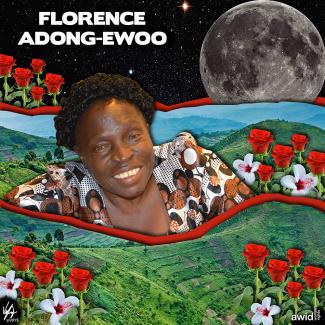
Florence était une militante des droits des personnes handicapées qui travaillait avec plusieurs organisations de femmes handicapées en Ouganda.
Elle a également occupé le poste de présidente de l’Association des femmes handicapées du district de Lira, ainsi que du caucus des conseillères du district de Lira. Formée en tant que conseillère pour personnes handicapées et parents d'enfants handicapés, elle a soutenu de nombreux projets appelant à une plus grande représentation des personnes handicapées.
Elle est morte dans un accident de moto.
Vous avez des questions concernant le Forum de l’AWID ou les activités connexes ? Nous avons des réponses !
أكيد. سيتم محي اجوبتك بعد عملية معالجة المعطيات وتحليلها وسيتم استعمالها لأهداف بحثية فقط. لن تتم أبداً مشاركة المعطيات خارج AWID وسيتم معالجتها فقط عن طريق طاقم AWID والمستشارات/ين اللواتي/ اللذين يعملن/وا في مشروع "أين المال" معنا. خصوصيتكم/ن وسرّيتكم/ن هي في أعلى سلم أولوياتنا. سياسة الخصوصية متواجدة هنا.