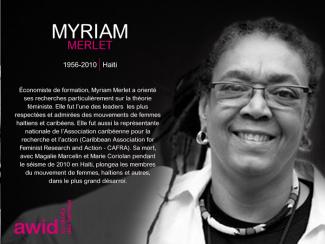
Myriam Merlet
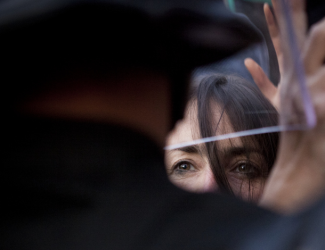
Lxs defensorxs se identifican a sí mismas como mujeres y personas lesbianas, bisexuales, transgénero, queer e intersex (LBTQI) y otrxs que defienden derechos y que debido a su trabajo en derechos humanos están bajo riesgos y amenazas específicos por su género y/o como consecuencia directa de su identidad de género u orientación sexual.
Lxs defensorxs son objeto de violencia y discriminación sistemáticas debido a sus identidades y su inclaudicable lucha por derechos, igualdad y justicia.
El Programa Defensorxs colabora con contrapartes internacionales y regionales así como con lxs afiliadxs de AWID para crear conciencia acerca de estos riesgos y amenazas, abogar por medidas de protección y de seguridad que sean feministas e integrales, y promover activamente una cultura del autocuidado y el bienestar colectivo en nuestros movimientos.
lxs defensorxs enfrentan los mismos tipos de riesgos que todxs lxs demás defensorxs de derechos humanos, de comunidades y del medio ambiente. Sin embargo, también están expuestas a violencia y a riesgos específicos por su género porque desafían las normas de género de sus comunidades y sociedades.
Nos proponemos contribuir a un mundo más seguro para lxs defensorxs, sus familias y comunidades. Creemos que actuar por los derechos y la justicia no debe poner en riesgo a lxs defensorxs, sino que debe ser valorado y celebrado.
Promoviendo la colaboración y coordinación entre organizaciones de derechos humanos y organizaciones de derechos de las mujeres en el plano internacional para fortalecer la capacidad de respuesta en relación a la seguridad y el bienestar de lxs defensorxs.
Apoyando a las redes regionales de defensorxs y de sus organizaciones, tales como la Iniciativa Mesoamericana de Mujeres Defensorxs de Derechos Humanos y la WHRD Middle East and North Africa Coalition [Coalición de Defensorxs de Derechos Humanos de Medio Oriente y África del Norte], promoviendo y fortaleciendo la acción colectiva para la protección, poniendo el énfasis en establecer redes de solidaridad y protección, promover el autocuidado y la incidencia y movilización por la seguridad de lxs defensorxs.
Aumentando la visibilidad y el reconocimiento de lxs defensorxs y sus luchas, así como de los riesgos que enfrentan, a través de la documentación de los ataques que sufren, e investigando, produciendo y difundiendo información sobre sus luchas, estrategias y desafíos.
Movilizando respuestas urgentes de solidaridad internacional para lxs defensorxs que están en riesgo a través de nuestras redes internacionales y regionales y de nuestrxs afiliadxs activxs.
English body
We will update the outcomes of this process in the website in due time.
“Nous Sommes la Solution a une vision d'une Afrique où, solidairement, les femmes rurales impliquées dans la prise de décision peuvent cultiver, transformer, vendre et consommer les produits de l'agriculture familiale tout en préservant l'environnement, pour un développement harmonieux et durable”
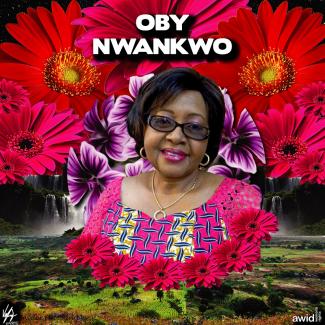
Avec une carrière juridique de plus de 30 ans à son actif, Oby était connue en Afrique et dans le monde comme une ardente défenseure de la justice de genre et des droits humains.
Elle a fondé le Centre de documentation et de développement des ressources civiles (CIRDDOC), une ONG nigériane qui sponsorise des formations et des activités de mise en réseau qui promeuvent les droits humains, la bonne gouvernance, l’accès à la justice et l’État de droit pour les membres de la société civile, les parlementaires, ainsi que d’autres parties prenantes concernées.
Au Nigeria, les activistes se souviennent d’Oby avec émotion, la qualifiant « d’activiste extraordinaire qui a fait preuve d’énergie et de passion pour lutter pour l’égalité de genre et la justice de genre au Nigéria et en Afrique »
Oui, tout à fait! Nous reconnaissons et comprenons les différentes raisons pour lesquelles les féministes de tous contextes ne recourent pas au financement extérieur, pouvant aller de ne pas être éligibles à demander des subventions et/ou recevoir de l’argent de l’étranger, à compter sur des ressources générées de manière autonome (ressource en anglais) en tant que stratégie politique à part entière. Nous vous invitons à participer, peu importe votre expérience du financement extérieur.
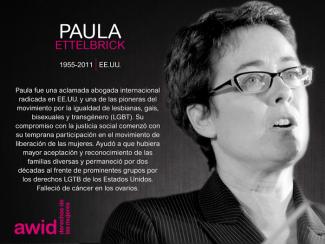
Une étudiante, une scénariste, une leader, une avocate. Les quatre femmes auxquelles nous rendons hommage ci-dessous avait toutes leur propre façon de vivre leur activisme, mais elles avaient en commun la promotion et la défense des droits des personnes lesbiennes, gaies, bisexuelles, trans*, queer et intersexes. Nous vous invitons à vous joindre à nous pour commémorer ces défenseuses, leur travail et l'héritage qu’elles nous ont laissé. Faites circuler ces mèmes auprès de vos collègues et amis ainsi que dans vos réseaux et twittez en utilisant les hashtags #WHRDTribute et #16Jours.
S'il vous plaît cliquez sur chaque image ci-dessous pour voir une version plus grande et pour télécharger comme un fichier


You DO NOT need a visa to attend the Forum in Taipei if you hold a passport from one of the following countries (the allowed length of your stay varies from one country to another):
Andorra, Australia, Austria, Belgium, Bulgaria, Brunei, Canada, Chile, Croatia, Cyprus, Czech Republic, Denmark, Estonia, Eswatini, Finland, France, Germany, Greece, Guatemala, Haiti, Honduras, Hungary, Iceland, Ireland, Israel, Italy, Japan*, Republic of Korea, Latvia, Liechtenstein, Lithuania, Luxembourg, Malta, Marshall Island, Monaco, Netherlands, New Zealand, Nicaragua, Norway, Palau, Paraguay, Philippines, Poland, Portugal, Romania, Russia, San Marino, Slovakia, Slovenia, Spain, Sweden, Switzerland, Tuvalu, the United Kingdom, the United States of America,and Vatican City State, Belize, Dominican Republic, Malaysia, Nauru, St. Kitts and Nevis, Saint Lucia, Saint Vincent and the Grenadines, Singapore.
Please note:
It is likely that, once you have registered to attend the Forum, you will get an event-related code that will allow you to apply for your visa electronically regardless of your citizenship.
We will let you know more about this when the Registration opens.

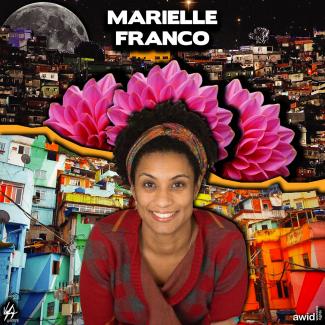
Marielle was a Brazilian politician, feminist, lesbian and human rights activist.
Marielle was an outspoken critic of police brutality and extrajudicial killings. Her openly feminist, Black and favela-centered politics were a source of hope for marginalized groups in Rio de Janeiro, currently governed by a conservative city government and an evangelical mayor.
On March 14, 2018, after delivering a speech in Rio de Janeiro, Franco and her driver were shot multiple times and killed. Following news of her death crowds took to the streets shouting "Marielle presente!" (Marielle is here!) and demanding justice be done.
Read more about Marielle and the situation in Brazil
AWID is committed to language justice and we regret that, at this point, having the WITM survey available in more languages is not feasible. However, if you need support with translations or want to fill the survey in any other language, please reach out to us at witm@awid.org.
6 Women Human Rights Defenders (WHRDs) across Western and Southeastern Europe have in their lifetime researched, campaigned, participated in and advanced peace and women’s rights movements be it through political and social activism or through dance. We are grateful for the legacy they have left. Please join AWID in honoring these women, their activism and legacy by sharing the memes below with your colleagues, networks and friends and by using the hashtags #WHRDTribute and #16Days.
Please click on each image below to see a larger version and download as a file


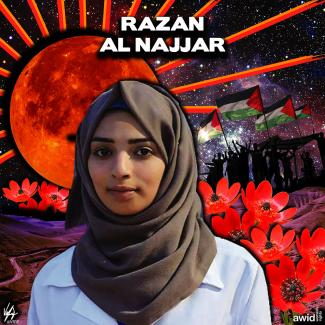
Razan era una médica voluntaria de 21 años en Palestina.
Le dispararon cuando corría hacia un muro fronterizo fortificado, en un intento por llegar hasta una persona herida en el este de la ciudad de Khan Younis, en el sur de Gaza.
En su última publicación en Facebook, Razan dijo: «Estoy volviendo y no retirándome», y añadió: «Denme con sus balas, no tengo miedo».
Sí, aún así deseamos saber de ustedes aunque no hayan recibido financiamiento en los tres, dos o cualquiera de los años comprendidos entre 2021 y 2023.
A framework for your research will guide throughout your research process, and the framing document you develop can also serve as a concept note to advisors and partners, and a funding proposal to potential donors.
Before conducting any research:
- Set the goals of your research
- List the key questions you want your research to answer
- Write out the type of data you will need to obtain and review to answer your key questions
- Define the final products you will produce with your research
Your research framing may evolve over time as you refine your questions and gather new information. However, building an initial research framing will allow you to work from a solid foundation.
To create a strong foundation for your WITM research, it is important to clarify what you hope to accomplish.
For example, one goal of AWID’s WITM global research was to provide rigorous data to prove what we already knew anecdotally: that women’s rights organizations are discrepantly underfunded. With this data, we felt we would be better positioned to influence funders in their decision-making.
Your goals could be to:
Frame your research process with key questions that only your research can answer and limit those questions to a specific time frame (e.g. past five years, past year, etc.).
Consider the following points:
Choosing a specific timeframe for your research can result in more precise findings than working with an open-ended timeframe. Also, deciding whether you will repeat this research at regular intervals will allow you to set up data collection benchmarks for easy replication and comparison over time.
These were the key questions that guided AWID’s WITM research process:
Now that you determined your key questions, you can determine what kind of data will help you answer your key questions. This will allow you to plan the rest of your schedule for your WITM research.
For example, will you conduct a survey that covers an extensive portion of your priority population? Will you analyze the applications that funders are receiving from a certain region? Will you also conduct interviews (recommended)? By determining the types of data you need, you can reach out to external parties who will provide this data early on, and plot out your full schedule accordingly. Some suggested sources of data could be:
Diverse data sets are a great way to create robust and rich analysis.
The data from AWID’s 2011 Global Survey formed the backbone of our analysis in Watering the Leaves, Starving the Roots report. However, we also collected data from interviews and interactions with several actors in the field, ranging from donors to activists and women’s rights organizations.
In addition to allowing you to set your schedule, creating an initial plan of what products you will develop will also allow you to work out what resources you need.
For example, will you only produce a long research report or will you also create infographics, brochures and presentations? Depending on your products, you may need to hire a design firm, plan events and so on.
These products will also be the tools you use to achieve your goals, so it is important to keep those goals in mind. For example, is your WITM research exclusively intended as an advocacy tool to influence funders? In that case, your products should allow you to engage with funders at a deep level.
Some sample products:
Framing your research to cover goals, key questions, types of data, and final products will allow you to create a well-planned schedule, prepare your resources in advance, and plan a realistic budget.
This will make interactions with external partners easier and allow you to be nimble when unexpected setbacks occur.

• 1 month
• 1 or more Research person(s)
• AWID Research Framing: sample 1
• AWID Research Framing: sample 2