AWID es un organización feminista internacional de membresía, que brinda apoyo a los movimientos que trabajan para lograr la justicia de género y los derechos de las mujeres en todo el mundo.
Lxs defensorxs se identifican a sí mismas como mujeres y personas lesbianas, bisexuales, transgénero, queer e intersex (LBTQI) y otrxs que defienden derechos y que debido a su trabajo en derechos humanos están bajo riesgos y amenazas específicos por su género y/o como consecuencia directa de su identidad de género u orientación sexual.
Lxs defensorxs son objeto de violencia y discriminación sistemáticas debido a sus identidades y su inclaudicable lucha por derechos, igualdad y justicia.
El Programa Defensorxs colabora con contrapartes internacionales y regionales así como con lxs afiliadxs de AWID para crear conciencia acerca de estos riesgos y amenazas, abogar por medidas de protección y de seguridad que sean feministas e integrales, y promover activamente una cultura del autocuidado y el bienestar colectivo en nuestros movimientos.
Riesgos y amenazas dirigidos específicamente contra lxs defensorxs
lxs defensorxs enfrentan los mismos tipos de riesgos que todxs lxs demás defensorxs de derechos humanos, de comunidades y del medio ambiente. Sin embargo, también están expuestas a violencia y a riesgos específicos por su género porque desafían las normas de género de sus comunidades y sociedades.
Por defender derechos, lxs defensorxs están en riesgo de:
Ataques físicos y muerte
Intimidación y acoso, incluso en los espacios virtuales
Acoso judicial y criminalización
Agotamiento
Un enfoque integral y colaborativo de la seguridad
Trabajamos de manera colaborativa con redes internacionales y regionales y con nuestrxs afiliadxs
para crear conciencia de las violaciones de derechos humanos contra lxs defensorxs y de la violencia y discriminación sistemáticas que enfrentan
para fortalecer los mecanismos de protección y asegurar respuestas más oportunas y efectivas para lxs defensorxs que están en riesgo
Trabajamos para promover un enfoque integral de la protección que incluya:
remarcar la importancia del autocuidado y el bienestar colectivo, y reconocer que el significado de cuidado y bienestar puede variar entre las diferentes culturas;
documentar las violaciones dirigidas contra lxs defensorxs usando una perspectiva feminista interseccional;
promover el reconocimiento y celebración social del trabajo y la resiliencia de lxs defensorxs; y
construir espacios ciudadanos que conduzcan al desmantelamiento de las desigualdades estructurales sin restricciones ni obstáculos.
Nuestras acciones
Nos proponemos contribuir a un mundo más seguro para lxs defensorxs, sus familias y comunidades. Creemos que actuar por los derechos y la justicia no debe poner en riesgo a lxs defensorxs, sino que debe ser valorado y celebrado.
Promoviendo la colaboración y coordinación entre organizaciones de derechos humanos y organizaciones de derechos de las mujeres en el plano internacional para fortalecer la capacidad de respuesta en relación a la seguridad y el bienestar de lxs defensorxs.
Apoyando a las redes regionales de defensorxs y de sus organizaciones, tales como la Iniciativa Mesoamericana de Mujeres Defensorxs de Derechos Humanos y la WHRD Middle East and North Africa Coalition [Coalición de Defensorxs de Derechos Humanos de Medio Oriente y África del Norte], promoviendo y fortaleciendo la acción colectiva para la protección, poniendo el énfasis en establecer redes de solidaridad y protección, promover el autocuidado y la incidencia y movilización por la seguridad de lxs defensorxs.
Aumentando la visibilidad y el reconocimiento de lxs defensorxs y sus luchas, así como de los riesgos que enfrentan, a través de la documentación de los ataques que sufren, e investigando, produciendo y difundiendo información sobre sus luchas, estrategias y desafíos.
Movilizando respuestas urgentes de solidaridad internacional para lxs defensorxs que están en riesgo a través de nuestras redes internacionales y regionales y de nuestrxs afiliadxs activxs.
Contenido relacionado
Donation Success
Thank you for taking a step further to change the world!
Your generous contribution will help us support feminist movements across the globe working to achieve gender justice and women’s human rights worldwide.
You can also support our work as an AWID Member. Find out how here.
¿Existe una metodología preferida para las actividades?
La Convocatoria de Actividades enumera una lista de sugerencias para formatos y metodologías. Sé creativx y asegúrate de leer la sección «Lo que debes saber».
Qu'en est-il de la justice climatique? Est-ce vraiment le moment d'effectuer autant de vols internationaux ?
Nous nous posons la même question et nous pensons qu'elle n’admet pas de réponse simple. Le Forum de l’AWID pourrait être, pour de nombreux participant·e·s, l'un des rares voyages internationaux qu'ils·elles effectueront au cours de leur vie. La pandémie nous a révélé les possibilités mais aussi les limites des espaces virtuels pour la construction de mouvements : rien ne vaut une rencontre en personne. Les mouvements ont besoin de connexions transfrontalières pour renforcer leur pouvoir collectif face aux menaces qui pèsent sur eux, notamment la crise climatique. Nous sommes d'avis que le prochain Forum de l'AWID pourrait ouvrir un espace stratégique afin d'organiser ces conversations et explorer les alternatives qui se posent aux voyages internationaux. L'élément hybride du Forum est une composante importante de cette exploration.
Crear | Résister | Transform: A Walkthrough of the Festival! | Content Snippet EN
As heteropatriarchal capitalism continues to force us into consumerism and compliance, we are finding that our struggles are being siloed and separated by physical as well as virtual borders.
And with the additional challenges of a global pandemic to overcome, this divide-and-conquer strategy has been favorable for the proliferation of exploitation across many areas.
Yet, From September 1 to September 30, 2021, Crear | Résister | Transform: a festival for feminist movements! took us on a journey of what it means to embody our realities in virtual spaces. At the festival, feminist activists from across the world came together, not only to share experiences of hard-won freedoms, resistances, and cross-borders solidarities, but to articulate what a transnational form of togetherness could look like.
It is this togetherness that has the potential to defy borders, weaving a vision for a future that is transformative because it is abolitionist and anti-capitalist. Spread out over a month, across digital infrastructures that we occupied with our queerness, our resistance, and our imaginaires, the festival showed a way to deviate from the systems that make us complicit in the oppression of others and ourselves.
Though Audre Lorde taught us that the master’s tools will never dismantle the master’s house, Sara Ahmed showed us that we can misuse them. Because we had to make space for assembly, in spite of all the other demands on our time, it became possible to imagine a disruption to the reality of heteropatriarchal capitalism.
Now, if we understand assembly as a form of pleasure, then it becomes possible to make the link between transgressive pleasure and transnational/transdigital resistance. Between the kinds of pleasure that challenges borders on the one hand, and queerness, campiness, land and indigenous struggle, anti-capitalism, and anti-colonial organizing on the other.
This issue attempted to capture a sense of how the festival’s exercise in assembly took on multiple shapes and imaginations. Beyond direct collaborations with some of its speakers and dreamers, we brought on a plethora of other voices from the Global South to be in conversation with many of its themes and subjects. Below is a map of some of the festival’s panels that most inspired us.
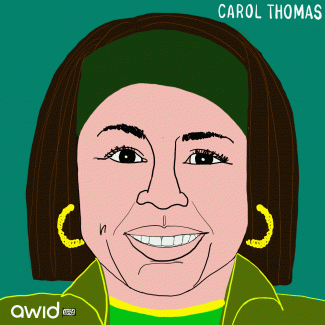
Carol Thomas was a trailblazer for women’s sexual and reproductive rights in South Africa. A gifted gynecologist and founder of the WomenSpace, she practiced and advocated for non-traditional ways of delivering healthcare to women, offering services that were high quality, empathetic and accessible.
“She entered into not only the joy of pregnancies and new babies, but the anxieties of infertility and premature deliveries and female cancers, the heartbreak of miscarriages and stillbirths.” Helen Moffett
Carol thought in new paradigms that centered the needs of women with the least access to services and rights in society:
“The prevailing socio-economic environment that we find ourselves in means that women bear a disproportionate burden of disease and unemployment…As a black, previously disadvantaged woman I have a good sense of what is happening in our communities.” - Carol Thomas
Carol’s innovative and multi-award-winning social venture “iMobiMaMa” used mobile kiosks and interactive technology to connect women directly with antenatal and reproductive health services, information and support in communities all over South Africa.
Carol supported women both in wanted and unwanted pregnancies, mentoring many nurses and doctors during her lifetime.
She was also described as the go-to gynecologist “for trans folks who could have affirming care. She got it right when so many did not have the language or pronouns. Her warm blankets, listening and saying just what you needed to hear was so comforting.” -Marion Lynn Stevens
Carol Thomas was described as being at the height of her professional career when she died on 12 April 2019 of complications following a double lung transplant.
The tributes that poured in following her unexpected death referred to her as many things:
Undoubtedly, Carol Thomas will be remembered and honored for being all of this and much more.
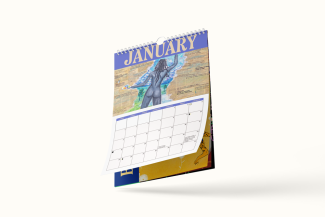
Calendario Feminista AWID 2026
Considera este calendario como un obsequio, que te llega a ti y a 9500 afiliades de nuestra comunidad feminista mundial. Un obsequio de esperanza, conexiones renovadas, acción y comunidad en un momento de inmensas injusticias y violencias.
Que estas historias te recuerden que a través de las fronteras y a lo largo de las luchas, somos muches, somos fuertes y, en conjunto, construimos los mundos que merecemos.
Si la langue des signes utilisée pour l’activité n’est pas la langue des signes internationale, y aura-t-il un appui en interprétation dans d’autres langues des signes ?
Si votre activité est acceptée, l’équipe de l’AWID vous contactera pour évaluer et répondre aux besoins d’interprétation et d’accessibilité pour votre activités.
Mereani Naisua Senibici, también llamada "Sua", fue, durante mucho tiempo, integrante del movimiento de la Asociación Cristiana de Mujeres Jóvenes de Fiji (YWCA, por sus siglas en inglés).
Trabajó con diversos grupos de mujeres en entornos multirraciales, rurales y urbanos y se comprometió a apoyar y promover los derechos de las mujeres y las jóvenes.
En el YWCA de Lautoka, Sua trabajó con mujeres de ascendencia india, y se convirtió en una figura destacada en el desarrollo del deporte y de la participación de atletas mujeres y personas trans en Lautoka.
"Sua es muy querida por lxs integrantes del YWCA de Fiji, a causa de su dedicación y apoyo persistente a todo lo que la organización se ha esforzado por hacer". - Tupou Vere
Mereani formaba parte de House of Sarah [La Casa de Sarah] (HoS, por sus siglas en inglés ), una iniciativa de la Asociación de Mujeres Anglicanas (AAW), lanzada en 2009, que tenía por objetivos tanto sensibilizar sobre los problemas relacionados con la violencia de género, como brindar apoyo a las mujeres que sufren violencia. Mereani empezó como una voluntaria comprometida y ofreció apoyo a las mujeres de todo el Pacífico.
Mereani falleció en 2019.
"Una persona con don de gente y una trabajadora todoterreno en el empoderamiento de las mujeres y construcción de movimientos a nivel comunitario. Descansa en paz, Sua". - Tupou Vere
Across the globe, feminist, women’s rights and gender justice defenders are challenging the agendas of fascist and fundamentalist actors. These oppressive forces target women, persons who are non-conforming in their gender identity, expression and/or sexual orientation, and other oppressed communities.
Discriminatory ideologies are undermining and co-opting our human rights systems and standards, with the aim of making rights the preserve of only certain groups. In the face of this, the Advancing Universal Rights and Justice (AURJ) initiative promotes the universality of rights - the foundational principle that human rights belong to everyone, no matter who they are, without exception.
We create space for feminist, women’s rights and gender justice movements and allies to recognize, strategize and take collective action to counter the influence and impact of anti-rights actors. We also seek to advance women’s rights and feminist frameworks, norms and proposals, and to protect and promote the universality of rights.
Our actions
Through this initiative, we:
Build knowledge: We support feminist, women’s rights and gender justice movements by disseminating and popularizing knowledge and key messages about anti-rights actors, their strategies, and impact in the international human rights systems through AWID’s leadership role in the collaborative platform, the Observatory on the Universality of Rights (OURs)*.
Advance feminist agendas: We ally ourselves with partners in international human rights spaces including, the Human Rights Council, the Commission on Population and Development, the Commission on the Status of Women and the UN General Assembly.
Create and amplify alternatives: We engage with our members to ensure that international commitments, resolutions and norms reflect and are fed back into organizing in other spaces locally, nationally and regionally.
Mobilize solidarity action: We take action alongside women human rights defenders (WHRDs) including trans and intersex defenders and young feminists, working to challenge fundamentalisms and fascisms and call attention to situations of risk.
Cuándo: del 2 al 5 de diciembre de 2024 Dónde: Bangkok, Tailandia, y en línea Quiénes: Aproximadamente unxs 2.500 feministas de todo el mundo participarán en persona, y otrxs 3.000 participarán de manera virtual
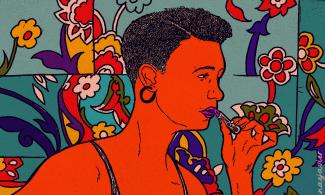
Sexting Like a Feminist: Humor in the Digital Feminist Revolution | Title Snippet
Sexting como feminista: el humor en la revolución digital feminista