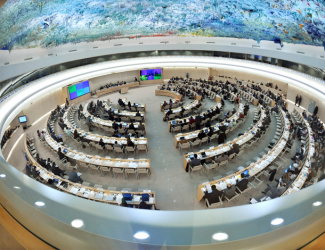
A general view of participants at the 16th session of the Human Rights Council in Geneva, Switzerland.
Análisis Especiales
AWID es un organización feminista internacional de membresía, que brinda apoyo a los movimientos que trabajan para lograr la justicia de género y los derechos de las mujeres en todo el mundo.
El Consejo de Derechos Humanos (CDH) es el cuerpo intergubernamental del sistema de las Naciones Unidas responsable de la promoción y protección de todos los derechos humanos en todo el mundo. El HRC se reúne en sesión ordinaria tres veces al año, en marzo, junio y septiembre. La La Oficina del Alto Comisionado para los Derechos Humanos (ACNUDH) es la secretaría del Consejo de Derechos Humanos.
El CDH trabaja de la siguiente forma:
Debate y aprueba resoluciones sobre cuestiones mundiales de derechos humanos y el estado de los derechos humanos en determinados países
Examina las denuncias de víctimas de violaciones a los derechos humanos o las de organizaciones activistas, quienes interponen estas denuncias representando a lxs víctimas.
Nombra a expertos independientes que ejecutarán los «Procedimientos Especiales» revisando y presentado informes sobre las violaciones a los derechos humanos desde una perspectiva temática o en relación a un país específico
Participa en discusiones con expertos y gobiernos respecto a cuestiones de derechos humanos.
A través del Examen Periódico Universal, cada cuatro años y medio, se evalúan los expedientes de derechos humanos de todos los Estados Miembro de las Naciones Unidas
Se está llevarando a cabo en Ginebra, Suiza del 30 de junio al 17 de julio de 2020.
AWID trabaja con socios feministas, progresistas y de derechos humanos para compartir conocimientos clave, convocar diálogos y eventos de la sociedad civil, e influir en las negociaciones y los resultados de la sesión.
Con nuestrxs socixs, nuestro trabajo será:
◾️ Monitorear, rastrear y analizar actores, discursos y estrategias anti-derechos y su impacto en las resoluciones
◾️ Desarrollar conjuntamente una labor de promoción conjunta para contrarrestar a los actores anti-derechos y debatir más a fondo las conclusiones del Informe de Tendencias de OUR de 2017
◾️ Apoyar, coordinar y desarrollar de manera colaborativa el Caucus feminista emergente en el CDH
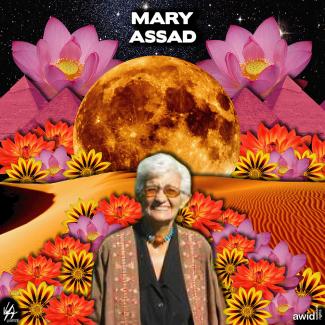
Experta en desarrollo social y antropóloga de formación, Mary fue conocida como pionera en la batalla contra la mutilación genital femenina (MGF).
Nacida en 1922 en El Cairo, el trabajo de Mary en el campo del desarrollo comenzó tempranamente, cuando se unió a la Asociación Cristiana de Mujeres Jóvenes (YWCA, por sus siglas en inglés). Fue integrante del Consejo Mundial de Iglesias y se comprometió cada vez más con la cuestión de la salud de las mujeres. Su larga lucha contra la MGF rindió frutos en 2008, cuando Egipto finalmente penalizó este tipo de prácticas.
Se la recuerda como mentora de numerosxs feministas y activistas egipcixs.
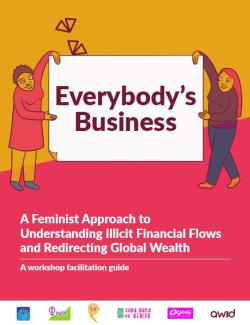
Download your faciliation guide:
"A Feminist Approach to Understanding Illicit Financial Flows and Redirecting Global Wealth"
Ekaete Judith Umoh is an international disability rights advocate and inclusive development expert with astute analysis of issues regarding gender, disability and inclusive development. Her dream is to see increased visibility of women and girls with disabilities in the global feminist movement, as well as in all development efforts around the world.
Ekaete enjoys activism and politics, and went on to become the first elected female President of the Joint National Association of Persons with Disabilities (JONAPWD) in Nigeria, where she led Organizations of Persons with disabilities in the struggle to sign the Nigerian Disability Bill into Law in 2019, after over 17 years of consistent advocacy. Thereafter, she joined CBM Global as a pioneer Country Director and led her team for about 3 years, contributing towards ending the circle of poverty and disability in Nigeria. Aside from disability activism, Ekaete has served as consultant to several development agencies, providing technical assistance on disability inclusion in program and project design.
Add to stories
Off
Snippet FEA Union Otras (ES)
SINDICATO OTRAS
La Organización Sindical de Trabajadoras del Sexo (OTRAS) es el primer sindicato de trabajadoras del sexo de la historia de España. Nació de la necesidad de garantizar los derechos sociales, legales y políticos de las trabajadoras sexuales en un país donde los movimientos de extrema derecha están cada vez más fuertes.
Después de años de luchas contra el sistema legal español y los grupos abolicionistas del trabajo sexual que solicitaron su cierre, OTRAS finalmente obtuvo su estatus legal como sindicato en 2021.
¿Su objetivo? Despenalizar el trabajo sexual y garantizar condiciones y entornos de trabajo dignos para todxs lxs trabajadorxs sexuales.
El sindicato representa a más de 600 trabajadorxs sexualxs, muchxs de lxs cuales son inmigrantes, racializadxs y sexo/genero disidentes.
Our values - bodily autonomy
Autonomía corporal, integridad y libertades
Celebramos el derecho de todas las personas a elegir sus identidades, relaciones, metas, trabajos, sueños y placeres, y lo que hacen con su mente, cuerpo y espíritu. Trabajamos por el acceso a los recursos, a la información, y a ambientes seguros y habilitantes que permitan que esto suceda.
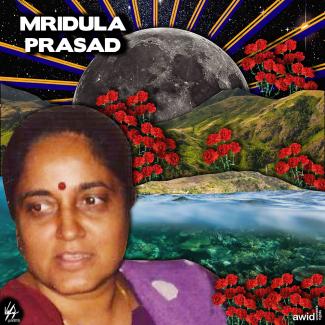
Mridula était une ardente défenseure de la promotion de la santé des femmes à une époque où le sujet de la santé sexuelle et reproductive des femmes était considéré comme tabou aux Fidji.
C’est elle qui a guidé les premiers travaux du Fiji Women’s Rights Movement sur les droits sexuels et reproductifs. En septembre 1999, le Fonds des Nations Unies pour la population lui a décerné un prix régional pour sa contribution en matière de santé et de droits sexuels et reproductifs. Mridula était une militante affirmée, dévouée et infatigable, passionnée par la santé et l’autonomisation des femmes.
Membre reconnue du mouvement féministe et des mouvements de femmes aux Îles Fidji, nous nous souviendrons toujours de la contribution de Mridula. Elle est décédée de causes naturelles en 2017.
Holding up the Skies
A Film Series on Feminist Realities from Africa and the African Diaspora
by Gabrielle Tesfaye
When I created my short animation film, The Water Will Carry Us Home, my mind was plugged into a magical world of fearless resilience and ancestral mermaids who transformed their deepest scars into a new generation of life. Set during the time of the transatlantic slave trade, I was pulled to show this history of African enslavement in a different way than it has ever been told on screen. I wanted to give my ancestors the commemoration they never received. I was motivated to reclaim the history that continues to paint us as helpless victims. Essentially, I wanted to tell the truth. To reclaim and reimagine our history and perspective, means to simultaneously heal our generational traumas that exist today. It is this important work that so many women through the African continent and the African diaspora are doing today, igniting our collective Feminist Realities.
In the making of the film I researched religiously, and in what was written, I saw what was not. There were many times I felt I was hitting a wall trying to find something that was not there, and it was in those voided places that I realized the storytellers of today are filling the voids. I found the most useful stories in contemporary art, film, and African diaspora folklore.
“... a truly unique, raw and representation of feminist power in action.”
The Water Will Carry Us Home carried itself around the world into the hearts of the Diaspora. It also led me here, as the curator of the African and Diaspora film screenings of AWID’s Co-Creating Feminist Realities initiative. Whilst curating this collection of films, I looked for stories that were completely unique, raw and representational of feminist power in action. Consisting of three shorts and one feature, they reveal stories through many communities in Africa and the diaspora, including Ethiopia, Uganda, The Democratic Republic of Congo, South Africa and Kenya. These films reposition African women as what they truly are- self governing and empowered through the unfiltered lens of their work.
“An incredibly beautiful, attentive, finely observed telling of the connection between Africa and its Diaspora formed form the trans Altantic slave trade. The visual universe it creates is just gorgeous… an echo of the fusion of spiritual traditions and non-linear time that speak to how we are still experiencing the moments of the past that formed 'new' worlds of diaspora blackness.”
- Jessica Horn, PanAfrican feminst strategist, writer and co-creator of the temple of her skin
Our short documentary film, Women Hold Up the Sky, created by the WoMin African Alliance, tells the story of women activists in Uganda and the Democractic Republic of Congo who are actively reclaiming their land rights, threatened by mining and other extractives in their homes. The film not only exposes the corruption of extractivism, but finally shares what we have been missing on screen - how grassroots African women are actively organizing, strategizing, and analyzing within their communities to create women-centred and community-driven alternatives. Margaret Mapondera of WoMin explains it beautifully, that they are the “custodians of lands, forests, waters, rivers and territories; the ways in which women hold and transmit the stories / herstories of our past and our futures; the powerful and transformative ways of being that women embody in their relationships to each other, to the environment and in themselves.”
“A refreshing and much-needed piece of cinema highlighting the many ways African women are coming together to create women-led and community-driven alternatives… The fight is on and
women hold the key.”
Pumzi, created by critically acclaimed director Wanuri Kahiu, bridges Africa and science fiction around climate and environmentalism. Pumzi imagines a futuristic world where humankind has been forced to settle on another planet. While Pumzi seems afro-futuristic and new for Africa on the surface, Kahiu reveals the truth that science fiction and fantasy is something that has always existed in African storytelling, but never recognized. Kahiu creates a world where women are truth seekers and heroes who pioneer us into a new world, the opposite of images that position Africans as victims of war and destruction. Instead, Pumzi writes the narrative of African women being their own saviors and problem solvers, who stop at no cost to follow the cryptic visions they channel in their dreams.
“A pioneering African sci-fi film, situating women as scribes of the future and opening up our visions about other worlds, other universes we might occupy as Africans - always an important exercise as we imagine our way out of present crises.”
- Jessica Horn, PanAfrican feminst strategist, writer and co-creator of the temple of her skin
Our feature film of the program, Finding Sally is set in 1970’s Ethiopia during the time of The Red Terror war, documenting the striking history of director Tamara Mariam Dawit’s activist aunt, Sally Dawit. Throughout the film we learn of Sally’s incredible journey as a young and courageous woman activist navigating one of the most violent times of Ethiopian history. Sally’s story not only reveals the gravity of this time, but the reflection of her own personal evolution as a young woman. Dawit was intentional to tell the film through the lens of women, untouched by male voices. Due to so much Ethiopian history being told by men, the making of this powerful story preserved its reality of honoring the feminist perspective. Dawit explains, “Women in revolution and war are often only included as someone's spouse or someone who did cooking or typing work. I wanted to look at the activism around the revolution only through the memories and voices of women.” Finding Sally demonstrates the reclamation of history sought by current filmmakers today. It is an igniting of feminist power and our connected realities throughout time.
“The responsibility falls on us, to remember these women that came before us and their brilliant work so they are not forgotten like the thousands of women already forgotten while fighting the good fight. Sally is such a woman and may she never be forgotten.”
These films have became a part of my own psyche, empowering me to continue building powerful alternatives towards justice from within. They affirm that I am a woman among a world of women, holding up the skies and actively building indestructible Feminist Realities. These films are more than stories of African women - they are globally relatable, inspiring and set the example of Feminist Realities for all of us around the world.
Gabrielle Tesfaye:
Gabrielle Tesfaye is an interdisciplinary artist versed in painting, animation, film, puppetry and interactive installation. Her work is rooted in the African diaspora, Afro-futurism, ancient art practices and cultural storytelling.
Follow us on Social Media to receive news about upcoming events and screenings:
Financiamento externo inclui subsídios e outras formas de financiamento de fundações filantrópicas, governos, financiadores bilaterais, multilaterais ou empresariais, e doadores individuais, tanto a nível nacional como internacional. Não inclui recursos gerados autonomamente por grupos, organizações e/ou movimentos, como, por exemplo, quotas de membres, contribuições voluntárias de colaboradores, membres e/ou apoiantes, angariações de fundos comunitários, aluguer de espaços ou venda de serviços. Para facilitar a consulta, estão incluídas no inquérito definições dos diferentes tipos de financiamento e descrições resumidas de diferentes doadores.
Alejandra is passionate about women’s rights and gender justice. She dreams of creating a world that centers care – for people and nature. As a feminist human rights expert, she’s worked at the intersections of gender, climate, social and economic justice at various international organizations. Her areas of expertise include knowledge building and co-creation, research, facilitation, and advocacy. She holds a MA in Human Rights from the University of Essex and has authored and co-developed many publications, including the article “Enraged: Women and Nature”. The campaign Feminist Activism Without Fear draws on interviews and research carried out by Alejandra.
Originally from Argentina, she has lived and worked in several countries in Europe and Latin America over the past two decades. Alejandra loves photography, the sea, baking with her daughter, and enjoying food from around the world. As a mother, she aims to be a cycle breaker. Alejandra draws energy and inspiration from the amazing women in her life, who are spread in many corners of the world.
Position
Research & Advocacy Lead, Resourcing Feminist Movements
Add to stories
Off
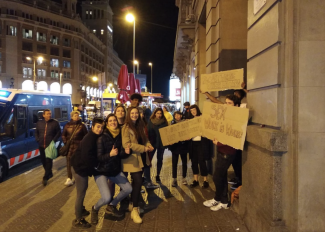
Snippet FEA Union Otras Photo 4 (FR)
Membership why page - Angelina Mootoo quote
En rejoignant l’AWID, j’espère pouvoir contribuer à la mobilisation du mouvement féministe. Pas seulement pour les femmes privilégiées, mais pour TOUTES les femmes et activistes féministes..- Angelina Mootoo, féministe intersectionnelle et caribéenne, Guyane/USA
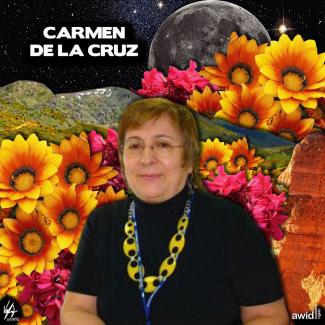
Carmen had a long career advocating for women’s rights both in NGOs and within the United Nations (UN) system.
She taught courses in several Spanish and Latin American universities, and published numerous articles and reports on women, gender and peace in developing countries.
Her writing and critical reflections have impacted a whole generation of young women. In her last years, she was responsible for the Gender Practice Area in the Regional Center of the United Nations Development Program (UNDP) for Latin America, from where she supported very valuable initiatives in favour of gender equality and women's human rights.
#MeToo in China
En China, el movimiento #MeToo [«Yo También»] se encendió en enero de 2018, empujado por el ímpetu del movimiento #MeToo de todo el planeta. Fue una respuesta a los problemas culturales y sistémicos relacionados con el género y el poder dentro de China. Las bases del movimiento habían sido establecidas durante décadas, y los muchos años de debate y promoción de la igualdad de género, finalmente, hicieron erupción con tremenda fuerza en toda la sociedad. El movimiento #MeToo fue impulsado fundamentalmente por jóvenes, que incluyen a innumerables mujeres anónimas y sus aliadxs, en busca de oportunidades para hacer realidad el principal «sueño chino»: transformar a China en un país con igualdad de género.
En China, el contexto para el movimiento #MeToo es extremadamente adverso: el Estado de derecho, la justicia y la transparencia de las acciones gubernamentales y la libertad de expresión no pueden darse por descontados, pero estos son precisamente los objetivos por los cuales lucha el movimiento. Ha sido, desde el principio, una lucha intensa, y cada víctima o activista que se visibiliza corre enormes riesgos: desde ser silenciadx o humilladx o de sufrir represalias hasta poner en peligro su seguridad. Todos los éxitos del movimiento #MeToo han sido logrados por quienes son lo suficientemente valientes como para asumir los costos de manifestarse y desafiar la censura.
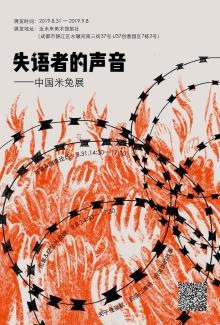
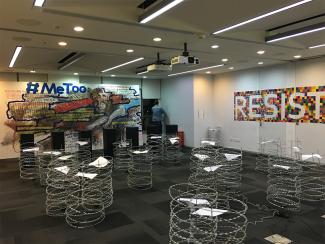
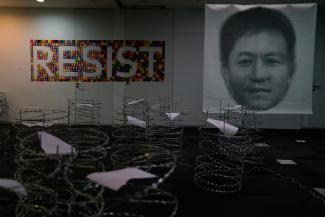
La exhibición «#MeToo in China» fue inaugurada en 2019 y recorrió cinco ciudades. Su objetivo es dar mayor prominencia a las experiencias personales de lxs víctimas y lxs activistas, para inspirar al público a unirse a la lucha a través del contacto con estas historias. La exposición misma se ha convertido en parte de la lucha #MeToo: ha debido enfrentar desafíos en su itinerario por toda China y, en más de una ocasión, fue amenazada con la clausura.
لغتي ليست واحدة من لغات الاستطلاع الرسمية ولدي صعوبة بتعبئته. ماذا يمكن أن أفعل؟
تلتزم جمعية حقوق المرأة في التنمية بالعدالة اللغوية ونأسف على عدم توفر الاستطلاع بلغات أخرى في الوقت الحالي. إن كنتم/ن بحاجة لدعم من مترجم/ة أو أردتم/ن تعبئة الاستطلاع بأي لغة أخرى، الرجاء الكتابة لنا عبر البريد الالكتروني: witm@awid.org
El trabajo de AWID es posible gracias al apoyo financiero de una amplia gama de donantes, incluyendo agencias multilaterales y bilaterales, fundaciones privadas y fondos de mujeres.
AWID offers the WITM Toolkit to support individuals and organizations who want to conduct their own research on funding trends for a particular region, issue or population by adapting AWID’s research methodology.
AWID’s WITM Toolkit builds on 10 years research experience. AWID’s WITM research and WITM Toolkit is a political and practical demonstration of the resources and steps it takes to conduct solid action-research.
The Resourcing Feminist Movements team also offers technical and political support before and during the research process. Review the toolkit and contact us at fundher@awid.org if you need more information.