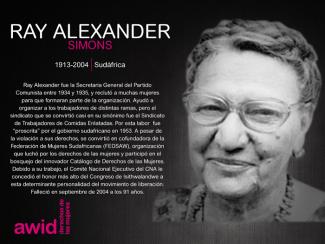
Ray Alexander Simons
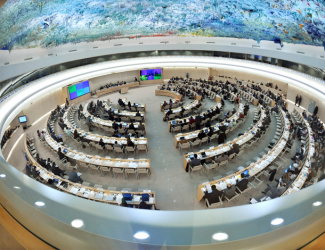
El Consejo de Derechos Humanos (CDH) es el cuerpo intergubernamental del sistema de las Naciones Unidas responsable de la promoción y protección de todos los derechos humanos en todo el mundo. El HRC se reúne en sesión ordinaria tres veces al año, en marzo, junio y septiembre. La La Oficina del Alto Comisionado para los Derechos Humanos (ACNUDH) es la secretaría del Consejo de Derechos Humanos.
Debate y aprueba resoluciones sobre cuestiones mundiales de derechos humanos y el estado de los derechos humanos en determinados países
Examina las denuncias de víctimas de violaciones a los derechos humanos o las de organizaciones activistas, quienes interponen estas denuncias representando a lxs víctimas.
Nombra a expertos independientes que ejecutarán los «Procedimientos Especiales» revisando y presentado informes sobre las violaciones a los derechos humanos desde una perspectiva temática o en relación a un país específico
Participa en discusiones con expertos y gobiernos respecto a cuestiones de derechos humanos.
A través del Examen Periódico Universal, cada cuatro años y medio, se evalúan los expedientes de derechos humanos de todos los Estados Miembro de las Naciones Unidas
Se está llevarando a cabo en Ginebra, Suiza del 30 de junio al 17 de julio de 2020.
AWID trabaja con socios feministas, progresistas y de derechos humanos para compartir conocimientos clave, convocar diálogos y eventos de la sociedad civil, e influir en las negociaciones y los resultados de la sesión.
Le salaire minimum en Géorgie est l’un des plus bas dans le monde. Cette réalité touche surtout les femmes.
Non seulement le pays a un écart de rémunération important entre les genres, mais les femmes travaillent également des heures plus longues et moins réglementées avant de rentrer chez elles pour s'occuper des tâches ménagères et de leur famille. Il n'y a pas de congé de maternité, pas d'augmentation de salaire pour les heures supplémentaires, pas d'assurance-chômage, et pas de congé de maladie ou d'autre protection sociale. Sous la pression d’organisations occidentales, les partis politiques oligarchiques géorgiens ont mis en œuvre des réformes qui détruisent l'État-providence, augmentent les mesures d'austérité et aggravent l'exploitation des travailleur·euses, le tout au profit des grandes entreprises qui applaudissent le pays pour sa «facilité à faire des affaires». Les médias, cooptés par des intérêts privés et corporatifs, sont partiaux sur ces questions ou les réduisent au silence. L'organisation syndicale reste l'une des rares options pour lutter pour les droits humains fondamentaux et pour tenir l'État et les entreprises responsables des violations et persécutions quotidiennes et généralisées contre les travailleur·euses, et en particulier les femmes.
Source: Minimum-Wage et entretien avec Sopo Japaridze dans Open Democracy
Да, опрос доступен людям с различными нарушениями слуха, зрения, движений и когнитивных способностей.
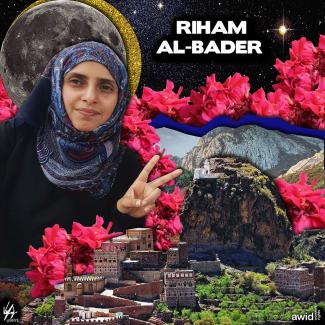
Riham was a lawyer and activist committed to monitoring rights violations in Yemen.
She worked with other activists to supply civilians trapped by Houthi militias in the outskirts of the city of Taiz with food and water.
Riham was killed in February 2018 and it is unconfirmed whether she was killed by a sniper or hit by an aircraft. Nobody has been held accountable for her murder.
En savoir plus sur les réalités féministes
N'hésitez pas à nous contacter.
O tempo estimado para preencher o inquérito é 30 minutos.
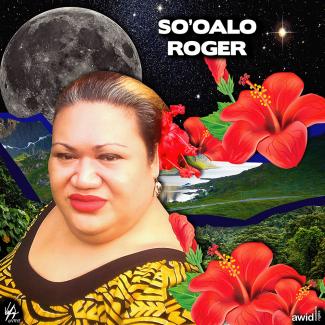
So'oalo fue una ferviente defensora de los derechos humanos, especialmente de los derechos de la comunidad LGBTQI en el Pacífico.
Fue integrante de la Asociación Fa’afafine de Samoa (SFA) y una apasionada activista por el reconocimiento de un tercer género en el país insular. Bajo su liderazgo, la SFA luchó por el reconocimiento de la validez y los derechos de la comunidad fa’afafine.
También fue pionera en articular los vínculos entre derechos humanos, explotación de lxs fa’afafines en Samoa y el Pacífico y la salud, el bienestar y la seguridad de la comunidad LGBTQI.
Fue fuente de inspiración, visionaria y su dedicación a la lucha por los derechos de su comunidad es admirable y será recordada por siempre.
The information contained in this communication is confidential and is intended solely for the addressee.
This communication may contain information proprietary to the Association for Women’s Rights in Development (AWID), and may not be reproduced or disseminated in whole or in part without AWID's written consent.
AWID does not warrant that any information contained herein is complete or correct. This communication is not an offer to enter into any agreement and is not a confirmation of any agreement described herein unless the context clearly indicates the contrary.
AWID is not acting as your adviser in any agreement that may be proposed herein, and this communication does not constitute a recommendation, guidance or proposal to enter into any agreement.
AWID does not guarantee or otherwise assure the expected results of any agreement. This communication may contain views or opinions that are not necessarily those of AWID.
You shall not be entitled to place any reliance on the information contained in this communication for the purposes of entering into any proposed agreement or otherwise.

طبعاً! هذه الأسئلة اختيارية. نقدّر جداً حقكم بالسرية. الرجاء تعبئة الاستطلاع دون علاقة بقراركم/ن بمشاركة اسم المجموعة، المنظمة أو الحركة أو تفاصيل التواصل معكم/ن.
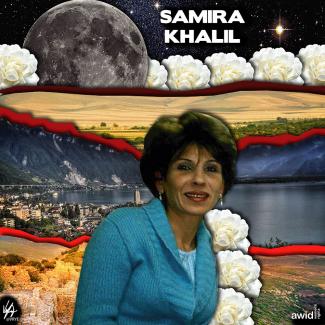
Samira était une activiste syrienne sous le régime de Bachar al-Asad.
Dès son plus jeune âge, Samira s'est opposée à toutes les formes de despotisme et en particulier au régime autoritaire dans lequel elle vivait. Samira a été kidnappée en 2013 avec trois autres activistes de premier plan. Elle aurait été enlevée au Centre de documentation sur les violations à Douma, une ville située en périphérie rurale de Damas.
Le principal suspect associé à sa disparition est le groupe rebelle syrien Jaych al-Islam (l'armée de l'islam), qui nie son implication. Aucune enquête officielle n’a été ouverte sur la disparition de Samira et elle n’a plus donné de nouvelles depuis lors. Samira était attachée à son pays et refusait de quitter la Syrie tant qu'elle estimait que son rôle en faveur de l'émancipation des femmes et la documentation des crimes était utile et nécessaire.
Our thoughts are with the many people all around the world who are most affected by the repercussions of the global COVID-19 pandemic, especially marginalised communities that are historically oppressed.
This is an invitation for artists and creative activists to join a virtual space to connect, build community, and support each other through these challenging times. For this we have created a new Slack community to safely share insights, learnings, life-hacks, resources, advice, fears and anxieties, hopeful and joyful reminders, and in general chat about how we’re doing.
After filling out the form, we will send you a personal invitation to the community.

For those who are new to Slack, we’ll have orientation sessions and materials available after you sign up.
Since we are working in three languages (English, Spanish, French) we invite you to write in the language you are the most comfortable with and use online translation tools (Google Translate or others) to participate in discussions.
Please refer to the Community Guidelines
The co-creation of our feminist realities starts with ourselves and how we treat each other. We are dedicated to creating and protecting safe and supportive spaces for our communities both online and in person. We also consider that safe and welcoming spaces are co-owned and co-created. We expect our members to act in a manner that is ethical, responsible and consistent with the values of AWID and assume collective responsibility to ensure an atmosphere of mutual respect and solidarity.
As part of our ongoing discussions, we will offer weekly prompts in Slack with the intention to gently facilitate dialogue and inspire art-making processes. This can be an introspective process, but to make the most out of this community, we welcome you to interact with other community members and share thoughts as part of our discussions. The intention is to invite folks to respond freely and gradually by writing or making art in whatever way feels best.
We hope to have relevant and timely discussions with you, so we invite your suggestions and feedback. In general, the themes will center the experiences and perspectives of artists, writers, and creators -- and they will make space for folks to vision into and beyond the current global climate through the lens of feminist realities.

Trouvez et créez des connexions. L’AWID compte plus de 9 000 membres, qui s’efforcent tou·te·s de résoudre des questions complémentaires et interconnectées. Cette diversité favorise la pérennité des mouvements et acteures féministes.